Introduction

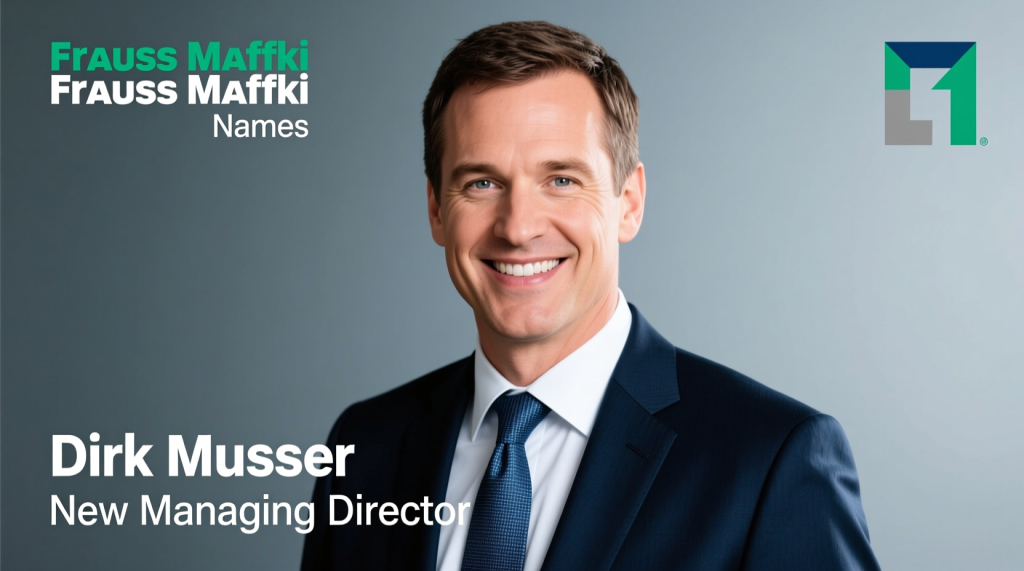
Who/what/when: KraussMaffei Technologies has announced a KraussMaffei leadership change: Jörg Stech will step down at the end of March 2026, and Dirk Musser will assume the role of Managing Director to the Board effective 1 April 2026.
The appointment was communicated as part of an official company announcement/press communication (as typically distributed via corporate channels and trade media). For background on the company and its business lines in plastics processing machinery, see the manufacturer’s corporate website: https://www.kraussmaffei.com/en/.
- Key change: Dirk Musser succeeds Jörg Stech from 1 April 2026.
- Context: Stech’s term (since 2023) focused on earnings discipline and portfolio renewal in injection moulding and automation.
- What to watch: continued investment in injection moulding automation, machine controls, and data-driven applications (AI use cases like process monitoring and predictive maintenance).
TL;DR: KraussMaffei Technologies changes top leadership on 1 April 2026, with a stated focus on maintaining the transformation path and accelerating automation and digital capabilities.
Leadership Transition at KraussMaffei Technologies (and what the role means)
KraussMaffei Technologies operates across injection moulding, reaction process machinery, extrusion, automation, and additive manufacturing. In governance terms, the role “Managing Director to the Board of KraussMaffei Technologies” typically indicates executive responsibility for business performance (P&L), operations, and strategy execution within KraussMaffei Technologies, while the parent KraussMaffei Group—led by the Group CEO—oversees group-level direction, capital structure, and cross-division transformation programs.
For customers, a leadership change at this level is most relevant if it affects product roadmap continuity, service responsiveness, or investment priorities (e.g., digital retrofits and automation standardization across plants). In practice, most industrial buyers will look for stable delivery, spare parts availability, and application support—especially for high-cavitation packaging, automotive technical parts, and medical moulding programs where qualification and process validation cycles are long.
TL;DR: The new Managing Director role is an execution-heavy position within KraussMaffei Technologies, while the Group CEO and KraussMaffei Group provide overarching governance and transformation direction.
Jörg Stech’s Tenure (since 2023): Earnings discipline plus portfolio renewal
Since taking responsibility in 2023, Stech’s period aligned with continued cost pressure in machinery building and plastics processing—driven by energy price volatility, supply chain constraints, and intensified global competition. Against that backdrop, the stated priorities were less about slogans and more about measurable industrial basics: margin protection, product/program rationalization, and capital discipline—areas that influence lead times, after-sales capability, and the ability to keep investing in next-generation platforms.
For readers tracking industry context, the European plastics and rubber machinery sector is commonly represented by VDMA (German Engineering Federation) reporting and trade-show trend coverage, e.g., https://www.vdma.org/en/.
TL;DR: Stech’s tenure emphasized financial and operational tightening alongside targeted product updates—critical levers for sustaining investment in new machine and automation platforms.
Product & Technology Updates: clarifying dates, events, and what changed technically
The original wording that the fully electric PX series and MC7 control system were launched “at the end of 2025” can read as speculative when paired with a 2026 leadership transition. To keep the timeline credible: KraussMaffei has publicly showcased major injection moulding and automation innovations through recurring industry trade fairs such as K (Düsseldorf) and Fakuma (Friedrichshafen). These events are widely used for product premieres and production-ready platform updates. Reference event sites include https://www.k-online.com/ and https://www.fakuma-messe.de/en/.
Where exact “launch” dates vary by configuration and region, the most accurate phrasing for a news-style update is: the platforms were introduced and demonstrated publicly in the 2024–2025 timeframe (trade-fair cycle) and then rolled into commercial deliveries as programs matured. If you need a precise date, it should be tied to a specific KraussMaffei press release or trade-fair announcement page (rather than a generic “end of 2025” claim).
Technical relevance for plastics processors:
- Fully electric injection moulding machines (all-electric drives instead of hydraulics for key axes) are typically selected for high repeatability, clean operation, and lower energy consumption—especially in packaging and medical production. (Energy savings depend heavily on part, cycle, and peripheral equipment; buyers often validate via plant trials and energy metering.)
- MC7 control system: “MC” here refers to the machine control platform (human-machine interface, motion/control architecture, and data connectivity). Modern controls matter because they enable faster set-up, consistent recipe management, and standardized interfaces for robots, vision, and MES integration. MES means Manufacturing Execution System—software that connects shop-floor equipment to production planning and traceability.
- LRXplus linear robot: a linear take-out robot used for demoulding, part handling, and downstream operations (e.g., gate cutting, stacking, or in-line quality checks). In cell engineering, even small reductions in handling time can translate to more stable cycle performance and fewer mould-open delays—especially on multi-cavity tools.
Two differentiators industrial readers often care about (beyond generic “Industry 4.0” claims):
- Cell-level integration: When the machine control, robot interface, and process monitoring are engineered as a coherent system (rather than multiple supplier islands), teams typically see faster commissioning and cleaner responsibility boundaries for troubleshooting—important for OEMs and Tier 1 suppliers ramping new programs.
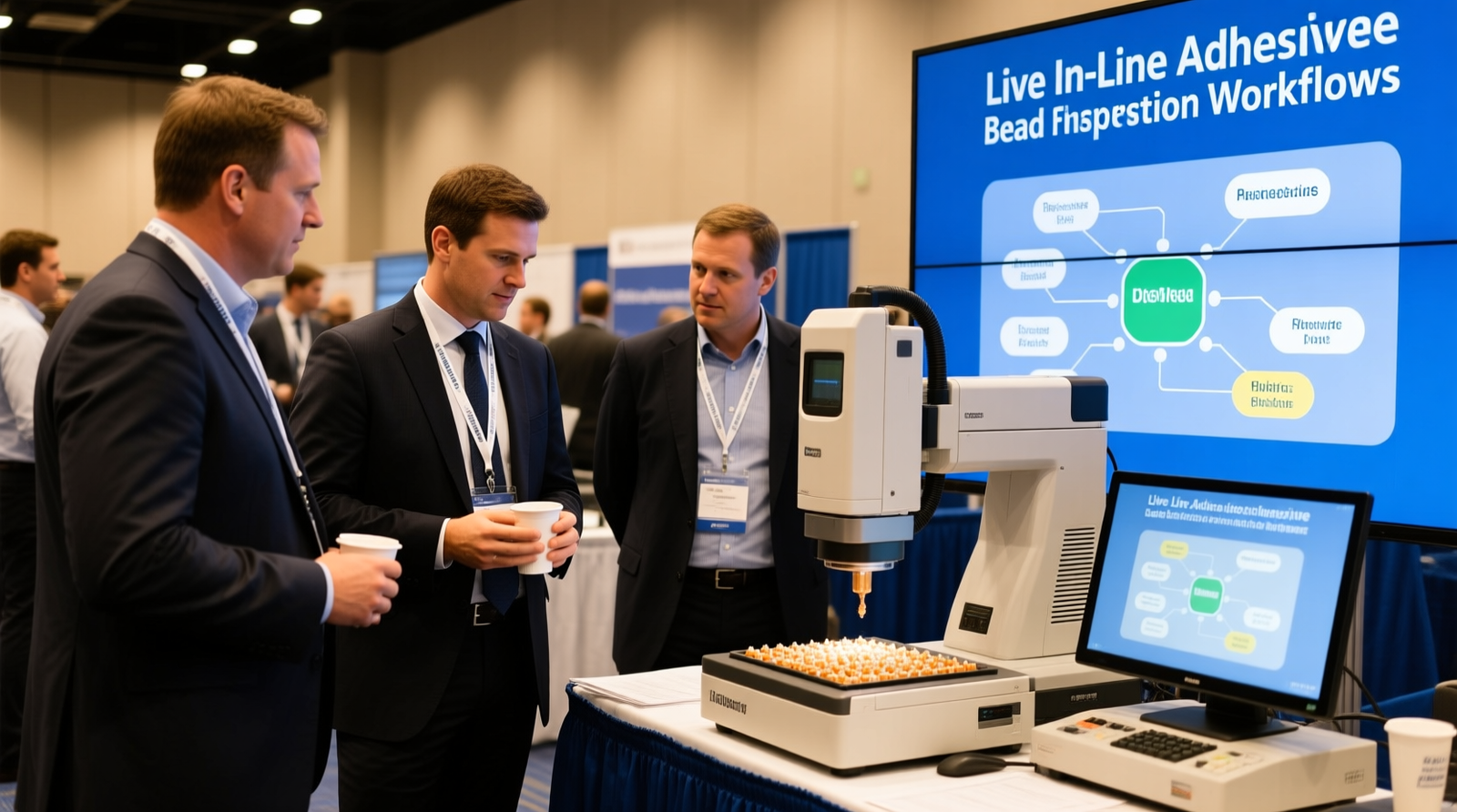
- AI use cases that map to KPIs: Instead of “AI” as a label, practical deployments in injection moulding usually focus on (1) adaptive process control (adjusting parameters to reduce scrap), (2) quality monitoring (detecting drift via signals such as pressure curves), and (3) predictive maintenance (detecting component wear to avoid unplanned downtime). “AI” means Artificial Intelligence, here applied to pattern recognition and optimization on machine and sensor data.
TL;DR: Tie “launch” claims to trade fairs (K/Fakuma) or press releases; technically, the story is about electrification, modern controls for connectivity/traceability, and robotics that stabilizes cycles—plus AI used for process, quality, and maintenance outcomes.
ColorForm and high-performance applications (aerospace/drone): what it’s used for
ColorForm is commonly positioned as an in-mould surface finishing approach—reducing downstream painting/lamination steps by creating a finished surface directly in the moulding process. For manufacturers, the practical value is often in shorter process chains and repeatable aesthetics for visible parts.
Concrete application examples relevant to industrial readers include:
- Automotive interiors: decorative trim elements, functional surfaces, or soft-touch areas where consistent appearance and scratch resistance are critical.
- Drone/aerospace-adjacent lightweight components: housings, covers, or structural shells where weight and dimensional stability matter and where manufacturers may want to avoid additional finishing steps that add variability.
These applications are closely linked to broader industry drivers: lightweighting, material efficiency, and reducing VOC-heavy (volatile organic compounds) finishing operations. VOC means Volatile Organic Compounds.
TL;DR: ColorForm is best understood as “finish-in-the-mould” to reduce post-processing; aerospace/drone relevance is strongest in lightweight housings/shells and high-quality surfaces where process chain reduction matters.
What the executive quotes are—and why that matters
The statements attributed to Alex Li (CEO of KraussMaffei Group), Jörg Stech, and Dirk Musser should be treated as quoted passages from official corporate communication (e.g., a press release or formal announcement), not informal internal messages. If you publish this article as news, it’s best practice to label them explicitly as “according to a company statement/press release” and—where available—link to the original source on the company website or a reputable trade publication that reproduces it.
For background on how major product and leadership announcements are typically validated and disseminated in the plastics industry, trade-fair newsrooms and exhibitor announcements at K are a common reference point: https://www.k-online.com/.
TL;DR: Frame executive quotes as coming from official corporate communication and, when possible, cite the originating press release or trade-fair newsroom for credibility.
Dirk Musser: scope, experience, and what may change for customers
Effective 1 April 2026, Dirk Musser will become Managing Director to the Board of KraussMaffei Technologies. He previously led Group Transformation at KraussMaffei Group, a role that typically coordinates cross-business programs such as footprint optimization, operational KPI systems, procurement levers, and performance governance.
Musser’s background spans transformation and restructuring roles across industrial and mobility sectors (including Deloitte and automotive-related positions). For KraussMaffei Technologies customers—OEMs, Tier 1 suppliers, and contract moulders—the likely practical implications are:
- Product roadmap continuity with sharper execution: transformation leaders often focus on standardizing platforms (machines, controls, automation modules) to reduce variant complexity and improve delivery reliability.
- Potential acceleration of digital retrofits: more emphasis on upgrades that connect installed machines to monitoring, energy reporting, and maintenance workflows—especially valuable for multi-site processors managing mixed fleets.
- Global support consistency: tighter process governance can improve response times and spare-parts planning, which directly affects uptime.
TL;DR: Under Musser, customers should expect continuity in core technology direction but potentially stronger execution on platform standardization, retrofits, and service process consistency.
Strategic focus: injection moulding automation and data-driven manufacturing (without buzzwords)
Instead of broad claims about “smart factories,” the measurable strategic axis for KraussMaffei Technologies is how effectively it can package injection moulding automation into repeatable, fast-to-industrialize cells: machine + robot + control + quality monitoring + connectivity.
For industrial decision-makers, the differentiator is often the integration effort: fewer interfaces, simpler responsibility, and faster ramp-ups—especially for Tier 1 and medical moulders with strict validation. Standard connectivity concepts are frequently aligned with industry architectures such as OPC UA (Open Platform Communications Unified Architecture), a machine-to-software communication standard widely used in industrial automation. Reference: https://opcfoundation.org/about/opc-technologies/opc-ua/.
AI-enabled functions become valuable when they support plant KPIs:
- Quality monitoring: detect process drift early (e.g., via cavity pressure/temperature signatures) to reduce scrap and sorting.
- Adaptive process control: parameter adjustments to keep parts within tolerance across material lot changes.
- Predictive maintenance: identify wear patterns in drives, screws, or auxiliaries to reduce unexpected downtime.
TL;DR: The strategic story is integrated automation cells plus practical AI use cases tied to scrap, uptime, and ramp-up time—not abstract “digitalization” language.
Outlook: near-term challenges and how the transformation agenda may respond

Over the next 12–24 months, plastics processors and machinery OEMs will likely face a combination of energy-efficiency requirements, cost pressure, and accelerating demand for recycling and circular-economy capability (material variability, regrind use, traceability, and documentation).
In this context, KraussMaffei Technologies’ ability to support customers will depend on:
- Energy transparency: metering and reporting at machine and cell level to quantify improvements and justify capex.
- Robust processing of recycled materials: stable process windows and monitoring to manage variability and maintain quality.
- Retrofit paths: upgrades for connectivity and monitoring that extend the life of installed assets—important for contract moulders balancing cash flow and customer requirements.
For regulatory context around circular economy and plastics, the European Commission’s policy framework is a useful reference point: https://environment.ec.europa.eu/topics/circular-economy_en.
TL;DR: Expect focus on energy reporting, recycled-material process robustness, and retrofit-friendly digital upgrades as processors adapt to circular-economy and efficiency demands.
FAQ
Q: What changes at KraussMaffei with the new Managing Director?
A: The announced KraussMaffei leadership change means Dirk Musser takes over as Managing Director to the Board of KraussMaffei Technologies on 1 April 2026, succeeding Jörg Stech. For customers, the most likely impact is continuity in product direction with stronger execution on operational performance, platform standardization, and digital/automation rollout.
Q: When does Dirk Musser officially take over at KraussMaffei Technologies?
A: Dirk Musser is scheduled to assume the role on 1 April 2026, following Jörg Stech stepping down at the end of March 2026.
Q: How does KraussMaffei use AI in injection moulding?
A: In injection moulding, AI (Artificial Intelligence) is typically applied to practical tasks such as quality monitoring (detecting drift from sensor curves), adaptive process control (stabilizing output when conditions change), and predictive maintenance (forecasting wear to prevent downtime).
Q: What is injection moulding automation, and where does the LRXplus robot fit?
A: Injection moulding automation means using robots and peripherals to remove parts, handle sprues, stack/pack parts, and run in-line checks to keep cycles consistent and reduce manual labor. A linear robot like the LRXplus is commonly used for fast, repeatable take-out and downstream handling in an integrated moulding cell.
Q: What does the leadership change mean for existing KraussMaffei customers?
A: Existing customers should generally expect business continuity—ongoing service, spare parts support, and product roadmap follow-through—while the new leadership may place additional emphasis on delivery reliability, retrofit options for connectivity/monitoring, and standardized automation packages that reduce commissioning effort.