Introduction

This article is written for equity investors in capital goods and mining equipment who want targeted exposure to the gold mining capex (capital expenditure) theme and the broader mining capital expenditure cycle. It explains why Sandvik mining equipment demand often moves with gold producers’ budgets—especially for underground mines—and what to monitor as the cycle evolves.
Barclays has highlighted Sandvik (OM:SAND) as a potential beneficiary of a renewed mining capex upturn linked to higher gold prices and a healthier project pipeline. The core idea is straightforward: when gold miners fund new developments and modernize fleets, Sandvik’s underground equipment, automation, and aftermarket service base can see an uplift in orders and, later, revenue.
TL;DR: Sandvik offers relatively direct, underground-leaning exposure to gold miners’ spending—useful for investors who want a more “mining capex” link than a broad industrials basket.
Why Higher Gold Prices Matter for Sandvik’s Mining Equipment Demand
Gold prices influence miners’ willingness to spend on both growth capex (new mines/expansions) and sustaining capex (replacement and maintenance spending to keep production stable). When gold prices are high or stable enough to support attractive margins, producers are more likely to approve:
- Greenfield projects (new mine builds)
- Brownfield expansions (extensions and upgrades at existing sites)
- Accelerated replacement of aging underground fleets and infrastructure
This tends to lift demand for the product categories Sandvik is known for in underground operations—such as underground drilling rigs (e.g., development and production drilling), loaders and trucks (often referred to as LHDs: load–haul–dump machines), ground support equipment, and increasingly for automation and digitized fleet optimization.
Gold is also disproportionately important in underground mining versus some bulk commodities, which matters because Sandvik’s mining franchise is primarily geared toward underground hard-rock applications rather than large surface truck-and-shovel fleets.
TL;DR: Higher or steadier gold prices can unlock approvals and replacement spending—areas where Sandvik’s underground fleet, automation, and service offerings typically benefit.
Barclays’ View on Mining Capex (and the Data Points Investors Should Treat as Forecasts)

Barclays has argued the mining investment backdrop is improving, citing forecasts that:
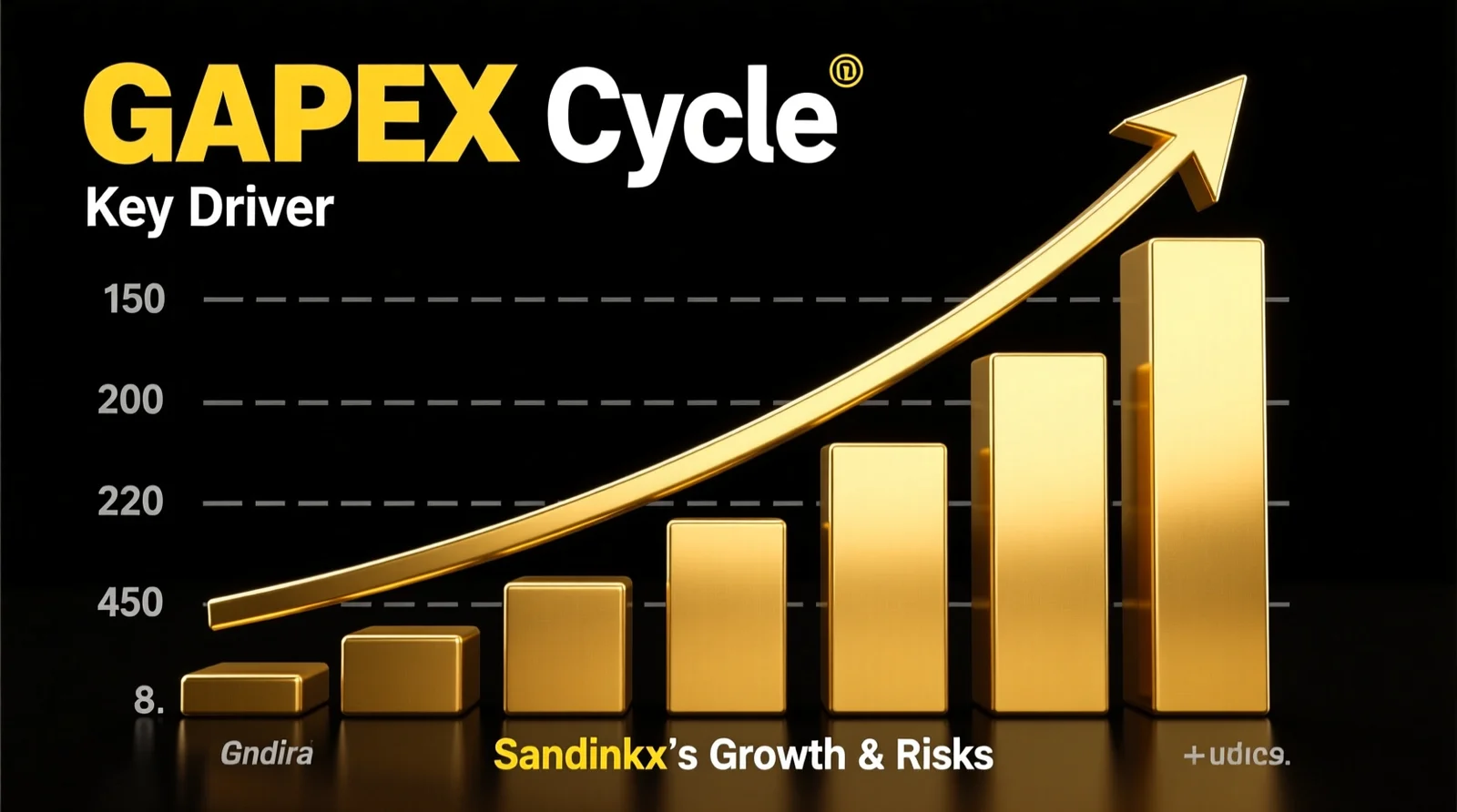
- Global mining capex could rise ~8% in the current year
- Gold-related capex could grow ~23% in 2026
These figures are sell-side forecasts (i.e., forward-looking estimates rather than audited facts) and should be interpreted as a scenario-based outlook. Where possible in your own work, cross-check these forecasts against producers’ published budgets and project approvals.
For broader context on mining investment cycles and commodity-market dynamics, readers can also reference the World Gold Council’s Goldhub research and the IEA’s work on mining investment and supply chains (useful for understanding capex constraints and equipment lead times across commodities).
Transition to company specifics: If Barclays’ macro capex thesis is directionally right, the next question is how much of that spend can plausibly flow to Sandvik via underground equipment packages, automation retrofits, and aftermarket service demand.
TL;DR: Treat the 8% and 23% figures as Barclays’ forecasted capex acceleration; the investable question is whether project intentions convert into purchase orders that land in Sandvik’s order intake.
Sandvik’s Exposure to Gold Mining Capex: Products, Regions, and Customer Mix
Sandvik’s mining exposure primarily sits in its Mining and Rock Solutions business, which sells underground equipment, rock processing solutions, and a growing suite of digital/automation tools plus aftermarket parts and services. (Segment names and mix can evolve; confirm the latest revenue/EBIT split in Sandvik’s most recent annual report and quarterly presentation on the Sandvik Investor Relations site.)
Barclays has estimated that roughly 30%–40% of revenue for Sandvik and Epiroc is tied to gold customers. Investors should treat that range as an estimate that can shift with the cycle: gold’s share can rise when gold miners outspend other commodities, and fall when copper/iron ore or battery-metals capex dominates. Additionally, order intake and revenue timing often diverge in an upturn—large fleet orders may be booked in orders first, while revenue is recognized later as equipment is manufactured, delivered, commissioned, and accepted.
Regional nuance (why it matters): Gold capex is not evenly distributed. Spending momentum can vary by jurisdiction based on permitting, infrastructure, grid access, and cost inflation. Sandvik’s underground footprint tends to align with major underground or transitioning-to-underground gold regions, including:
- Canada (mature underground operations and brownfield expansions)
- Australia (a deep ecosystem of underground hard-rock mining and contracting)
- West Africa (select countries with active development pipelines, though geopolitical and permitting risk can be higher)
- Latin America (project-by-project dynamics; timelines can be sensitive to social licensing and permitting)
On “who buys,” Sandvik sells across majors and mid-tiers as well as contractors. Publicly listed global gold producers such as Newmont, Barrick, Agnico Eagle, AngloGold Ashanti, and Kinross regularly disclose underground development, sustaining capital, and productivity initiatives that can translate into demand for drilling, loading/hauling, ground support, and automation. (Sandvik does not always disclose customer names for each order; investors can triangulate via producers’ capex plans and OEM order announcements.) For industry background, see companies’ filings and presentations on their investor sites, and the S&P Global Market Intelligence Metals & Mining portal for broader sector coverage.
TL;DR: Sandvik’s gold sensitivity is meaningful but not a fixed percentage; it depends on commodity mix and the lag between order intake and revenue, with important regional differences (Canada/Australia often steadier; emerging regions can be higher growth but higher risk).
Sandvik vs. Epiroc vs. Caterpillar/Komatsu in Underground Gold Mining Equipment

Below is a simplified, table-style comparison to frame Sandvik’s positioning for investors focused on gold and underground exposure (qualitative; exact shares vary by year and reporting definitions):
Dimension
Sandvik: Higher underground hard-rock tilt; strong in underground drilling, loading/hauling, rock tools, automation/digital, and aftermarket services. Gold exposure often discussed as significant (Barclays estimate ~30–40%).
Epiroc: Similarly underground-focused; strong in drills, rock reinforcement, automation, and services; also commonly cited as having high gold exposure (Barclays estimate ~30–40%).
Caterpillar / Komatsu: Broader mining + construction mix; stronger presence in large surface fleets (trucks, shovels) and infrastructure-linked demand; gold exposure tends to be more diluted by non-gold and non-mining end markets.
Underground share (relative)
Sandvik: High
Epiroc: High
Caterpillar / Komatsu: Lower (more surface/bulk + construction exposure)
Technology focus in mining
Sandvik: Automation-ready underground fleets, digital optimization, electrification pathway (including battery-electric equipment), productivity and safety tooling ecosystems.
Epiroc: Automation and electrification focus; strong in connected equipment and fleet management solutions.
Caterpillar / Komatsu: Autonomous hauling and fleet technologies historically prominent in surface operations; mining tech competes alongside large installed bases and construction tech platforms.
TL;DR: Sandvik and Epiroc are the more “pure” underground hard-rock ways to express a gold capex view; Caterpillar/Komatsu may be less sensitive to gold specifically due to broader surface and construction exposure.
How Sandvik Is Positioned in the Gold Mining Value Chain (What It Actually Sells)
Sandvik’s Mining and Rock Solutions offering is most relevant to gold miners when spending is directed toward underground development, productivity, and fleet modernization. The core buckets include:
- Underground drilling for development and production (critical for advancing headings and maintaining grade control)
- Load and haul (LHDs and underground trucks) for ore movement in constrained underground environments
- Rock processing (crushing/screening) where applicable in hard-rock circuits
- Automation and digital solutions (equipment connectivity, remote operation, and optimization tools)
- Electrification-ready equipment, including battery-electric vehicle (BEV: battery-electric vehicle) solutions where mines prioritize diesel reduction
- Aftermarket (wear parts, components, rebuilds, and service agreements) that monetizes the installed base through the cycle
For gold operations in particular, “technology spend” is often justified by tangible underground economics: reduced ventilation requirements, improved operator safety (remote operations), better utilization, and lower unit costs—especially as mines get deeper and more complex.
Transition to investor angle: This product positioning matters because the fastest signal of a capex upturn often shows up in order intake and backlog before it shows up in reported revenue.
TL;DR: Sandvik’s edge is not just “mining exposure”—it’s specific exposure to underground drilling/loading/hauling plus automation and aftermarket, which are common spending lines in modern gold mine plans.
Who Should Care (Investor Profile)

This thesis is most relevant for:
- Cyclical investors looking to capture operating leverage to a mining capex upswing (accepting volatility).
- Quality-cyclical or “compounder” investors who believe aftermarket/services and technology content can smooth the cycle versus pure equipment OEMs.
- Investors seeking gold-linked equity exposure without owning miners directly—while recognizing the exposure is second-order (capex-driven) rather than a direct gold price beta.
It may be less suitable for investors who require low earnings variability or who primarily want dividend defensiveness without commodity-cycle sensitivity.
TL;DR: Sandvik fits investors who want technology-led, underground-tilted exposure to mining capex (including gold), and who can tolerate cycle-driven swings in orders.
What This Means for Investors: From Capex Intentions to Sandvik Orders
Barclays’ view implies that as gold producers approve budgets, Sandvik could see above-trend order growth in underground equipment packages and follow-on service/parts demand. The practical mechanism typically runs:
- Budget approvals and project sanctions (miners commit to spend)
- Tendering and OEM selection (competitive process)
- Order intake and backlog growth (Sandvik books orders)
- Revenue recognition (delivery/commissioning over subsequent quarters)
This sequence is why investors often react most to changes in order intake and management commentary on the pipeline, rather than to revenue alone in the early stages of an upcycle.
TL;DR: The capex upturn typically shows up in Sandvik’s orders/backlog first; revenue follows with a lag as equipment is delivered and accepted.
How This Fits Into the Broader Sandvik Narrative (Including Other Segments)

At the company level, Sandvik is more than mining: it also has exposure to machining and manufacturing ecosystems (for example, cutting tools and machining solutions), which can be driven by industrial production, aerospace, general engineering, and inventory cycles rather than commodity capex.
In practice, investors often view the group as a blend of:
- Mining and Rock Solutions: more commodity-capex sensitive; benefits from automation, safety, and aftermarket pull-through.
- Machining-related businesses: linked to manufacturing output and tooling demand; can be cyclical too, but the cycle drivers differ from gold capex.
This matters because strong mining conditions can offset softness in manufacturing end markets (or vice versa), but the offset is not guaranteed in every macro regime.
Transition: With that portfolio context, the next step is to weigh the risk/reward of leaning into gold-driven mining demand.
TL;DR: Mining can be Sandvik’s growth engine in a gold capex upswing, but the overall investment case still depends on how mining performance balances against manufacturing/tooling cycles.
Scenario Analysis: What Different Gold Price Environments Could Mean for Sandvik
Below is a simplified framework investors can use. It is illustrative (not a forecast) and focuses on directionality:
- Bull case (gold strong and stable; project approvals accelerate): Higher probability of multi-quarter strength in underground fleet orders, automation packages, and services attach. Sandvik’s mining order intake could sustain strong year-on-year growth, backlog expands, and revenue growth follows with a lag.
- Base case (gold stable; disciplined capex): Sustaining capex and selective brownfield growth drive steady orders; automation retrofits and aftermarket remain supportive. Growth is positive but not “straight-line,” with quarter-to-quarter variability.
- Bear case (gold drops or volatility spikes; approvals deferred): Miners prioritize cash preservation; greenfield and discretionary expansions slip right. Sandvik may still see aftermarket resilience, but new equipment order intake can weaken quickly.
TL;DR: In bull/base scenarios, Sandvik’s upside is mostly through stronger order intake and backlog; in a bear scenario, aftermarket helps cushion but does not fully eliminate equipment cyclicality.
The Key Risks and Rewards Around Sandvik’s Gold Exposure (With Mitigants)

Key risks investors should underwrite:
- Gold-cycle sensitivity: If gold prices fall or miners turn cautious, underground fleet replacement and expansion decisions can be delayed, hitting order intake first.
- Project timing and execution: Even with high gold prices, permitting, labor availability, cost inflation, and contractor capacity can push out timelines—creating a gap between “capex intention” and OEM orders.
- Regional and geopolitical risk: Certain gold jurisdictions can face higher permitting or political uncertainty, which can interrupt project pipelines.
Potential mitigants / what management can do:
- Diversify commodity exposure: Maintain momentum in battery metals, copper, and other hard-rock segments so gold is not the only growth pillar.
- Lean on aftermarket and installed base: Services, parts, and rebuilds can be more resilient than new equipment sales during pauses in capex.
- Cost and capacity flexibility: Adjust production, prioritize higher-margin deliveries, and manage working capital as lead times change.
- Selective M&A and technology investment: Strengthen automation/software and electrification ecosystems where customer ROI is clearest.
TL;DR: The biggest risk is a capex “air pocket” if gold approvals slow; the main cushion is aftermarket resilience and broader hard-rock exposure beyond gold.
What Investors Should Watch Going Forward (Actionable Indicators)
To track whether a gold-driven mining capex upswing is translating into Sandvik performance, investors can monitor a few practical indicators from quarterly results and presentations:
- Mining and Rock Solutions order intake growth: As a rule of thumb, sustained double-digit year-on-year growth for several quarters can indicate a genuine upcycle rather than isolated orders. (Compare against prior-year comps and consider one-off mega orders.)
- Book-to-bill (orders vs. revenue): A book-to-bill ratio persistently above 1.0 generally implies backlog is building, which can support future revenue.
- Aftermarket/services mix and margin commentary: Rising service attachment, stable pricing, and good utilization often signal healthy installed base activity even if new equipment is lumpy.
- Peer read-through: Compare commentary from Epiroc and broader OEMs on underground demand and automation adoption to triangulate whether the cycle is company-specific or industry-wide.
- Gold miners’ budgets and approvals: Watch capex guidance from major producers and any shift between sustaining vs. growth spending.
For primary-source grounding, use Sandvik’s official reporting and presentations via Sandvik Investor Relations, and cross-check gold-market drivers via the World Gold Council research library.
TL;DR: Look for sustained order intake strength, book-to-bill above 1.0, and supportive service mix—then validate against gold producers’ capex guidance and peer commentary.
Conclusion

Barclays’ thesis frames Sandvik as a relatively direct play on gold-related mining investment, particularly where spending targets underground development, modernization, automation, and service support. The commonly cited 30%–40% gold revenue exposure should be treated as an estimate that can swing by cycle—and orders typically lead revenue in an upturn.
Bottom line: Sandvik is best suited for investors seeking targeted, technology-led exposure to the gold mining capex cycle, with an understanding of the inherent commodity and project-timing risk.
TL;DR: If gold capex accelerates as forecast, Sandvik’s underground order book can benefit first—making order intake and backlog the key investor dashboard.
FAQ
Q: Is Sandvik a good stock for exposure to gold prices?
A: Sandvik is typically a second-order gold exposure: it benefits when gold miners increase capex and buy equipment/services, rather than from gold price moves alone. Key takeaway: it can work as a leveraged play on gold mining investment, but it won’t track gold prices as directly as a miner or royalty company.
Q: How cyclical is Sandvik’s mining business?
A: Mining equipment demand is cyclical because it follows miners’ capex budgets, which respond to commodity prices, costs, and project confidence. Key takeaway: expect orders to be more volatile than revenue, with aftermarket/services usually providing partial downside protection.
Q: How does Sandvik compare with Epiroc in underground gold mining equipment?
A: Both are heavily exposed to underground hard-rock mining and are often cited as having meaningful gold customer exposure; competition tends to center on drilling, load/haul, automation, and service ecosystems. Key takeaway: for a gold-capex view, both are closer substitutes than diversified OEMs whose earnings are driven by construction and surface mining.
Q: What indicators best signal a gold mining capex upcycle for Sandvik?
A: Watch Mining and Rock Solutions order intake growth, book-to-bill above 1.0, backlog expansion, and supportive service mix, then validate with miners’ capex guidance and peer commentary. Key takeaway: orders and backlog usually turn before revenue in a true capex upcycle.
Q: What are the biggest risks if gold capex expectations don’t materialize?
A: The main risks are delayed project approvals, sudden capex discipline from miners, and regional permitting/geopolitical disruptions—hitting new equipment orders first. Key takeaway: downside is often cushioned by aftermarket demand, but a broad capex slowdown can still pressure growth expectations and valuation.