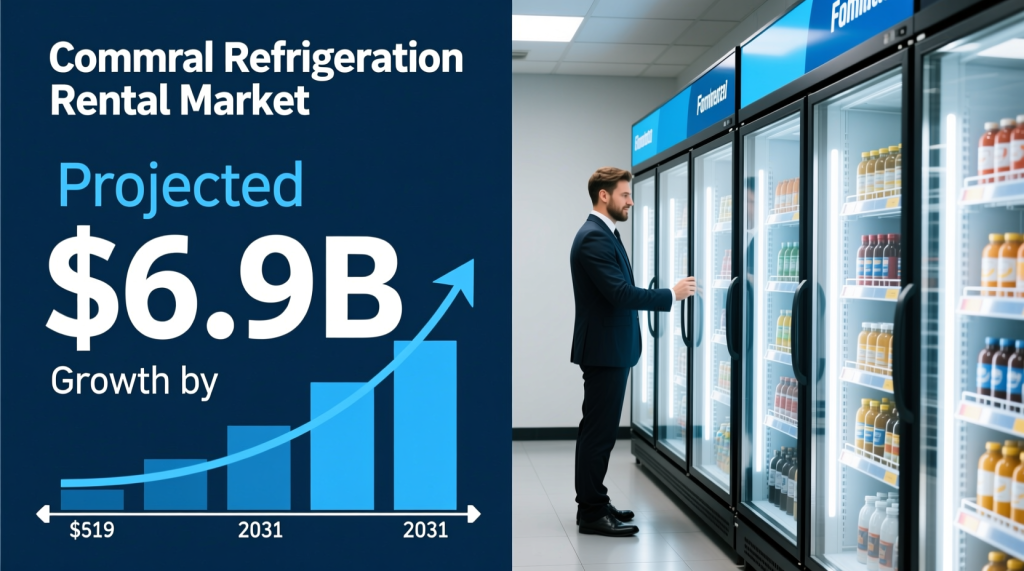
Meta-style market snapshot: The global commercial refrigeration equipment rental market was estimated at US$ 4,263 million in 2024 and is projected to reach ~US$ 6,884 million by 2031, implying a 7.1% CAGR over 2025–2031 (per QYResearch). Demand is being pulled by food delivery expansion, retail remodels, seasonal peaks, and tighter refrigerant/energy requirements—led by North America and Europe in current scale, with Asia-Pacific as the fastest-growing region.
Introduction

In food service, grocery retail, and temperature-controlled logistics, refrigeration is mission-critical: one compressor failure can translate into spoilage, lost sales, and food safety exposure. Yet the market is also becoming harder to plan for—operators face unpredictable demand spikes, remodel cycles, and stricter environmental requirements for refrigerants and energy performance.
Owning commercial refrigeration assets (e.g., walk-in coolers, display freezers, refrigerated trailers) requires capital outlay and creates utilization risk if equipment sits idle outside peak periods. A rental model—often described as outsourced cold storage infrastructure—offers variable capacity without a permanent asset burden.
Commercial refrigeration equipment rental providers typically deliver, commission, maintain, and retrieve equipment. For many operators, this shifts the problem from “own and fix” to “specify performance and verify outcomes,” using service-level commitments and monitoring.
TL;DR: Rentals help operators scale refrigeration capacity quickly, reduce ownership risk, and outsource maintenance—especially useful when demand and regulations change faster than capital plans.
Market Overview and Growth Forecast (and what the 7.1% CAGR means)
QYResearch’s report, “Commercial Refrigeration Equipment Rental – Global Market Share and Ranking, Overall Sales and Demand Forecast 2026–2032,” uses historical market data (2021–2025) and forward estimates. The report places the market at US$ 4,263 million in 2024 and forecasts it to reach ~US$ 6,884 million by 2031, representing a compound annual growth rate (CAGR)—the smoothed annual growth rate—of 7.1% from 2025 to 2031.
Figure basis clarification (important for decision-makers): The CAGR is mathematically consistent with the 2024 estimate and 2031 projection, but QYResearch’s public summary does not always specify whether values are in current dollars (nominal) or constant dollars (inflation-adjusted). When building an internal business case, operators and investors should verify: (1) base year, (2) currency assumptions, and (3) whether inflation/FX are embedded.
For context and triangulation, broader cold-chain demand signals can be cross-checked against industry and policy sources such as the FAO (food loss and supply chain context) and the International Energy Agency (IEA) cooling work (energy implications of cooling growth).
TL;DR: The market is forecast to grow steadily (~7% annually), but buyers/investors should validate whether the forecast is nominal vs. inflation-adjusted before using it for ROI comparisons.
What “Commercial Refrigeration Equipment Rental” includes (terms, typical specs, and contract models)
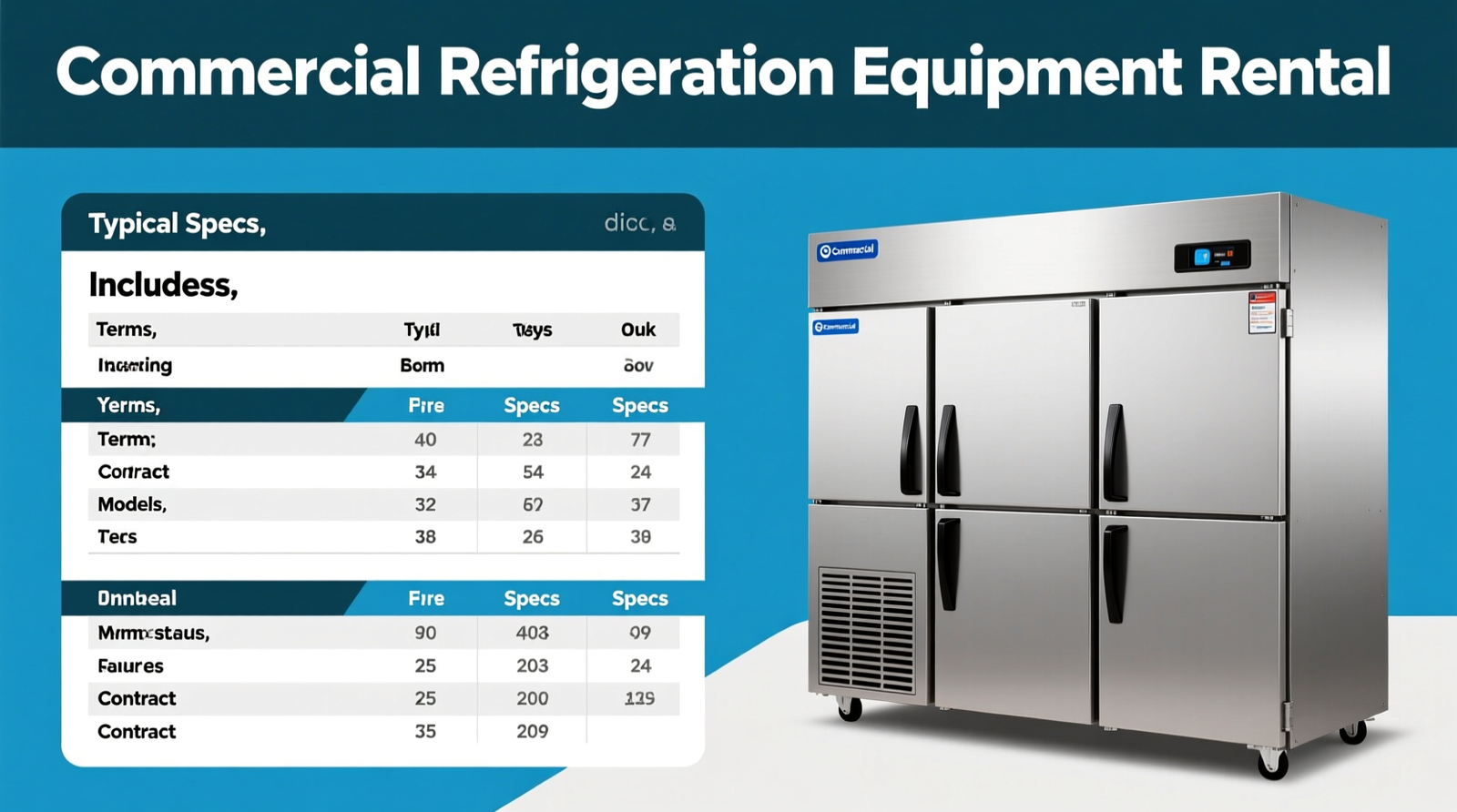
Commercial refrigeration equipment rental is a service model where providers supply refrigeration assets for a defined period and typically bundle logistics and maintenance. Contracts range from “one weekend” to multi-year frameworks.
Common contract models:
- Daily/weekly rentals (typical for refrigerated trailer rental for events, festivals, emergency breakdown cover).
- Monthly seasonal rentals (holiday peaks, harvest seasons, temporary commercial cold storage rental during warehouse overflow).
- Multi-year framework agreements (chains and 3PLs—third-party logistics providers—securing standardized SLAs across sites).
Operational specs (indicative ranges; varies by manufacturer and region):
- Temperature ranges: chilled typically 0°C to +5°C; frozen often -18°C to -25°C (setpoints depend on product and compliance plan).
- Refrigerated trailers/containers: commonly configured for palletized loading (e.g., ~18–26 pallet positions for a typical 40–53 ft trailer, depending on region and pallet standard).
- Walk-in cooler rental for restaurants: often specified by internal volume and door/access needs rather than just footprint; providers may offer modular rooms that can be installed quickly where power and access allow.
Service features that materially affect outcomes: 24/7 call-out availability, spare-unit pools, response-time tiers (e.g., 4-hour/8-hour next-available), temperature logging, and preventative maintenance schedules.
TL;DR: Rentals span short-term event hires to multi-year programs; good agreements define temperature performance, response times, monitoring, and contingency (spare units) rather than just price.
Market Segmentation: Equipment Types (what’s rented and why)
Transport refrigeration equipment
Includes refrigerated trucks, trailers, and mobile cold rooms used for last-mile delivery, intercity distribution, and temporary staging. This segment benefits from rental because demand is volatile (promotions, route expansions, seasonal produce), and uptime expectations are high.
TL;DR: Transport rentals convert variable delivery volumes into variable fleet capacity—useful when routes and volumes change month to month.
Refrigerators and freezers (reach-in and walk-in)
Includes reach-in units (single/multi-door commercial fridges) and walk-in coolers/freezers used in kitchens, central production, warehouses, and overflow storage. Rental is common during refurbishments or when operators need a fast “capacity patch” without construction delays.
TL;DR: Reach-ins and walk-ins are the workhorses for overflow and refurbishment periods—rental reduces downtime risk.
Beverage refrigerators (merchandising)
Glass-door merchandisers and bottle coolers are frequently rented for promotions, seasonal assortments, and pop-up retail. The value driver is merchandising speed: the equipment is deployed where demand is highest, then redeployed.
TL;DR: Beverage cooler rentals are often a revenue enablement tool for promotions and peak seasons, not just a storage decision.
Specialized equipment (regulated and high-value use cases)
Includes blast chillers, pharmaceutical/medical cold units, and modular/containerized cold rooms. Specialized rentals are attractive when compliance requirements, validation documentation, or short-lived projects make ownership inefficient.
TL;DR: Specialized rentals help operators meet tight temperature/validation needs without buying niche equipment that may sit idle.
Market Segmentation: Key Applications (what’s unique by segment)
Food service (restaurants, catering, and dark kitchens)
Food service often needs fast-deploy capacity for menu changes, remodels, or temporary production sites. A walk-in cooler rental for restaurants is commonly used as a bridge during kitchen rebuilds or when adding a high-throughput prep line.
Mini-case (anonymized): A regional casual dining chain renovated 12 locations in phases. Instead of purchasing temporary units per site, it used rotating rentals with a defined SLA and temperature logging. Result: fewer spoilage incidents during remodel weeks and smoother reopenings because the temporary cold room arrived pre-validated and monitored.
TL;DR: Food service rentals reduce renovation downtime and protect food safety during high-variability operations.
Retail grocery and convenience
Retailers rent for remodel continuity, seasonal merchandising, and contingency coverage. Temporary refrigerated display and backroom cold rooms can keep stores operating during equipment replacement cycles.
Mini-case (anonymized): A grocery banner executed a summer freezer replacement program. It staged temporary freezer capacity via rentals and rotated units store-by-store, avoiding full-category delists and maintaining service levels during the hottest weeks (when failures are most likely).
TL;DR: Grocery rentals are often about “no lost aisles” during remodels and heat-stress periods—continuity and sales protection drive the ROI.
Food delivery, micro-fulfillment, and online grocery
Delivery networks add and remove nodes quickly (dark stores, micro-fulfillment). Temporary commercial cold storage rental helps match infrastructure to real demand data rather than forecasts. It also supports pilots in new neighborhoods where volume uncertainty is high.
Mini-case (anonymized): A dark-kitchen network entering two new cities used rental walk-ins and refrigerated trailers for 90 days while testing menu/zone fit. After volumes stabilized, it committed to a smaller permanent footprint and kept a rental contingency plan for marketing spikes.
TL;DR: For delivery, rentals are a “test-and-scale” infrastructure layer that reduces the cost of wrong location bets.
Food production and processing
Processors rent for harvest peaks, shutdown coverage, and capacity bridging during plant modernization. This segment values predictable performance, documented temperature histories, and rapid service response.
TL;DR: Processing rentals smooth peak production and modernization gaps—performance documentation can be as important as capacity.
Events, emergency response, and temporary sites
This includes refrigerated trailer rental for events, festivals, and emergency breakdown cover. Here, lead time, on-site support, and redundancy planning often matter more than unit cost.
TL;DR: Events and emergency use cases prioritize fast delivery, reliability, and backup plans over long-term optimization.
Key Market Drivers (grouped for faster scanning)
Financial drivers: CapEx vs. OpEx under tighter capital conditions
High interest rates or tighter lending standards can make ownership less attractive. Rental converts large up-front capital expenditure (CapEx) into operating expenditure (OpEx), and may reduce the need to hold spare owned units “just in case.”
TL;DR: When capital is expensive or constrained, rentals can preserve liquidity and reduce the cost of idle contingency assets.
Operational drivers: uptime, speed of deployment, and multi-site standardization
Modern chains want consistent equipment performance across locations, with standardized response times and reporting. Rental fleets can be deployed in days (site/access/power dependent) and swapped quickly when failures occur—especially if the provider maintains local spare inventory.
TL;DR: Rentals help standardize performance and accelerate deployment, particularly across multi-site operations.
Regulatory and compliance drivers: food safety plus refrigerant and energy rules
Beyond food safety systems like HACCP (Hazard Analysis and Critical Control Points) and the U.S. FSMA (Food Safety Modernization Act), refrigeration is increasingly shaped by environmental rules on refrigerants and emissions.
Key regulatory references:
- Kigali Amendment to the Montreal Protocol (global phase-down of high-GWP refrigerants): UNEP Ozone Secretariat.
- EU F-Gas Regulation (fluorinated greenhouse gases; restrictions and phase-down impacting HFC availability and service practices): European Commission.
- ASHRAE Standard 15 (Safety Standard for Refrigeration Systems; widely referenced for safe system design/installation): ASHRAE.
- ISO 22000 (Food safety management systems; often used in audits and supplier requirements): ISO.
Refrigerant types (why they matter to rental fleets):
- HFCs (hydrofluorocarbons): historically common but targeted for phase-down due to high GWP (global warming potential).
- HFOs (hydrofluoroolefins): lower GWP alternatives used in some applications, with evolving cost/availability dynamics.
- Natural refrigerants (e.g., CO2/R744, ammonia/R717, hydrocarbons like propane/R290): can offer very low GWP, but may require different safety practices and technician capabilities.
As Kigali and regional policies tighten, rental providers may modernize fleets faster than many end-users can via ownership—potentially making rentals a pathway to lower-GWP compliance and better energy performance without immediate capital replacement.
TL;DR: Refrigerant and safety standards are pushing fleet modernization; rental providers may absorb upgrade complexity and compliance documentation more efficiently than individual operators.
Scenario Analysis: how demand could vary under different conditions (2025–2031)
Forecasts are averages; actual rental demand can swing meaningfully based on macro and regulatory conditions.
- Base-case (steady growth): Food delivery grows moderately, retail remodel cycles continue, and rental penetration rises through multi-site contracts. Utilization stays healthy and fleets modernize gradually.
- Upside scenario (regulatory + operational acceleration): Faster refrigerant restrictions (e.g., tighter GWP limits) and corporate sustainability mandates drive earlier replacement of older HFC equipment. Operators avoid owning “soon-to-be-noncompliant” assets and lean on rental while replatforming sites—boosting demand for modern low-GWP fleets.
- Downside scenario (energy and capex shocks + supply constraints): Energy price volatility raises the operating cost of older, less efficient units; at the same time, supply chain disruptions limit availability of compressors, controls, or refrigerants. Rental providers may raise rates or face longer lead times, pushing some large operators toward selective ownership or longer contract lock-ins to secure capacity.
TL;DR: Regulation tightening can accelerate rental adoption; energy/supply shocks can either increase reliance on rentals (for upgrades) or constrain it (if fleets and parts are scarce).
Rent vs. buy vs. lease: practical comparison for operators
Rental is not always the best answer. A clearer decision emerges when you map duration, utilization, and risk.
- Rent (short-to-medium term, high uncertainty): Best for events, pilots, remodels, breakdown coverage, seasonal peaks, and new location ramp-ups.
- Buy (long duration, stable utilization): Often wins when you have predictable, year-round use and in-house maintenance capacity (or stable service contracts) and you can manage compliance and end-of-life responsibilities.
- Lease (financed ownership-like model): Can fit when you want to spread payments but still control the asset—however, you may retain more maintenance and compliance burden than with rentals.
Rule-of-thumb: If the equipment is needed intermittently or the site format may change within 12–36 months, rental frequently reduces the “wrong asset” risk more than it reduces monthly cost.
TL;DR: Rent for uncertainty and short timelines; buy for stable, high utilization; lease when you want payment smoothing but can still manage lifecycle obligations.
Operator checklist: how to evaluate a refrigeration rental provider (KPIs and SLA terms)
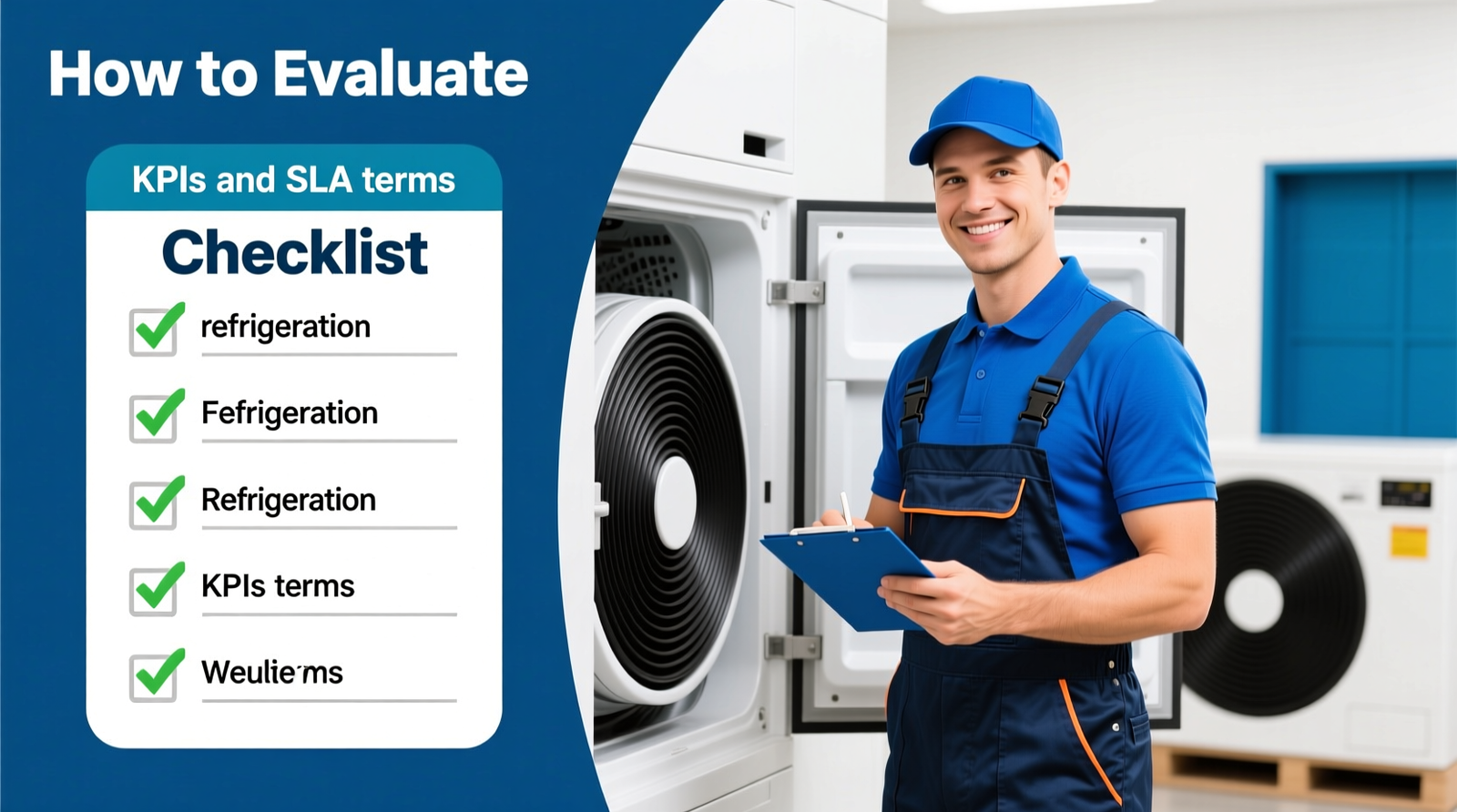
When sourcing temporary commercial cold storage rental or a multi-site framework, treat it like a performance service, not a commodity.
- Temperature performance: confirm achievable setpoints, pull-down time, and how performance is verified (calibrated probes, data loggers).
- Temperature mapping: for critical products, ask whether the provider supports temperature mapping (documented hot/cold spots) and sensor placement guidance.
- SLA (service-level agreement): define response time tiers (e.g., 4/8/24 hours), fix vs. swap policy, and uptime targets.
- Redundancy planning: ask about spare-unit pools, emergency swap lead times, and power-failure contingencies.
- Compliance support: confirm documentation for audits (temperature logs, maintenance records, refrigerant handling records where applicable).
- Fleet details: average fleet age, refrigerant types used (HFC/HFO/natural), and energy efficiency features (EC fans, variable-speed drives).
- Deployment lead time: typical delivery/installation windows and site prerequisites (power, drainage, access, permits).
- Total cost clarity: understand add-ons (delivery, installation, fuel/power, monitoring, after-hours callouts, cleaning, damage waivers).
TL;DR: Compare providers on verifiable temperature control, SLA response times, redundancy, compliance documentation, and transparent total cost—not just day rates.
Regional dynamics and indicative demand split (rough, directional)
Based on typical industry patterns described in market research summaries (including QYResearch’s regional commentary) and observed maturity of rental ecosystems, a reasonable directional split of global demand is:
- North America: ~30–35% (mature rental culture, strong chain density, high compliance expectations).
- Europe: ~25–30% (environmental regulation intensity; strong retail and logistics networks).
- Asia-Pacific: ~25–30% (fastest growth; rapid expansion of delivery and organized retail).
- Latin America + Middle East & Africa: ~10–15% (earlier-stage adoption; modernization-led growth).
Note: These percentages are indicative for context and should be replaced with exact figures when a paid report or audited datasets are available.
TL;DR: North America and Europe drive today’s scale; Asia-Pacific drives incremental growth; emerging regions are smaller but rising as retail and logistics modernize.
Market constraints and risks (what could slow or reshape growth)

- Refrigerant regulation transitions: As HFC phase-downs tighten, older fleet segments may become harder or more expensive to service; providers must invest in modernization and technician training.
- Supply chain disruptions: Compressors, electronic controls, and refrigerants can face availability constraints, extending repair cycles and increasing spare-unit requirements.
- Energy price volatility: Electricity/diesel swings can change the effective operating cost of refrigeration quickly, pushing demand toward higher-efficiency units but also increasing the total cost of short-term rentals.
- Skilled labor shortages: Refrigeration technicians are in short supply in many markets, affecting response times and maintenance quality across the industry.
- Utilization cyclicality: Rental businesses depend on fleet utilization; a sudden demand drop can pressure margins, while demand spikes can create shortages.
TL;DR: Regulatory change, parts availability, and energy costs can meaningfully affect rates, availability, and fleet modernization timelines—plan contingency capacity accordingly.
Digital transformation: IoT monitoring and audit-ready documentation
IoT (Internet of Things) sensors and telematics are increasingly embedded in rental fleets to track temperature, humidity, door openings, and equipment health. This supports faster fault detection and more consistent audit trails.
For operators, the practical benefit is less about “technology” and more about control: automated alerts for deviations, downloadable logs for audits, and fewer silent failures.
For more on temperature-controlled logistics practices and monitoring, reference bodies like the Cooling Post (industry reporting) and policy/efficiency context from the IEA.
TL;DR: IoT-enabled rentals can reduce spoilage risk and simplify audits by making temperature evidence continuous and exportable.
Investor lens: unit economics, KPI dashboard, and what “good” looks like
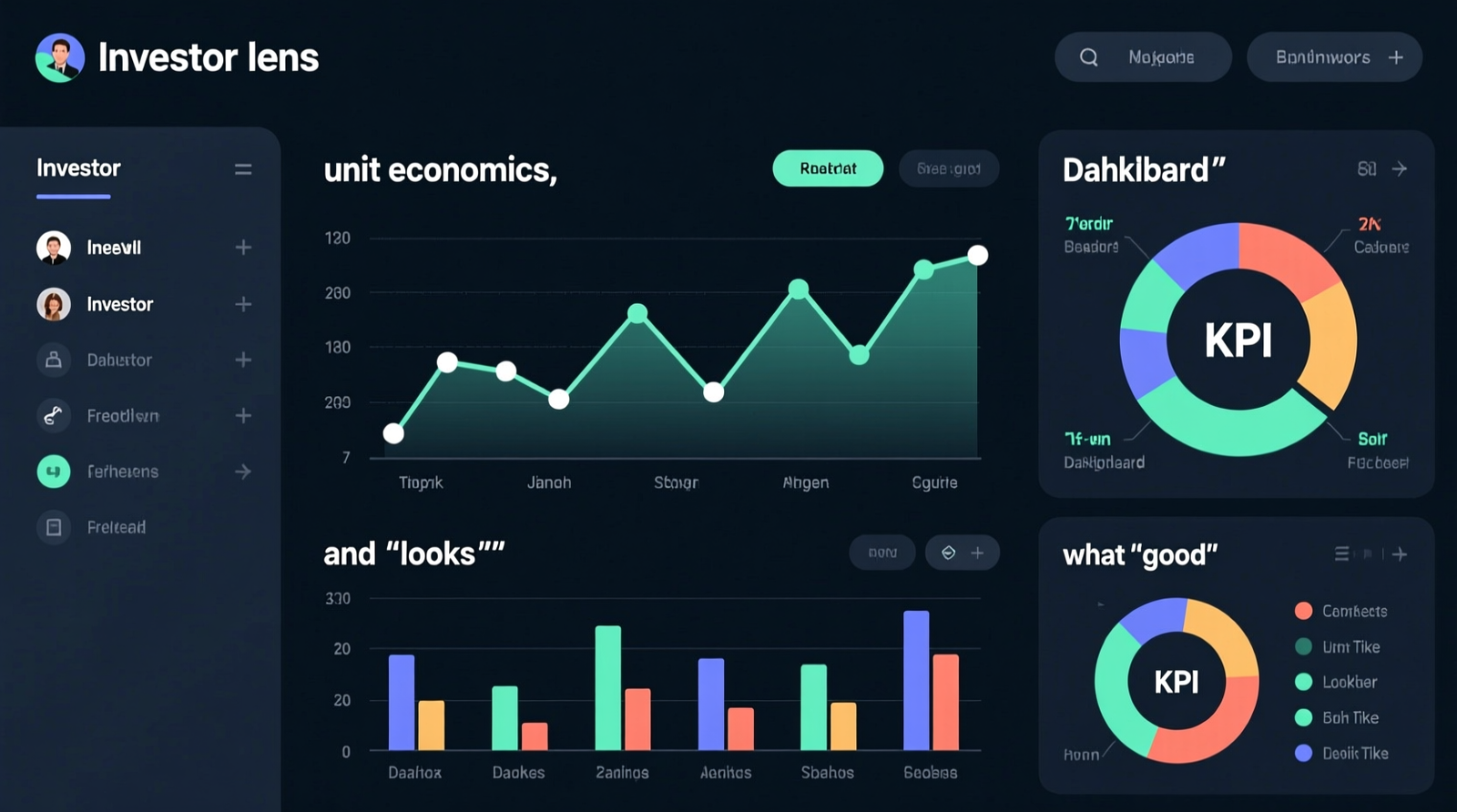
Commercial refrigeration rental businesses often resemble specialty industrial rentals: capital-intensive fleets with recurring revenue and service layers. Performance is driven by utilization, pricing discipline, maintenance efficiency, and fleet modernization.
| Dimension | What to look for | Why it matters |
|---|---|---|
| Contract duration mix | Short-term (days/weeks) vs. seasonal (months) vs. multi-year frameworks | Affects revenue stability, redeployment costs, and pricing power |
| Utilization rate | % of fleet on rent by category | Primary driver of revenue per asset and margin resilience |
| Fleet age & refrigerant mix | Exposure to HFC-heavy assets vs. modern low-GWP equipment | Regulatory risk, serviceability, and future capex needs |
| Service performance | Response times, swap rates, first-time fix, call-out frequency | Impacts churn, penalties, and brand trust with national accounts |
| Churn / retention | Renewal rates and share-of-wallet expansion | Signals product-market fit and contract stickiness |
| Margin profile (directional) | Often higher gross margins on longer rentals; service adds cost but can raise ARPU | Mix and operational efficiency drive profitability more than headline growth |
TL;DR: For investors, the “health” of a rental business is utilization + fleet modernity + service KPIs + retention—not just top-line growth.
Conclusion: decision-oriented takeaways
The commercial refrigeration equipment rental market’s projected growth reflects a broader shift: many operators are treating refrigeration as a performance-managed utility rather than a fixed owned asset. That shift is reinforced by delivery growth, remodel cycles, and refrigerant/energy regulation tightening.
- Takeaway 1 (when to rent vs. buy): Rent when demand is uncertain, time-to-deploy is critical, or regulation risk makes ownership of older refrigerant technology unattractive; buy when utilization is stable and lifecycle capabilities are strong.
- Takeaway 2 (who benefits most): Multi-site grocery, Q-commerce/dark kitchens, and processors with seasonal peaks tend to capture outsized value from temporary commercial cold storage rental and framework agreements.
- Takeaway 3 (what to prioritize): Specify outcomes—temperature control evidence, SLA response times, redundancy, and compliance documentation—then evaluate providers on measured performance, not just rental rates.
TL;DR: Growth is real, but the best rental strategies are performance-driven: rent for uncertainty and speed, select providers by SLA and monitoring capability, and plan for refrigerant/energy-driven modernization.
FAQ

Q: What is temporary commercial cold storage rental, and when is it typically used?
A: Temporary commercial cold storage rental is short-to-medium term hired refrigeration capacity (e.g., modular cold rooms, walk-ins, or refrigerated trailers) used for seasonal peaks, store remodels, equipment failures, harvest surges, or short-term projects like pop-up kitchens and events.
Q: How quickly can a walk-in cooler rental for restaurants usually be deployed?
A: Deployment can range from same-day to several days depending on local availability, site access, power requirements, and whether installation needs permits or special lifting equipment. Ask providers for typical lead times, site prerequisites, and whether they maintain a nearby spare-unit pool for emergencies.
Q: In what situations is renting usually more economical than owning refrigeration equipment?
A: Renting is often more economical when usage is intermittent (seasonal or project-based), when downtime risk is costly and you need guaranteed response/swap support, or when you expect to change site format within ~12–36 months. Ownership can be cheaper over a long horizon with high utilization, but it also carries maintenance, compliance, and end-of-life costs that rentals may bundle into the service.
Q: What should I look for in a refrigerated trailer rental for events to reduce spoilage risk?
A: Prioritize verified temperature performance at your required setpoint, calibrated temperature logging, clear loading guidance (airflow), and an SLA that includes after-hours support. Also plan redundancy for high-value events—either a spare unit on standby or a rapid swap commitment.
Q: How can rental providers help with environmental and regulatory compliance (F-Gas, Kigali, leak checks, documentation)?
A: Many providers support compliance by modernizing fleets toward lower-GWP refrigerants, maintaining service records, supplying temperature logs for audits, and managing equipment end-of-life handling. In regions impacted by rules like the EU F-Gas framework and Kigali-related HFC phase-downs, a capable provider can reduce the operational burden by standardizing documentation, maintenance routines, and compliant servicing practices across sites.