Introduction

If you’re evaluating a PLA production plant in 2026, this DPR-style guide summarizes what investors typically need to sanity-check feasibility: market pull, process routes, biodegradable PLA plant cost benchmarks (CapEx), OpEx/utility intensities, quality specs by grade, implementation timelines, risks, and a practical outline for a PLA DPR financial model.
Polylactic acid (PLA) is a bio-based polymer (made from renewable carbon such as corn sugar or sugarcane). However, PLA is generally industrially compostable—it is not “universally biodegradable” in oceans, soil, or home compost. Industrial composting typically targets controlled conditions such as ~58 °C, managed humidity/oxygen, and defined residence time (often measured in weeks), consistent with common compostability standards.
Policy and brand commitments continue to drive demand for compostable materials in certain packaging formats, but the investment case for a PLA manufacturing unit depends heavily on local composting infrastructure, resin price cycles, and whether the project is integrated into lactic acid and/or feedstock.
TL;DR: This article is an investor-focused roadmap for a PLA manufacturing unit—covering process choices, economics, quality specs, utilities, risks, and what a practical PLA DPR should include.
Biodegradable PLA Plant Feasibility and Project Report Scope
A practical PLA DPR (Detailed Project Report) for a 20,000–50,000 TPA (tons per annum) plant generally covers six decision blocks:
- Product/grade plan: packaging vs. fiber vs. heat-resistant (nucleated/blended) vs. specialty (e.g., medical).
- Process route and technology: lactide route vs. direct condensation polymerization; in-house lactic acid vs. merchant supply; catalyst system; devolatilization and pelletizing configuration.
- Site and utilities: electricity, steam, cooling water, wastewater treatment, logistics, and permitting.
- CapEx and schedule: equipment, OSBL (outside battery limits) utilities, EPC (engineering, procurement, construction) strategy, commissioning plan.
- Operating economics: feedstock contracts, byproduct handling, energy intensity, staffing, maintenance, certification costs.
- Commercial readiness: offtake terms, certification roadmap (EN 13432 / ASTM D6400), and customer qualification timelines.
TL;DR: A bankable PLA DPR links grade strategy and technology selection to utilities, CapEx, schedule, certification, and an offtake-backed economics case.
Market Overview and Demand Drivers (Without Overstating the Case)
PLA demand is tied to packaging formats where compostability is valued (foodservice items, liners, some films) and to processing ease in applications like thermoforming and 3D printing. Demand growth is real, but it is also uneven: regions with robust organics collection and industrial composting capacity tend to see more stable pull-through for certified compostables.
Key drivers that are commonly observed:
- Regulation and procurement: restrictions on certain single-use plastics and public-sector procurement criteria can shift demand toward certified compostable materials.
- Brand commitments: packaging pledges can increase trials and long-term sourcing—especially when converters can demonstrate end-of-life pathways.
- Processing compatibility: PLA runs on many existing converting assets (extrusion, injection molding, thermoforming) with process adjustments rather than greenfield converting lines.
- Carbon-accounting pressure: buyers increasingly request LCA (life cycle assessment) data and PCR/EPD documentation (product category rules / environmental product declarations).
For regulatory context, see the European Commission overview of the Single-Use Plastics rules and the US EPA’s sustainable materials management hierarchy (useful when discussing end-of-life claims).
TL;DR: PLA demand is strongest where regulation, procurement, and composting infrastructure align—growth is not uniform across regions or applications.
What PLA Is (Bio-based vs. Compostable vs. Recyclable)
Bio-based content describes where the carbon comes from (renewable feedstocks). Compostable describes end-of-life behavior under specific controlled conditions. These are not the same thing: a plastic can be bio-based but not compostable, and compostability does not automatically mean it will biodegrade quickly in uncontrolled environments.
Most commercial PLA is designed to meet industrial compostability requirements when certified to standards such as:
- EN 13432 (EU compostability standard for packaging)
- ASTM D6400 (US compostability standard for plastics designed for composting)
Authoritative standard references include ASTM D6400 and the general overview of bioplastics material definitions from European Bioplastics.
TL;DR: PLA is commonly bio-based and can be industrially compostable when certified—but “bio-based” and “compostable” are different attributes, and neither guarantees biodegradation in nature.
PLA Production Process Routes (Lactide Route vs. Direct Condensation)
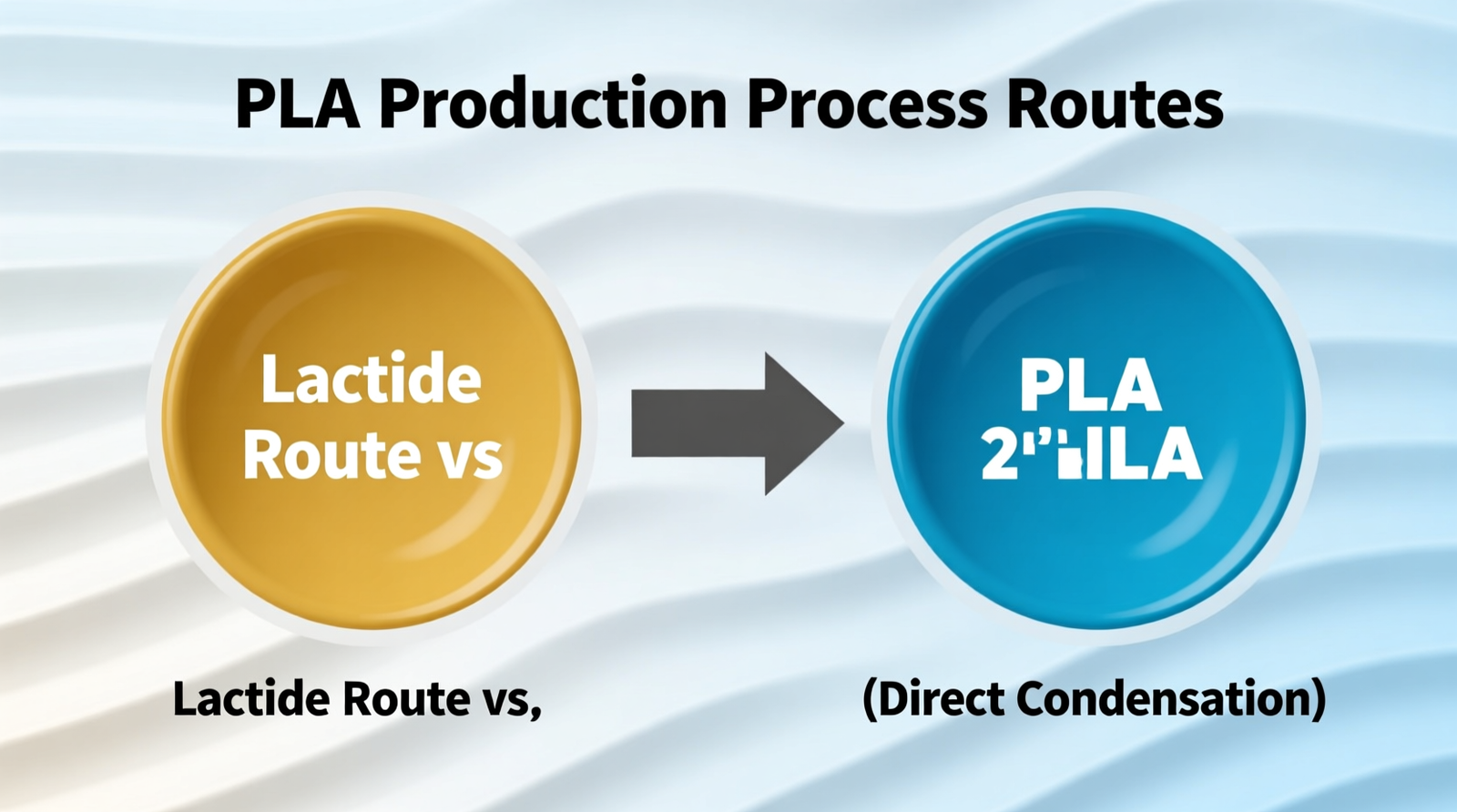
Two main process routes are used to make PLA from lactic acid (2-hydroxypropionic acid):
1) Lactide route (dominant for high molecular weight PLA)
This is typically used for packaging/fiber grades requiring high molecular weight and consistent rheology.
- Step A: Lactic acid production via fermentation of sugars (glucose/sucrose) using lactic acid bacteria; followed by purification.
- Step B: Oligomer formation by condensation (water removal) to form low-molecular oligomers.
- Step C: Lactide formation (cyclic dimer) via depolymerization; then lactide purification (often distillation) to remove water and impurities.
- Step D: Ring-opening polymerization (ROP) of lactide to PLA using catalysts (commonly tin-based catalysts historically; alternative systems exist) and controlled initiators to target melt flow and molecular weight.
Typical yields (indicative): In well-run plants, overall mass yields from purified lactic acid to PLA resin are often in the 85–92% range, depending on lactide purification efficiency, devolatilization, and off-spec recycle strategy. Integrated fermentation-to-PLA yield depends strongly on sugar purity, fermentation titer, and purification losses.
2) Direct condensation polymerization (DCP)
DCP polymerizes lactic acid by removing water, but achieving high molecular weight is more challenging without chain extenders or solid-state polymerization. DCP can be used for certain lower-MW products or as part of multi-step schemes, but most commodity PLA resin production still favors the lactide route for property consistency.
Mini case insight (anonymized): A mid-scale Asian PLA line (tens of kTPA) that initially targeted high-MW thermoforming resin reported persistent variability in melt flow due to trace impurities in lactide. After upgrading lactide purification (additional distillation capacity and tighter moisture control), the plant reduced off-spec pellets and improved on-stream factor—highlighting that lactide purification and moisture management can be as decisive as reactor design.
TL;DR: The lactide (ROP) route is the mainstream path for high-quality, high-MW PLA; overall yields depend heavily on lactide purification, moisture control, and recycle handling.
Key Product Grades and Quality Parameters Investors Should Track
Buyers typically qualify PLA on rheology and thermal performance rather than “PLA is PLA.” Common parameters include:
- Molecular weight (often reported as number-average Mn or weight-average Mw): commodity packaging grades frequently fall in the rough 100,000–200,000 g/mol Mw range (varies by supplier/grade).
- Melt Flow Index (MFI) / Melt Flow Rate (MFR): measured in g/10 min (test method dependent). Many injection grades target higher MFI; film/fiber grades target lower MFI (higher viscosity). Indicative commercial ranges often span ~2 to 30 g/10 min, depending on application and measurement conditions.
- D-lactide content / stereochemistry: controls crystallization behavior and heat resistance. Higher crystallinity (through stereocomplexing or nucleation) supports higher heat distortion temperature (HDT).
- Crystallinity: affects stiffness, clarity, shrinkage, and thermal resistance. Packaging thermoforming grades may target lower crystallinity for clarity; heat-resistant grades target higher crystallinity.
- Residual monomer (lactide) and volatiles: impacts odor, taste, migration (food contact), and stability.
- Moisture content: PLA is hydrolysis-sensitive during melt processing; low pellet moisture is essential for consistent converting performance.
Mini case insight (anonymized): A European converter qualification failed for a PLA sheet grade not because tensile properties were off-target, but due to inconsistent pellet moisture causing viscosity drop during extrusion (hydrolytic chain scission). The producer added stricter post-pellet drying controls and tighter packaging specs (barrier bags/liners), which improved customer retention more than further polymer recipe tuning.
TL;DR: PLA competitiveness often comes down to tight control of MFI/MW, stereochemistry, residual lactide, and moisture—especially for packaging and fiber customers.
Plant Capacity, Configuration, and Integration Choices (20,000–50,000 TPA)
A 20,000–50,000 TPA plant is a common “mid-scale” band because it can support:
- Multiple grades (film/thermoforming, injection, fiber, compounding feedstock).
- Reasonable fixed-cost absorption without committing to mega-scale logistics and offtake.
- Stepwise debottlenecking (e.g., adding lactide purification capacity, extra extruder line, or downstream compounding).
Key configuration decision: backward integration into lactic acid vs. buying merchant lactic acid.
- Integrate into lactic acid (pros): more control over purity and cost; potential byproduct valorization; improved supply security.
- Integrate into lactic acid (cons): higher CapEx; fermentation/purification complexity; higher wastewater load; broader EHS and permitting scope.
- Buy merchant lactic acid (pros): lower CapEx and faster schedule; simpler operations; easier to focus on polymer quality and customer qualification.
- Buy merchant lactic acid (cons): exposure to supplier pricing and availability; quality variability risks; may compress margins in tight markets.
TL;DR: 20–50 kTPA is a pragmatic scale for grade flexibility; integration into lactic acid can improve control but adds CapEx, wastewater, and execution complexity.
Utilities, Effluents, and Their Impact on Operating Economics
Utilities can materially change unit costs—especially in regions with high power/steam tariffs or limited water availability. Indicative consumption ranges (technology- and integration-dependent) for mid-scale PLA production are:
- Electricity: ~500–1,200 kWh/ton PLA (higher end when purification, vacuum systems, and drying loads are significant).
- Steam/thermal energy: often ~2–6 t steam/ton PLA (especially where multiple evaporation/distillation steps are used for purification and lactide recovery).
- Water: highly site-specific; integrated fermentation + purification can require substantially more process water than polymerization-only sites. A rough range is ~5–20 m³/ton PLA inclusive of cooling makeup and process water, but can be lower with closed-loop cooling and water reuse.
Effluent characteristics (typical): If fermentation and lactic acid purification are on-site, wastewater can have elevated COD (chemical oxygen demand) and BOD (biochemical oxygen demand), plus salts (depending on neutralization route), and may require anaerobic/aerobic treatment. Polymerization-only sites have lower organic wastewater loads but still need control of cleaning waste, cooling tower blowdown, and any solvent/catalyst-related streams (if used).
Because utilities and wastewater treatment influence both OpEx and permitting, many investors run a “utilities sensitivity” alongside feedstock and selling price cases.
TL;DR: Utilities and wastewater can swing PLA cash costs meaningfully; integrate utilities/WTP design early in feasibility, not after technology selection.
Operating Cost Structure (OpEx) with Credible Ranges
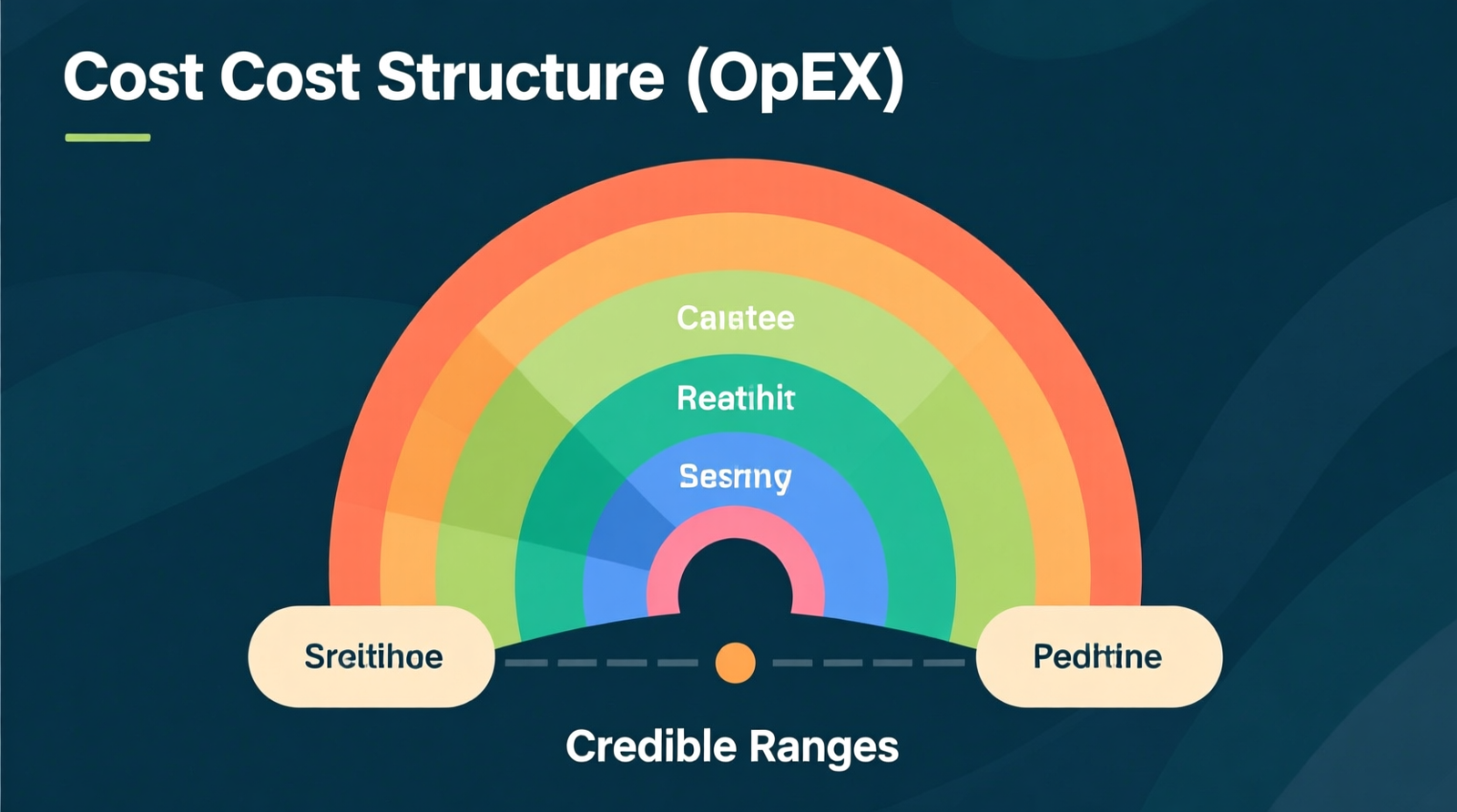
For many PLA projects, raw materials are the largest OpEx component, but the exact split varies by integration level and region. As a broad global rule-of-thumb (not a universal constant):
- Feedstocks & chemicals: often ~55–75% of cash OpEx (sugars/corn dextrose or purchased lactic acid; catalysts; chain extenders/additives; packaging).
- Utilities: often ~15–30% (electricity, steam/fuel, cooling water, compressed air, nitrogen).
- Labor, maintenance, overhead, QA/QC: often ~10–20%.
These are typical industry-style splits used in pre-feasibility models; actual numbers move with energy markets, wastewater requirements, and whether you’re producing standard resin or higher-value tailored grades.
TL;DR: Feedstock usually dominates OpEx, but utilities and wastewater treatment can be the second “hidden lever” that differentiates cash costs by region.
Biodegradable PLA Plant Cost (CapEx) Benchmarks for 20,000–50,000 TPA
CapEx varies widely by scope (polymerization-only vs. fully integrated fermentation-to-PLA), labor/material costs, local code requirements, and the amount of OSBL infrastructure required. The ranges below are indicative and should be treated as pre-feasibility benchmarks only:
- Polymerization-only (merchant lactic acid/lactide feed), 20–50 kTPA:
- Asia: ~USD 60–140 million
- Europe: ~USD 90–200 million
- North America: ~USD 80–190 million
- Integrated lactic acid + lactide + PLA, 20–50 kTPA:
- Asia: ~USD 140–320 million
- Europe: ~USD 200–450 million
- North America: ~180–420 million
As a quick per-ton heuristic, that often corresponds to roughly ~USD 2,000–6,000 per annual ton of capacity depending on scope and region. Projects with extensive wastewater treatment, higher automation, or stricter hazardous area classification typically sit toward the upper end.
TL;DR: Mid-scale PLA plants commonly land in the low hundreds of millions USD if fully integrated; polymerization-only projects can be materially cheaper but trade CapEx for feedstock exposure.
Financial Viability: Margin Reality, Cyclicality, and What Moves Returns

PLA profitability is sensitive to resin pricing, feedstock spreads, energy, and utilization. Any “typical” margin number should be handled with caution because commodity-grade PLA is cyclical and regionally segmented.
Indicative modeling assumptions sometimes used at screening stage:
- Gross margin: ~30–40% (highly dependent on resin price cycle and feedstock/utility costs)
- Net margin: ~15–22% (varies widely with depreciation, financing, tax regime, and ramp-up performance)
These figures can be higher for differentiated compounds/specialty grades with strong offtake contracts, and lower for merchant commodity resin sold into oversupplied markets. Investors typically stress-test at least three price scenarios and a ramp-up delay scenario.
TL;DR: PLA margins can be attractive but are not guaranteed; they vary by region, integration level, product mix, and cycle timing—commodity PLA tends to be more volatile.
High-Level Financial Model Outline (What a PLA DPR Should Calculate)
A simple investor-ready model (even before full EPC quotes) typically includes:
- Revenues: sales volumes by grade; assumed price by grade; byproduct credits (if any); scrap/off-spec sales.
- Ramp-up curve: e.g., Year 1: 50–65% utilization, Year 2: 75–85%, Year 3+: 85–95% (adjust to project risk and market readiness).
- Variable costs: feedstock; catalysts/additives; packaging; utilities per ton (kWh/ton, steam/ton, water m³/ton); wastewater treatment chemicals; logistics.
- Fixed costs: headcount; maintenance (% of ISBL/OSBL); insurance; lab/QC; G&A.
- CapEx phasing: EPC payments by quarter; owner’s costs; commissioning spares; startup inventory; working capital.
- Financing: equity/debt mix; interest rate; DSCR (debt service coverage ratio); covenants; drawdown schedule.
- Outputs: EBITDA, free cash flow, IRR, NPV, payback; sensitivities on resin price, feedstock, energy, utilization, and schedule.
TL;DR: A useful PLA DPR model is driven by utilization ramp-up, grade pricing, utility intensities, and CapEx phasing—not just a single “steady-state” year.
Project Implementation Roadmap and Typical Timelines
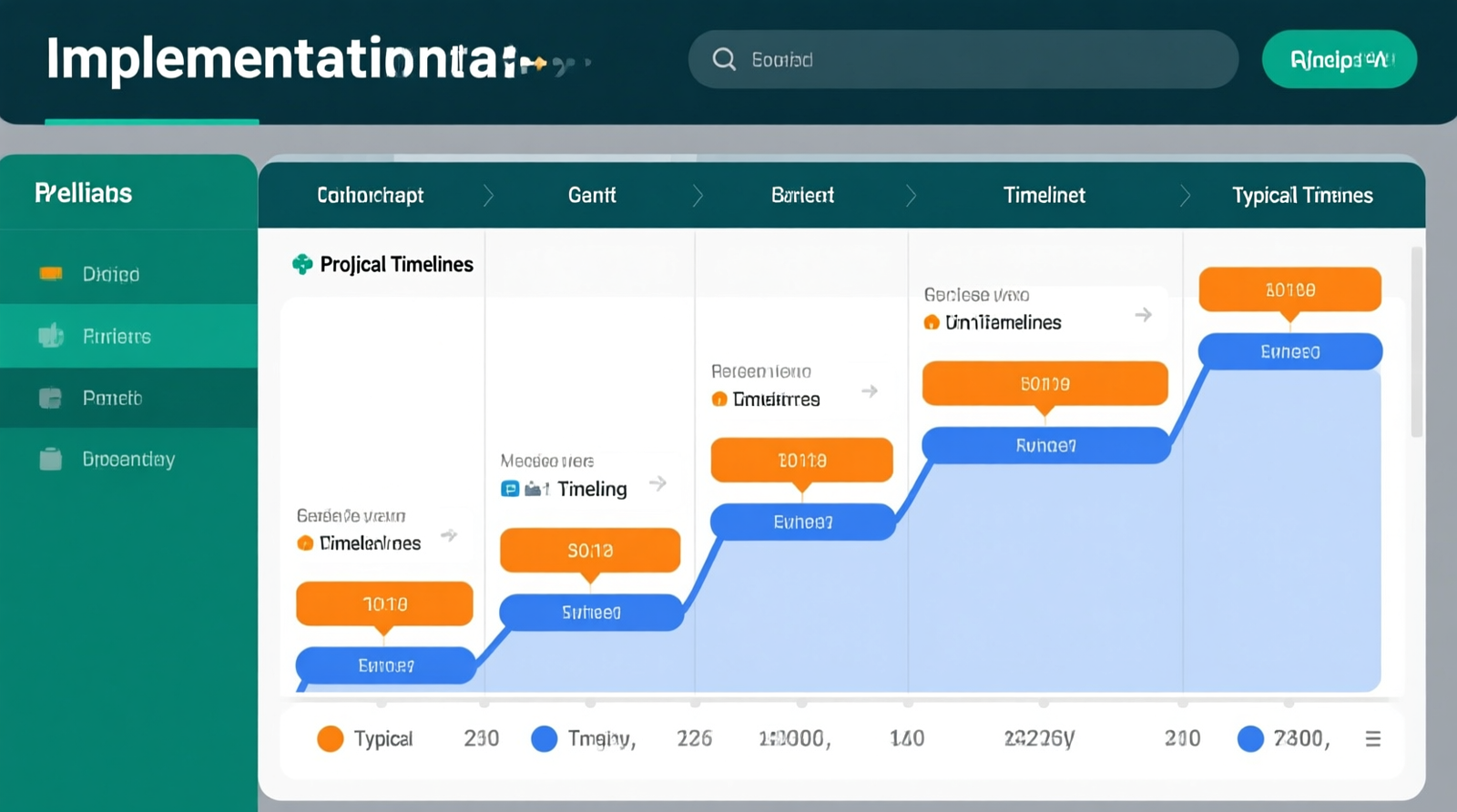
For a mid-scale PLA manufacturing unit, a realistic concept-to-commercial-operation timeline is often 24–36 months, depending on permitting, technology licensing, and equipment lead times.
- Pre-feasibility (6–10 weeks): market/grade plan, site screening, initial mass/energy balance, CapEx/OpEx ranges.
- Feasibility + technology selection (3–6 months): licensor evaluation, pilot/customer trials plan, ROM (rough order of magnitude) quotes, EIA (environmental impact assessment) pathway.
- Basic engineering (3–5 months): PFD/P&ID (process flow diagram / piping & instrumentation diagram), plot plan, utility design basis, HAZID (hazard identification).
- Detailed engineering + procurement (6–10 months): long-lead items (reactors, distillation columns, extruders, dryers), vendor data integration, HAZOP (hazard and operability study).
- Construction (8–14 months): civil, mechanical, E&I (electrical & instrumentation), OSBL tie-ins.
- Commissioning + ramp-up (3–8 months): water runs, hot commissioning, quality stabilization, customer qualification shipments.
TL;DR: Plan on 24–36 months end-to-end, with long-lead equipment and permitting as the most common schedule gatekeepers.
Organization Structure and Manpower for a Mid-Scale PLA Plant
Headcount depends on automation, integration scope (fermentation vs. polymerization only), and 24/7 operations. For a 20–50 kTPA plant, typical staffing ranges are often:
- Polymerization-only site: ~80–140 total staff
- Integrated fermentation-to-PLA: ~140–260 total staff
Key roles and skill sets usually required:
- Operations: shift supervisors, panel operators, field operators (polymerization, extrusion/pelletizing, utilities).
- Process engineering: polymerization kinetics, devolatilization, extrusion, energy optimization, debottlenecking.
- Quality (QA/QC): MFI/MFR testing, GPC (gel permeation chromatography) for molecular weight, DSC (differential scanning calorimetry) for crystallinity, residual monomer analysis.
- Maintenance & reliability: rotating equipment, vacuum systems, extruders, instrumentation; preventive maintenance planning.
- EHS: process safety management, waste handling, contractor safety, compliance reporting.
- Commercial/technical service: converter support and application development to accelerate qualification cycles.
TL;DR: Mid-scale plants often need 80–260 staff depending on integration; technical service and QA capability are essential to sustain margins through customer qualification.
EHS Considerations (Practical, Not Boilerplate)

EHS (environmental, health, and safety) risk in PLA depends on chosen chemistry and integration level:
- Fermentation hazards: CO₂ off-gassing, cleaning chemicals, biological controls, odor management, and confined-space entry in tanks.
- Chemicals/catalysts: some catalyst systems and additives require controlled handling and waste classification; ensure SDS (safety data sheet) alignment and disposal routes.
- Dust and pellets: polymer dust control, combustible dust risk assessments where applicable, pellet loss prevention (“Operation Clean Sweep”-type practices).
- Thermal and pressure hazards: high-temperature polymer melt, vacuum systems, distillation columns—requires robust relief design and interlocks.
- Wastewater & solid waste: high-COD streams (if integrated), sludge handling, and compliance with discharge permits.
Many investors benchmark their management systems against ISO standards such as ISO 9001 (quality), ISO 14001 (environment), and ISO 45001 (occupational health & safety).
TL;DR: PLA plants are not “risk-free”—key EHS topics include catalyst/chemical handling, thermal/vacuum systems, wastewater load (if integrated), and pellet/dust control.
Competitive Materials: PLA vs. PBAT, PHA, rPET, Paper, and Starch Blends
Positioning PLA in a broader sustainable materials portfolio helps avoid single-material risk:
- PBAT (polybutylene adipate terephthalate): flexible and often blended with PLA for film toughness; fossil-based but compostable grades exist; economics depend on petrochemical cycles.
- PHA (polyhydroxyalkanoates): bio-based and biodegrades in more environments than PLA in some cases, but often higher cost and more limited supply.
- rPET (recycled PET): strong mechanical performance and recycling fit where collection exists; not compostable; pricing tied to recycling policy and bale supply.
- Paper: strong consumer acceptance and recycling/composting pathways depending on coatings; barrier performance may require coatings/laminates.
- Starch blends: can be cost-competitive for certain films; performance and moisture sensitivity vary by formulation.
Investment implication: PLA can be compelling in rigid packaging, thermoforming, fibers, and certain compostable formats—but flexible films often rely on blends (e.g., PLA/PBAT) to meet toughness and tear requirements.
TL;DR: PLA is strong in rigid and thermoforming applications; flexible compostable films often need blends, and rPET/paper can outperform PLA where recycling systems are dominant.
Risk and Sensitivity Discussion (Beyond Feedstock and Energy)
In addition to feedstock and utilities, investors commonly stress-test:
- Technology obsolescence: improvements in catalysts, lactide purification, and compounding can change cost/performance benchmarks; choose licensors with reference plants and upgrade paths.
- Competition and substitution: PBAT/PHA/rPET and paper-based solutions can capture the same “sustainable packaging” budgets depending on policy and brand strategy.
- Composting infrastructure gap: if organics collection or industrial composting capacity is limited, certified compostables may face weaker pull-through or reputational risk from “greenwashing” scrutiny.
- Regulatory reversals or tightening of claims: labeling rules and definitions can shift (e.g., restrictions on “biodegradable” claims); maintain evidence-based claims and certifications.
- Qualification and offtake risk: converters often require months of trial runs; delayed approvals can extend ramp-up and working capital needs.
TL;DR: The largest non-obvious risks are infrastructure/labeling dynamics, qualification delays, and substitution by other “sustainable” materials—not just feedstock and power.
Conclusion
A PLA production plant can be viable when three conditions align: (1) a clear grade strategy with real converter pull, (2) robust process control (especially lactide purity and moisture management), and (3) a realistic view of end-of-life infrastructure and certification timelines. In practice, the best projects treat PLA as a quality- and application-driven polymer business rather than a purely commodity resin play.
Before committing to EPC, most teams benefit from a DPR-level package that includes a mass/energy balance, utility design basis, certification plan, ramp-up assumptions, and sensitivity cases for price/utilities/utilization—so that the “biodegradable PLA plant cost” and the operating model are tested against real execution constraints.
TL;DR: PLA projects work best with tight quality control, infrastructure-aware market selection, and a DPR that stress-tests ramp-up, certification, and substitution risks—not just steady-state margins.
FAQ

Q: How long do EN 13432 or ASTM D6400 certifications typically take for a PLA grade?
A: Many projects budget roughly 3–9 months from submitting a complete technical dossier and samples to receiving certification, but timing varies by lab capacity, test outcomes, and how many formulations (colors/additives) are included. Data typically includes disintegration testing, biodegradation testing, ecotoxicity/heavy metals limits, and documentation of formulation and manufacturing controls. Starting certification work during commissioning/ramp-up can reduce time-to-market.
Q: What is a realistic timeline from concept to commercial operation for a 20,000–50,000 TPA PLA manufacturing unit?
A: A common planning range is 24–36 months. Key gating milestones are (1) technology licensor selection, (2) permitting/EIA approval, (3) long-lead equipment orders (reactors, distillation, extruders/dryers), and (4) customer qualification shipments during ramp-up.
Q: What does a biodegradable PLA plant cost for a 20,000–50,000 TPA project?
A: As indicative benchmarks, polymerization-only projects can fall around USD 60–200 million depending on region and OSBL scope, while fully integrated fermentation-to-PLA plants often fall around USD 140–450 million. Final CapEx depends on scope definition (utilities, wastewater treatment, storage, automation), local construction costs, and licensor/equipment selections.
Q: How should investors choose between backward integration into lactic acid versus buying merchant lactic acid?
A: Integration tends to improve supply security and can lower long-run unit costs if the site has competitive sugar feedstock and utilities, but it increases CapEx, wastewater treatment requirements, and operational complexity. Buying merchant lactic acid can shorten the schedule and reduce CapEx, but it increases exposure to supplier pricing, quality variability, and availability—often a key sensitivity in a PLA DPR.
Q: What financing structures are common for PLA projects, and are there “green finance” options?
A: Many projects use a mix such as 30–50% equity and 50–70% debt, depending on offtake strength and lender appetite. Some sponsors pursue sustainability-linked loans, green bonds, or concessional funding where eligibility criteria are met (often requiring LCA documentation, certification plans, and reporting). Carbon credits or incentives may be possible in certain jurisdictions, but they are policy-dependent and should be treated as upside rather than base-case revenue.