Meta overview (who/what/where/when/why)

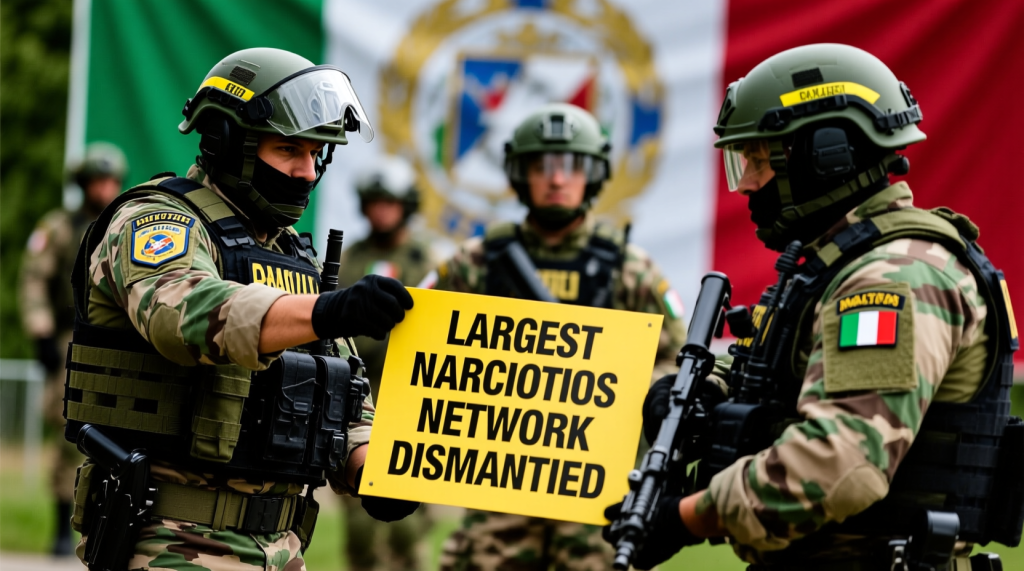
A Guardia di Finanza anti-drug investigation launched by the Provincial Command of Caltanissetta—starting from a September seizure in Caltanissetta—reportedly led to the identification of a drug trafficking operation in Naples, the arrest of two suspects, the seizure of narcotics valued at over €100,000, and the reconstruction of alleged illicit proceeds exceeding €2 million tied to drug shipments via courier in Italy.
TL;DR: A seizure in Caltanissetta (September) triggered digital, logistics, and financial tracing that pointed investigators to a packaging-and-shipping hub in the Naples area, where two suspects were arrested and assets/proceeds were traced.
Chronology of the Guardia di Finanza anti-drug investigation (Caltanissetta → Naples)
According to a public statement by the Guardia di Finanza, the case developed from evidence collected during a prior seizure carried out in September in Caltanissetta. From that initial enforcement action, investigators of the Main City Group and the GOA section of the Economic and Financial Police Unit (a specialized unit focusing on economic crime and illicit financial flows) began correlating three information streams: digital traces, shipment data, and payment movements.
Rather than treating each clue in isolation, analysts typically build a timeline: when orders were taken, when parcels moved, and when funds were received or withdrawn. That cross-checking process—common in complex narcotics cases—helped narrow the operational footprint to the province of Naples, where the alleged packaging and dispatch activity was concentrated.
TL;DR: A September seizure in Caltanissetta triggered coordinated digital, courier-logistics, and financial analysis that reportedly pointed to a Naples-area hub.
Legal framework in Italy: charges and typical penalties (high-level)

In Italy, drug trafficking and illicit dealing are primarily prosecuted under D.P.R. 309/1990 (the Consolidated Law on Narcotic Drugs, “Testo Unico Stupefacenti”). The best-known provision is Article 73, which covers production, trafficking, and dealing of narcotic substances; penalties vary based on substance type, quantity, and aggravating factors. More serious allegations—such as an organized structure dedicated to trafficking—can also connect to provisions on criminal association, including Article 74 of D.P.R. 309/1990 for association aimed at drug trafficking (where applicable), and related criminal-code concepts assessed by prosecutors on a case-by-case basis.
Courts can also apply asset measures: preventive or criminal confiscation may follow when prosecutors show a link between assets and criminal proceeds. In practice, that is why many Guardia di Finanza investigations run “in parallel” on narcotics and money laundering indicators.
For an authoritative reference, see the text and overview of D.P.R. 309/1990 on Normattiva (Italy’s official legislation portal).
TL;DR: Italian drug trafficking cases typically rely on D.P.R. 309/1990 (notably Art. 73, and potentially Art. 74 for organized structures) and often include asset seizure/confiscation pathways.
Locating the Naples packaging-and-shipping hub
Investigators reportedly intercepted the two suspects in the province of Naples inside a clandestine site described as set up for packaging and dispatch. In practical terms, a “lab” in this context is often less about chemical processing and more about standardized parcel preparation: portioning, sealing, odor masking, labeling, and rapid handoff into ordinary logistics channels.
During the search, officers found items consistent with that purpose, including concealment/packaging equipment and materials used to disguise narcotics inside ordinary parcels, as well as a blank pistol (i.e., a non-lethal firearm designed to fire blanks) without the required red cap and related ammunition. Even when a weapon is not a conventional firearm, its presence is often treated by investigators as a risk marker for intimidation or operational “security” within a trafficking workflow.
TL;DR: The Naples-area location was reportedly equipped to prepare drugs for shipment like ordinary e-commerce parcels, and officers also found a blank pistol without the red cap.
Drug shipments via courier in Italy: how the alleged scheme worked

According to the Guardia di Finanza’s findings as reported in official communications, orders were allegedly managed through social media using private chats and coded terminology. In many courier-based trafficking cases, “operational security” comes from blending into normal consumer traffic: short lead times, frequent small parcels, neutral packaging, and rotating sender details.
Once an order was confirmed, narcotics—reported here as cocaine, hashish, and marijuana—were shipped through postal/courier services to customers in multiple regions. This approach leverages the same high-throughput networks used for legitimate e-commerce, where the sheer parcel volume can make manual interception difficult without targeted risk indicators.
For broader context on how online platforms are used in EU drug markets, the European Union Drugs Agency (EUDA, formerly EMCDDA) regularly publishes research on digital supply patterns and evolving retail distribution models.
TL;DR: The alleged retail layer ran through social media ordering and courier fulfillment, aiming to look like normal parcel traffic across Italy.
Arrests and seizures in the drug trafficking operation in Naples
On the basis of the evidence gathered and under direction of the competent judicial authority in the Naples area, the two suspects were arrested and taken to prison. The allegations described include possession and trafficking of narcotic substances and management of a distribution channel with national reach.
Authorities reported seizing narcotics with an estimated street value of over €100,000, along with the principal packaging/concealment equipment and the blank pistol without the red cap and ammunition mentioned earlier. Removing both product and dispatch capability matters operationally: it interrupts supply, delays reconstitution of the network, and can generate additional investigative leads from recovered digital and logistical artifacts.
TL;DR: Two arrests were made and the core “dispatch capacity” (drugs plus packaging/concealment tools) was reportedly taken off the table.
Financial investigations: why “following the money” dismantles networks

A hallmark of a Guardia di Finanza anti-drug investigation is the financial track running alongside the narcotics track. In this case, investigators reported deepening the inquiry through financial profiling (mapping income vs. lifestyle and cash usage), banking checks, and transaction analysis, as well as reviewing more than 4,000 shipments connected to the suspected activity.
In public, non-sensitive terms, “following the money” generally means:
- Link analysis between senders/recipients, payment instruments, and recurring logistics touchpoints (addresses, drop-off patterns).
- Transaction pattern review to spot structuring (splitting amounts to avoid attention), rapid cash-outs, or use of intermediaries.
- Asset tracing to identify vehicles, real estate, or other property potentially disproportionate to declared income.
Investigators estimated illicit profits exceeding €2 million and stated the mechanism was fully active since 2024—an assessment that typically reflects what can be supported by recovered records (shipment histories, account movements, and message logs), rather than speculation.
For readers who want the broader compliance context, the Financial Action Task Force (FATF) explains why anti-money laundering (AML) controls are crucial in cutting the incentives and capacity behind organized crime.
TL;DR: Shipment analysis plus banking/asset checks help quantify proceeds, identify facilitators, and support seizures/confiscation—often the decisive step in breaking a network.
Investigative techniques used in cases like this (shipment analysis, digital forensics, profiling)
While each case differs, public reporting on similar investigations indicates a repeatable toolkit that combines classic policing with forensic analytics:
- Shipment analysis: investigators compare parcel metadata (frequency, weight bands, recurring routes, sender/recipient reuse) to flag anomalies and build probable cause around specific nodes in the chain.
- Digital forensics: lawful extraction and analysis of devices can reveal chat histories, contact graphs, photos of packaging, address notes, or authentication tokens tied to social accounts. “Digital forensics” here means the scientific acquisition and analysis of data from phones/computers in a manner suitable for court.
- Financial profiling: cross-checking declared income against transactions, assets, and spending patterns to identify hidden proceeds and possible money-laundering layers.
These methods are especially relevant when drug shipments via courier in Italy are designed to resemble ordinary e-commerce flows: investigators must prove not only that drugs moved, but also who controlled ordering, packaging, dispatch, and proceeds.
TL;DR: The common playbook blends courier-data patterns, lawful device forensics, and financial profiling to connect parcels, people, and profits.
Across Italy and Europe, law enforcement and drug-monitoring bodies have repeatedly highlighted how retail distribution is shifting toward “low-contact” sales: encrypted or semi-private messaging, social media storefront behavior, and delivery through third-party logistics. The operational logic is straightforward—small parcels, many destinations, and rapid account turnover can make a single dealer harder to spot without data-led targeting.
EU-level trend reporting from the European Union Agency for Law Enforcement Cooperation (Europol) and the EUDA provides useful context on how online channels and logistics are exploited, and why financial disruption is increasingly prioritized alongside seizures.
TL;DR: The Naples case fits a wider European pattern: social messaging for sales, courier logistics for delivery, and financial tracing to neutralize the business model.
Impact on local communities and legitimate logistics
Beyond the immediate arrests, disrupting a local dispatch hub can have practical effects: reduced short-term availability in served areas, price/quality volatility that deters casual buyers, and a warning signal to smaller copycat operators who rely on the perception of “safe, anonymous shipping.”
Legitimate courier and e-commerce ecosystems also feel the pressure. More targeted screening—based on risk indicators rather than blanket delays—can push logistics providers to refine compliance training, improve anomaly reporting, and strengthen sender verification for high-risk patterns. The goal is not to burden ordinary customers, but to make abuse of courier channels more detectable.
TL;DR: Taking down a dispatch node can reduce local supply and push logistics providers toward smarter, risk-based screening rather than broad disruption.
Public guidance: recognizing suspicious online selling or parcel behavior (and reporting safely)

If you encounter suspected drug selling online or suspicious parcel activity, prioritize safety and avoid direct confrontation. Red flags that authorities commonly associate with illicit activity include:
- Online behavior: accounts advertising “menus,” “drops,” or “stealth shipping,” frequent account switching, and insistence on moving conversations to private chats immediately.
- Delivery patterns: repeated small parcels to many recipients, use of third-party names, frequent changes of pickup points, or unusual concealment (excessive wrapping/odors).
Reporting options in Italy can include contacting emergency services when there is immediate danger or using standard reporting channels for non-urgent tips. For general guidance and contact points, consult official portals such as the Italian Ministry of the Interior or local law enforcement websites. If you work in logistics, follow your employer’s internal compliance procedures and escalate concerns through designated security contacts.
TL;DR: Don’t intervene personally—document what you can safely, use official reporting channels, and let investigators connect the dots.
Impact on Italy’s National Anti-Drug and Anti-Money Laundering Strategy
Operations that combine narcotics seizures with asset tracing support two national priorities at once: reducing supply and shrinking the economic power that allows networks to recruit, pay couriers, rent spaces, and reinvest. In practice, that means pairing drug-law charges with robust financial evidentiary packages that can justify seizures and eventual confiscation.
Because the Guardia di Finanza has a statutory focus on economic-financial crime, these investigations often aim to identify not only sellers and shippers, but also facilitators—payment intermediaries, straw owners, and service providers who knowingly enable logistics or conceal proceeds.
TL;DR: Italy’s strategy increasingly targets both drugs and the revenue engine behind them—seizures matter, but confiscation and facilitator disruption can be decisive.
Conclusion: Lessons from the Naples Drug Trafficking Crackdown

This drug trafficking operation in Naples illustrates a clear sequence: an initial seizure in Caltanissetta (September) generated data points; shipment and digital analysis helped locate the dispatch node; and financial investigations helped quantify and constrain the alleged business, with profits estimated at over €2 million and narcotics seized valued at over €100,000.
Disclaimer: The operational details above are summarized from publicly available information and official institutional communications; investigative findings and legal qualifications may evolve during judicial proceedings.
TL;DR: The case underscores how modern courier-based trafficking is best countered with integrated tactics—logistics analysis, digital forensics, and “follow-the-money” asset disruption.
FAQ
Q: What does “drug shipments via courier in Italy” usually mean in practical terms?
A: It typically refers to narcotics being portioned and packaged to resemble ordinary e-commerce parcels, then sent through postal or private courier networks to buyers in multiple regions. Investigations focus on who controls ordering, packaging, dispatch points, and payment flows.
A: Logistics providers may be asked to preserve records, share shipment metadata under lawful requests, and strengthen internal screening for high-risk patterns. The aim is targeted cooperation that helps identify suspect nodes without broadly disrupting legitimate deliveries.
A: In general terms, investigators may use lawful digital forensics on seized devices, open-source intelligence (OSINT) from public profiles, and link analysis to connect accounts, contacts, and shipping addresses—always under the authorization framework required by prosecutors and courts.
Q: Why are financial investigations so important alongside drug seizures?
A: Seizing drugs interrupts supply, but tracing proceeds can reveal the network’s scale, identify facilitators, and enable asset seizure/confiscation—reducing the ability to restart operations. It also strengthens evidentiary support by connecting people to profits and logistics.
Q: How can residents report suspected online drug sales without putting themselves at risk?
A: Avoid direct contact with suspected sellers. Save non-invasive details (URLs, usernames, timestamps) and report through official channels (local police or other competent authorities). If there’s immediate danger, use emergency services; otherwise, use non-urgent reporting routes recommended by Italian authorities.