Introduction

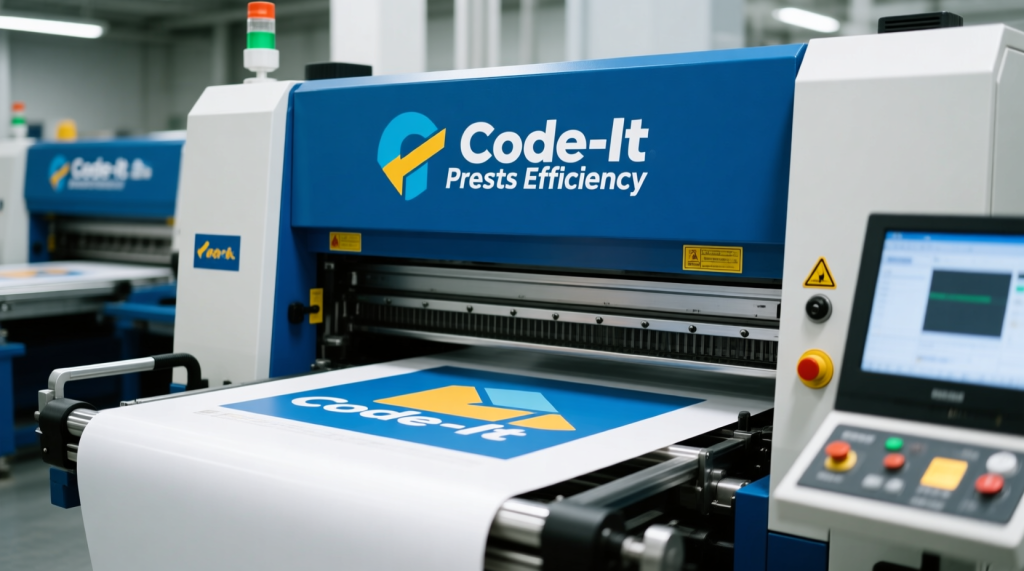
UK-based independent label converter Code-It Labels has added a 20in Mark Andy Performance Series P7 to move beyond narrow web flexographic printing and into short-run flexible packaging and wider-web label production. The change isn’t just about “more capacity”—it’s about being able to run film structures, larger formats, and multi-layer constructions reliably, without the downtime and waste that used to make this work uneconomical on a label press.
The P7 installation also supports A4 booklet labels two-up (printing two A4 booklet lanes across the web). This matters for productivity because it doubles booklet output per press revolution—useful for regulatory booklets, instructions for use (IFUs), clinical trial labels, and other information-heavy formats where content is fixed but volumes are time-sensitive.
Section TL;DR: The 20in P7 expands Code-It from labels into wider-web, short-run flexible packaging and doubles throughput for A4 booklet label production via two-up layout.
Code-It Labels: Where the Demand Is Coming From
Founded in 2000 (label manufacturing since 2002), Code-It serves food and drink, industrial products, health/pharma-adjacent work, and retail—markets where SKU (stock keeping unit) counts keep rising and artwork changes are frequent. In practice, customers are asking for more versions (multilingual exports, retailer-specific promotions, seasonal graphics) but not always more volume per version.
That demand profile is what pushed Code-It toward a wider-web press that can cover both label converting and flexible packaging formats—without sacrificing the responsiveness that label buyers expect.
Section TL;DR: More SKUs, more artwork versions, and shorter planning cycles are driving demand for flexible, short-run production rather than just high volume.
Why a 20in P7 (and Why Now): Real-World Lessons Moving into Flexible Packaging

Moving from labels into flexible packaging is rarely a “drop-in” upgrade. Unsupported films (thin films without a paper backing) behave differently under tension, and the consequences of instability show up immediately as register drift, wrinkles, or inconsistent lamination.
During commissioning, Code-It focused on three practical issues that typically challenge label converters entering flexible packaging:
- Web handling and tension control: unsupported films like BOPP (biaxially oriented polypropylene) or PE (polyethylene) can stretch or neck down under incorrect tension. Stable tension zones and repeatable settings are essential.
- Register tolerance on film: film movement and temperature can cause minor dimensional changes; tighter register control reduces start-up waste and helps maintain consistent barcodes and small text.
- Job planning across web widths: scheduling isn’t only about “what press is free.” It’s about matching repeat length, number of lanes, and substrate cost per square metre to the correct web width to minimise trim waste.
Code-It’s approach has been to use narrower web presses for standard self-adhesive labels and allocate the P7 to jobs where the 20in width improves yield (more lanes across, larger formats, booklet work, or flexible packaging where inline lamination and cooling are required).
Section TL;DR: The move into flexible packaging required solving film handling, register stability, and smarter scheduling by web width—areas the P7 is built to support.
Key Benefits at a Glance (What Changes on the Shop Floor)
- Faster makeready (setup) on repeat jobs: job presets and automation reduce operator adjustments between runs.
- Lower setup waste: auto-register reduces the amount of film/stock consumed while chasing colour-to-colour alignment.
- Broader substrate range: from paper label stocks to PET (polyethylene terephthalate), BOPP, and PE films, including laminate constructions.
- More product types: booklet label production, peel & reveal labels, and multi-layer label converting plus short-run flexible packaging formats.
- Higher throughput where width matters: more labels/lanes across the web improves cost per label and press utilisation.
Section TL;DR: The P7 brings measurable operational gains (faster setups, less waste) and opens new product categories while improving output through wider-web imposition.
Press Configuration Explained (In Plain Industrial Terms)
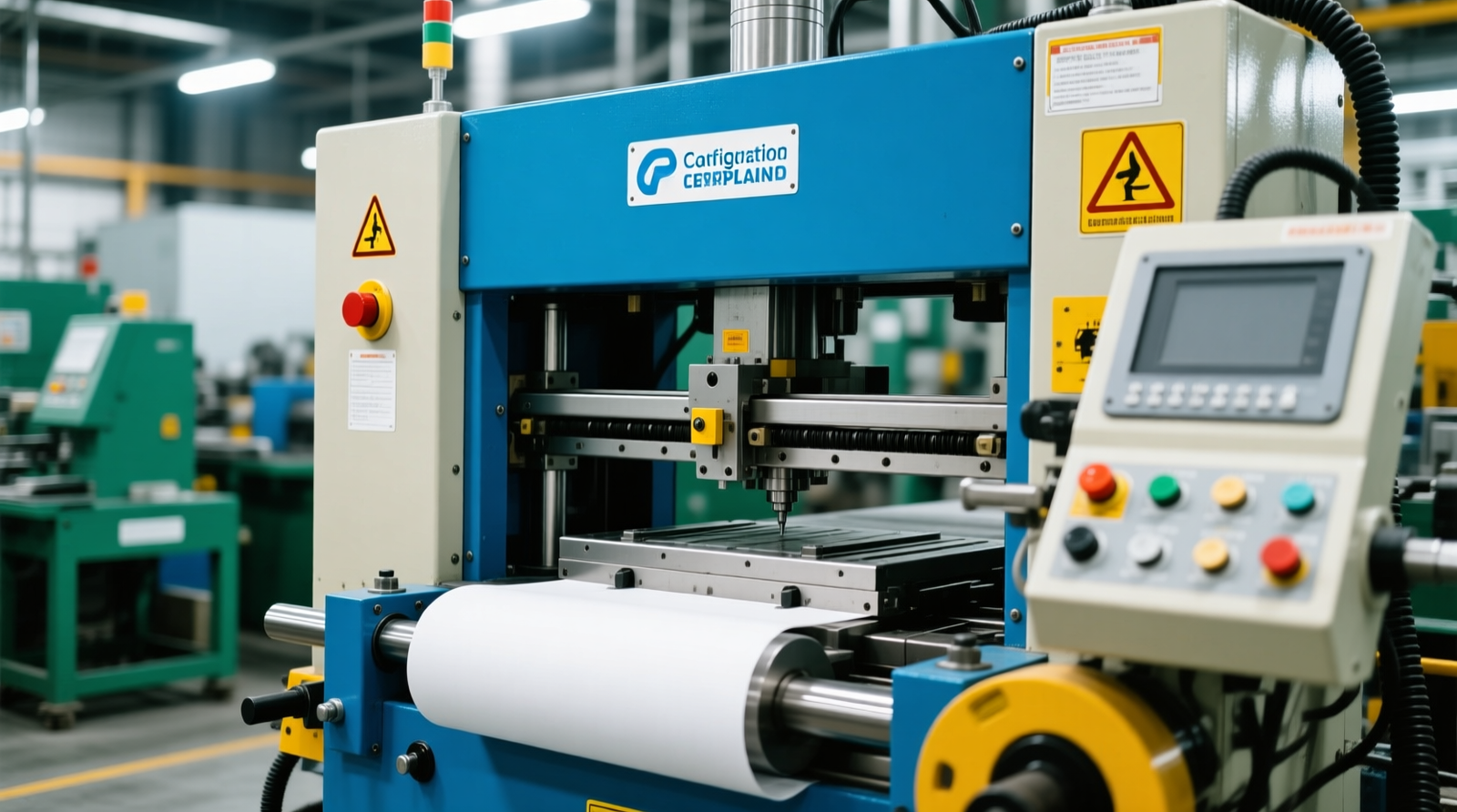
The Mark Andy Performance Series P7 installed at Code-It is an eight-colour UV flexo press. UV means ultraviolet curing: inks are cured instantly using UV energy rather than drying by evaporation, supporting high line speeds and strong rub resistance. “Fully servo-driven” means each station is controlled by servo motors for accurate, repeatable movement and registration.
- Auto-register: automated registration control to align colours faster and maintain alignment during the run, reducing start-up waste.
- Delam/relam: delamination/relamination module—separates the face stock from the liner so the adhesive side can be printed or to enable specific constructions/finishing steps, then re-laminates inline.
- Turn bars: web turning components that allow front-and-back printing or complex layouts (useful for multi-panel labels and certain booklet formats).
- Inline laminating: supports adhesive lamination to create film/film or paper/film structures (for example PET/PE using an adhesive tie layer), enabling barrier-oriented flexible packaging formats and durable label constructions.
- Dual rewind: improves finishing workflow by allowing different rewind options, aiding slitting/handling and reducing changeover disruptions downstream.
- Chill Pack: an engineered cooling module (typically chilled impression/chill rollers) that removes heat from UV curing and stabilises heat-sensitive films to reduce distortion and register drift on unsupported films.
For reference on flexographic printing fundamentals and common press configurations, see the Flexographic Technical Association (FTA): https://www.flexography.org/.
Section TL;DR: The P7’s servo control, auto-register, inline lamination, and Chill Pack are specifically aimed at stable printing and converting on films and multi-layer structures—not just standard paper labels.
Substrates and Structures Now in Scope (Films, Laminates, and Thickness Reality)
With the wider web and cooling/handling configuration, Code-It can now target jobs on common packaging films such as PET, BOPP, and PE, alongside paper label materials and paper/film laminates. In flexible packaging and filmic label work, typical gauge ranges depend on end use, but many converters operate in the broad range of roughly 20–80 microns for films (and thicker when laminated), where tension stability and heat management become decisive.
Examples of structures and where they fit:
- PET/PE adhesive-laminated structures: used where toughness and sealability are needed, often for sachets or sample packs.
- BOPP-based constructions: common for wrap-around labels and lidding-style applications where clarity and stiffness matter.
- PE films: used for squeezable packs and certain sleeve-type applications where flexibility is required.
- Paper/film laminates: useful where a premium paper feel is needed with added durability or moisture resistance.
For polymer film background and common packaging uses, the British Plastics Federation provides accessible reference material: https://www.bpf.co.uk/.
Section TL;DR: The P7 expands Code-It’s workable material set from traditional label stocks into mainstream packaging films and laminated structures where tension and heat control are critical.
Unsupported Film Printing: What Changes (Tension, Temperature, and Register)
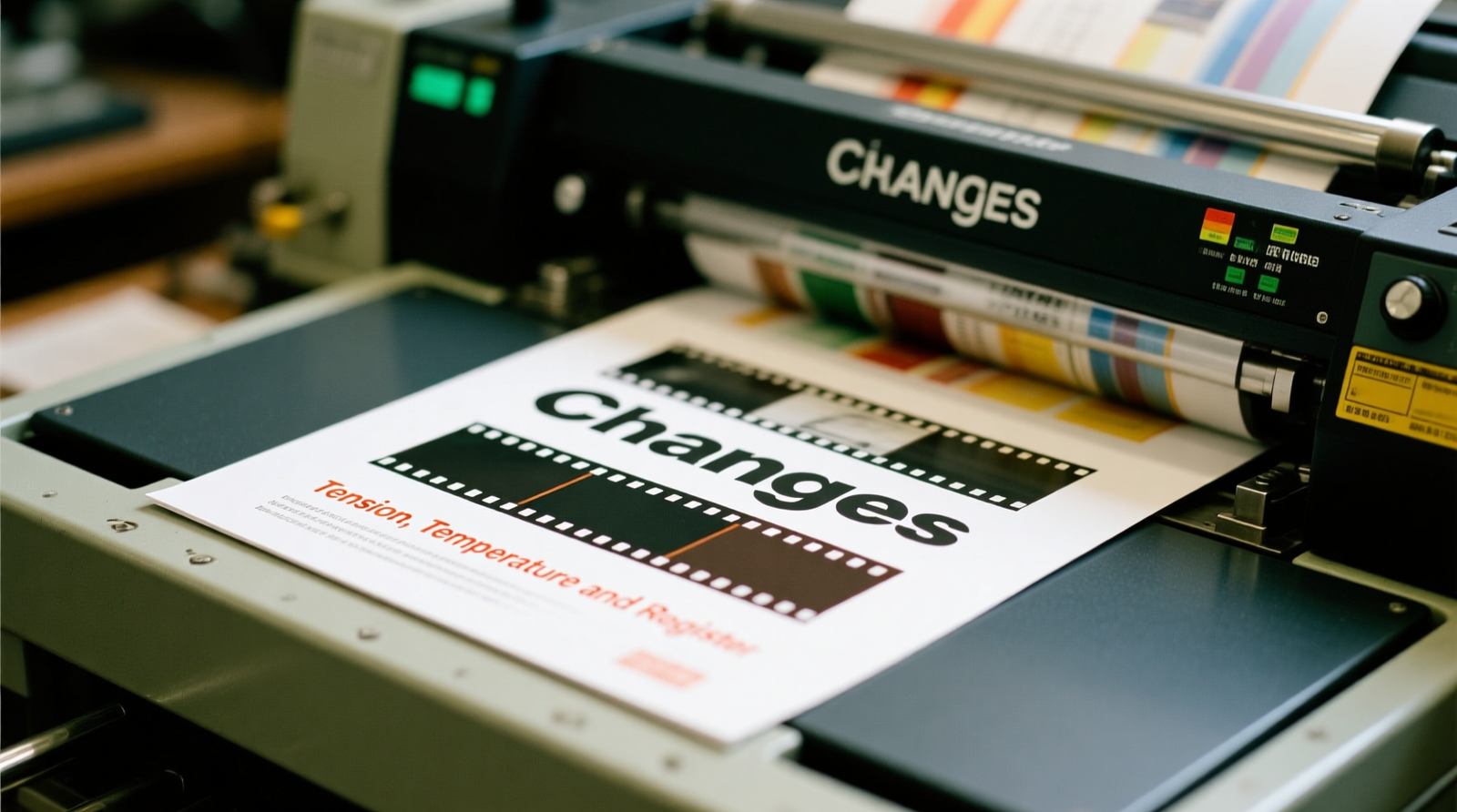
Unsupported film means the film is not carried by a release liner (unlike many pressure-sensitive label materials). That makes it lighter, more elastic, and more sensitive to heat. To print consistently, three control areas matter:
- Tension control: stable tension zones reduce web stretch and “baggy edges,” helping maintain print-to-die alignment and reducing wrinkles.
- Register stability: tighter registration improves legibility of small text, barcodes, and multi-colour graphics. On flexible packaging, even small drift can show up as colour-to-colour halos or misaligned panels.
- Thermal management: UV curing introduces heat; the Chill Pack counteracts this by cooling the web path to help keep film dimensions consistent. In practical terms, that means fewer stops to “chase” register after curing heat builds up.
These are also the areas where commissioning tends to uncover “hidden” process variables—like how different film suppliers respond to tension, or how job sequencing (running heat-sensitive films back-to-back) affects stability.
Section TL;DR: Printing unsupported films is mainly a control problem—tension, register, and heat. The P7 configuration is aimed at stabilising all three to reduce scrap and downtime.
Operational Impact: Makeready Time, Waste, and Typical Run Economics
Code-It’s managing director Phil Barker points to setup speed as the practical reason modern narrow web flexographic printing can cover more short-run work than it could a decade ago. On the P7, auto-register reduces the number of manual corrections during start-up and after stops, which in turn reduces wasted substrate—particularly important on films and laminates where material cost per roll is higher than many paper label stocks.
In day-to-day production, this typically shows up as:
- Fewer metres scrapped during start-up on multi-colour jobs because colour-to-colour alignment is achieved faster.
- More repeatable changeovers due to consistent press settings and operator workflow.
- Better utilisation on mixed job queues (labels, booklets, peel & reveal, and film work) because the press can be returned to known conditions more quickly.
Section TL;DR: The operational win is not a vague “efficiency”—it’s less start-up waste and quicker, more repeatable setups, which makes short and mid runs more viable on flexo.
Flexo vs Digital for Short-Run Labels and Flexible Packaging (How Code-It Decides)
For many converters, the decision isn’t “flexo or digital” in general—it’s which technology best matches run length, substrate, finishing complexity, and required durability.
- Flexo advantages (especially UV flexo for unsupported films): strong solids, robust ink performance, and efficient production when there are multiple versions but still meaningful quantities per version. Flexo also integrates inline converting (lamination, delam/relam, turn bars, rewinds) in one pass.
- Digital advantages: very short runs, rapid versioning, and minimal setup, especially when finishing is straightforward or handled inline with digital-specific equipment.
Code-It’s practical split is to use flexo for the majority of work where makeready can be controlled and where inline converting adds value, while keeping digital for the shortest runs and high-variation jobs where plate costs and setup time would dominate.
For an overview of flexography’s typical applications and strengths, see Wikipedia’s flexography entry as a general reference (non-vendor): https://en.wikipedia.org/wiki/Flexography.
Section TL;DR: Digital stays best for ultra-short runs and heavy versioning; UV flexo becomes cost-effective once setup waste and changeovers are controlled—especially when inline lamination and complex constructions are required.
Application Examples: What Code-It Can Now Produce More Competitively
The wider web and film-ready configuration allow Code-It to target specific packaging and label formats that align with its existing customer base:
- Sachets and sample packs: short-run flexible packaging for promotions, trial sizes, and seasonal campaigns where design changes are frequent.
- Lidding films and wrap-around formats: where film stability and consistent register are necessary for clean graphics and reliable sealing/fit.
- Unsupported film sleeves and filmic labels: when customers need durability and moisture resistance for chilled, wet, or high-handling environments.
- Pharmaceutical and chemical peel & reveal: multi-layer label converting for space-limited primary packaging, including multilingual text and safety information.
- Booklet labels (A4 two-up): regulatory booklets, IFUs, and clinical trial labels—two-up increases output and reduces cost per unit on information-heavy jobs.
Section TL;DR: The P7 broadens Code-It’s offering from standard labels into short-run flexible packaging and complex formats like sachets, lidding films, sleeves, peel & reveal, and high-volume booklet work.
Peel & Reveal and Multi-Layer Label Converting: Compliance-Driven Formats
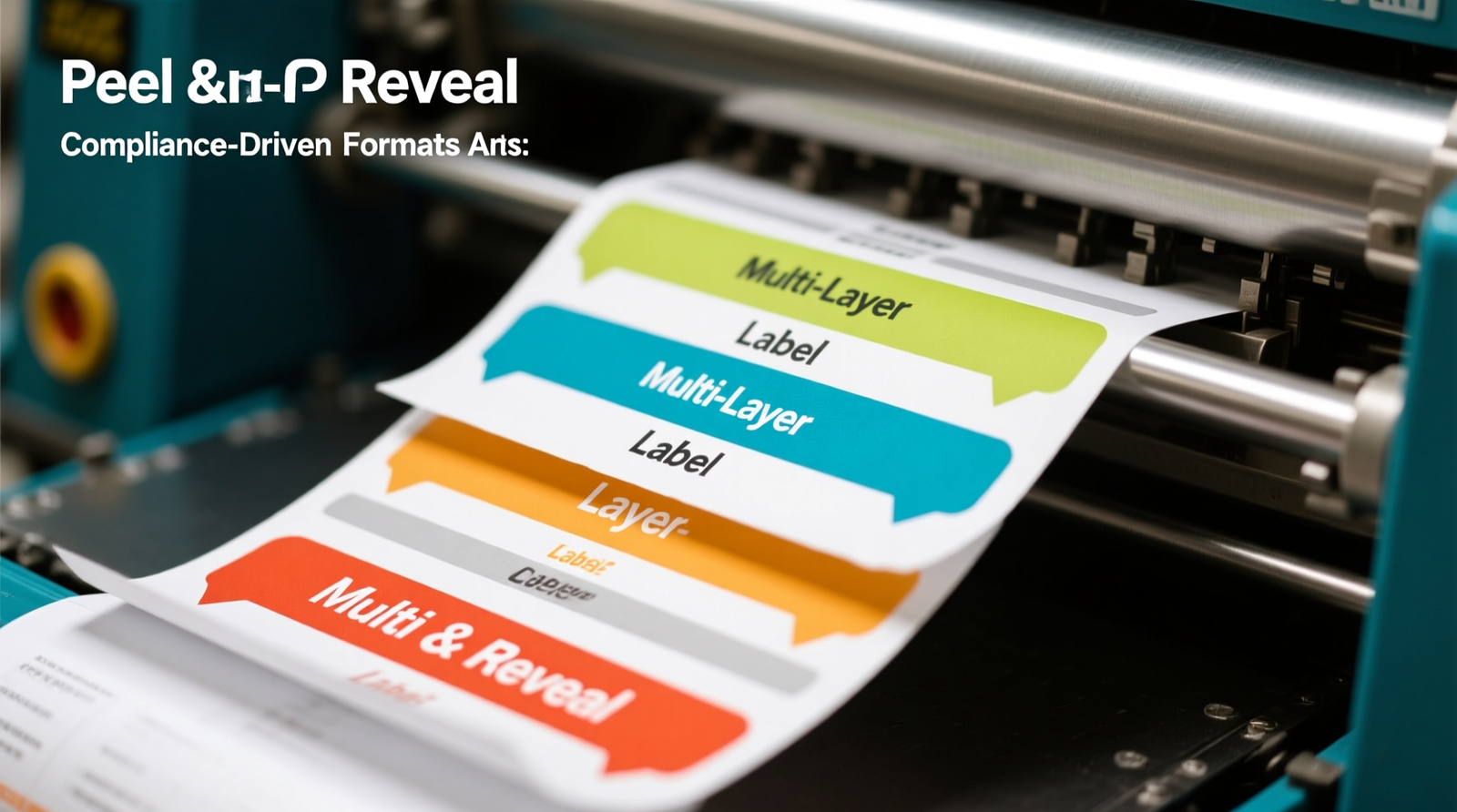
Peel & reveal labels (also called multi-layer or extended-content labels) are often specified when pack size is fixed but information requirements increase. Common drivers include multilingual exports, promotional campaigns, and regulatory needs in pharma and chemicals.
On the P7, delam/relam and laminating functions support controlled construction of these labels, helping maintain consistent alignment between layers. For chemical labelling, layouts can be designed to carry GHS/CLP (Globally Harmonized System / EU Classification, Labelling and Packaging) elements without compromising branding or legibility—particularly useful for small containers.
For background on the GHS system, see the UNECE (United Nations Economic Commission for Europe): https://unece.org/transport/dangerous-goods/ghs-rev9-2021.
Section TL;DR: Multi-layer and peel & reveal labels solve space constraints for regulated and multilingual products, and the P7’s inline delam/relam and lamination help produce these consistently.
Optimising Press Selection by Web Width in a Label Plant
Running multiple web widths is only valuable if scheduling rules are clear. Code-It uses narrower webs for standard label formats where the substrate yield is already strong, and moves jobs to 20in when width increases productivity or reduces waste. Typical triggers include:
- More lanes across: higher labels-per-revolution on popular sizes.
- Booklet and peel & reveal formats: where the construction benefits from extra width and inline modules.
- Flexible packaging layouts: where the wider web improves imposition efficiency and reduces trim waste on films.
The benefit of keeping presses in the same family is also practical: shared operating concepts, consistent control logic, and repeatable job setup practices reduce training time and make it easier to move operators between machines during peak periods.
Section TL;DR: Code-It schedules by yield and construction complexity: narrow web for standard labels, 20in for lane-heavy work, booklets, complex multi-layer labels, and short-run flexible packaging.
Lead Times, Minimum Order Quantities, and Design Change Responsiveness
For customers, the most noticeable changes are often commercial rather than mechanical. The P7 helps Code-It be more flexible on:
- Lead times: faster, more repeatable setups improve daily scheduling and reduce bottlenecks on complex jobs.
- Minimum order quantities (MOQs): reduced setup waste and quicker changeovers make smaller batches more practical—useful for start-ups, limited editions, and promotional SKUs.
- Design updates: when customers need rapid artwork changes (regulatory updates, language changes, retailer promos), quicker makeready and stable register reduce the “penalty” of stopping and restarting.
Section TL;DR: The P7 supports shorter lead times, more realistic MOQs for short runs, and faster response to frequent artwork changes.
Quality, Regulatory, and Traceability Considerations (Food, Pharma, Chemical)
In regulated or brand-sensitive applications, print quality is only part of the acceptance criteria. Converters also need documented process control and material choices suited to end use (for example, low-migration ink systems for food-contact packaging, where specified).
When flexible packaging is intended for food-contact applications, ink and adhesive selection must align with relevant guidance and risk assessment for migration. For an industry reference point on printing inks for food packaging, see EuPIA (European Printing Ink Association): https://www.eupia.org/food-contact/.
For chemical labels, consistency and legibility are critical for hazard communication; layouts may also need to be serialisation-ready depending on the customer’s downstream requirements (e.g., for traceability workflows).
Section TL;DR: Beyond print, regulated markets require controlled materials and process discipline; the P7’s stable register and inline capabilities support consistent, compliance-driven label formats.
Sustainability: Waste Reduction, Energy, and Material Efficiency
In label and flexible packaging production, the most immediate sustainability gains usually come from reducing waste—especially during setup. Auto-register and repeatable settings reduce the number of metres consumed before saleable product starts. Wider-web optimisation can also reduce trim waste by improving imposition efficiency.
UV curing is valued for instant cure and productivity, but sustainability performance depends on lamp type, job mix, and operating discipline. Many converters evaluate LED-UV options (where compatible) for potential energy and maintenance benefits; in all cases, the measurable KPI that customers notice first is typically less scrap per job and fewer reruns due to registration errors.
Section TL;DR: The main sustainability impact is less setup scrap and better material yield; UV curing supports fast production, with energy performance depending on curing technology and job mix.
Conclusion
Adding the 20in Mark Andy Performance Series P7 shifts Code-It from primarily label-focused narrow web flexographic printing into a broader mix that includes short-run flexible packaging, multi-layer constructions, and higher-output booklet label production. The practical differentiators are stable film handling (via Chill Pack and tension control), faster registration, and inline modules that keep complex jobs in one pass.
Phil Barker sums up the operational value in straightforward terms: once makeready time and setup waste are controlled, flexo can profitably cover far more “short-run” work than most buyers expect—especially when the job requires inline lamination, delam/relam, or wide-web imposition efficiencies.
Section TL;DR: The P7 isn’t just a new press—it changes what Code-It can manufacture competitively: film-based packaging, complex multi-layer labels, and higher-throughput booklet formats with lower setup waste.
FAQ

Q: What kinds of short-run flexible packaging can a 20in UV flexo press realistically handle?
A: Typical fits include sachets/sample packs, lidding-style films, wrap-around formats, and filmic label applications where inline lamination or tight registration is required. The key is stable tension and thermal management on unsupported films (for example BOPP or PE), supported by cooling and consistent register control.
Q: How does UV flexo for unsupported films reduce waste compared with older flexo setups?
A: Modern auto-register reduces the time and material spent aligning multiple colours, and improved web handling reduces film distortion and rework. The result is fewer scrapped metres at start-up and fewer stops caused by register drift—two of the biggest waste sources on unsupported film jobs.
Q: Flexo vs digital: which is cheaper for short-run labels and flexible packaging?
A: Digital often wins on extremely short runs with frequent version changes because setup is minimal. UV flexo typically becomes more cost-effective when quantities rise enough that plate cost is amortised and when inline converting (lamination, delam/relam, multi-layer label converting) eliminates secondary operations. The break-even point depends on artwork versions, substrate cost, and finishing complexity.
Q: Are booklet labels (A4 two-up) only for pharmaceuticals?
A: No. Pharmaceuticals are a common use due to dense regulatory text, but A4 booklet labels are also used for chemicals (multi-language safety content), industrial products (instructions), and clinical trial labels/IFUs. Printing two-up increases throughput and typically lowers cost per booklet by improving web utilisation.
Q: What are realistic minimum runs and lead times for short-run flexible packaging from a label converter?
A: Minimums and lead times depend on substrate availability, finishing steps, and the number of artwork versions. Press automation and reduced setup waste make smaller batches more practical than traditional flexo, which helps start-ups, promotional campaigns, and multilingual export SKUs that need frequent design changes.