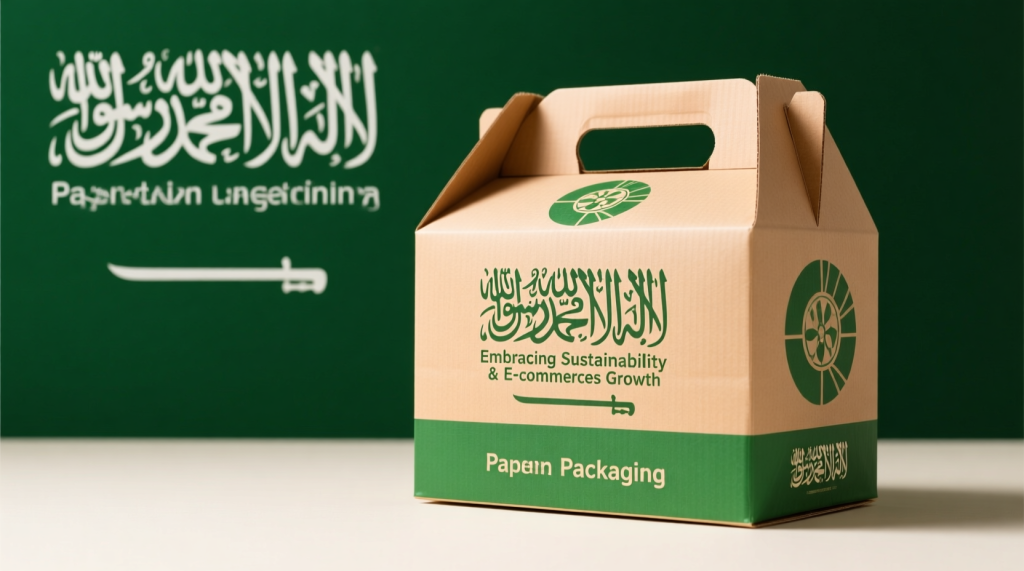
Market size and outlook for the Saudi Arabia paper packaging market (base year and methodology)

According to IMARC Group, the Saudi Arabia paper packaging market is estimated at approximately USD 3.3 billion in 2025 and is forecast to reach around USD 4.8 billion by 2034, implying a compound annual growth rate (CAGR) of about 4.14% over 2026–2034. In other words, the 2025 figure should be read as a forecast-year estimate (not a finalized historical total), with growth projected from the 2026 base period.
IMARC’s market sizing typically uses a combination of secondary research (public data, company reporting, trade statistics) and primary interviews (industry participants) to produce forecast estimates; readers should treat the figures and trajectories as forward-looking rather than audited results.
Three measurable forces are supporting the outlook:
- Digitalization of converting operations (automation, sensors, AI-driven inspection and planning)
- Industrial localization and logistics investment under Vision 2030 and the National Industrial Development and Logistics Program (NIDLP)
- Demand expansion tied to e-commerce shipping, foodservice delivery, healthcare compliance, and higher recycled-content expectations
TL;DR: IMARC estimates the Saudi Arabia paper packaging market at ~USD 3.3B in 2025 (forecast estimate) and projects ~USD 4.8B by 2034, driven by automation/digitalization, Vision 2030 localization, and demand from e-commerce and regulated end uses.
How AI is reshaping the Saudi Arabia paper packaging market
Artificial intelligence (AI) and machine learning (ML) are being applied across design, converting, inspection, and planning in the Saudi Arabia paper packaging market—especially by Saudi corrugated packaging manufacturers supplying e-commerce shippers, FMCG (fast-moving consumer goods), and pharma accounts. Most deployments fall under Industry 4.0 (connected, data-driven manufacturing using sensors, analytics, and automation).
In practical terms, upgrades often look like: adding in-line cameras and defect detection on high-speed flexo-folder-gluer lines in Riyadh’s industrial zones, or integrating job scheduling software that balances corrugator changeovers with short-run e-commerce SKUs.
TL;DR: AI/ML adoption in KSA is moving from pilot projects to operational tools—particularly in inspection, planning, and line optimization for high-mix, high-volume packaging demand.
Saudi Arabia paper packaging market: smart quality inspection systems
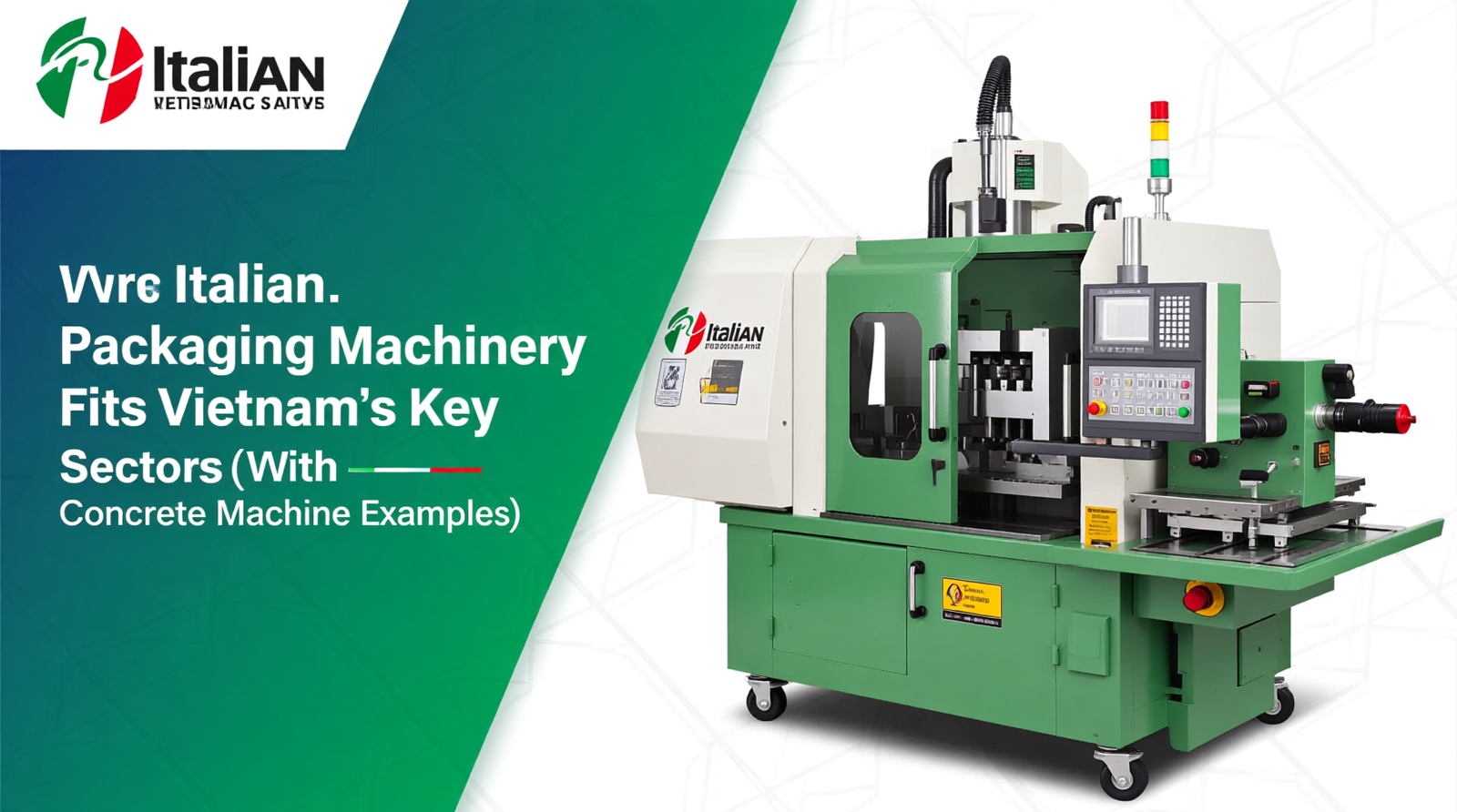
AI-based computer vision (software that “sees” using cameras and algorithms) is increasingly installed on corrugated box and folding carton lines to spot defects such as print misregistration, barcode readability issues, crushed flute, glue misses, or die-cut accuracy problems at production speed.
- Real-time detection of tears, misalignment, print defects, and contamination
- Automated rejection and defect categorization for root-cause analysis
- Improved traceability for regulated customers (food and pharmaceuticals)
The often-cited performance uplift—waste reduction of ~15–25%—should be understood as an industry benchmark range reported across global converting case studies, not a Saudi-specific audited result. Actual outcomes depend on baseline scrap rates, operator practices, and board grade consistency.
TL;DR: AI vision systems reduce defects and rework; the 15–25% waste reduction is a global benchmark range, with site-specific results varying.
Saudi Arabia paper packaging market: demand forecasting and inventory optimization
ML forecasting models help packaging producers align reel purchases, conversion capacity, and finished-goods inventory with demand signals such as Ramadan/Eid peaks, promotional campaigns, and retail launches. This matters for paper bag suppliers in Saudi Arabia as well as carton and corrugated converters because working capital can be heavily tied up in paper reels and boards.
- Forecasting of order volumes by customer, SKU, and region
- Optimization of safety stocks for paper reels, inks, and dies
- More stable production plans with fewer urgent changeovers
Claims of ~20–30% inventory cost reduction are best treated as global benchmark ranges (cross-industry planning improvements) rather than guaranteed savings in KSA. Benefits are usually highest where baseline forecasting is manual and SKU volatility is high.
TL;DR: ML forecasting can cut excess stock and improve service levels; the 20–30% reduction is a benchmark range, not a Saudi-only measured outcome.
Saudi Arabia paper packaging market: automated design and customization
AI-assisted structural design tools generate dielines and packaging specifications based on product geometry, stacking strength, and logistics constraints. This is increasingly relevant for liquid carton packaging in KSA (e.g., dairy), where pack dimensions must match filling lines and secondary cartons, and for e-commerce right-sizing where dimensional weight impacts shipping cost.
Saudi-specific example: a dairy producer may run multiple carton sizes and dozens of SKUs (plain milk, flavored milk, laban, and seasonal variants). AI tools help standardize structures and artwork variants while keeping board usage efficient and minimizing changeover complexity.
TL;DR: AI design speeds up dielines and variants for high-SKU portfolios (notably dairy cartons and e-commerce), reducing prototyping time and material overuse.
Saudi Arabia paper packaging market: production line optimization (OEE, downtime, and trim)
AI-driven analytics can optimize changeovers, trim patterns, and maintenance to improve throughput. Here, overall equipment effectiveness (OEE) is a standard KPI that combines availability, performance, and quality into one measure of how effectively a line runs.
- Predictive maintenance scheduling (reducing unplanned downtime)
- Optimization of die-cut nesting and trim to reduce fiber waste
- Dynamic scheduling to reduce bottlenecks across corrugator and converting steps
Statements like “OEE improvements of up to 18%” should be read as upper-end benchmark improvements seen in global factories adopting advanced analytics—results in Saudi facilities will vary based on data maturity, equipment age, and operator training.
TL;DR: AI analytics can lift OEE and reduce downtime; “up to 18%” is a benchmark ceiling, with real-world results depending on site conditions.
Saudi Arabia paper packaging market: supply chain transparency and sustainability compliance (IoT, FSC, PEFC)

Internet of Things (IoT) sensors and track-and-trace software improve visibility from paper sourcing to finished shipments. This supports certification and customer audits in food, pharma, and export-oriented segments.
- Tracing sourcing to certified mills and responsible forestry
- Shipment and batch tracking for customer complaints and recalls
- Documentation support for certifications such as FSC (Forest Stewardship Council) and PEFC (Programme for the Endorsement of Forest Certification)
For certification background and standards, see FSC and PEFC.
TL;DR: IoT + traceability systems help prove sourcing and compliance; FSC/PEFC references improve audit readiness for export and regulated customers.
Linking AI adoption to Vision 2030 digital transformation
AI investments are not happening in a vacuum. They align with Vision 2030’s emphasis on productivity, localization, and technology-enabled competitiveness—especially in industrial ecosystems that supply food security, healthcare, and logistics. For a high-level reference on Vision 2030 priorities and programs, see the official portal: Saudi Vision 2030.
In the Saudi Arabia paper packaging market, this connection typically shows up as faster approvals for capacity upgrades, stronger demand from localized FMCG production, and more pressure to document sustainability performance across supply chains.
TL;DR: Vision 2030’s productivity and digitalization agenda reinforces the business case for AI-driven inspection, planning, and traceability in packaging operations.
How Vision 2030 and NIDLP are transforming the Saudi paper packaging industry

Vision 2030 and the NIDLP focus on building industrial capacity, improving logistics, and attracting investment—directly shaping the operating environment for the Saudi Arabia paper packaging market. The strategic direction is measurable: more localized converting capacity, more recycling infrastructure, and higher compliance expectations for food-contact materials.
TL;DR: Policy-led industrialization is accelerating local capacity, compliance, and recycling—key tailwinds for paper packaging converters and mills.
NIDLP and localization of paper packaging capacity
Under NIDLP, incentives and infrastructure improvements support domestic manufacturing and logistics performance. For paper packaging, this tends to translate into:
- Import substitution for paper and board grades where feasible
- Expansion of converting capacity near major consumption hubs
- Logistics efficiency improvements that favor standardized, stackable corrugated formats
The Public Investment Fund (PIF) investment in MEPCO is often cited as an example of strategic support for local paper production and recycling capacity (as referenced in company and media announcements).
TL;DR: NIDLP supports localization—reducing reliance on imports and improving logistics economics for corrugated and cartonboard supply chains.
Megaprojects and sector build-out driving packaging demand
Megaprojects (e.g., NEOM, Qiddiya, and Red Sea-related developments) create indirect packaging demand through construction supply chains, hospitality openings, retail build-out, and foodservice growth.
- Industrial corrugated for equipment, fittings, and spare parts
- Retail-ready and transit packaging for new supermarkets and distribution centers
- Premium folding cartons for hospitality, gifting, and tourism experiences
TL;DR: Megaprojects stimulate packaging demand via supply chains—especially corrugated transit packaging and premium cartons tied to hospitality and retail.
Circular economy and recycling targets (Saudi Arabia paper packaging market implications)
Saudi Arabia’s recycling ambitions are a key driver for recovered fiber demand and recycled-grade development. The Saudi Investment Recycling Company (SIRC) publicly communicates an ambition to recycle ~82% of waste by 2035 (target/aspiration). For official context on programs and objectives, refer to SIRC.
Operationally, this supports:
- Investment in collection, sorting, and baling systems for recovered paper
- More availability of recycled liner and medium for corrugated packaging
- Brand-owner procurement shifts toward recycled content specifications
TL;DR: Recycling targets (including SIRC’s 82% by 2035 ambition) support recovered-fiber supply growth and accelerate recycled-grade adoption in corrugated and cartons.
Key trends and demand drivers in the Saudi Arabia paper packaging market
Demand growth is being shaped less by vague “shifts” and more by concrete channel changes: higher parcel volumes, stricter food-contact compliance expectations, and procurement policies that specify recycled or certified fiber.
TL;DR: The market is being pulled by channel economics (parcels), compliance (food/pharma), and procurement specs (recycled/certified fiber).
E-commerce expansion and omnichannel logistics (corrugated growth)
E-commerce is a primary volume driver for corrugated boxes, mailers, and protective inserts. Saudi operators and brands increasingly require “ship-ready” corrugated designs that balance compression strength with right-sizing to reduce dimensional-weight freight penalties.
For a numeric anchor on the channel: Saudi Arabia’s e-commerce market is widely forecast to reach approximately US$20.6 billion in 2025 (revenue estimate), according to Statista’s e-commerce outlook for Saudi Arabia. While this is not a packaging statistic, it helps quantify the underlying demand engine for shipping cartons.
Implications for Saudi corrugated packaging manufacturers:
- Higher demand for standardized shipper sizes plus right-sized variants
- More emphasis on box performance testing (compression, burst, humidity tolerance)
- Growth in branded/unboxing-ready corrugated for D2C (direct-to-consumer) shipments
TL;DR: Corrugated is one of the fastest-growing segments because parcel volumes rise with e-commerce; Statista estimates Saudi e-commerce revenue at ~US$20.6B in 2025.
Food delivery and QSR packaging demand (foodservice paperboard)

Quick-service restaurants (QSR) and delivery kitchens are driving higher consumption of paperboard clamshells, cups, wraps, and grease-resistant cartons. The material change is increasingly technical: brands want barrier performance (oil/grease resistance) while still meeting recycling and food-contact expectations.
Saudi-specific micro-example: many mid-sized restaurant groups now order short digital print runs for campaign packaging (limited-time menu items), enabling localized promotions without holding months of packaging inventory.
TL;DR: QSR/delivery growth supports paperboard formats with grease resistance and short-run customization; digital print reduces MOQ (minimum order quantity) constraints.
Liquid paperboard cartons for dairy and beverages (liquid carton packaging in KSA)
Dairy and juice remain core end uses for liquid paperboard cartons (aseptic and chilled cartons). In KSA, cartons are attractive where brands want shelf efficiency, lower plastic content, and stable logistics performance.
Actionable insight: this segment can outpace average growth when producers expand SKU breadth (e.g., different fat levels, flavors, and pack sizes) and when filling lines are upgraded for higher speed and better seal integrity.
TL;DR: Liquid carton packaging in KSA benefits from dairy/juice SKU expansion and filling-line upgrades; it’s often a faster-growing niche than mature carton categories.
Retail paper bags and municipal plastic restrictions (paper bag suppliers in Saudi Arabia)
Retailers have expanded the use of paper shopping bags in response to single-use plastic controls and brand sustainability commitments. For paper bag suppliers in Saudi Arabia, the commercial requirement is not just “paper instead of plastic,” but consistent handle strength, print quality, and cost control as kraft prices fluctuate.
TL;DR: Paper bag demand is supported by regulation and retailer procurement policies; suppliers compete on strength specs, print quality, and cost stability.
Healthcare, pharmaceuticals, and personal care (SFDA-driven compliance)
Regulated segments favor folding cartons and compliant paper materials with documented traceability. The Saudi Food and Drug Authority (SFDA) plays a central role in expectations around labeling, safety, and quality systems. For background on the regulator, see SFDA.
- Pharma: consistent print quality, serialization readiness, batch traceability
- Medical devices: protective secondary packaging and documentation control
- Personal care: premium board, finishes, and sustainable sourcing claims that withstand audit scrutiny
Where consumers are cited as paying a “premium” for sustainability, this should be treated as a general consumer research pattern that varies by category and brand positioning—not a guaranteed uplift in every Saudi segment.
TL;DR: Pharma/healthcare demand is compliance-led (SFDA expectations), while personal care is driven by premium presentation plus defensible sustainability claims.
Saudi Arabia paper packaging market segmentation (with fastest-growing segments)
The Saudi Arabia paper packaging market can be segmented by product type, grade, packaging level, end-use, and region. From an “action” standpoint, growth is typically strongest in:
- Corrugated boxes (parcel shipping and omnichannel distribution)
- Liquid paperboard cartons (dairy and beverage SKU proliferation)
- Retail paper bags (plastic restrictions and retailer commitments)
TL;DR: Corrugated (e-commerce), liquid cartons (dairy), and paper bags (retail policy) tend to be the most dynamic growth pockets.
By product type
- Corrugated Boxes: Core for shipping, industrial packaging, and e-commerce logistics (often the fastest-growing volume segment).
- Folding Boxes and Cases: Used for food, personal care, pharma, and premium goods.
- Liquid Paperboard Cartons: Key for dairy/juice; growth supported by filling-line capacity and sustainability procurement.
- Paper Bags and Sacks: Retail and foodservice demand; also sacks for select industrial uses.
- Others: Wraps, specialty papers, and niche formats.
TL;DR: Corrugated leads in logistics volume; liquid cartons and paper bags are expanding quickly where channel/regulatory drivers are strongest.
By grade
- Solid Bleached Board (SBB): Premium print and aesthetics for cosmetics, pharma, and high-end food.
- Coated Recycled Board (CRB): Common for cartons balancing cost and sustainability.
- Uncoated Recycled Grades: Typical for corrugated and industrial use where appearance is secondary.
- Others: Specialty grades and barrier structures.
TL;DR: SBB is premium-led, while recycled grades (CRB/uncoated) benefit from circular-economy targets and cost considerations.
By packaging level
- Primary packaging: Direct contact or direct containment of product (e.g., cartons for medicines).
- Secondary packaging: Groups units for display or distribution (e.g., shelf-ready packaging).
- Tertiary packaging: Transport protection (e.g., corrugated shippers and pallet cases).
TL;DR: E-commerce pushes tertiary corrugated; pharma/personal care push primary/secondary cartons with higher compliance requirements.
By end-use industry
- Food: Bakery, confectionery, frozen foods, and staples using cartons, wraps, and bags.
- Beverage: Milk, juices, and functional beverages using liquid cartons and multipacks.
- Personal & home care: Cartons/sleeves for brand presentation and sustainability claims.
- Healthcare: Pharma, nutraceuticals, and devices requiring traceability and print control.
- Others: Industrial, electronics, apparel, general goods.
TL;DR: Beverages (liquid cartons), e-commerce logistics (corrugated), and healthcare (folding cartons) are the most specification-driven demand centers.
By region
- Northern and Central Region: Riyadh and surrounding industrial zones—manufacturing, logistics, distribution.
- Western Region: Jeddah/Makkah/Madinah—retail, tourism, port-driven trade.
- Eastern Region: Dammam and industrial belt—industrial and export-oriented packaging needs.
- Southern Region: Emerging demand supported by infrastructure improvements.
TL;DR: Central and Western regions are major consumption hubs; Eastern demand is more industrial/export-linked.
Competitive landscape and 2025 industry developments
The Saudi Arabia paper packaging market is moderately consolidated, with competition shaped by scale economics, quality systems (especially for food/pharma), and the ability to supply certified or recycled-content grades reliably.
- January 2025 – MEPCO capacity expansion: MEPCO announced an investment in a fifth line, including an added ~450,000 tons annual cardboard capacity (as reported in market and company news).
- March 2025 – Tetra Pak localization initiative: Tetra Pak promoted “Made, consumed and recycled in Saudi Arabia” positioning, reinforcing circular-economy messaging and local supply chain development.
- June 2025 – SFDA updates: Updated expectations for food-contact paper materials strengthened documentation and compliance requirements across suppliers.
TL;DR: 2025 developments reinforce three themes: capacity expansion, localization/circularity programs, and tighter food-contact compliance expectations.
Risks and challenges to plan for
Decision-makers in the Saudi Arabia paper packaging market should also plan for constraints that can affect margins and execution:
- Fiber and recovered paper price volatility: Global pulp and OCC (old corrugated containers) cycles can compress converter margins.
- Import competition: Price pressure can intensify when regional capacity is long or freight rates ease.
- Skills and integration gaps: Automation/AI projects can stall without data discipline, maintenance capability, and trained operators.
- Barrier-material tradeoffs: Some functional coatings improve performance but can complicate recycling if not designed carefully.
TL;DR: The main risks are input-price volatility, import competition, skills gaps in automation, and barrier/coating choices that can affect recyclability.
Conclusion (strategic implications)
IMARC’s forecast trajectory for the Saudi Arabia paper packaging market reflects a steady expansion supported by localization policies, higher parcel volumes, and stronger compliance and sustainability expectations. The most investable “execution” theme is operational capability: plants that pair capacity with quality systems, traceability, and data-driven efficiency are better positioned to win long-term contracts.
- Manufacturers/converters: Prioritize investment in AI-driven quality inspection, predictive maintenance, and data capture that improves OEE and reduces scrap.
- Brand owners: Build procurement specs around defensible claims—e.g., FSC/PEFC chain-of-custody where relevant and fit-for-recycling structures.
- E-commerce and retail: Develop e-commerce-ready SKUs (right-sized corrugated, protective inserts) and reliable supply for paper bags.
- Dairy/beverage: Align liquid carton packaging in KSA with filling-line capability, seal integrity targets, and secondary packaging optimization.
TL;DR: Winning strategies center on AI-enabled quality and productivity, certified/recycled sourcing, and channel-ready packaging (especially corrugated for e-commerce and liquid cartons for dairy).
FAQ
Q: What is the 2025 size of the Saudi Arabia paper packaging market, and is it historical or forecast data?
A: IMARC Group estimates the Saudi Arabia paper packaging market at about USD 3.3 billion in 2025 as a forecast-year estimate, with a projection to ~USD 4.8 billion by 2034. The 2025 figure should be treated as part of a forward-looking outlook rather than a finalized audited historical total.
Q: Which segment is growing fastest in the Saudi Arabia paper packaging market?
A: Corrugated packaging for e-commerce logistics is often among the fastest-growing volume segments because parcel shipping scales with online retail. Liquid paperboard cartons can also outpace average growth when dairy and beverage producers expand SKUs and filling capacity.
Q: How are Saudi corrugated packaging manufacturers using AI in day-to-day operations?
A: The most common uses are AI vision inspection to detect print and structural defects in real time, and analytics for OEE (overall equipment effectiveness) improvement via downtime reduction and better scheduling. Reported waste/OEE gains (e.g., 15–25% waste reduction, up to 18% OEE uplift) are generally global benchmark ranges and vary by plant maturity.
Q: What should paper bag suppliers in Saudi Arabia focus on to win retail contracts?
A: The most decisive factors are consistent bag strength (handle and kraft performance), print quality for brand visibility, and cost stability despite fiber price volatility. Retailers also increasingly request sourcing documentation (e.g., FSC/PEFC where applicable).
Q: What are the key compliance and sustainability requirements affecting paper packaging in KSA?
A: The main requirements are food-contact safety expectations (often linked to SFDA-related compliance practices), traceability for regulated sectors, and rising demand for recycled content aligned with national circular-economy objectives. Certifications like FSC and PEFC can strengthen credibility for export-oriented or audit-heavy customers.