Introduction

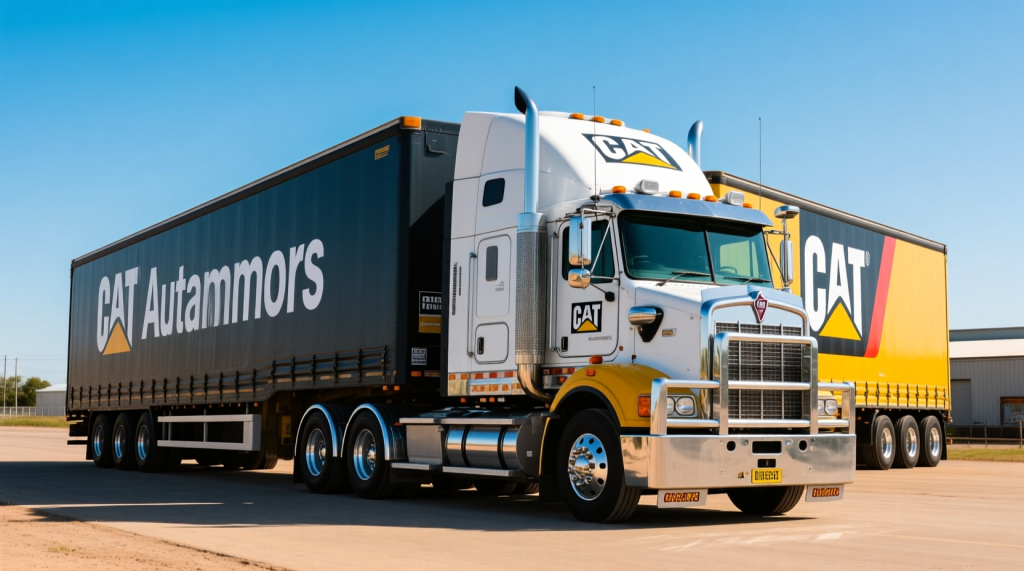
Caterpillar (NYSE: CAT) has renewed its autonomous haulage system (AHS)—a supervised autonomy platform that operates haul trucks without an in-cab driver under control-room oversight—with Fortescue in Australia. The extension builds on a partnership that started in 2012, when Fortescue began one of the earliest commercial-scale deployments of Caterpillar autonomous haulage in iron ore.
The renewal matters beyond a single contract: AHS implementation in iron ore mining has become a core lever for open-pit truck dispatch optimization, workforce risk reduction, and more consistent production in remote regions.
Section TL;DR: Caterpillar and Fortescue are extending a long-running AHS relationship that began in 2012, reflecting how autonomy has moved from pilots to core operating strategy in large open-pit iron ore mines.
Overview of the Renewed Caterpillar–Fortescue Agreement (What’s Public vs. What Isn’t)
Public statements indicate the renewed agreement continues deployment of Cat MineStar™ Command for hauling (Caterpillar’s autonomy application within the MineStar suite) across multiple Fortescue iron ore operations in Western Australia. Fortescue’s Pilbara operations commonly referenced in public materials include the Chichester Hub (often associated with Cloudbreak and Christmas Creek) and the Solomon Hub (Solomon). Where announcements describe “multiple sites,” they typically refer to these hubs; however, the exact contract duration, the exact number of trucks covered, and the precise phased rollout schedule are not always disclosed in headline releases.
What can be stated with high confidence based on how these renewals are structured in the mining industry:
- Scope type: Continued operation plus lifecycle support—software releases, autonomy hardware refreshes, site support, and ongoing fleet optimization—rather than a one-time technology sale.
- Fleet mix: Primarily large-class mechanical-drive haul trucks used in Pilbara iron ore (the specific model mix may vary by site and year). “Autonomous haul truck fleet conversion” programs often cover both new trucks and conversions of existing fleets.
- Phasing: Renewals typically align with multi-year mine plans and include staged upgrades (control room enhancements, network improvements, additional autonomous zones, and integration updates with dispatch and planning tools).
For readers who want to validate the latest confirmed details, use the companies’ official newsrooms and reports: Caterpillar’s mining autonomy information is available on its official MineStar pages (Caterpillar Cat MineStar) and Fortescue publishes operational and sustainability updates through its reporting center (Fortescue reports).
Section TL;DR: The renewal continues MineStar Command across Fortescue’s Pilbara iron ore operations; exact truck counts/duration are not always disclosed publicly, but the contract nature is typically multi-year, phased, and service-heavy (support, upgrades, and optimization).
Fortescue as an Autonomous Haulage Early Mover in the Pilbara
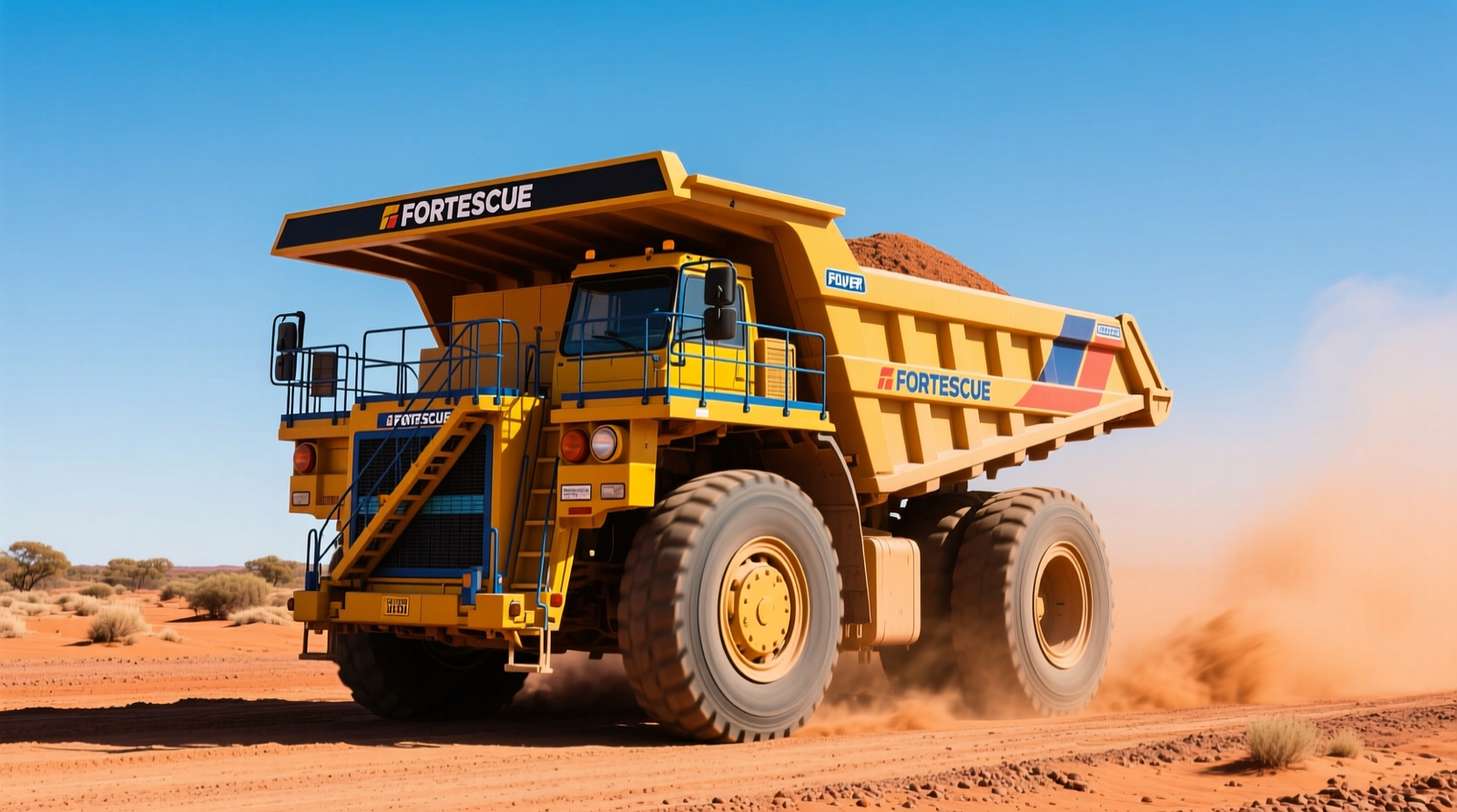
Fortescue’s 2012 move into AHS was significant because it demonstrated that autonomy could be scaled in a high-throughput, open-pit iron ore context—long haul roads, heavy truck utilization, and tight production schedules. In practice, this shift changes both operations and governance:
- From operator-centric to system-centric production: cycle time consistency becomes driven by dispatch logic, geofenced routes, and control-room decisions rather than by individual driving styles.
- From line-of-sight supervision to remote operations: a remote operations center (ROC) model becomes central, with defined procedures for interventions, spot checks, and exception handling.
- From “truck-by-truck” improvements to “system throughput” optimization: the goal becomes whole-of-mine flow (loader queues, dump congestion, speed zoning, and intersection control).
Company statements from Fortescue leadership over the years generally emphasize continuity, safety exposure reduction, and operating discipline—key themes in autonomous production systems. Readers can cross-check performance and safety commentary in Fortescue’s annual and sustainability reports (see Fortescue reports).
Section TL;DR: Fortescue’s early AHS adoption proved autonomy can run at Pilbara scale and shifts the operating model toward control-room-led, system-level optimization.
How Cat MineStar Command Works (Technical Precision and Architecture)
Cat MineStar Command for hauling is a supervised autonomous driving stack integrated with mine operations systems. While popular summaries mention “GPS and sensors,” production-grade AHS typically relies on multiple layers of positioning, perception, communications, and centralized orchestration:
- High-precision GNSS: GNSS (Global Navigation Satellite System) positioning—often augmented (e.g., RTK/PPP-style corrections depending on site design)—supports lane discipline and repeatable paths.
- Geofencing: virtual boundaries that define where autonomous trucks can operate, speed-limit zones, no-go areas, and safe interaction envelopes near loaders, dumps, workshops, and light-vehicle routes.
- Onboard autonomy controllers: truck-level compute that executes trajectory following, speed control, braking, steering, and safe-stop logic, while continuously checking system health.
- Perception and detection sensors: radar and other proximity systems are commonly used in mining autonomy for detection/avoidance and situational awareness; some architectures also incorporate lidar (light detection and ranging) depending on OEM and generation. Exact sensor configurations can be site- and model-specific.
- V2X communications: V2X (vehicle-to-everything) messaging supports coordination between trucks and site infrastructure (e.g., intersection right-of-way, speed zone updates), typically over private wireless networks.
- Central command and dispatch integration: a control-room application assigns missions (load → haul → dump), manages traffic, handles exceptions, and provides the human interface for supervised autonomy.
Mixed fleets (autonomous + manned): Many mines run mixed operations during conversion phases. In these environments, safety is maintained through segregated operating areas where possible, strict right-of-way rules, geofenced light-vehicle corridors, controlled intersections, speed zoning, and procedural controls for interactions at loaders and dumps. Mines also implement clear protocols for “human-in-the-loop” interventions when abnormal conditions occur (e.g., obstacles, comms dropouts, weather/visibility constraints, or road degradation).
High-level architecture (simplified):
- Truck layer: onboard autonomy controller + positioning + vehicle control interfaces + detection systems.
- Network layer: site wireless, backhaul, redundancy/coverage planning, and cybersecurity controls.
- Control layer: command center software, mission management, traffic control, analytics, and incident playback.
- Integration layer: fleet management systems (FMS), mine planning, grade control, maintenance systems, and reporting.
More system-level background is available through Caterpillar’s official MineStar resources (Caterpillar Cat MineStar).
Section TL;DR: MineStar Command is supervised autonomy built on high-precision GNSS, geofencing, onboard controllers, detection sensors, V2X communications, and a control-room orchestration layer integrated with dispatch and planning systems.
What the “Up to 15% Productivity Gain” Typically Means (With Source-Based Context)
Caterpillar has publicly stated that autonomous haulage can deliver productivity improvements (often cited as “up to 15%”) in suitable conditions. That “up to” figure is best interpreted as a top-end outcome observed in certain deployments—not a guaranteed average—because results depend on haul profiles, road design, queueing at loaders/dumps, network reliability, and how aggressively the mine optimizes dispatch rules.
Concrete, operationally realistic before/after examples (illustrative ranges grounded in published AHS behaviors):
- Cycle time consistency: After autonomy, mines often see reduced variability in speed profiles and fewer micro-stops from operator behavior changes at shift change. The practical effect is tighter distribution of cycle times, which improves dispatch predictability and loader utilization.
- Unplanned stoppage reduction (downtime avoidance): Consistent operating practices (speed zoning compliance, smoother braking/acceleration) can reduce certain incident types and wear-driven stoppages. The magnitude varies; the mechanism is better discipline rather than “faster driving.”
- Safety exposure reduction: Removing operators from the cab reduces exposure hours in high-energy areas (haul roads, dumps, and intersections). This does not eliminate risk, but it changes the risk profile and typically increases the focus on traffic management and interaction controls.
For readers who want to verify Caterpillar’s stated performance claims and learn how they’re framed, consult Caterpillar’s autonomy/MineStar materials and public communications (Caterpillar MineStar). For Fortescue-specific performance commentary, the most defensible public references are Fortescue’s annual and sustainability reporting (Fortescue reports), where operating metrics and safety narratives are documented in a governed reporting format.
Section TL;DR: “Up to 15%” is a best-case claim that depends on site conditions; the most repeatable gains come from tighter cycle time consistency, improved dispatch predictability, and reduced human exposure—not simply higher speed.
Competitive Landscape: How MineStar Command Compares to Other AHS Options
Autonomous haulage is an OEM-led market with a few mature solutions. Mine operators evaluating a mine automation strategy typically compare Caterpillar’s MineStar Command with alternatives such as:
- Komatsu FrontRunner AHS: a widely deployed autonomy system with strong presence in large open-pit operations, particularly where Komatsu truck fleets dominate.
- Hitachi + Wenco (dispatch/FMS integration): Wenco (a Hitachi group company) is well known for fleet management and dispatch; autonomy strategies may emphasize tight integration between dispatch optimization and equipment control across mixed fleets depending on site choices.
Practical differentiators buyers tend to weigh (instead of marketing claims):
- Fleet fit and conversion path: how readily an existing truck fleet can be converted, and what the downtime looks like per unit during conversion.
- Interoperability: how autonomy integrates with existing fleet management systems, mine planning tools, and third-party monitoring platforms.
- Support model and lifecycle services: autonomy is not “set-and-forget”; buyers value software upgrade cadence, on-site support, and the availability of trained technicians.
- Safety case maturity: proven procedures for mixed operations, intersection management, and abnormal-condition handling.
This is why long-running renewals matter: they can indicate that the chosen AHS has met enough operational and support expectations to remain the platform of record.
Section TL;DR: MineStar Command competes mainly with Komatsu FrontRunner and Hitachi/Wenco-centered ecosystems; real-world selection often hinges on conversion feasibility, interoperability, support capability, and safety case maturity.
Market Growth and Why the $4.3B Projection Is Time-Sensitive

Multiple market researchers forecast strong growth for autonomous mining equipment through 2030 as mines push for scale, consistency, and labor risk reduction. The article’s earlier reference to an approximately $4.3 billion market projection by 2030 should be treated as time-sensitive: market-sizing varies by definitions (equipment only vs. equipment + software + services) and is frequently updated as adoption rates and commodity cycles change.
To ground market context, readers can review current research outlets such as GlobalData’s mining coverage (GlobalData Mining reports) and cross-check assumptions against OEM statements and miner capex/disclosure trends in annual reports.
Section TL;DR: Autonomous mining market forecasts (including the ~$4.3B by 2030 figure) depend on definitions and are updated over time; treat them as directional and verify with the latest research and company reports.
Safety Standards and Regulatory Context for Autonomous Mining in Australia
In Western Australia, autonomous haulage deployments operate within established work health and safety (WHS) expectations for mines. While the exact compliance approach is site-specific, operators typically align autonomous operations with regulator guidance on risk management, traffic interaction, and safe systems of work.
For a credible regulatory starting point, refer to WorkSafe Western Australia guidance and resources (WorkSafe WA). Mines also commonly implement internal functional safety processes, management of change (MoC), and verification/validation practices for autonomy zones, communications coverage, and interactions with light vehicles and ancillary equipment.
Section TL;DR: AHS in the Pilbara operates under WA’s WHS expectations; strong risk management, traffic controls, and management-of-change processes are central to operating autonomous and mixed fleets safely.
Implementation Considerations for Autonomous Haulage Systems (Practical Guidance)
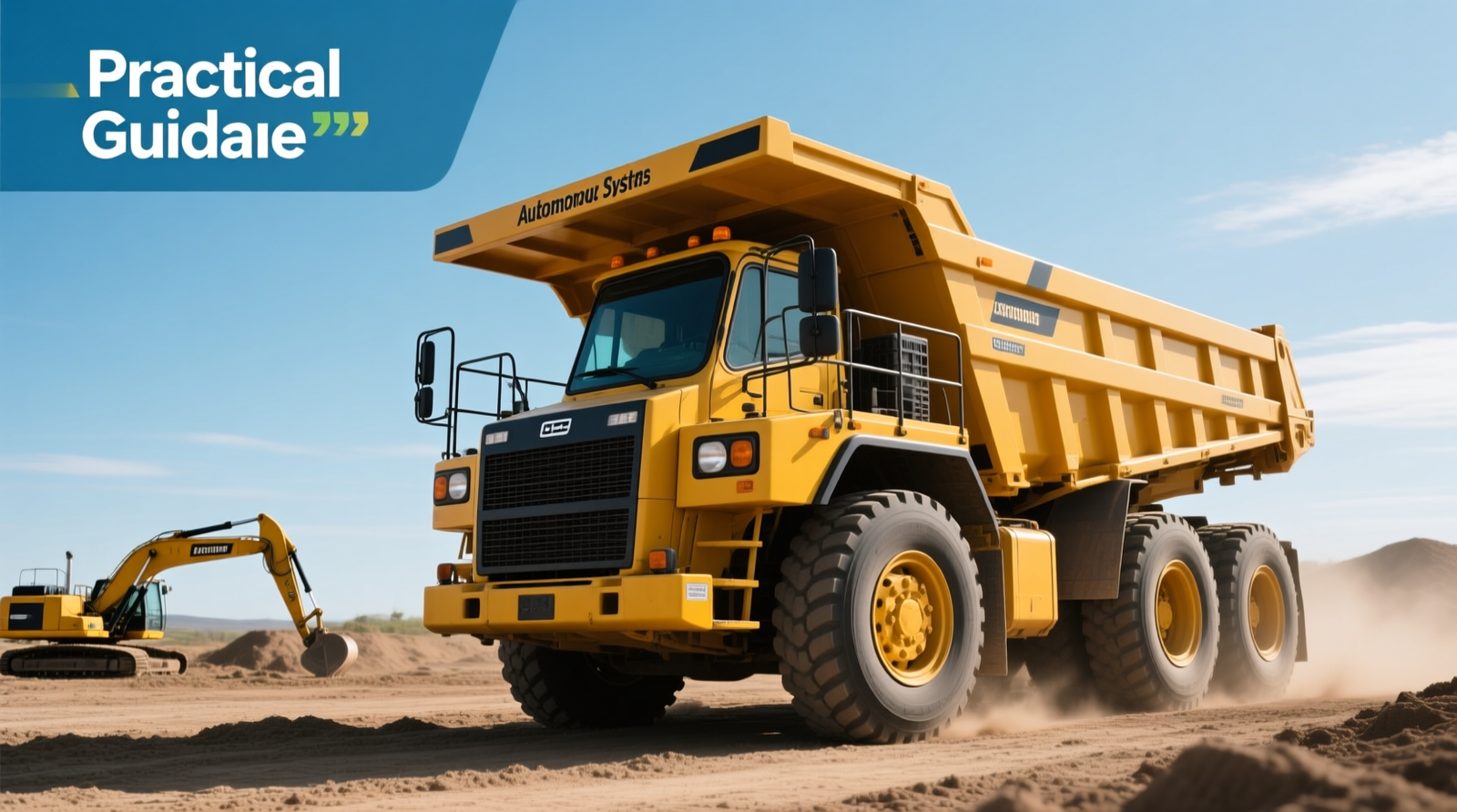
For mine operators planning AHS implementation in iron ore mining, the critical path is usually less about the “truck technology” and more about site readiness, operating model redesign, and disciplined change management.
Site readiness requirements
- Haul road standardization: consistent berms, signage, intersection geometry, and maintained running surfaces to support predictable autonomous behavior.
- Wireless network design: coverage mapping, redundancy, latency/jitter targets, and operational monitoring—network reliability is a production constraint.
- Operational design domains (ODD): the defined conditions where autonomy is permitted (zones, speeds, weather thresholds, visibility rules).
- Interoperability planning: integration with FMS (fleet management system), dispatch rules, mine planning, and maintenance systems so autonomy doesn’t become an “automation island.”
Workforce and operating model
- Role redesign: operator roles often transition toward control-room operation, field readiness, exception response, and supervisory functions.
- Competency and training: autonomy requires new skills—network diagnostics, autonomy troubleshooting, and standardized procedures for interventions.
- Change management: structured engagement reduces friction and accelerates stabilization after go-live.
Typical deployment timeline (high-level)
- Phase 1 – Design and readiness: network, roads, traffic rules, and safety case development.
- Phase 2 – Pilot/autonomous zone commissioning: initial routes, supervised autonomy tuning, mixed-fleet procedures.
- Phase 3 – Ramp-up and scale: expand autonomous zones, convert additional trucks, refine dispatch logic for open-pit truck dispatch optimization.
- Phase 4 – Continuous improvement: KPI governance, software upgrades, and ongoing “autonomous haul truck fleet conversion” optimization.
Common bottlenecks: network coverage gaps, intersection/interaction design, maintenance readiness for autonomy components, and operational discipline during mixed-fleet periods.
Section TL;DR: Successful AHS programs hinge on site readiness (roads + networks), operating model redesign, integration with dispatch/planning, and strong change management more than on the truck hardware alone.
Risks and Limitations (What Can Reduce AHS Value)
Autonomous haulage can underdeliver if enabling conditions are weak. Common constraints include:
- Network reliability risk: coverage gaps or unstable latency can force safe-stops and reduce effective utilization.
- Capital and conversion downtime: conversion kits, network upgrades, and commissioning consume both capex and planned downtime; benefits arrive after stabilization.
- Interoperability challenges: legacy FMS, mixed OEM fleets, and nonstandard data interfaces can complicate end-to-end optimization.
- Skills and maintenance load: autonomy adds sensors, compute, and software lifecycle requirements—sites need trained technicians and spares strategy.
- Weather and visibility constraints: dust, heavy rain, and operational variability can require conservative operating rules depending on the site’s defined ODD.
Section TL;DR: The main AHS risks are network performance, conversion cost/downtime, integration complexity, and the ongoing skills/maintenance burden of autonomy systems.
Decarbonization Link: How Autonomy Can Reduce Emissions (and Where It Doesn’t)

Autonomy is not inherently “zero emissions,” but it can support measurable emissions-reduction pathways in diesel fleets and can prepare sites for next-generation powertrains. Mechanisms that connect AHS to lower fuel burn per tonne include:
- Consistent speed profiles: fewer harsh acceleration/braking events can move operation closer to efficient fuel burn curves.
- Queue and idle reduction: improved dispatch logic can reduce time spent idling at loaders, dumps, and intersections.
- Reduced rehandle and better sequencing: better adherence to dispatch plans can reduce unnecessary movements and rework (a frequent hidden fuel cost).
- Road discipline: repeatable paths can support better road maintenance targeting, indirectly reducing rolling resistance over time.
Fortescue’s “Real Zero” ambition is documented in its sustainability communications and reporting (see Fortescue reports). Autonomy can be complementary to electrification or hydrogen strategies by improving utilization and operational control, but the emissions outcome still depends on the energy source and fleet powertrain.
Section TL;DR: AHS can cut emissions intensity through smoother driving, fewer queues/idle events, and better sequencing—but true “zero” depends on the underlying powertrain and energy source.
The mention of Caterpillar’s share price is inherently time-sensitive; a single closing price reflects a specific date and market conditions that can change quickly. What tends to matter more strategically is why recurring autonomy relationships can be financially meaningful to OEMs:
- Lifecycle revenue: autonomy is supported by software updates, hardware refresh cycles, and on-site services that can create longer-duration revenue streams than one-off equipment sales.
- Aftermarket pull-through: higher utilization can increase planned maintenance demand; autonomy components also add new parts/service categories.
- Customer lock-in via integration: once dispatch, traffic rules, and operating procedures are standardized around a platform, switching costs can rise—making renewals strategically important.
This aligns with how large OEMs position autonomy within a broader resource industries strategy: combining machines, technology, and services to support availability, utilization, and total cost of ownership (TCO) over the mine lifecycle.
Section TL;DR: Investors often care less about the day’s share price and more about autonomy’s recurring software/services and lifecycle support economics, which can deepen long-term customer relationships.
Conclusion

Caterpillar’s renewed AHS agreement with Fortescue extends a partnership that helped define commercial-scale autonomous haulage in Pilbara iron ore. While public disclosures may not always specify truck counts, contract duration, or phase gating, the renewal signals ongoing reliance on MineStar Command as a supervised autonomy platform integrated with control-room operations and dispatch optimization.
For mine operators, the practical takeaway is that value is created through disciplined implementation: network and road readiness, a robust safety case for mixed operations, workforce change management, and tight integration with fleet management and mine planning. For the industry, the renewal reinforces that autonomy has become a long-horizon operating model shift—not just a technology upgrade.
Section TL;DR: The renewal underscores autonomy’s role as a long-term operating model built on site readiness, safety governance, and dispatch integration—rather than a standalone tech install.
FAQ
Q: What does “AHS implementation in iron ore mining” usually involve beyond installing autonomous trucks?
A: It typically includes upgrading site wireless networks, standardizing haul-road geometry and signage, defining geofenced autonomous zones, establishing mixed-fleet traffic rules, training a control-room team, and integrating autonomy with a fleet management system (FMS) for open-pit truck dispatch optimization.
Q: How is Cat MineStar Command different from other autonomous haulage solutions like Komatsu FrontRunner?
A: Both are mature AHS platforms, but mines often differentiate them based on fleet fit (truck OEM mix and conversion approach), how the autonomy layer integrates with dispatch and planning tools, support/lifecycle services, and how the safety case is managed for mixed autonomous and manned operations.
Q: What are common KPIs used to measure “before vs. after” performance for autonomous haul truck fleet conversion?
A: Mines commonly track payload tonnes per hour, cycle time distribution (variance, not just average), queuing time at loaders/dumps, autonomous utilization/availability, number of safe-stops and intervention rates, and safety exposure hours in high-energy zones.
Q: What are the biggest failure points when scaling AHS across multiple pits or hubs?
A: The most common bottlenecks are network coverage/latency issues, poorly controlled interactions at intersections and dump points, insufficient maintenance capability for autonomy components, and weak change management during mixed-fleet operations.
Q: Can autonomous haulage materially reduce emissions if a mine still runs diesel trucks?
A: It can reduce emissions intensity (e.g., litres per tonne moved) by cutting idle and queue time, enforcing consistent speed profiles, and improving sequencing to reduce rehandle. However, absolute emissions reductions depend on total production and, for “Real Zero” outcomes, ultimately require low- or zero-carbon energy/powertrains.