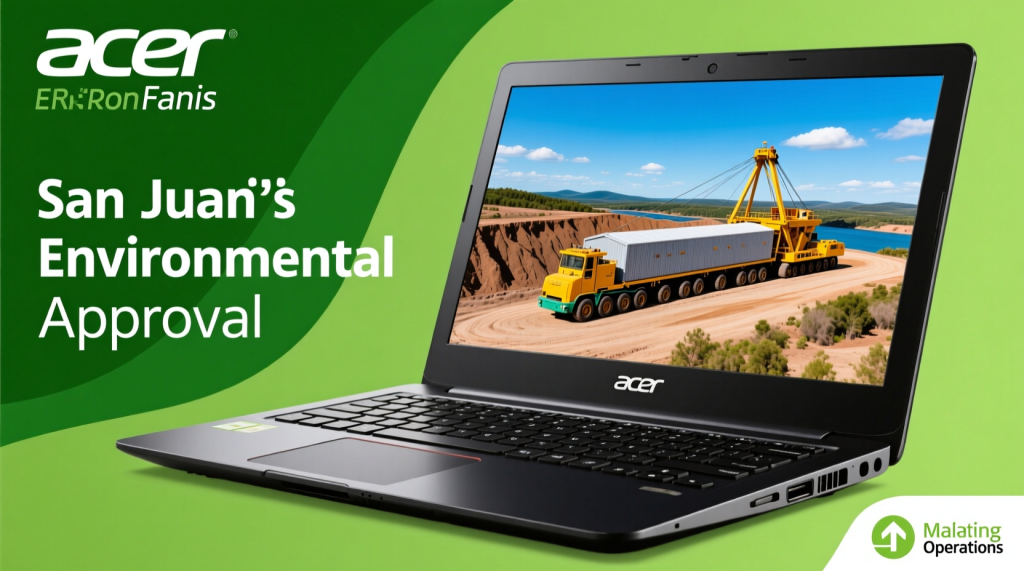
ACER completed its Environmental Impact Statement (EIS)—a formal environmental assessment and authorization required for certain industrial facilities—after a multi-year program of operational changes at its San Juan workshop. This article focuses on environmental compliance, mining equipment maintenance in San Juan, environmental management for mining service providers, industrial component repair for gold and copper projects, and how ISO 14001 in mining supply chains translates into practical controls, monitoring, and traceability for maintenance and repair services.
TL;DR: The EIS approval ties ACER’s workshop operations to defined environmental controls (hydrocarbons, water, waste) and documented procedures that many mining procurement teams require from suppliers.
About ACER: Origins, Capabilities, and Current Footprint
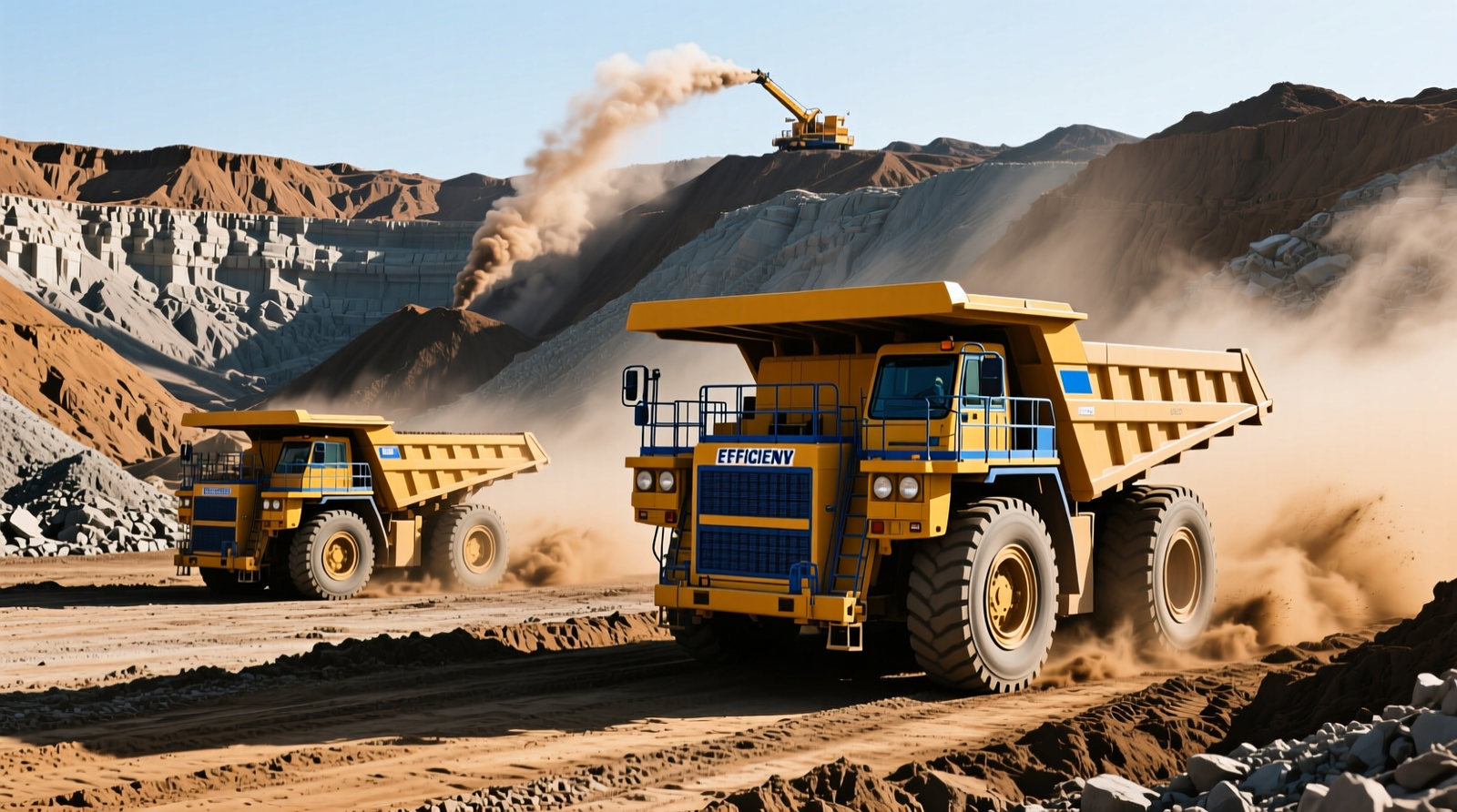
ACER was founded in San Juan, Argentina, as a workshop dedicated to fabrication and industrial component repair for heavy equipment used in mining and related industries. It currently reports around 60 direct jobs and more than 100 indirect jobs through contractors and suppliers.
In practice, ACER’s repair scope for mining fleets and plants typically includes components such as haul truck trays/bodies, crusher and chute wear parts, pumps and slurry-handling components, rotating equipment (shafts, housings), and hydraulic cylinders. Common shop processes in this type of work include:
- Welding procedures for structural repair and hardfacing (wear-resistant overlays) on high-abrasion surfaces
- Machining (boring, turning, milling) for dimensional recovery, fits, and alignment
- NDT (non-destructive testing) such as magnetic particle testing (MT) and dye penetrant testing (PT) to detect cracks without damaging parts, plus visual inspection (VT) and dimensional verification
ACER operates in Argentina and reports activity in the United States and Mexico. In these markets, comparable maintenance and repair demand is concentrated around heavy-industry hubs and mining regions—such as copper and gold districts—where wear, corrosion, and fatigue failures drive continuous rebuild cycles for high-value components.
TL;DR: ACER functions as a heavy-component repair workshop (welding, machining, NDT) supporting mining maintenance needs, with operations anchored in San Juan and reported activity in the U.S. and Mexico.
Integration into San Juan’s Mining Supply Chain (Gold and Emerging Copper Projects)
San Juan’s mining supply chain typically requires local turnaround capacity for repairs that would otherwise cause long downtimes if shipped out of province. ACER entered the ecosystem through service demand linked to large-scale operations, including gold mining, where components often arrive with abrasive wear, impact damage, and contamination from oils/greases and process solids.
For gold operations (e.g., high-altitude sites), maintenance planning often prioritizes rapid repair of structural and mechanical components to keep fleet availability stable. For copper project development (exploration to feasibility), service providers are increasingly screened on auditable environmental controls, documentation, and waste management due to investor and operator requirements.
TL;DR: ACER’s role fits the practical need for local, auditable repair capacity that reduces logistics delays for gold operations and aligns with stricter supplier screening expected for San Juan copper projects.
Environmental Management and Circular Economy: What the EIS and ISO 14001 Change in Practice

The Environmental Impact Statement (EIS) process typically requires identifying operational impacts (water, wastes, emissions, risks) and committing to specific mitigation and monitoring measures. ACER reports that its EIS work program focused on three recurring service-workshop risks: hydrocarbon handling, parts washing water consumption, and industrial waste management.
In parallel, ACER references implementation of an Environmental Management System (EMS) aligned with ISO 14001 (the international standard for environmental management systems published by the International Organization for Standardization). ISO 14001 does not prescribe exact performance targets; it requires structured processes such as aspect/impact evaluation, legal compliance evaluation, operational controls, training, emergency preparedness, and internal audits. For an overview of ISO 14001 requirements, see the ISO summary page: https://www.iso.org/iso-14001-environmental-management.html.
From a circular economy standpoint, component rebuilding reduces demand for new parts by returning repaired components to service within acceptable engineering tolerances. In mining maintenance, this can reduce lifecycle material consumption for high-mass components (e.g., trays, crusher parts, pump casings) and reduce the volume of scrap sent off-site—provided that repairs are controlled, documented, and inspected.
TL;DR: The EIS sets environmental operating conditions; ISO 14001 structures how ACER documents, audits, and continuously improves those controls; component repair supports circular economy outcomes by reducing replacement demand and scrap generation.
Environmental Improvements and Process Optimization Triggered by the EIS
To connect the EIS to operational reality, the types of workshop changes commonly required (and referenced by ACER) include engineering controls for oily water, more rigorous waste segregation, and measurable monitoring parameters. In a mining service workshop, the most sensitive point is usually parts washing, where water, surfactants, oils/greases, and solids combine into a regulated waste stream.
1) Hydrocarbon–water separation and oily wastewater treatment
ACER reports changes to its component washing system that include drainage and recovery mechanisms to separate hydrocarbons from wash water. In practice, service workshops typically use combinations of:
- API oil–water separators (gravity separation) for free oils
- Coalescing plate separators to improve droplet capture for smaller oil droplets
- Settling pits or lamella clarifiers to remove suspended solids prior to final polishing
- Oil skimmers (belt/disc/tube) to recover floating oils from sumps
Typical control/monitoring parameters that procurement and HSE (Health, Safety & Environment) teams ask to see include:
- Oil-in-water concentration (often reported as mg/L or “ppm” parts per million) measured at discharge points or reuse loops
- pH and electrical conductivity (indicators of cleaning chemistry and dissolved solids)
- Total Suspended Solids (TSS) and turbidity to confirm solids removal performance
2) Water recirculation and consumption control
A common EIS-driven change is moving from once-through washing to closed-loop or semi-closed-loop recirculation, where wash water is treated and reused. Practical KPIs (key performance indicators) used in industrial washing include:
- Recirculation rate (e.g., % of wash water reused versus fresh make-up water)
- Freshwater make-up volume (m³/week or m³/month), normalized per ton of parts washed or per work order
- Sludge generation rate from settling/filtration steps (kg/week) to size disposal logistics
3) Waste streams: segregation, storage, and off-site treatment
Mining equipment maintenance generates mixed industrial wastes that need clear identification, segregation, and manifests for transport. Typical streams include:
- Used oils (engine oil, hydraulic oil, gear oil) stored in labeled containers with secondary containment and sent to authorized operators for recovery/recycling
- Oily rags/absorbents and filter elements handled as hazardous or special waste depending on local classification
- Oily sludge from separators/settling systems, often requiring controlled dewatering and disposal by authorized facilities
- Scrap metal (clean vs. contaminated) segregated to maximize recycling value and reduce disposal volumes
- Spent blasting media, paint residues, and solvent-contaminated materials where applicable
4) Operational controls around storage and spill prevention
EIS programs often require improved controls around hydrocarbon storage: bunded (contained) areas, spill kits, trained responders, and documented inspection routines. Emergency preparedness drills and incident reporting are often incorporated into the EMS.
TL;DR: EIS-driven changes translate into tangible controls: oily-water separation (API/coalescing/skimming), water reuse metrics (recirculation and make-up volumes), defined waste streams with authorized off-site treatment, and spill-prevention measures with documented inspections.
Regulatory Context in Argentina and San Juan (What Mining Service Providers Are Usually Measured Against)
Environmental authorizations for workshops supporting mining projects sit within Argentina’s broader environmental framework and provincial enforcement. While requirements vary by activity and jurisdiction, service providers in San Juan are commonly asked by clients to demonstrate compliance with applicable provincial permitting, waste transport documentation, and monitoring records consistent with their environmental approvals.
At a national level, Argentina’s General Environmental Law (Ley General del Ambiente) No. 25.675 establishes baseline principles for environmental policy and management: https://www.argentina.gob.ar/normativa/nacional/ley-25675-79980. Additionally, mining-related environmental provisions are addressed through the Mining Environmental Protection Law No. 24.585 (often cited in mining environmental compliance discussions): https://www.argentina.gob.ar/normativa/nacional/ley-24585-55119.
For San Juan specifically, mining and environmental oversight typically involves provincial authorities and procedures (e.g., environmental evaluation and monitoring tied to permitted activities). For readers seeking an official starting point on provincial mining governance and context, see the Government of San Juan’s mining portal: https://mineriasanjuan.gob.ar/. For national context on mining policy and institutional information, see Argentina’s Ministry of Economy mining area: https://www.argentina.gob.ar/economia/mineria.
Note: Specific permitting instruments, technical annexes, and discharge limits applicable to a workshop can differ depending on location, process design, and whether discharges are to sewer, surface water, or managed as zero-discharge with off-site treatment. Mining clients commonly request that suppliers show the exact conditions contained in their approvals (e.g., EIS resolution terms), plus records demonstrating ongoing compliance.
TL;DR: ACER’s EIS sits within Argentina’s national environmental framework (e.g., Laws 25.675 and 24.585) and San Juan’s provincial oversight; mining clients typically verify the permit conditions plus monitoring and waste-tracking records.
How Mining Companies Typically Work with ACER (Workflow, Reporting, and Traceability)
For procurement and maintenance teams, the value of a repair supplier often depends on how predictable the workflow is and how complete the documentation package is for critical components. A practical service cycle for mining equipment maintenance in San Juan generally follows these steps:
- 1) Intake and identification: component tagging, work order creation, and photo record; contamination checks for oil/grease and solids.
- 2) Inspection and diagnosis: dimensional inspection, wear mapping, and NDT (non-destructive testing) selection based on the failure mode (e.g., MT/PT for surface cracks, plus alignment checks for rotating parts).
- 3) Repair plan and method statement: defined welding procedure, machining plan, acceptance criteria, and hold points for inspection.
- 4) Execution: controlled welding (including preheat/interpass controls where required), machining to restore tolerances, surface preparation and coating/painting where specified.
- 5) Final QA/QC package: as-found/as-left measurements, NDT reports, consumables traceability where applicable, and release documentation.
For compliance-sensitive projects, mining clients often request evidence of traceability (linking a component serial/asset number to its repair records) and environmental traceability for related waste streams (e.g., manifests for used oil, sludge, contaminated absorbents). Warranty terms vary by component and failure mode; in heavy repair, warranties are often defined around workmanship scope and operating conditions rather than unlimited runtime.
TL;DR: A useful supplier workflow includes documented intake, NDT-driven inspection, controlled welding/machining plans, and a final QA pack—plus traceability that supports both reliability and environmental audits.
Mini Case Examples (Anonymized) Linked to Availability, Downtime, and Environmental Controls
Case 1: Truck tray structural repair with controlled welding and inspection
A haul truck tray arrived with cracking around high-stress zones (typical in high-impact loading). A controlled repair plan using staged weld passes and targeted NDT checkpoints (VT + MT on critical areas) reduced rework risk and improved confidence at handover. The practical outcome for the mine is fewer repeat repairs during the following operating interval, which helps stabilize equipment availability—especially when tray failures become a bottleneck during peak haulage.
Case 2: Parts washing optimization to reduce oily wastewater risk
A batch of heavily contaminated components required intensive degreasing. With hydrocarbon separation and recovery controls in place (separator + skimming + solids settling), the workshop can reduce the volume of emulsified oily water requiring off-site handling and improve consistency of monitoring results (oil-in-water and TSS trends), supporting supplier audits focused on environmental management for mining service providers.
TL;DR: Reliability comes from controlled repair methods and inspection hold points; environmental performance comes from engineered oily-water treatment and measurable monitoring trends used in client audits.
Key Benefits of ACER’s EIS Approval for Mining Clients
- Lower environmental approval risk in the supply chain: an EIS-backed operation provides a clearer compliance baseline for vendor qualification.
- More auditable maintenance services: ISO 14001-style controls support document control, training records, internal audits, and corrective actions.
- Improved waste accountability: defined streams (used oil, oily sludge, contaminated absorbents, scrap segregation) with traceable off-site management.
- Operational predictability for shutdowns: documented repair workflows and inspection reporting reduce surprises during planned maintenance windows.
TL;DR: For clients, the EIS primarily reduces supplier-compliance uncertainty and supports auditable, traceable repairs—important for both day-to-day maintenance and shutdown planning.
International Presence and Technical Cooperation: More Concrete Scope
ACER reports activity in the United States and Mexico, markets where demand for heavy repair services is closely tied to mining regions (copper and gold districts) and heavy-industry corridors that operate large rotating equipment, pumps, and wear-intensive material handling systems.
Regarding potential cooperation with Asian partners (including China), concrete technical domains that are often relevant for mining component repair—beyond generic “technology transfer”—include:
- Wear-resistant materials (e.g., improved hardfacing consumables and abrasion-resistant plate selections for trays, chutes, and crushers)
- Surface engineering (overlay welding process optimization, dilution control, and repair design to reduce spalling)
- Component manufacturing know-how for high-wear assemblies and standardized repair kits that shorten turnaround time
TL;DR: International activity aligns with mining/heavy-industry repair demand; potential Asian cooperation is most meaningful when tied to specific wear-material, surface engineering, and standardized component technologies.
Challenges and Limitations (What Implementation Usually Requires)
Implementing an EIS program and an ISO 14001-aligned EMS typically comes with practical constraints that maintenance providers must manage:
- Upfront investment: oily-water treatment equipment, secondary containment, monitoring instruments, and upgraded storage areas require capital and maintenance.
- Operational discipline: segregation of wastes and consistent recordkeeping can slow throughput initially, especially during high-demand periods.
- Training load: weld quality, NDT reliability, and environmental controls depend on continuous training and supervision, not only written procedures.
- Supplier dependence: off-site treatment and transport performance can impact compliance timing and documentation completeness.
Mining clients often see these constraints reflected in lead times for repairs, documentation turnaround, and the maturity of audit responses (corrective actions and follow-up evidence).
TL;DR: EIS/ISO 14001 implementation is not “paperwork only”—it requires investment, disciplined operations, training, and dependable waste-management partners, which can affect throughput and timelines.
Conclusion: What the EIS Enables and Why It Matters for San Juan’s Mining Pipeline
ACER’s EIS approval concretely enables workshop operations under defined environmental conditions—particularly around hydrocarbon handling, oily-water control, and waste management—supported by measurable monitoring parameters and documented procedures. In San Juan, where gold operations continue and multiple copper projects advance through development stages, supplier qualification increasingly depends on verifiable environmental controls and traceable maintenance records. Combined with repair-focused circular economy outcomes (life extension, reduced scrap) and structured ISO 14001-aligned management practices, the EIS provides a clearer compliance baseline that procurement and maintenance teams can audit when selecting local repair capacity for uptime-critical assets.
TL;DR: The EIS matters because it turns environmental expectations into auditable controls, supporting reliable local repair capacity for current gold operations and the upcoming wave of San Juan copper projects.
FAQ
Q: What environmental controls do mining companies typically expect from a repair workshop in San Juan?
A: Common expectations include engineered oily-water controls (oil–water separation and sludge handling), secondary containment for hydrocarbons, waste segregation with transport/disposal manifests, spill-response procedures, and monitoring records such as oil-in-water (ppm or mg/L), pH, and suspended solids trends—aligned with the facility’s EIS conditions.
Q: How does ISO 14001 help in mining supply chains if it doesn’t set fixed emission limits?
A: ISO 14001 focuses on the management system: identifying environmental aspects/impacts, ensuring legal compliance evaluation, implementing operational controls, training personnel, running internal audits, and documenting corrective actions. Mining clients use this structure to assess whether a supplier can consistently control risks like oily wastewater, hazardous waste, and spill prevention.
Q: What should a mining company evaluate when selecting a maintenance/repair provider for compliance-sensitive projects?
A: Beyond price and lead time, evaluate (1) evidence of environmental authorization (e.g., EIS terms and compliance records), (2) waste traceability (manifests, authorized operators), (3) QA/QC documentation (NDT reports, dimensional records, welding procedure control), (4) traceability of repaired components to work orders and inspection results, and (5) the provider’s audit history and corrective-action responsiveness.
Q: What repaired components most often improve availability in gold and copper operations?
A: High-impact availability gains often come from quick-turn repairs of haul truck trays/bodies, crusher and chute wear components, slurry pump parts, and hydraulic cylinders—because failures in these systems can constrain production, hauling, or materials handling. The best results usually occur when repairs include defined inspection hold points and final measurement/NDT records.
Q: How can EIS-driven wash-water improvements reduce environmental risk in component repair?
A: By adding oil–water separation (API/coalescing), skimming, and solids removal, a workshop can reduce free oil carryover, better control sludge generation, and improve consistency of water quality indicators (oil-in-water, TSS). That reduces the likelihood of non-compliant discharges and strengthens documentation during environmental and supplier audits.