
Introduction

Caterpillar introduced a new 173 hp (129 kW) Cat C3.6 twin‑turbo 173 hp diesel rating for compact construction equipment at CONEXPO‑CON/AGG 2026. It’s positioned as a Tier 4 Final compact diesel engine / Stage V construction equipment engine option for OEMs that want more output from the same 3.6 L base architecture—often to avoid a chassis redesign or a step up to a larger engine family.
This article is written for OEM design engineers, fleet managers, and equipment dealers. It focuses on the questions that typically come up in selection and integration: What is the real delta versus the prior Tier 4 Final/Stage V C3.6? What does the aftertreatment architecture look like? What packaging/cooling trade-offs appear at 173 hp? What duty cycles benefit most from the added torque?
For emissions context, “Tier 4 Final” refers to US EPA off‑road diesel emissions requirements, and “Stage V” refers to the EU’s non‑road mobile machinery (NRMM) emissions standard. For background, see the US EPA overview of nonroad compression‑ignition engines and the European Commission’s NRMM Stage V information under Non‑Road Mobile Machinery.
TL;DR: A targeted deep dive for OEMs and fleets on the 173 hp Cat C3.6 twin‑turbo 173 hp—performance, emissions hardware, integration considerations, and where it sits versus other Cat industrial engines.
New 173 hp Cat C3.6 twin‑turbo 173 hp: What changed versus the earlier Tier 4 Final/Stage V C3.6?
Caterpillar states the 173 hp rating delivers up to 21% more power than earlier Tier 4 Final/Stage V 3.6 L offerings in its current lineup. In practical terms, that claim aligns with a comparison to the 142 hp (106 kW) Tier 4 Final/Stage V C3.6 rating (173 vs. 142 hp = ~21.8%). That’s an important qualifier: the gain is not necessarily versus older pre‑Tier 4 engines or different emissions tiers/duty cycles.
Technically, stepping a 3.6 L four‑cylinder to 173 hp tends to be less about a single “magic” change and more about a stack of incremental upgrades—combustion, air handling, and durability margin all have to move together. Caterpillar highlights an upgraded combustion system, reinforced core components, and a twin‑turbo setup. From an OEM perspective, the relevant question is: does this deliver the needed performance while keeping installation and service access similar to the established C3.6 envelope?
Compared with many competitor 3.4–3.8 L industrial diesels that reach similar power (often by pushing higher boost and higher rated speed), the differentiator here is the emphasis on maintaining a familiar platform while extending the top rating. The trade-off is that higher output nearly always increases heat rejection (more demand on cooling package sizing) and can tighten constraints around under‑hood airflow and aftertreatment placement.
TL;DR: The “up to 21%” figure is best interpreted as 173 hp versus the 142 hp Tier 4 Final/Stage V C3.6 rating; the upgrade likely comes from combined combustion + air system + durability updates, with cooling/packaging implications at the higher rating.
Core performance numbers OEMs look for (and what’s confirmed vs. what to request)

Caterpillar has publicly cited peak torque of 546 lb‑ft (740 N·m) at 1,500 rpm for the Cat C3.6 twin‑turbo 173 hp. That’s a meaningful datapoint because 1,500 rpm is a common “work band” in construction duty cycles, where operators want strong lug capability without hunting gears or overshooting hydraulic pump power.
However, several parameters that OEMs typically need for final machine matching were not specified in the original announcement text and should be requested on the engine performance curve and installation drawings:
- Torque curve shape: Is it a broad plateau (e.g., flat ±3–5% from ~1,300–1,700 rpm) or a sharper peak at 1,500 rpm? This affects drivability and hydraulic response.
- Rated speed: The rpm at which 173 hp is achieved (often 2,200–2,400 rpm in this class, but needs confirmation).
- Low idle and high idle: Critical for NVH (noise, vibration, harshness), hydraulic standby losses, and jobsite ergonomics.
- Brake-specific fuel consumption (BSFC): Fuel efficiency in g/kWh (grams per kilowatt-hour). OEMs usually evaluate BSFC “islands” at mid‑load and high‑load points that mirror their duty cycle.
- Maximum BMEP: Brake Mean Effective Pressure (BMEP) is a displacement‑normalized measure of torque loading (bar). It helps compare how “hard” different engines are being pushed at a given torque level.
Rule of thumb for context: 740 N·m from 3.6 L corresponds to roughly ~26 bar BMEP (order‑of‑magnitude), which is a high-torque 3.6 L industrial engine territory and explains why air handling and thermal management become central design themes at 173 hp.
TL;DR: Peak torque is stated (740 N·m @ 1,500 rpm), but OEMs should request rated speed, idle speeds, full torque curve, BSFC maps (g/kWh), and max BMEP for accurate machine matching and cooling system sizing.
Air system, cooling approach, and turbo configuration: what to validate during integration
The headline change is a twin‑turbo arrangement. “Twin‑turbo” can mean different architectures (series/sequential vs. parallel), and the difference matters: series/sequential systems typically prioritize transient response and low‑speed boost, while parallel setups often prioritize flow capacity at high load. For a compact, high‑torque 3.6 L industrial engine, many OEMs will want to know which approach is used because it impacts plumbing, heat shielding, and service access.
Similarly, charge-air cooling should be confirmed. Many engines in this class use air‑to‑air charge‑air cooling (an intercooler using ambient air) to reduce intake temperature and protect durability at higher boost. If an OEM is space‑limited, the heat exchanger stack (radiator + CAC + AC condenser + hydraulic cooler) becomes a packaging puzzle, especially on telehandlers and compact wheel loaders where rear‑end airflow is already constrained.
On cooling, confirm whether the engine uses a single-circuit cooling system or a dual-circuit (separate temperature loops for different components). Dual circuits can improve temperature control and emissions performance but may increase hoses, sensors, and integration effort. At 173 hp, the machine’s fan power and shroud design also become more consequential—oversizing the fan can erode fuel efficiency and jobsite noise targets.
TL;DR: “Twin‑turbo” and cooling details need clarification for real-world packaging—ask whether the turbos are series or parallel, confirm charge‑air cooler type (air‑to‑air, etc.), and validate cooling circuit architecture to avoid late-stage thermal and NVH surprises.
Emissions compliance and aftertreatment: define the architecture, not just the standard

The engine is described as meeting US EPA Tier 4 Final and EU Stage V. In practice, most engines at these standards rely on a combination of:
- DOC (Diesel Oxidation Catalyst)
- DPF (Diesel Particulate Filter)
- SCR (Selective Catalytic Reduction)
- DEF (Diesel Exhaust Fluid, also called AdBlue in many markets)
Because the article states “maintenance‑free aftertreatment” and “no scheduled downtime for regeneration,” it’s worth tightening the meaning: many modern DPF systems are designed to regenerate passively during normal operation and to perform active regeneration automatically when needed, but real-world duty cycles (cold ambient, extended idle, low exhaust temperature) can still influence soot loading and regeneration frequency. OEMs should confirm expected regen behavior for their duty cycle and whether any operator prompts are possible under worst‑case conditions.
For a neutral reference on aftertreatment components and how they function together, see the US Department of Energy Alternative Fuels Data Center explanation of diesel emissions control technologies.
TL;DR: “Tier 4 Final/Stage V compliant” should be translated into a specific DOC/DPF/SCR architecture and regen strategy; duty cycle and ambient conditions still matter, so validate behavior for low-temp/low-load use cases.
Maintenance intervals, uptime claims, and the conditions that usually apply
The Cat C3.6 twin‑turbo 173 hp is described as supporting up to 1,000‑hour oil and fuel filter service intervals under recommended conditions. For fleets, the key words are “up to” and “recommended conditions.” In most off‑highway maintenance programs, interval capability depends on factors such as duty severity, fuel cleanliness, ambient dust load, idle percentage, and oil analysis results.
To make the “lower operating cost” discussion more concrete, fleets typically translate extended intervals into:
- Fewer planned service events per 2,000 operating hours (e.g., two services instead of four if prior intervals were ~500 hours, depending on the baseline).
- Lower consumables spend (filters and oil) and less technician time.
- Higher availability for rental fleets, where a day lost to service has a clear revenue impact.
If you’re evaluating this engine for harsh environments (high dust, high sulfur fuel risk, extreme temperature swings), it’s prudent to request Caterpillar’s duty-cycle guidance on whether 1,000‑hour intervals apply to light/medium duty only, and what derates or shortened intervals are expected for severe duty. Using used oil analysis programs is a common way to safely extend drains while monitoring wear metals, soot, and viscosity.
TL;DR: The 1,000‑hour interval is typically duty‑cycle dependent; fleets should confirm what “recommended conditions” mean for their environment and consider oil analysis to validate intervals without risking downtime.
Fuel flexibility (B20, HVO) and fuel quality requirements OEMs should document
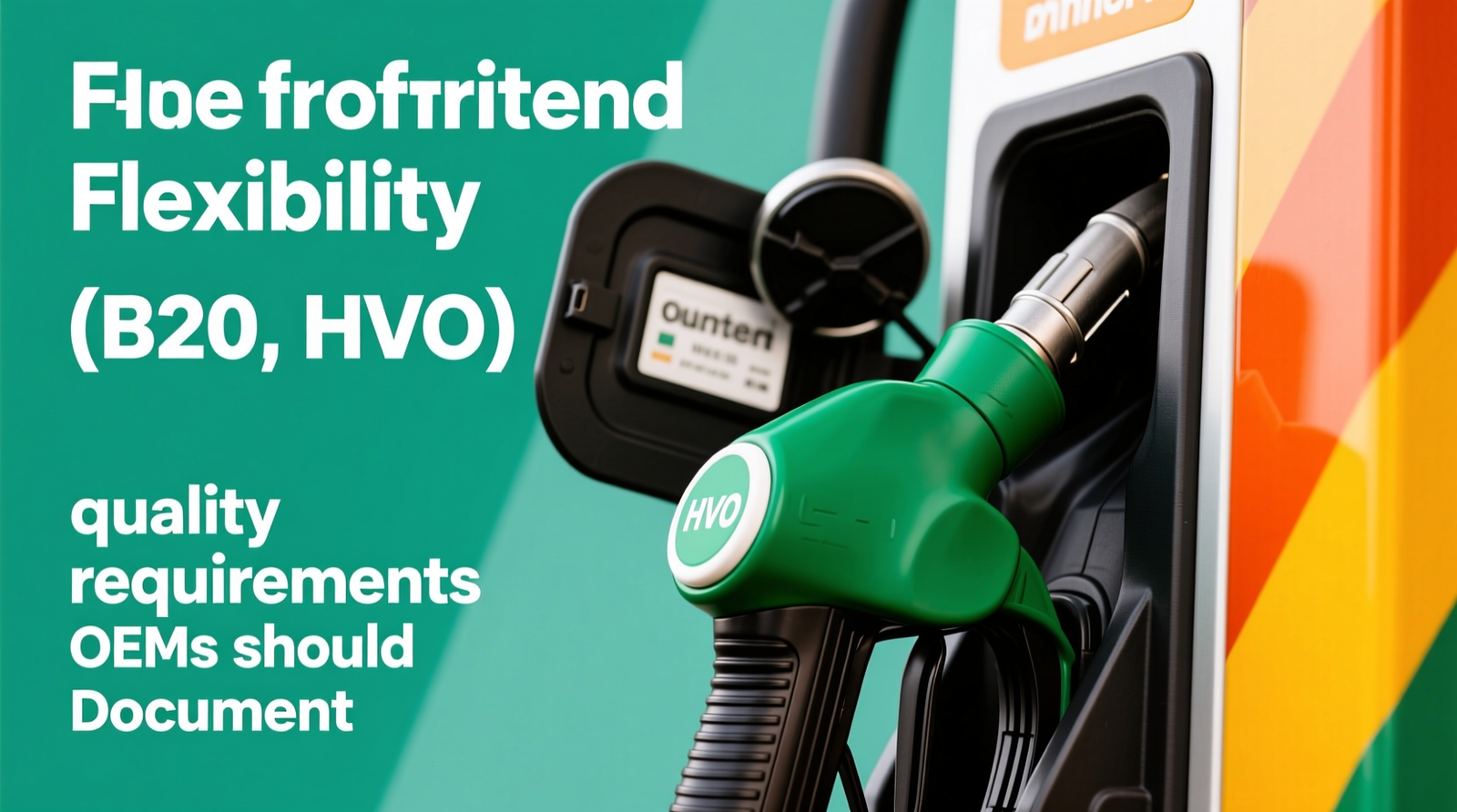
The engine is described as compatible with B20 (up to 20% biodiesel blend) and 100% HVO (Hydrotreated Vegetable Oil, a paraffinic renewable diesel). Fuel compatibility can be a practical advantage for contractors working across regions with different fuel policies or for fleets seeking lifecycle CO₂ reductions without changing hardware.
For procurement and warranty risk management, fleets should document fuel quality requirements, including sulfur limits and applicable standards. Common reference points include:
- ASTM D975 (Standard Specification for Diesel Fuel Oils) for conventional diesel in North America: ASTM D975
- EN 590 for automotive diesel in much of Europe: overview at EN 590 summary
- EN 15940 for paraffinic diesel fuels such as HVO: overview at EN 15940 summary
Also note that biodiesel blends tend to have different cold-flow properties and oxidative stability requirements versus conventional diesel; storage practices and filter management can matter as much as the engine’s baseline compatibility.
TL;DR: B20 and 100% HVO compatibility can broaden fuel sourcing options, but fleets should lock down the applicable diesel/HVO standards (ASTM D975, EN 590, EN 15940) and align storage/handling practices to avoid avoidable fuel-related downtime.
Packaging: dimensions, weight, and power-to-weight ratio (what’s missing and why it matters)
For OEM packaging decisions, the most actionable data usually includes: dry weight (engine only and “power unit” with aftertreatment), dimensional envelope (L×W×H), mounting points, and service clearances. Those figures were not provided in the original text, but they are often the deciding factors when retrofitting an existing machine model or trying to avoid frame changes.
At 173 hp, even if the base block remains familiar, twin turbos and aftertreatment routing can shift center of gravity, increase under‑hood heat density, and tighten access for starter, filters, and turbo service. OEMs should request:
- Engine and aftertreatment envelope drawings and 3D models
- Mass properties (weight and CG location)
- Heat rejection data for radiator/CAC sizing and fan curves
Only with those can you compute a meaningful power-to-weight ratio (kW/kg) for machine balance and compare it to competitor offerings or the previous 142 hp Cat C3.6 configuration.
TL;DR: The announcement doesn’t include weight/dimensions; OEMs should request envelope, mass/CG, and heat rejection data—twin-turbo and aftertreatment packaging can change serviceability and thermal margin even if displacement stays at 3.6 L.
Use-case fit: where a high-torque 3.6 L industrial engine helps (and where it can be a stretch)
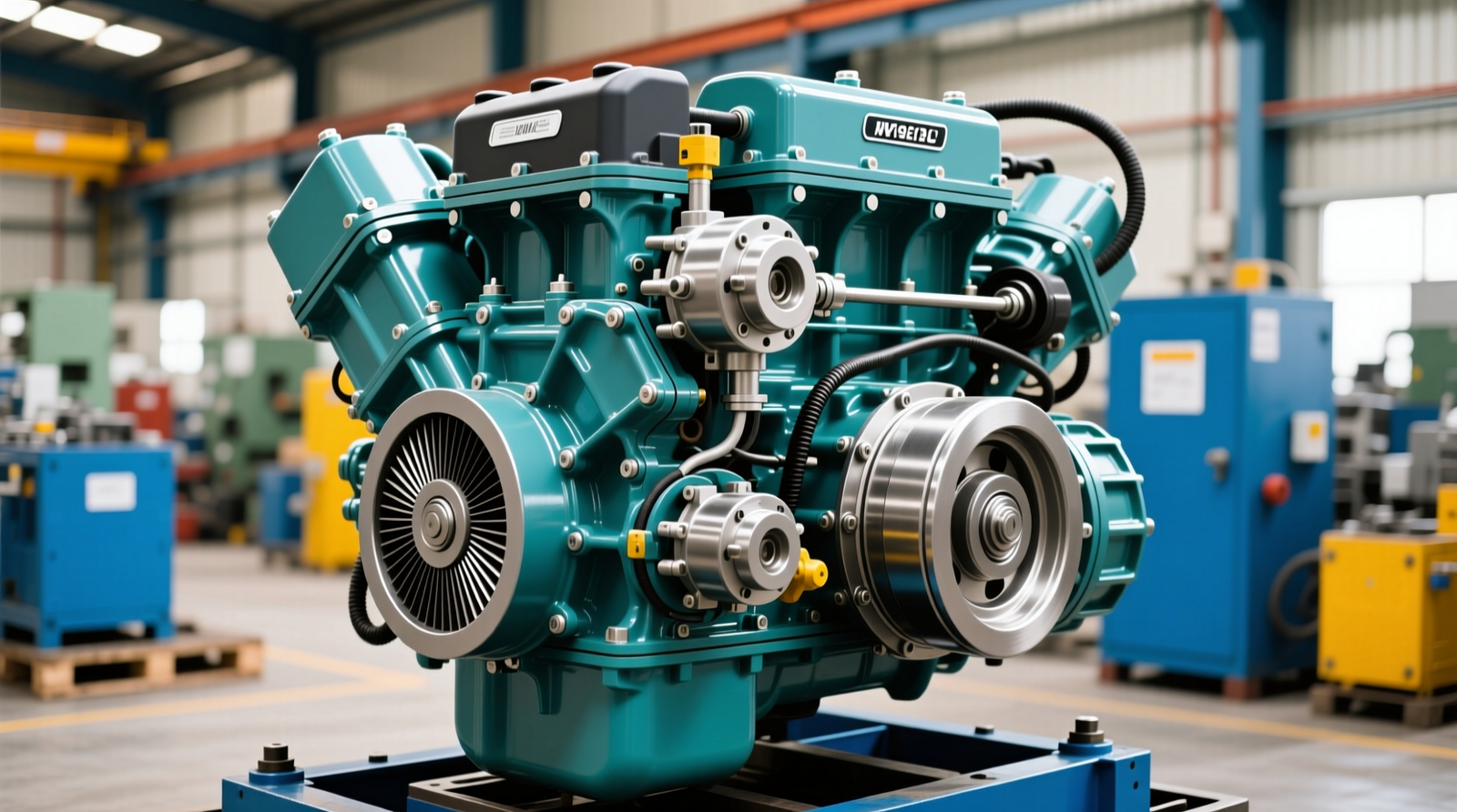
The Cat C3.6 twin‑turbo 173 hp is most compelling when a machine needs more “push” in the midrange without moving to a larger displacement class. Typical candidates include:
- Telehandlers that see frequent transient loads (boom functions + driveline demand)
- Backhoe loaders where hydraulic work and roading both matter
- Soil compactors that benefit from lugging torque at steady rpm
- Small dumpers/site dumpers operating on grade where torque at 1,500 rpm reduces downshifting
- Asphalt pavers requiring stable power delivery and controlled thermal behavior
A practical guideline for OEMs: this rating tends to suit machines in the “upper compact / lower midrange” power bracket where chassis size and cooling package volume are limited, but customers still expect near‑mid‑class performance. The main caution is that 173 hp in a compact envelope can push cooling stack capacity and under‑hood air management, especially in high ambient temperature regions or machines with heavy auxiliary cooling demands (hydraulics, AC).
TL;DR: Best fit is equipment that needs stronger midrange torque without a larger engine family—telehandlers, backhoes, compactors, small dumpers, pavers—while watching cooling stack limits and under‑hood airflow at 173 hp.
OEM integration checklist: controls, interfaces, and factory options to ask for
Beyond raw performance, OEM programs succeed or fail on integration time and supportability. When specifying the Cat C3.6 twin‑turbo 173 hp, engineers commonly confirm availability of:
- SAE flywheel housings and flywheel options (to match transmissions and hydraulic pump drives)
- CAN bus (Controller Area Network) communications and SAE J1939 messaging support (common off‑highway data protocol)
- Multiple ECU (Engine Control Unit) / control system variants (open vs. more integrated machine control approaches)
- Pre‑configured cooling packages (radiator/CAC/fan/shroud recommendations) or validated heat-rejection data for your stack
- Aftertreatment mounting orientations and thermal shielding guidance for nearby components
If you are migrating from the 142 hp Tier 4 Final/Stage V C3.6, confirm what changes in harnessing, sensors, and cooling requirements occur at 173 hp—“same platform” doesn’t always mean “same peripherals.”
TL;DR: Ask early about SAE housings, CAN/J1939 data, ECU variants, validated cooling package guidance, and aftertreatment mounting/heat shielding—those details drive schedule and cost more than the headline horsepower number.
Caterpillar’s portfolio context: where C2.2, C3.6, C9.3B, C13D, C18, and reman fit

The later lineup items make more sense when viewed by power band, displacement class, and typical machine category rather than as a catalog list:
- Cat C2.2 (74 hp / 55 kW): small displacement compact machines—mini equipment, compact compressors, small pumps where simplicity and low installed cost matter.
- Cat C3.6 range (74–173 hp): compact/mid machines that need a modern Stage V construction equipment engine solution; the 173 hp node targets higher performance without stepping to a larger block.
- Cat C9.3B (diesel-electric demonstration): mid-to-higher power applications exploring hybridization—useful when duty cycle has frequent transients or when electrified auxiliaries/regen strategies can improve operating efficiency.
- Cat C13D (under development): higher displacement / higher power density platform aimed at heavy-duty equipment (crushers, grinders, large ag, big pumps) where step-change output can justify packaging revisions.
- Cat C18 (shown at 800 hp): high-output class for large machines in heavy construction/mining and industrial applications where durability and long life dominate selection criteria.
- Cat C7 remanufactured engine: lifecycle strategy for existing fleets—reman can reduce capital cost and keep proven platforms working when replacement is not economical.
This framework helps an OEM decide whether the Cat C3.6 twin‑turbo 173 hp is a “sweet spot” (maximize performance inside a compact chassis) or whether the application is already beyond what a 3.6 L four‑cylinder can do comfortably without significant cooling and structural margin.
TL;DR: Think in bands: C2.2 for small, C3.6 for compact/mid (now up to 173 hp), C9.3B for hybrid demonstrations, C13D for heavy-duty next platform, C18 for very high output, and C7 reman for extending existing fleet life.
Lifecycle, rebuildability, and TCO: what to ask Caterpillar for (and why)
Claims like “lower total cost of ownership (TCO)” are only useful when tied to measurable levers: service intervals, fuel burn in your duty cycle, parts cost, and expected life to overhaul. The announcement text doesn’t provide overhaul or rebuild targets, so OEMs and fleets should request:
- Expected time-to-overhaul guidance by duty severity
- Availability of long blocks, short blocks, or certified rebuild kits
- Whether a Caterpillar reman pathway exists (or is planned) for the C3.6 family to support lifecycle cost control
- Warranty coverage terms by region and application class
For fleets that standardize on one engine family across multiple models, the non-obvious savings often come from parts commonality, technician familiarity, and reduced diagnostic variance—especially when electronic controls and aftertreatment are involved.
TL;DR: The announcement doesn’t quantify overhaul intervals or warranty; to evaluate TCO, ask for life-to-overhaul guidance, rebuild/reman options, and regional warranty terms—these dominate long-run cost more than headline horsepower.
Limitations and considerations (objectivity check)

Moving to 173 hp on a 3.6 L platform typically increases thermal load and may tighten the machine’s cooling and under‑hood airflow requirements. If an OEM keeps the same radiator/CAC stack from a 142 hp model without revalidating, hot-day performance and derate behavior can become a field issue.
Noise and heat shielding also deserve attention. Twin turbo hardware and aftertreatment placement can change radiated heat and sound signatures, which affects operator comfort and compliance with jobsite noise expectations. These are not deal-breakers, but they are integration realities that should be validated in prototype testing.
TL;DR: The main watch-outs at 173 hp are cooling capacity, under‑hood airflow, and potential NVH/heat-shielding changes—validate early with instrumented prototypes, not late in production sign-off.
Conclusion
The Cat C3.6 twin‑turbo 173 hp expands Caterpillar’s compact industrial diesel options for Tier 4 Final and Stage V applications, offering a clear step up from the 142 hp Tier 4 Final/Stage V C3.6 rating while staying in the 3.6 L class. The most meaningful published number is 740 N·m at 1,500 rpm, which targets real work-band performance rather than peak-only marketing.
For OEMs, the decision hinges less on the headline power and more on integration fundamentals: turbo architecture, charge-air cooling approach, aftertreatment layout (DOC/DPF/SCR), heat rejection, and envelope/weight. For fleets, the value case comes down to service interval applicability, fuel quality discipline (diesel/B20/HVO), and lifecycle support (warranty, rebuild/reman pathways).
TL;DR: Stronger midrange torque in a 3.6 L package can be a smart upgrade path—but OEMs should validate cooling/packaging and request the missing performance/BSFC/weight data before locking in machine designs.
FAQ

Q: When will the Cat C3.6 twin‑turbo 173 hp be available for OEM production orders?
A: Caterpillar debuted the 173 hp rating publicly at CONEXPO‑CON/AGG 2026, but production availability can vary by region, emissions configuration, and OEM volume. The practical next step is to request an OEM program timeline (SOP dates, pilot build windows, and lead times for aftertreatment variants) through your Caterpillar industrial power representative.
Q: What aftertreatment system does the Tier 4 Final / Stage V Cat C3.6 twin‑turbo 173 hp use (DOC, DPF, SCR)?
A: Tier 4 Final and Stage V engines in this power class commonly use a DOC+DPF+SCR architecture, but the exact configuration and packaging can differ by application and certification. OEMs should confirm the precise aftertreatment bill of materials, DEF dosing strategy, and expected regeneration behavior for their duty cycle—especially for cold-weather or high-idle machines.
Q: Is the 1,000-hour oil and fuel filter service interval guaranteed for all duty cycles?
A: No—“up to 1,000 hours” typically depends on duty severity, ambient conditions, fuel cleanliness, and maintenance practices (often including used oil analysis). For severe-duty cycles (high dust, high idle, extreme heat/cold), OEMs and fleets should confirm whether shorter intervals are recommended and what operating conditions are required to achieve 1,000 hours.
Q: What fuel standards and sulfur limits should fleets follow when using B20 biodiesel or 100% HVO?
A: Use fuels that meet recognized specifications (commonly ASTM D975 for diesel in North America, EN 590 for diesel in Europe, and EN 15940 for paraffinic fuels such as HVO) and follow Caterpillar’s published fuel guidance for biodiesel blend quality and storage practices. Sulfur limits are typically aligned with ultra-low sulfur diesel (ULSD) requirements for modern aftertreatment systems; confirm the allowable sulfur level for your region and certification package before switching fuels.
Q: Does the Cat C3.6 twin‑turbo 173 hp support telematics or remote monitoring through J1939/CAN?
A: Many off-highway engines support CAN bus communications using SAE J1939 messaging, which can be used by OEM telematics gateways for remote monitoring (fault codes, load factors, fuel use estimates, etc.). Compatibility depends on the chosen ECU configuration and the machine’s network architecture, so OEMs should confirm which J1939 parameters are available and how they map to their telematics system.
Q: Will the Cat C3.6 twin‑turbo 173 hp be certified outside the US and EU (e.g., Japan or Korea)?
A: The announcement highlights US EPA Tier 4 Final and EU Stage V. Additional certifications (Japan, Korea, or other markets) depend on regional regulatory pathways and OEM demand. If your machines ship globally, request Caterpillar’s country-by-country certification plan and whether the same hardware can be certified across multiple regions or if configuration changes are required.