Introduction: Wilmington Machinery Expansion Signals Stronger North American Plastics Equipment Demand
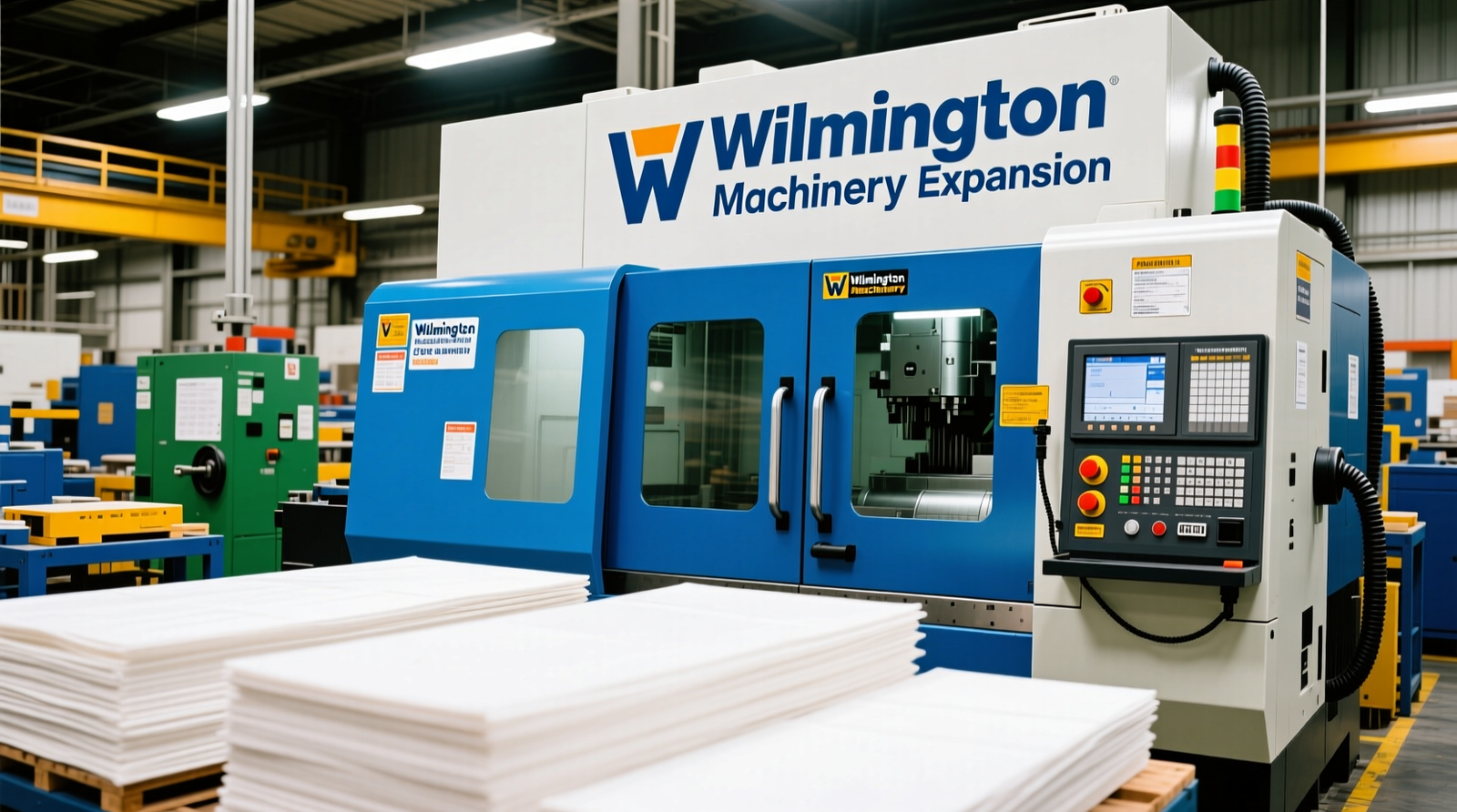
Wilmington Machinery LLC, a long-established North Carolina plastics machinery manufacturer, is planning a major facility expansion in Wilmington, North Carolina. The project will significantly increase the company’s manufacturing footprint and reflects a broader acceleration in demand for energy-efficient plastics processing equipment—especially for packaging and industrial markets that prioritize uptime, faster tooling changes, and domestic service support.
Across North America, processors are also navigating labor constraints and cost pressure, which is increasing interest in automation-ready platforms and more standardized, repeatable production cells. In parallel, brand-owner sustainability goals (lightweighting, downgauging, and increased recycled content) are driving tighter process windows and higher expectations for machine controls, melt consistency, and scrap reduction.
TL;DR: Wilmington Machinery’s planned expansion aligns with rising North American demand for automation-ready, energy-efficient injection and blow molding equipment—particularly in packaging and industrial applications.
Facility Expansion Details: 33,000+ Square Feet Added for Build Capacity, Testing, and Support
According to local business news outlet WilmingtonBiz, Wilmington Machinery intends to add more than 33,000 square feet to its existing plant in Wilmington, N.C.
The proposed expansion is scheduled for review by New Hanover County’s technical review committee on Feb. 18. Site plans indicate that the project would increase the current 57,600-square-foot facility to nearly 91,000 square feet.
From an industrial buyer’s perspective, added floor space typically translates into practical gains: additional assembly bays for parallel machine builds, larger staging areas for turnkey cells (machine + mold + downstream automation), expanded FAT (Factory Acceptance Test) space, and more room for spare parts kitting and rebuild work. For customers evaluating custom injection molding machines or rotary blow molding systems for packaging, the ability to run robust FATs under production-like conditions can materially reduce commissioning risk and shorten ramp-up time after installation.
TL;DR: The added footprint is likely to increase build throughput and enable more comprehensive FAT and service operations—reducing project risk for buyers of custom molding systems.
Technical Capabilities: Custom Injection Molding Machines and Rotary Blow Molding Systems Built for High-Output Production
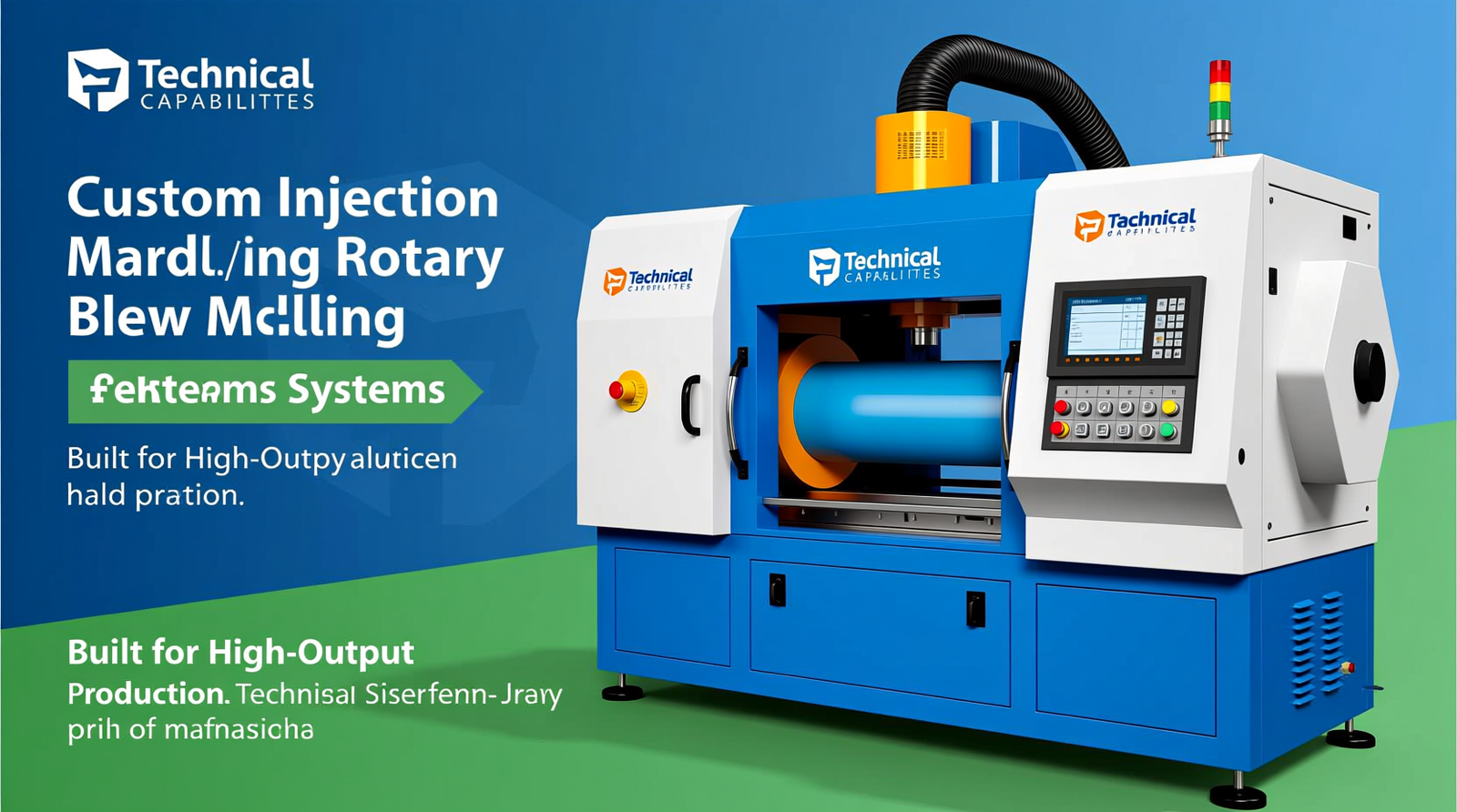
Wilmington Machinery is widely associated with two core equipment categories: injection molding systems and rotary blow molding systems. While exact specifications vary by build, industrial buyers typically evaluate these platforms based on clamp tonnage, shot capacity, platen size, controls/automation readiness, and energy use per part.
Injection molding systems (low-pressure and large-part focused): Injection molding is the process of melting polymer and injecting it into a mold to form parts. Wilmington’s positioning in low-pressure injection molding is particularly relevant for large parts and applications where processors want to reduce clamp force requirements, tool wear, and flash. Low-pressure approaches can also be beneficial when molding larger surface-area parts or parts where uniform fill and reduced internal stress help improve dimensional stability.
- Clamp tonnage: Large-part molding typically requires higher clamp tonnage (the force used to keep the mold closed during injection). Buyers often look for platforms ranging from several hundred tons into the multi-thousand-ton class depending on part size and cavity count.
- Process advantages: Lower-pressure fill strategies can help reduce mechanical stress on molds, potentially extending tool life and improving part consistency on certain geometries.
- Energy-efficiency technologies: Modern presses commonly use servo-driven hydraulics or variable-speed pump systems to cut energy use by matching motor speed to demand rather than running continuously. The U.S. Department of Energy notes that variable speed drives can be a major lever for reducing motor energy consumption in industrial systems (DOE overview on variable speed drives).
- Controls and automation: Controls typically include recipe storage, closed-loop process monitoring, alarm logging, and integration points for robots/conveyors/vision inspection. In a tightening labor market, automation-ready controls are increasingly treated as a baseline rather than an upgrade.
Rotary blow molding systems (high-cavitation packaging output): Blow molding forms hollow parts—such as bottles and containers—by inflating a heated plastic preform or parison inside a mold. Rotary architectures are attractive for packaging because they support continuous, high-output production and compact footprints. For packaging processors shifting between resin grades or incorporating recycled content, stable heating and repeatable forming conditions can help manage variation and reduce scrap.
- Typical applications: HDPE (high-density polyethylene) and PET (polyethylene terephthalate) packaging such as bottles, containers, and industrial jugs, plus specialty shapes where high throughput is essential.
- Low-pressure process benefits (where applicable): In blow molding, controlling air pressure, wall distribution, and cooling is critical. Efficient air management and stable temperature control can reduce cycle time and improve wall-thickness uniformity.
- Automation integration: Systems commonly pair with leak detection, vision inspection, inline trimming/deflashing, and downstream packing to reduce manual handling.
For additional technical grounding on molding processes and performance factors, the Society of Plastics Engineers (SPE) provides industry education and resources (SPE.org), and the American Chemistry Council offers packaging and resin context relevant to HDPE/PET markets (americanchemistry.com).
TL;DR: Wilmington’s portfolio fits buyers seeking large-part, low-pressure-capable injection molding platforms and rotary blow molding systems for packaging—where energy efficiency, stable controls, and automation integration drive ROI.
Market Context: Why Demand Is Rising for Energy-Efficient Plastics Processing Equipment
The expansion arrives during a period of sustained investment in North American plastics processing capacity and modernization. Several forces are converging:
- Packaging growth and redesign: Packaging remains a major driver of polymer demand, and brand-owner commitments to lightweighting and recycled content are pushing processors to invest in equipment that can hold tighter process windows with less scrap.
- Sustainability and energy intensity: Energy costs and emissions reporting are making machine efficiency more visible in capital-approval decisions. Variable-speed pumping, servo control, and better thermal management can materially reduce kWh/part over long production runs.
- Reshoring and supply-chain risk: After several years of global logistics volatility, more processors are placing value on North American machine sourcing and service proximity to reduce downtime risk and avoid long shipping delays for parts.
For credible market reference points, organizations such as PMMI (Association for Packaging and Processing Technologies) routinely publish trend content and industry insights relevant to packaging automation and equipment investment (pmmi.org). In addition, the U.S. Bureau of Labor Statistics provides public data on manufacturing labor constraints and employment dynamics that influence automation adoption (bls.gov).
TL;DR: Packaging redesign, sustainability targets, reshoring dynamics, and labor constraints are all pushing processors toward energy-efficient, automation-ready molding platforms—supporting the business case for expanded domestic machine capacity.
Ownership and Governance: Continuity of Technical Know-How with a Local Manufacturing Investor
In early 2025, Wilmington Machinery was sold to a local private investor described as having extensive experience in manufacturing and business development. While detailed biographical information was not included in the original reporting, buyers typically look for two continuity signals during an ownership transition: (1) whether core engineering and service leadership remains in place, and (2) whether the new owner has operated within industrial sectors where capital equipment lifecycle support (spares, rebuilds, field service) is treated as a strategic capability—not an afterthought.
The company has communicated that the new ownership intends to strengthen product offerings and invest further in engineering and support functions. From a customer standpoint, the most meaningful indicator will be whether management maintains or expands field service coverage, parts stocking, and application engineering—especially for high-output packaging lines where downtime costs can be substantial.
TL;DR: The ownership change appears oriented toward growth and reinvestment; customers should watch for tangible continuity in engineering leadership, field service capacity, and parts availability.
Competitive Positioning: How a Larger Wilmington Footprint Could Shift Lead Times vs. Overseas OEMs
In plastics machinery procurement, delivery speed and commissioning support often matter as much as nameplate specs—particularly for packaging where new SKU launches can be time-sensitive. A larger Wilmington facility can improve competitive positioning in several practical ways:
- Shorter and more predictable lead times: Expanding assembly and test capacity allows more parallel builds and reduces bottlenecks (for example, waiting on a single test bay). This can help Wilmington compete with overseas OEMs where transit time, customs delays, and parts logistics can extend project schedules.
- Stronger aftermarket service: More space can mean a larger spare parts inventory, dedicated rebuild areas, and more technician training capacity—key factors in total cost of ownership (TCO).
- More robust FAT capability: Packaging customers often want extended run-offs, inspection validation, and operator training before shipment. Better FAT infrastructure can reduce start-up issues and help plants hit OEE (Overall Equipment Effectiveness) targets sooner. (OEE is a standard metric combining availability, performance, and quality.)
Relative to other North American builders, the ability to deliver custom or semi-custom platforms quickly—while supporting them with local service—often becomes a differentiator when processors standardize fleets across multiple plants.
TL;DR: More manufacturing and test capacity can translate into faster deliveries, better FAT run-offs, and stronger aftermarket service—areas where domestic OEMs can outcompete longer-distance suppliers.
Customer Benefits: What the Expansion Can Mean in Real Operational Terms

For processors evaluating new equipment, the value of an OEM expansion is measured in outcomes. While Wilmington Machinery has not published specific performance commitments tied to this project, expansions of this type commonly deliver customer-facing improvements such as:
- Higher capacity for turnkey cells: More floor space supports integrated builds that include machine, tooling interfaces, material handling, robotics, and downstream operations (inspection, conveyance, packing).
- Improved commissioning readiness: A better-equipped FAT area can enable longer validation runs, capturing process limits and alarm conditions before shipment—reducing surprises at site installation.
- Expanded spare parts stocking: A larger warehouse footprint supports deeper spares for critical subsystems (hydraulics, drives, heaters, sensors), which can shorten downtime from days to hours.
- Faster engineering change cycles: Collocating engineering, assembly, and test functions can tighten feedback loops when refining a custom configuration.
These benefits are especially relevant for rotary blow molding systems for packaging, where line stoppages affect large volumes quickly, and for custom injection molding machines used in large-part or high-throughput applications where molds and auxiliary equipment require careful coordination.
TL;DR: Customers should expect practical gains such as stronger FAT run-offs, improved spares availability, and more capacity for integrated turnkey systems—benefits that reduce commissioning risk and downtime.
Local and Regional Impact: Likely Jobs, Supply-Chain Pull-Through, and Workforce Partnerships
Wilmington Machinery’s expansion reinforces Wilmington, N.C. as a regional node for specialized manufacturing. Specific job creation numbers were not disclosed in the reporting; however, expansions adding tens of thousands of square feet in capital equipment manufacturing typically create a mix of roles across:
- Skilled assembly and electrical build: mechanical technicians, panel builders, wiring/harness roles
- Machining and fabrication support: fixtures, subassemblies, weldments (often through local suppliers)
- Engineering: mechanical, electrical, controls/PLC (Programmable Logic Controller) engineering, and application/process engineering
- Field service and customer support: installation, training, troubleshooting, and parts coordination
For context, similar industrial expansions often generate dozens of direct jobs over time plus indirect employment through local machining, fabrication, electrical supply houses, logistics, and industrial services. The supply-chain pull-through can be meaningful because machinery builders typically spend heavily on motors, drives, hydraulics, valves, sensors, safety components, and fabricated steel.
A practical next step many OEMs take is formal collaboration with workforce pipelines—such as community colleges and technical training programs—to develop controls, mechatronics, and industrial maintenance talent. In the Wilmington region, institutions such as Cape Fear Community College are often part of the broader manufacturing training ecosystem (cfcc.edu), and statewide workforce initiatives are supported through North Carolina’s economic development and training resources (nccommerce.com).
TL;DR: While exact hiring numbers aren’t public, an expansion of this scale commonly supports dozens of direct skilled jobs plus local supplier growth, with opportunities for partnerships with regional technical training programs.
Conclusion: A Bigger Wilmington Plant Supports Faster Builds, Better Testing, and Stronger Service
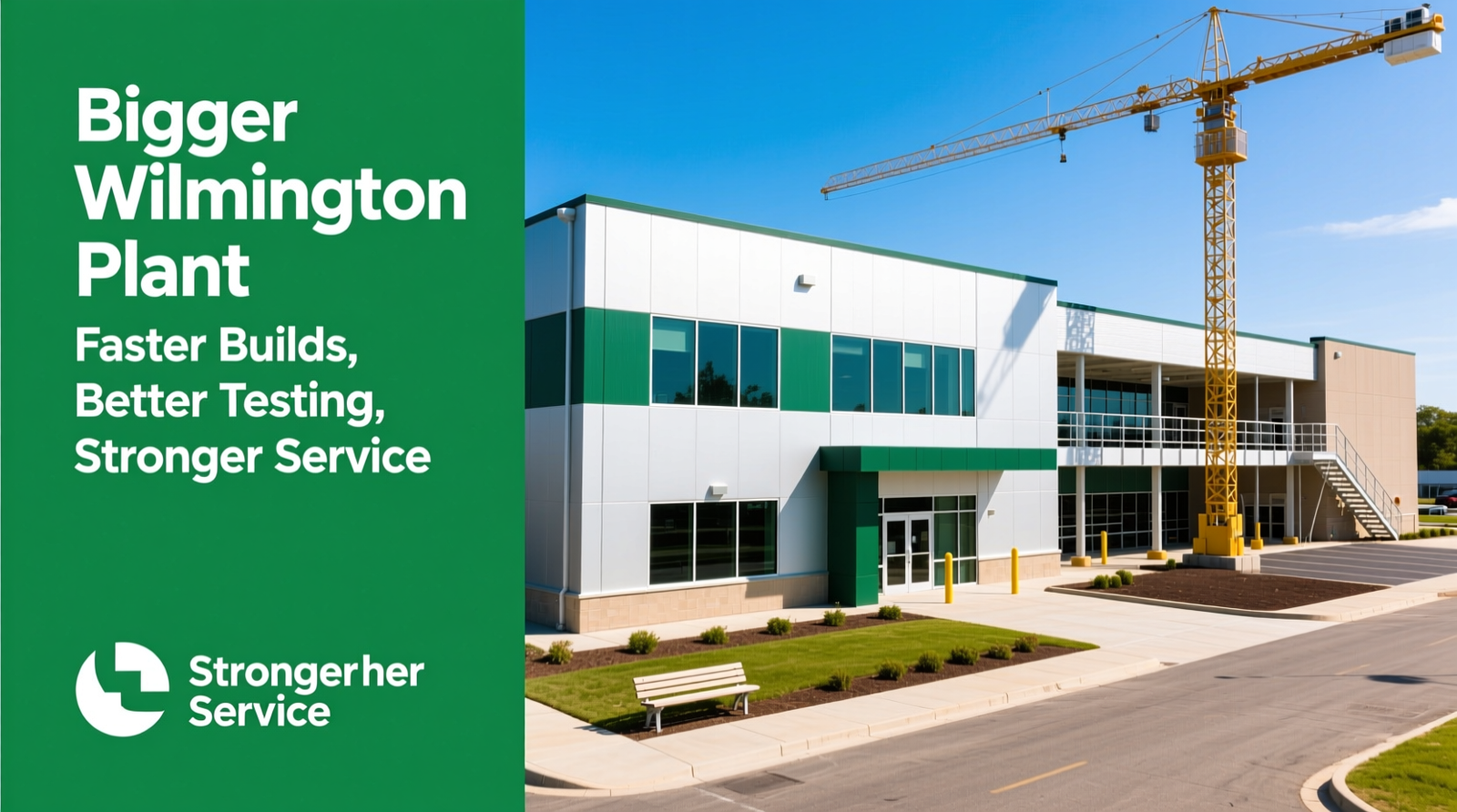
With a planned 33,000+ square-foot expansion, Wilmington Machinery LLC is preparing for a new growth phase in injection molding and blow molding machinery. The increased footprint—combined with local ownership and a legacy dating back to 1972—positions the company to increase output of custom injection molding machines and rotary blow molding systems for packaging, while strengthening engineering, FAT capacity, and aftermarket support.
For North American processors balancing throughput targets, sustainability requirements, and labor realities, expanded domestic manufacturing and service capacity can be as strategically important as machine specifications—especially when uptime and ramp speed determine profitability.
TL;DR: The expansion should strengthen Wilmington Machinery’s ability to deliver and support energy-efficient molding systems faster—improving commissioning readiness and lifecycle service for North American processors.
FAQ
Q: How long does it typically take to commission a new injection molding machine or rotary blow molding system?
A: Commissioning timelines vary by complexity (standalone machine vs. turnkey cell), site readiness, and validation requirements. Many projects include installation, utilities hookup, safety checks, process tuning, and operator training; a robust FAT (Factory Acceptance Test) can shorten on-site ramp-up by resolving issues before shipment.
Q: Do Wilmington Machinery systems support customization for specific molds, resins, or downstream automation?
A: Yes. Buyers commonly request custom configurations around clamp sizing, platen layout, resin handling, controls integration, robotics, leak/vision inspection, and downstream conveying/packing. When evaluating “custom injection molding machines” or packaging blow molding lines, processors typically specify mold interfaces, cycle-time targets, quality checks, and data collection requirements up front.
Q: Will the North Carolina facility expansion affect existing customers during construction?
A: Expansions are often staged to minimize disruption, but customers should confirm how build schedules, FAT availability, and shipping logistics will be managed during construction. The intent of adding space is usually to reduce bottlenecks (assembly bays, test areas, parts storage), not create them.
Q: What service and support coverage is available for customers in Canada and Mexico?
A: Many North American OEMs support Canada and Mexico through a combination of in-house field service, regional technicians, and expedited parts shipping. If cross-border support is critical, customers should ask about technician response time, parts stocking strategy, remote diagnostics capabilities, and any local service partners.
Q: How does an expanded factory help reduce lead times compared with overseas machinery OEMs?
A: A larger domestic footprint can increase parallel build capacity, improve scheduling around FAT bays, and reduce delays tied to ocean freight and customs. For time-sensitive packaging programs, faster access to parts and technicians can also reduce downtime risk over the equipment’s operating life.