
Introduction

The Mexico construction equipment market is set to expand through 2026–2031 as factories, warehouses, roads, and mines keep adding capacity—often in specific corridors rather than evenly across the country. To avoid timeline confusion, 2024–2025 figures are used as the base-year/reference period for recent demand and macro context, while the forecast window is 2026–2031.
In unit terms, the market is estimated at 32,188 units in 2025 and projected to reach 38,612 units by 2031. That implies an annualized growth rate of roughly 3.08% CAGR (compound annual growth rate). Some sources round this to ~3.0%; in this article we use 3.08% for internal consistency because it matches the 2025-to-2031 unit trajectory stated above.
Executive summary (2–3 sentences): Demand is increasingly concentrated in (1) northern border and Bajío manufacturing belts (Nuevo León–Coahuila–Chihuahua and Guanajuato–Querétaro), (2) port/industrial logistics nodes (e.g., Manzanillo and the Mexico City–Puebla–Veracruz axis), and (3) mining states (Sonora, Zacatecas, Chihuahua). Contractors are also shifting how they acquire fleets—more rentals, leases, and bank/arm financing—especially when interest rates or public spending are volatile.
Data provenance note: Macro and activity references commonly come from Mexico’s statistics agency INEGI; industrial park pipeline references are typically tracked by AMPIP (Asociación Mexicana de Parques Industriales Privados). Urban clean-construction commitments reference the C40 Cities network.
TL;DR: The 2026–2031 outlook builds on 2024–2025 as a reference base; units rise from 32,188 (2025) to 38,612 (2031), ~3.08% CAGR, with growth concentrated in specific industrial/logistics and mining corridors.
Mexico Construction Equipment Market Size and Growth Forecast (2026–2031)
Mexico’s equipment demand is not “one national story”—it behaves like a set of regional micro-markets tied to trade routes, industrial clusters, and state-level permitting and procurement. For 2026–2031, the key question for OEMs (original equipment manufacturers), dealers, and investors is where unit volume grows fastest and which mix shifts are most bankable.
- Volume: 32,188 units (2025) → 38,612 units (2031)
- Growth rate: ~3.08% CAGR (units)
- Where demand concentrates: Northern border manufacturing + Bajío industrial parks + major metro logistics + mining states
Approximate 2025 equipment mix (units) and direction of change by 2031:
- Earthmoving equipment in Mexico: ~55–60% of 2025 units; expected to drift slightly down (still #1) as warehousing lifts material handling share.
- Material handling equipment Mexico: ~25–30% of 2025 units; expected to gain share by 2031 as industrial parks and fulfillment networks densify.
- Road construction equipment: ~5–8% of 2025 units; growth is more cyclical and tied to public budgets—share may stay flat unless federal/state letting accelerates.
- Other equipment (concrete, dumpers, etc.): ~8–12% of 2025 units; stable to modest growth in metros and industrial builds.
Note: Segment shares are directional and reflect typical unit-weighted market structure (high earthmoving volumes, rising handling volumes). They are intended to support planning and prioritization rather than replace a paid dataset.
TL;DR: Earthmoving remains the volume base, but material handling grows faster and likely gains share by 2031; road equipment depends heavily on public tender cadence.
Market Overview: What’s Different About Demand in Northern Mexico vs. Central Mexico

Northern border states (Baja California, Sonora, Chihuahua, Coahuila, Nuevo León, Tamaulipas) typically pull equipment through export manufacturing, cross-border logistics, and supplier parks. This favors forklifts, reach stackers/port handling (where applicable), compact loaders, excavators for site prep, and aerial work platforms (AWPs) for MEP (mechanical, electrical, plumbing) installs and maintenance.
Central Mexico and the Bajío (Querétaro, Guanajuato, Aguascalientes, San Luis Potosí, Estado de México, Puebla) often see steadier private construction and industrial infill: mid-size excavators, backhoe loaders, compactors, telehandlers, plus strong ongoing service/parts demand due to higher utilization density around metro areas.
Regulatory nuance (practical impact): Equipment spec decisions can be shaped by local environmental enforcement and worksite restrictions—for example, stricter noise/dust and “clean site” expectations in large metros versus looser enforcement in remote projects. At the federal level, Mexico’s environmental regulator SEMARNAT influences permitting and environmental compliance expectations that can flow down into contractor requirements (dust suppression, spill prevention, site controls), even when not a direct “engine standard” mandate.
Mini-case example: A supplier building in the Monterrey–Saltillo corridor typically front-loads demand for earthmoving (site leveling, drainage, pads) and then transitions rapidly into material handling fleets once racks and docks go live—creating a two-step equipment cycle (construction → operations) that favors dealers offering both construction machines and warehouse products, plus service contracts.
TL;DR: Northern Mexico skews toward export/logistics-driven equipment (forklifts/AWPs + site prep), while central/Bajío demand is more mixed and service-intensive; permitting and metro constraints increasingly affect equipment specs.
Earthmoving Equipment in Mexico: Excavators, Loaders, and Dozers
Earthmoving remains the backbone category because it is used in industrial parks, housing, utilities, roads, and mining. In 2025, excavators led within earthmoving, reflecting a market that values versatile machines that can switch between trenching, mass excavation, and loading with attachments.
Approximate structure within earthmoving (2025, units):
- Excavators: ~45–50% of earthmoving units
- Backhoe loaders: ~20–25% (especially in general contracting and municipal-type work)
- Wheel loaders: ~10–15%
- Dozers, graders, trenchers, others: ~10–20% combined (more project-specific and mining/road dependent)
What changes by 2031: Expect incremental growth in compact excavators (mini excavators) and attachment-driven versatility (hammers, grapples, augers) as contractors chase utilization and take smaller urban jobs. Telematics (remote machine monitoring) becomes more common because it reduces theft risk and improves preventive maintenance scheduling—both critical in high-utilization fleets.
Mini-case example (mining): In Sonora, large-scale copper operations and ongoing expansion activity tend to keep demand steady for large excavators, wheel loaders, and support equipment. This is less about “one-time capex” and more about fleet replenishment plus incremental expansion, especially where haul roads, tailings facilities, and pit development require continuous earthworks.
Growth ranking (2026–2031): Medium overall (high in mining states; medium in industrial site prep; lower if public works slows).
TL;DR: Earthmoving remains the largest unit segment; the mix shifts modestly toward compact machines and attachment versatility, with mining states supporting steady replacement and expansion demand.
Nearshoring-Driven Demand for Material Handling Equipment (Mexico)
Material handling rises with nearshoring, defined here as relocating production and supplier operations closer to the U.S. market. The practical Mexico story is: more warehouse doors, more racking, more dock cycles, and higher uptime requirements. That favors forklifts, telehandlers, cranes (select use cases), and AWPs.
Approximate internal mix within material handling (2025, units):
- Forklifts (electric + internal combustion): ~65–75%
- AWPs (aerial work platforms): ~12–18%
- Telehandlers: ~5–10%
- Cranes (mobile/rough-terrain/tower, unit-light but value-heavy): ~2–6%
What changes by 2031: Forklifts remain the unit anchor, but electric forklifts gain share as large occupiers standardize ESG (environmental, social, governance) reporting and indoor air expectations. Across handling fleets, expect wider adoption of lithium-ion batteries in higher-throughput sites, especially where multi-shift operations justify fast charging.
Mini-case example (industrial parks): AMPIP projects a major pipeline of private industrial parks through 2030 (AMPIP). In practice, each new park phase creates a repeatable equipment sequence: site prep (earthmoving) → building shell (AWPs, telehandlers) → commissioning (forklifts) → steady-state operations (forklift fleet expansion + maintenance replacements).
Growth ranking (2026–2031): High (most resilient even under softer public investment because it’s tied to private logistics and manufacturing capex/opex cycles).
TL;DR: Material handling is the fastest-growing major segment; forklifts dominate units and electrification accelerates as nearshoring adds warehouses and multi-shift throughput.
Forklifts and E-commerce Logistics: Where the Units Add Up
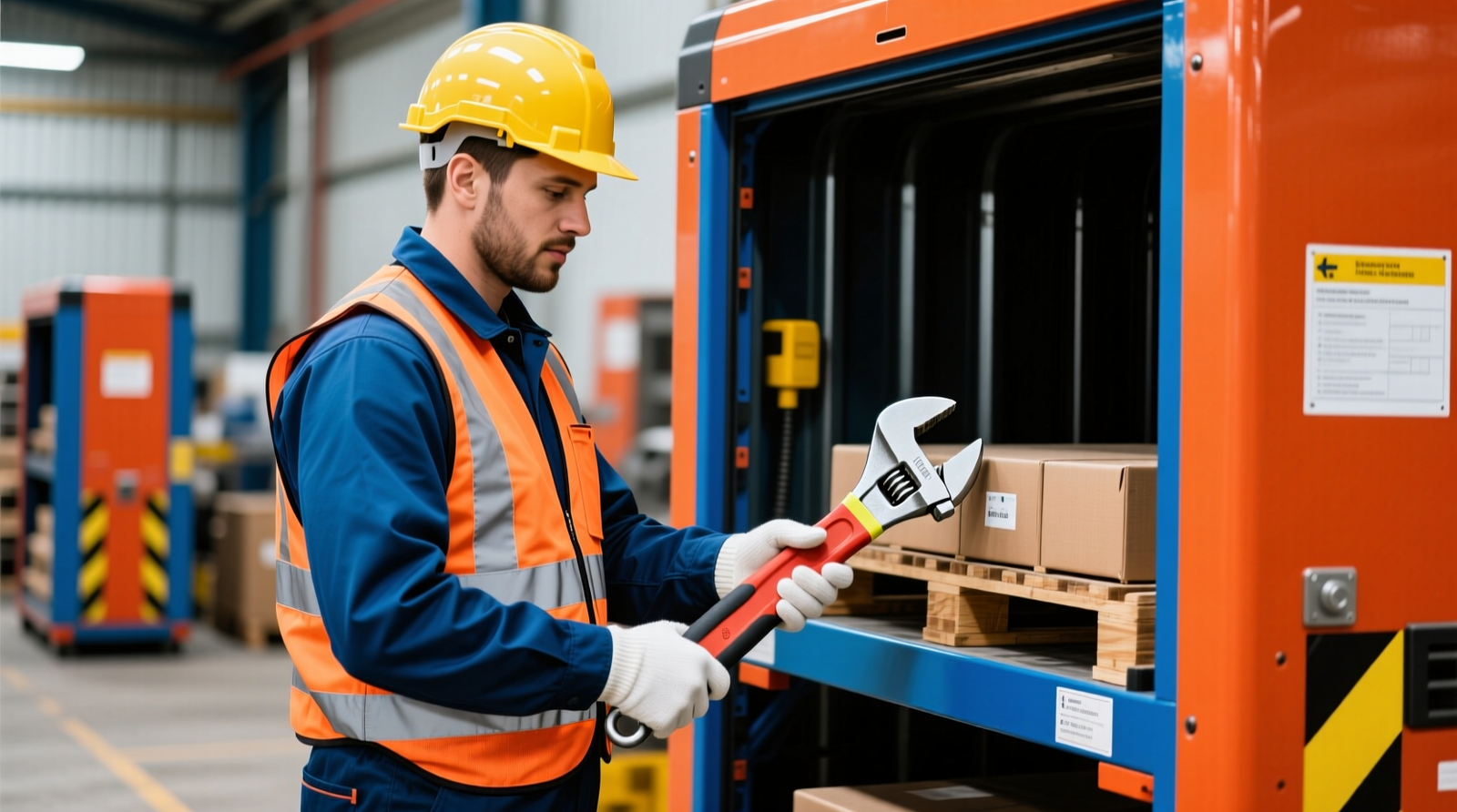
Forklift demand is pulled by fulfillment centers, 3PLs (third-party logistics providers), and retail distribution. Mexico’s growth is especially visible where e-commerce networks densify around Mexico City, Guadalajara, and Monterrey, and where import/export flows demand cross-dock capacity near border gateways.
Equipment implications:
- Electric counterbalance forklifts rise in indoor, high-throughput buildings.
- Reach trucks/order pickers increase where rack heights rise and space is tight.
- IC (internal combustion) forklifts remain relevant outdoors and in mixed environments, but may face stricter site-level policies in some metros.
Example investment signal: Large logistics investments (including publicly announced distribution-center expansions by major e-commerce players) tend to create multi-year forklift fleet ramp-ups—starting with commissioning fleets and continuing with add-on units as slotting and SKU counts grow.
Growth ranking (2026–2031): High (sensitive to consumer demand, but less dependent on federal infrastructure budgets than road equipment).
TL;DR: Forklifts are the highest-volume “repeat purchase” category in logistics; the shift is toward electric and higher-spec warehouse trucks as facilities modernize.
Road Construction Equipment: Linking Plan Milestones to Demand Peaks
Road equipment demand (rollers, pavers) is more budget-sensitive than warehouse equipment. The cited National Road Network Plan (including highway expansion, rehabilitation, and safety upgrades) supports a positive outlook, but the timing of tendering and budget release determines when fleets actually get refreshed.
How this maps to 2026–2031:
- 2026–2027: likely a “restart and re-bid” period in many jurisdictions if 2025 public investment softness persists; rental utilization may rise as contractors avoid large capex.
- 2028–2029: likely peak equipment demand window if rehabilitation targets (e.g., multi-thousand-km resurfacing programs) are executed at scale; this is when rollers and pavers see the strongest unit pull-through.
- 2030–2031: demand depends on whether programs extend/renew; replacement and rebuild cycles dominate if new awards slow.
Value note: Road construction equipment often has lower unit volume but meaningful aftermarket (wear parts, drums, screeds) and high rental relevance.
Growth ranking (2026–2031): Low-to-Medium (can jump to medium/high in years with strong letting; otherwise constrained by fiscal cycles).
TL;DR: Road equipment demand peaks when tenders and rehabilitation spending peak—most plausibly 2028–2029—while early years may lean more on rentals if budgets stay tight.
Policy, Standards, and Regulatory Signals that Affect Specs

Equipment decisions in Mexico increasingly reflect not just price and horsepower, but worksite eligibility (noise, emissions expectations, and client ESG policies). Regulations and standards can be set or enforced at different levels:
- Environmental and permitting oversight: Federal environmental authority SEMARNAT shapes compliance expectations that can influence contractor procurement (dust/noise controls, spill prevention, site practices).
- Urban clean construction commitments: Mexico City’s clean construction direction is influenced by its participation in C40 Cities, which many global real estate and corporate tenants also recognize.
- Electrical system planning: Power-sector roadmaps (e.g., PLADESE and Prosener) shape multiyear project pipelines for substations, transmission, and generation—equipment-heavy during civil works and erection phases.
Timeline alignment for 2026–2031: PLADESE (2025–2039) and Prosener (2025–2030) extend into the forecast window; the most equipment-intensive phases typically occur when projects move from planning into civil construction and grid interconnections. Expect demand to be lumpy by region and interconnection readiness rather than smooth nationwide growth.
TL;DR: Specs are increasingly shaped by environmental expectations and client policies; energy and grid plans extend into 2026–2031 but translate into equipment demand only when projects hit civil works and erection phases.
Compact and Electric Equipment: What’s Driving Adoption (and Where)
Compact equipment (smaller excavators/loaders) is gaining share because it fits Mexico’s reality of tight urban sites, utility works, and infill construction. Electric equipment adoption is emerging faster in public and highly visible projects (municipal works, flagship commercial developments) where clients enforce “clean site” rules, and then spreads voluntarily to private sites seeking lower noise and better indoor air.
Directional mix trend:
- 2025: electric construction machinery is a small base (low single digits of units in most subcategories), concentrated in AWPs and select compact machines.
- By ~2030: electric share is expected to become noticeable in compact urban equipment and indoor handling/warehouse-adjacent applications, especially where large corporates set fleet policies.
Procurement reality: Mexico buyers often choose “electric-ready” not only for sustainability but for total cost of ownership (TCO) when utilization is high and maintenance predictability matters. (TCO = purchase price + fuel/energy + maintenance + downtime + resale.)
Growth ranking (2026–2031): High for compact; High (from small base) for electric models in metros and corporate-led projects.
TL;DR: Compact equipment grows because it matches urban/infill work; electric adoption starts with public/flagship projects and spreads via corporate policies and TCO logic by ~2030.
Chinese OEM Penetration in Mexico’s Heavy Equipment Market

Chinese OEMs are gaining share in Mexico where buyers prioritize faster delivery, aggressive pricing, and bundled financing. The Mexico-specific differentiator is not just price—it’s how the deal is structured and how quickly parts/service can be provided in the buyer’s region.
Typical comparison points vs. traditional Western/Japanese OEMs:
- Warranty and service model: Chinese brands often compete with longer standard warranties or promotional coverage, but the decision hinges on dealer technician depth and parts availability in the customer’s corridor.
- Financing terms: More flexible structures (lease-like payments, seasonal schedules) can win small and mid-size contractors—especially when bank credit is tight.
- Telematics/features: Feature parity has improved quickly; acceptance rises when dealers can translate data into actionable maintenance and uptime support.
Regional footprint examples (non-promotional): OEM investments in Nuevo León and service coverage in central Mexico matter because they reduce downtime risk for fleets operating along the Monterrey–Saltillo–border export lanes and the Mexico City–Puebla–Veracruz corridor.
Growth ranking (2026–2031): Medium-to-High (share gains likely continue, especially in price-sensitive earthmoving and select cranes/handling categories).
TL;DR: Chinese OEMs win share when they match the local reality—fast parts/service coverage and flexible financing—not just low sticker prices.
End-User Analysis: Where Demand Is Highest (and Who Grows Fastest)
This section ranks end users by expected growth momentum over 2026–2031 and links that to equipment categories.
Construction (Residential, Commercial, and Private Infrastructure)
Private construction has been a stabilizer in the reference period (2024–2025), with activity often tracked via INEGI releases and private capex announcements. When growth slows, contractors typically shift toward renting or buying used equipment to protect cash flow—especially for general-purpose machines like backhoes and compactors.
Growth ranking (2026–2031): Medium (varies by metro permitting, financing, and consumer confidence).
TL;DR: Private construction remains important, but it’s financing-sensitive; slowdowns usually push contractors toward rentals and used equipment rather than new purchases.
Mining
Mining supports demand for large earthmoving and support fleets in states such as Sonora, Zacatecas, and Chihuahua. Mexico remains a major global producer of silver and an important producer of copper and gold; project activity and export performance are commonly referenced via official statistics and industry reporting (including INEGI trade/production data and company disclosures).
Replacement-cycle reality: In Mexico, heavy machines in mining and quarrying can run high utilization; many fleets plan major replacements in the ~5–8 year range for hard-worked units (depending on rebuild practices), while general construction fleets may stretch longer when financing is tight. This replacement dynamic is a concrete reason mining demand can remain steadier than purely discretionary construction demand.
Growth ranking (2026–2031): Medium-to-High (strong where expansions and metal-price economics support sustained stripping and haul-road work).
TL;DR: Mining demand is reinforced by replacement cycles and continuous earthworks; it’s often steadier than general construction when macro conditions soften.
Manufacturing, Logistics, and Industrial Facilities
Manufacturing and logistics are where nearshoring converts into repeatable equipment demand (as noted in the material handling section). New plants and supplier parks require site prep equipment first and then forklifts/AWPs/telehandlers once buildings are operational.
Growth ranking (2026–2031): High (best combination of private capex + ongoing operational fleet needs).
TL;DR: Manufacturing/logistics is the highest-growth end user because it drives both construction-phase demand and long-run operational fleets (especially forklifts).
Power, Utilities, and Municipal Buyers
Grid upgrades, substations, and generation projects can be equipment-intensive, but procurement is often tied to program timing, interconnection readiness, and public budget cycles. Municipalities can also push clean equipment requirements earlier than private projects in some metros, effectively shaping local adoption.
Growth ranking (2026–2031): Low-to-Medium (pipeline exists, but timing and budgets create volatility).
TL;DR: Energy and municipal demand can spike with project awards but is less predictable; it’s a volatility driver rather than a steady baseline.
Distributor Ecosystem and Rental Dynamics in Mexico
In Mexico, the route-to-market often matters as much as the machine. Buyers weigh uptime risk, parts availability, and the dealer’s ability to provide financing as heavily as purchase price.
How contractors typically finance fleets:
- Bank credit / arrendamiento (leasing): common for established contractors with stable cash flows.
- Captive/brand financing: often used to bundle rates, warranties, and maintenance plans.
- Dealer-arranged credit: important for SMEs (small and medium-sized enterprises) where speed matters.
- Rental-first strategy: used to avoid capex during uncertainty and to match equipment to short-duration jobs.
Rental market evolution: Rental penetration is increasing fastest in major metros and industrial corridors, where utilization is easier to maintain and customers demand fast replacement units. Typical rental durations range from weekly to 6–12 months, with longer terms common for AWPs, telehandlers, and forklifts supporting industrial builds and maintenance.
Distributor reality (non-sensitive, generally observed): Large dealer groups tend to be strongest where they can offer 24–48 hour parts reach along key corridors—northern border routes and the Bajío/central axis—because downtime costs dominate the buyer decision.
TL;DR: Dealer coverage and financing drive win rates; rentals are growing fastest in metros and industrial corridors with high utilization and tight uptime requirements.
Market Restraints and Risk Scenarios (2026–2031)
Macroeconomic Softness (Reference Period: 2025) and How It Changes Buying Behavior
INEGI’s timely activity indicators in 2025 signaled a slowdown versus earlier momentum (INEGI). In a prolonged soft-growth environment, Mexico equipment buyers typically react in two distinct ways:
- Large fleets: keep core replacements but shift more purchases to planned rebuilds, negotiate longer warranty coverage, and demand guaranteed parts availability.
- SME contractors: postpone ownership, rely more on rental, and buy used units—especially in earthmoving—because cash preservation becomes the priority.
TL;DR: Slow growth pushes the market toward rentals, used equipment, and rebuilds—especially among smaller contractors—rather than eliminating demand entirely.
Public Investment Volatility and Segment Impact
Public investment contraction in 2025 created a clear risk signal for segments tied to federal/state works. If public budgets remain constrained into early 2026–2027, the most exposed categories are typically road equipment, heavy compaction, and some large earthmoving tied to public works.
Investor-style scenarios (and which segments get hit first):
- Scenario A: prolonged public investment weakness → biggest drag on road construction equipment; smaller effect on forklifts/warehousing.
- Scenario B: U.S. tariff escalation or border friction → slows nearshoring decisions; affects material handling and industrial site prep in the north first.
- Scenario C: tightening credit conditions → pushes buyers from new to rental/used; impacts high-ticket earthmoving and cranes more than forklift rentals (which can stay resilient).
TL;DR: Public spending swings mainly hit road equipment; trade/credit shocks ripple into industrial equipment and shift purchases toward rental and used markets.
Go-to-Market Implications for OEMs, Distributors, and Investors
Where to prioritize (regions):
- High-priority corridors: Monterrey–Saltillo, border manufacturing nodes (Tijuana/Mexicali, Juárez, Reynosa/Matamoros), and the Bajío (Querétaro–Guanajuato–Aguascalientes–SLP).
- Mining focus: Sonora, Zacatecas, Chihuahua for heavy earthmoving and support fleets.
- Metro electrification early adopters: Mexico City and other large metros where clean-site expectations are highest.
Most competitive product configurations in Mexico (practical):
- Telematics standardization (theft recovery, maintenance planning, utilization reporting).
- Right-sized emissions approach: buyers often prioritize fuel efficiency and uptime; where clients require “cleaner sites,” offer electric/low-emission options and documented operating practices.
- Cooling/filtration packages for dust and heat in industrial and mining environments.
- Forklift electrification playbook (lithium options, fast charging, battery service, operator safety training).
Why rental fleets matter: A strong rental channel increases brand visibility and creates a “trial” path to ownership; it also stabilizes demand when private capex pauses.
Key success factors in Mexico (actionable checklist):
- Dealer depth by corridor (north vs. Bajío/central) and guaranteed parts lead times
- Bilingual service teams (Spanish/English) for multinational plant operators
- Financing partnerships with local banks/leasing firms + transparent total-cost offers
- Fast-turn field service and uptime SLAs (service-level agreements) for industrial fleets
- Operator training and safety support aligned to customer EHS (environment, health, safety) systems
TL;DR: Win in Mexico by prioritizing the right corridors, bundling uptime (service + parts + telematics), and offering financing/rental pathways—especially for fast-growing warehouse and industrial users.
Competitive Landscape (What Buyers Actually Compare)
The competitive set spans global leaders and fast-expanding challengers. In many bids, the deciding factors come down to parts availability, service response time, financing, and resale value—not brochure specs.
What to watch through 2026–2031:
- Dealer footprint investments in the north and Bajío (parts depots, mobile service units).
- Financing packages that reduce upfront cash and include maintenance.
- Electrification readiness in forklifts/AWPs first, then compact construction equipment.
TL;DR: Competitive advantage is increasingly “uptime + financing,” with electrification becoming a differentiator first in forklifts and access equipment.
Market Segmentation (Reference Framework)
By equipment type: Earthmoving (excavators, backhoes, loaders, dozers, graders), Road (rollers, pavers), Material handling (cranes, forklifts, telehandlers, AWPs), Other (dumpers, concrete mixers, pump trucks).
By end user: Construction, Mining, Manufacturing/logistics, Power/utilities/municipal, and other industrial services.
TL;DR: Use segmentation to align inventory and service capacity: earthmoving for site prep/mining, handling for nearshoring logistics, and road equipment for public-works cycles.
Conclusion
Through 2026–2031, the Mexico construction equipment market grows steadily in units, but demand is most concentrated in the north/border manufacturing belt, the Bajío industrial cluster, major metro logistics zones, and mining states. The most attractive growth pockets are clear: (1) forklifts and warehouse trucks for logistics/nearshoring, (2) compact and increasingly electric equipment in dense metros, and (3) heavy earthmoving tied to mining and industrial site prep.
For operators and suppliers, the Mexico playbook is practical: prioritize corridor coverage, build parts and field service capacity, and win deals with financing + rental pathways backed by measurable uptime support.
TL;DR: Best growth is in forklifts/warehouse equipment, compact-electric urban machines, and mining/industrial earthmoving—success depends on dealer reach, parts uptime, and financing/rental options.
FAQ
Q: What is the Mexico construction equipment market growth rate for 2026–2031?
A: Based on the unit forecast from 32,188 units (2025) to 38,612 units (2031), the implied CAGR (compound annual growth rate) is about 3.08%. Some sources round to ~3.0%, but 3.08% matches the stated unit endpoints.
Q: Which segment is expected to grow fastest—earthmoving equipment in Mexico or material handling equipment Mexico?
A: Material handling is expected to grow faster, mainly because nearshoring and warehousing add recurring forklift and warehouse-truck demand even when public works cycles soften. Earthmoving remains the largest segment, but its growth is more tied to construction cycles and mining capex timing.
Q: What regulatory changes could impact diesel construction equipment purchases in Mexico?
A: Instead of one nationwide rule, the pressure often comes from city- or client-level requirements (clean-site rules, noise and emissions expectations, ESG reporting) and permitting expectations influenced by federal and local authorities such as SEMARNAT. This typically accelerates electric adoption first in public/flagship projects and indoor/metro applications.
Q: How important is financing availability in Mexico construction equipment purchase decisions?
A: It’s critical. Many contractors rely on leasing (arrendamiento), dealer-arranged credit, or captive financing to protect cash flow. When credit tightens, the market shifts toward rentals, used equipment, and rebuilds—especially for high-ticket earthmoving and cranes.
Q: Where should OEMs and distributors prioritize expansion in Mexico during 2026–2031?
A: Prioritize northern and Bajío corridors tied to manufacturing and logistics (e.g., Monterrey–Saltillo, border gateways, Querétaro–Guanajuato–Aguascalientes) and mining-heavy states like Sonora and Zacatecas. These regions combine higher utilization with repeatable demand cycles and stronger service/parts requirements.