Introduction: Who the Cat 6015 Is For (and What’s New)

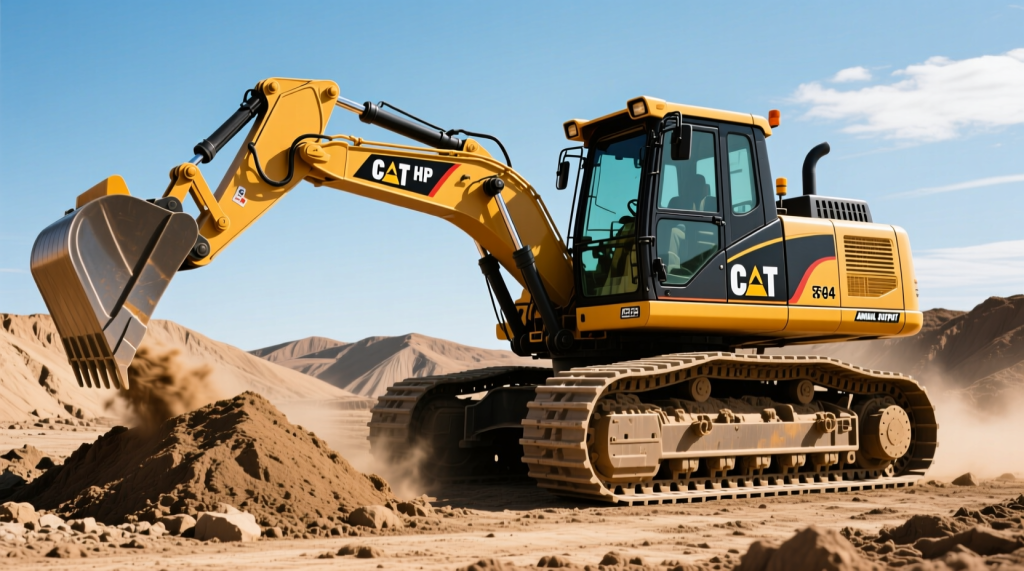
The Caterpillar (Cat) 6015 is a 140-tonne-class hydraulic mining shovel designed for surface mines, quarries, and heavy bulk earthmoving where fast, repeatable truck loading and high mechanical availability are critical. This latest iteration focuses on reducing energy losses in the hydraulic system, improving undercarriage and swing-component durability, and making service and connectivity more practical for multi-shift production.
Quick answers to common buyer/planner questions:
- Who is the 6015 for? Operations loading 55–90 tonne-class trucks (typical fleet pass-matching with Cat 773/775/777 trucks) that need a fuel-efficient hydraulic mining shovel for surface mines without sacrificing dig/swing performance.
- Key upgrades vs. prior 6015 generations: On-demand pilot oil flow, updated PPPC hydraulics, four-pump architecture with dedicated swing pump, boom-lowering float valves, closed-loop swing with energy recovery, heavier-duty undercarriage protection, autolube linkage, and an upgraded triple-roller slew bearing arrangement.
- Specs that matter for fleet planning: 140-t class size, ~14.6 t bucket payload, 824 hp (615 kW) Cat C27 engine, Tier 4 Final / EU Stage V capability without diesel exhaust fluid (DEF), and truck matching for consistent pass counts.
TL;DR: The new Cat 6015 targets planners who want predictable truck loading, lower hydraulic losses, and longer wear-component life—especially in abrasive, high-utilization sites.
Cat 6015 Hydraulic Mining Shovel Specifications (Planning Snapshot)
For readers searching “6015 hydraulic mining shovel specifications” or “Cat 6015 payload,” the table-style snapshot below consolidates the planning-level numbers referenced by Caterpillar.
- Operating weight class: ~140-tonne class (varies by configuration)
- Bucket payload: ~14.6 tonnes (application-dependent)
- Engine: Cat C27, 824 hp (approx. 615 kW)
- Emissions: U.S. EPA Tier 4 Final / EU Stage V capable, configured without SCR (Selective Catalytic Reduction) and without DEF (Diesel Exhaust Fluid), per Caterpillar’s product positioning
- Typical truck match: Cat 773 / 775 / 777 (55–90 t class)
- Typical bench focus: Designed for production bench loading in surface mining/quarry faces; final bench height suitability depends on site geometry, fragmentation, and bucket selection
For published model details and configuration notes, reference Caterpillar’s official product literature and support resources (see Cat’s site: https://www.cat.com/).
TL;DR: The 6015 sits in the ~140-t class with ~14.6 t bucket payload and an 824 hp C27—sized to load 773/775/777-class fleets efficiently.
Performance & Fleet Pass-Matching: Turning Payload into Production
The most direct lever for hydraulic shovel productivity is not a single headline number—it’s the combination of bucket payload, swing/implement speed, and how consistently the shovel achieves target passes per truck without spillage or truck-body abuse. With a ~14.6-tonne bucket payload, the 6015 is positioned for consistent pass-matching with Cat 773, 775, and 777 haul trucks, supporting steady truck dispatch and fewer “partial top-offs.”
In contrast to older shovel/truck pairings that rely on extra cleanup passes, a tighter pass plan can improve overall fleet balance. For example, in a typical quarry face with good fragmentation, a 6015 loading a 777-class truck often aims for a stable pass count rather than chasing maximum bucket fill each pass—helping keep cycle-to-cycle variability down, which can reduce truck queuing and improve shift-to-shift production predictability.
Example scenario (illustrative planning use case): A mid-size surface operation running a 6015 with a 4–6 truck fleet in the 55–90 t class can prioritize dispatch consistency (shorter queuing windows and fewer “last-pass” delays). If the site targets ~6,000 operating hours/year, even small reductions in average loading delays (seconds per cycle) can translate into meaningful annual tonnage—especially when truck availability is the constraint rather than dig capability.
For general background on surface mining load-and-haul productivity concepts (cycle time, queuing, match factor), see authoritative overviews like Society for Mining, Metallurgy & Exploration (SME) resources.
TL;DR: The 6015 is optimized around stable pass-matching with 773/775/777-class trucks—improving dispatch rhythm and reducing the hidden productivity losses that come from variability and cleanup passes.
Engine & Emissions: 824 hp Cat C27 and DEF-Free Logistics
The 6015 uses a Cat C27 engine rated at 824 hp. Caterpillar positions the package to meet U.S. EPA Tier 4 Final and EU Stage V requirements while avoiding SCR (Selective Catalytic Reduction) and DEF (Diesel Exhaust Fluid). In practical terms, that can simplify remote-site consumables planning by removing DEF storage, handling, freeze protection, and contamination risk from the daily routine.
For readers who want the regulatory context, the U.S. Environmental Protection Agency outlines nonroad diesel emissions frameworks here: https://www.epa.gov/regulations-emissions-vehicles-and-engines/nonroad-engines-equipment-and-vehicles. For the EU Stage V overview, see the European Commission summary: https://commission.europa.eu/.
TL;DR: The 6015’s 824 hp C27 is packaged to meet Tier 4 Final/Stage V goals without DEF—often a meaningful simplification for remote or cold-climate logistics.
Hydraulics & Cycle Efficiency: Where the 6015 Saves Energy (and Time)
Caterpillar’s most meaningful functional upgrades on the 6015 are in hydraulic control and energy management—areas that influence both fuel burn and repeatable cycle performance. The terms below are defined the first time they appear to keep the discussion accessible.
On-demand pilot oil flow (reducing “always-on” losses)
The updated pilot pump configuration is designed to deliver variable, on-demand flow instead of continuously supplying high pilot flow at elevated engine speed when controls are not actively demanding it. In simple terms: when joysticks are neutral, the system backs off; when the operator commands multiple functions, the system increases pilot supply to match.
According to Caterpillar’s internal validation and field testing, this contributes to a minimum 5.5% improvement in fuel efficiency versus prior designs. Beyond fuel savings, reducing excess flow can also lower hydraulic heat load, which may help cooling system duty cycle and fluid life in hot, high-altitude, or high-ambient environments where cooling margin matters.
TL;DR: Pilot flow that ramps with operator demand helps cut wasted hydraulic energy and heat; Caterpillar cites at least 5.5% fuel-efficiency gain from the updated approach.
PPPC hydraulics: Proportional Priority Pressure Compensating control
PPPC stands for Proportional Priority Pressure Compensating. It’s a control strategy that meters hydraulic flow in proportion to joystick input while maintaining priority to key functions and compensating for pressure changes. For operators, that usually shows up as more repeatable “feel” across simultaneous boom, stick, bucket, and swing actions—particularly when the material varies or when working tight to the truck sideboards.
Operationally, smoother control can reduce hard stops and spillage. These details matter because consistent bucket path and controlled dumping help protect truck bodies and reduce cleanup time around the loading area.
TL;DR: PPPC improves controllability under multi-function loading, helping operators keep bucket path consistent and reducing spillage-related delays.
Four-pump architecture: separating swing demand from implement demand
The 6015 uses a four-pump hydraulic arrangement: three pumps primarily support implement functions and travel, while one pump is dedicated to swing. This matters because swing demand can be highly dynamic; isolating it helps reduce “resource contention” where a high swing requirement steals flow from implements (or vice versa) during the most time-sensitive portion of the loading cycle.
In contrast, older architectures (or competitive designs with less separation) can require more compromise in multifunction operation—especially when operators are trying to keep the bucket moving while initiating swing and positioning for dump.
TL;DR: A dedicated swing pump supports smoother multifunction cycles by reducing competition between swing and implement circuits during peak demand.
Boom-lowering float valves: using gravity intelligently
Boom-lowering float valves allow the boom to lower using gravity where appropriate instead of consuming pump power for the full lowering event. The practical benefit is twofold: the boom-down portion of the cycle can be quicker, and pump capacity is freed for other functions during that same window.
This can be most noticeable in repetitive truck loading where the boom must return to a consistent dig posture every cycle and where small time savings accumulate across a shift.
TL;DR: Float valves speed boom-down and free hydraulic capacity for other movements—helping shave seconds off repetitive loading cycles.
Closed-loop swing with energy recovery: how it ties into the main system
A closed-loop swing system recirculates hydraulic oil within the swing circuit rather than constantly drawing from and returning to tank like a traditional open-loop arrangement. The 6015 also incorporates energy recovery during swing deceleration: kinetic energy that would otherwise be dissipated as heat is captured and converted to usable hydraulic power.
In simple terms, when the upper structure slows down at the end of a swing, the system can redirect that recovered energy to support hydraulic demand (helping drive main/auxiliary pump loads) rather than wasting it. The functions that tend to benefit most are the repetitive swing-accelerate/swing-decelerate events in truck loading, where deceleration happens every pass.
Constraints/limits to understand: energy recovery benefits are typically highest when swing events are frequent and controlled (e.g., consistent loading arcs) and may be less pronounced in highly irregular operations (variable swing angles, frequent interruptions, or very short “micro-swings”).
TL;DR: Closed-loop swing recirculates oil and recovers deceleration energy; it’s most beneficial in repetitive truck-loading swings and helps reduce heat and fuel burn beyond engine-only improvements.
Undercarriage & Slew Bearing Durability: Wear-Life Where Mines Actually Spend Money
Undercarriage and swing-circle components are frequent cost drivers for tracked loading tools operating in abrasive ground, sharp rock, and high-impact bench conditions. Caterpillar highlights a heavy-duty undercarriage protection package for the 6015, including reinforced guarding and upgraded wear areas around rollers, idlers, and track groups.
While exact wear-life depends heavily on ground conditions (abrasiveness, moisture content, track maintenance discipline, and operator travel habits), the intent of the upgrade is clear: protect high-value wear components from impact and packing, and reduce the “secondary damage” that turns routine wear into unscheduled downtime.
Triple-roller slew bearing: what it changes mechanically
The 6015’s upgraded slew bearing (also called a swing bearing or swing circle) uses a triple-roller configuration. In practical engineering terms, multiple roller rows can improve how combined loads are carried—especially the mix of axial load (vertical), radial load (side), and overturning moment (tipping torque) created when the shovel swings a full bucket at radius.
By improving load distribution across the bearing, the design aims to reduce localized contact stresses that accelerate wear. For mines, the real goal is not just “a stronger bearing,” but fewer adjustments, fewer heat-related issues, and a longer path to major swing-circle intervention under high-frequency loading.
TL;DR: The triple-roller slew bearing improves load sharing under combined swing loads, targeting longer service life and fewer swing-circle reliability issues in high-cycle truck loading.
Autolube linkage and 500-hour greasing window (planning benefit)
The shovel includes an autolube (automatic lubrication) system for bucket linkage points to reduce manual greasing exposure and improve consistency. Caterpillar notes increased grease tank capacity supporting up to a 500-hour service window for lubrication refills in typical planning scenarios.
Beyond labor savings, consistent lubrication can extend pin and bushing life by reducing boundary lubrication events (metal-to-metal contact). It also supports safer maintenance routines by reducing the frequency of manual access to lubrication points.
TL;DR: Autolube improves lubrication consistency and supports up to 500-hour refill intervals—reducing manual service exposure and helping protect pins/bushings.
Serviceability & Safety: Less Time Wrenching, More Time Loading
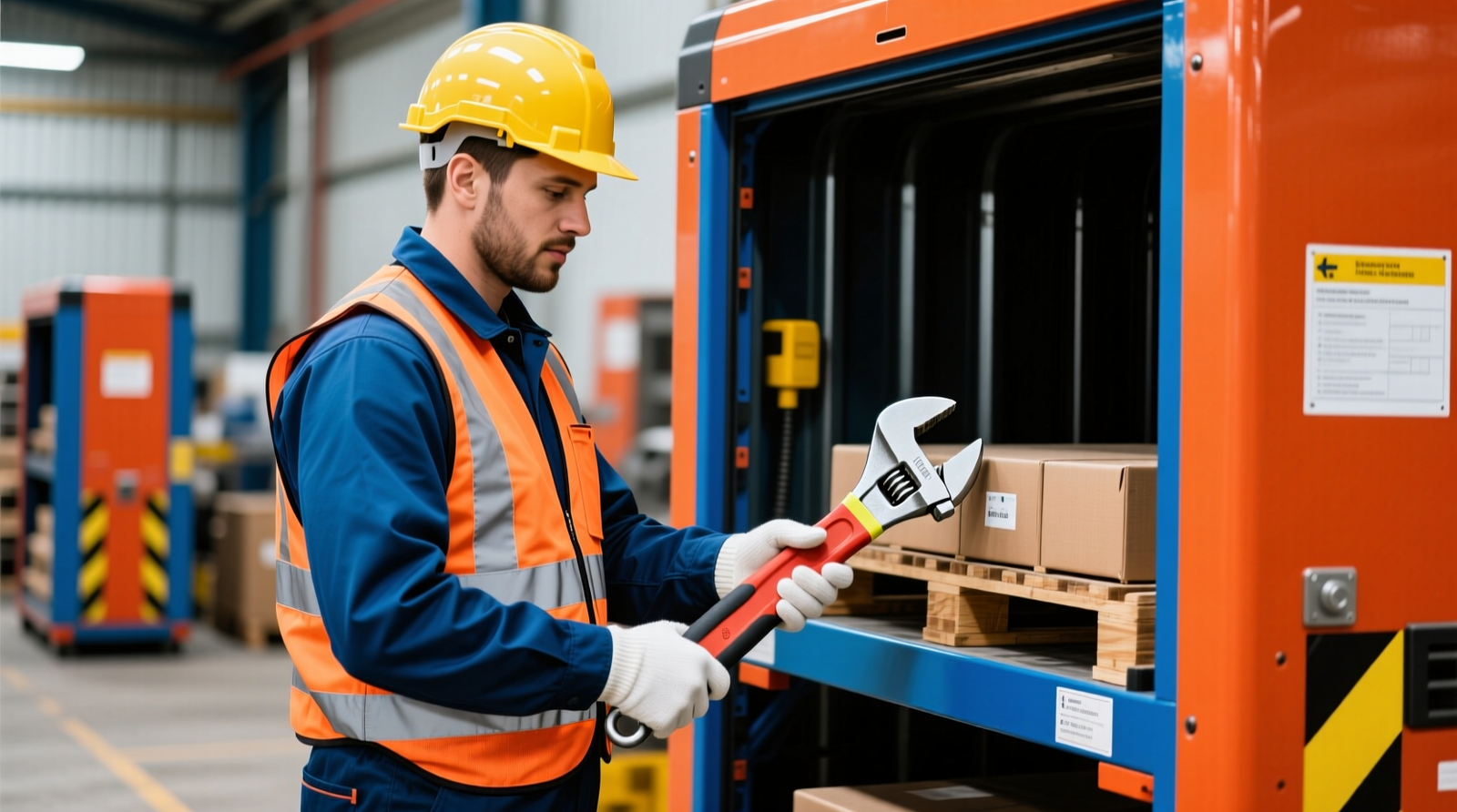
Serviceability improvements matter most when they reduce repeat maintenance time, make inspections easier, and limit the chance of secondary failures. The 6015 emphasizes improved hose routing (less abrasion and clearer access), practical service stations, and site-friendly repair approaches (e.g., dealers building hoses to length).
Additionally, access design elements—wide walkways, anti-slip surfaces, reduced elevation changes, and optional powered 45-degree stairs—align with modern mine safety expectations focused on reducing slips, trips, and falls during daily checks. For broader context on safety management systems and safe access expectations, refer to resources from organizations like the Mine Safety and Health Administration (MSHA).
TL;DR: The 6015’s service layout targets faster routine work and safer access—key levers for availability when running multi-shift production.
Digital Connectivity: MineStar, Product Link Elite, and Faster Diagnostics
The 6015 supports Cat MineStar integration via Product Link Elite hardware, using cellular or satellite communication depending on site coverage. Cat MineStar is Caterpillar’s suite of mining technologies for fleet, health, and productivity management (availability varies by region and subscription).
With MineStar Health, teams can use condition monitoring, fault/event tracking, and trend analysis to reduce reactive repairs and better plan component changeouts. For an authoritative overview of MineStar capabilities, see Caterpillar’s MineStar page: https://www.cat.com/en_US/products/new/technology/minestar.html.
For troubleshooting and configuration, Cat Electronic Technician (ET) (defined: Caterpillar’s diagnostic/service software) supports faster fault isolation and parameter checks—especially helpful when validating hydraulic pressures or confirming sensor inputs after repairs.
TL;DR: MineStar + Product Link Elite supports condition-based maintenance, while Cat ET helps technicians diagnose faster—both aimed at reducing unplanned downtime.
Use Cases: Making the Benefits Tangible

Two brief scenarios illustrate where the 6015’s changes can matter operationally:
- High-abrasion quarry with tight maintenance windows: If the site runs long shifts and struggles to schedule manual lubrication, autolube consistency plus the 500-hour grease refill window can reduce “missed lube” risk and the premature pin/bushing wear that follows. Combined with improved guarding, this targets fewer mid-week stoppages.
- Surface mine focused on dispatch stability: In a truck-limited pit where queue time is the hidden productivity killer, smoother PPPC control and dedicated swing hydraulics can help operators keep loading cycles consistent (fewer corrections and cleaner dumps). Even when average cycle time changes are modest, reduced variability can improve fleet match and reduce truck idle time.
TL;DR: The 6015’s biggest wins often show up as fewer interruptions (lubrication/service consistency) and steadier cycle repeatability (hydraulic control + swing separation), not just raw peak output.
Conclusion
The Cat 6015 is a decision-relevant update in the 140-tonne class, aimed at efficient truck loading, reduced hydraulic energy waste, and longer wear-component life. Its 824 hp C27 engine package (Tier 4 Final/Stage V positioning without DEF), on-demand pilot flow, PPPC controls, four-pump hydraulics, boom float functionality, and closed-loop swing energy recovery are designed to improve cycle efficiency and reduce heat and fuel consumption in repetitive loading.
Beyond fuel savings, the undercarriage protection focus, triple-roller slew bearing design, autolube linkage, and practical service access features target higher availability and safer maintenance routines—core drivers of cost and reliability in surface mines and quarries.
TL;DR: The 6015 combines hydraulic efficiency upgrades with durability and serviceability improvements—built for planners and operators who value consistent truck loading and high availability over the long haul.
FAQ

Q: What are the main differences between the new 6015 and previous 6015 iterations?
A: The newest 6015 emphasizes reduced hydraulic losses and improved component durability. Key changes include on-demand pilot oil flow, PPPC (Proportional Priority Pressure Compensating) controls, a four-pump hydraulic layout with a dedicated swing pump, boom-lowering float valves, a closed-loop swing system with energy recovery, heavier-duty undercarriage protection, an autolube linkage system, and an upgraded triple-roller slew bearing for better load distribution.
Q: What is the bucket payload and typical truck match for fleet pass-matching with Cat 773/775/777 trucks?
A: The Cat 6015 is commonly referenced with an approximate bucket payload of 14.6 tonnes and is intended to match efficiently with Cat 773, 775, and 777 haul trucks (roughly 55–90 tonne class). This pairing supports consistent pass counts and stable dispatch rhythm, which helps minimize truck queue time and loading-area cleanup.
Q: How does the closed-loop swing system with energy recovery actually reduce fuel use?
A: In a closed-loop swing circuit, hydraulic oil is largely recirculated within the swing system. When the machine decelerates at the end of a swing, the system captures energy that would normally turn into heat and redirects it back into usable hydraulic power to support pump demand. The benefit is usually greatest in repetitive truck-loading cycles where swing deceleration occurs every pass.
Q: What are the typical maintenance and service intervals for the 6015 (high level)?
A: Intervals vary by site conditions and maintenance program, but Caterpillar highlights an increased grease tank capacity supporting up to a 500-hour autolube refill window for the linkage system in typical planning scenarios. Undercarriage inspections are commonly performed routinely (often daily walkarounds with scheduled detailed checks) because wear rate is highly site-dependent. For exact intervals and procedures, use the official operation and maintenance documentation for the machine configuration.
Q: What infrastructure and support requirements should planners consider (dealer support, tooling, training, connectivity for MineStar)?
A: Plan for (1) dealer parts and field service coverage suitable for your utilization targets, (2) technician training and access to Cat Electronic Technician (ET) diagnostic tooling, (3) site capability for hose repair/build support as needed, and (4) connectivity prerequisites for MineStar/Product Link Elite (cellular coverage or satellite service). Mines typically also plan for data workflows (who reviews health events, response times, and escalation paths) so connectivity translates into fewer unplanned stops rather than just more data.