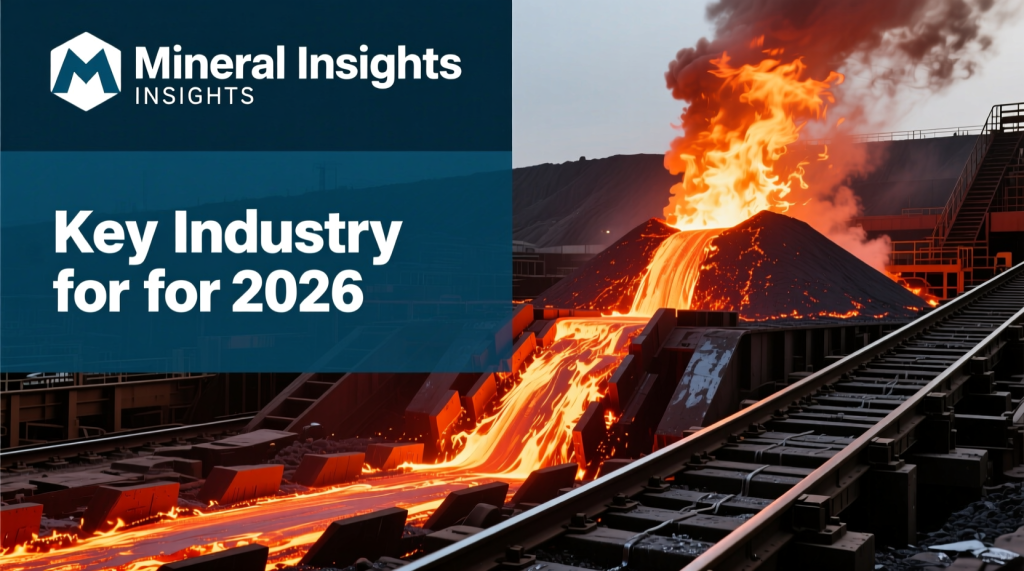
Minerals containing iron—especially iron ore minerals such as hematite and magnetite—remain central to steelmaking, infrastructure buildout, and selected agricultural and defense applications in 2025–2026. Global iron ore production is on the order of billions of tonnes per year, and steel demand continues to track urbanization and energy-transition buildout. At the same time, decarbonization pressure is forcing changes in how iron is explored, processed, and converted to steel.
- 2026 demand outlook: Steel demand is likely to remain resilient where infrastructure and grid expansion are strongest; volatility still depends on construction cycles and China’s output policy. For context, the World Steel Association statistics provide regularly updated global steel production and demand indicators.
- Key technologies: Satellite-based mineral detection (remote sensing), AI-driven prospectivity mapping, and improved beneficiation (ore upgrading) are shortening early-stage targeting cycles—while still requiring ground verification.
- Sustainability shifts: “Green steel” pathways (notably hydrogen-based DRI and EAF routes) depend on high-grade ore/pellets, scrap availability, and low-carbon power/hydrogen. Sector decarbonization context is summarized by the IEA Iron and Steel Technology Roadmap (IEA = International Energy Agency).
- Operational reality: Remote sensing complements—rather than replaces—geophysics, field mapping, sampling, and drilling. “Fast screening” is not the same as “resource definition.”
TL;DR: In 2026, minerals containing iron sit at the center of industrial growth and decarbonization—driving new exploration workflows, ore-upgrading investments, and tighter ESG (Environmental, Social, Governance) expectations.
Overview of iron-containing minerals (and why grades matter in 2026)
In industry, “minerals containing iron” usually refers to iron ore minerals mined for steel feedstock. The two workhorses are hematite (Fe2O3) and magnetite (Fe3O4). Their typical iron (Fe) grades and processing routes differ, which directly affects project economics and emissions intensity.
Major iron-bearing minerals and typical Fe-grade ranges
- Hematite (Fe2O3): Often occurs as “direct shipping ore” (DSO) in some deposits. Commercial hematite ores commonly range from ~55–68% Fe depending on gangue (waste minerals) and beneficiation needs.
- Magnetite (Fe3O4): In-situ grades are frequently lower than premium hematite, but magnetite is commonly upgraded via crushing/grinding + magnetic separation to concentrates (often ~65–70% Fe) suitable for pelletizing.
- Goethite (FeO(OH)): Common in laterites and many weathered profiles. It can be an ore component but may carry higher LOI (loss on ignition—water/hydroxyl content), impacting sintering/blast furnace performance unless blended/processed.
- Siderite (FeCO3): Carbonate iron ore that typically requires more complex processing (e.g., calcination) and is less common in mainstream seaborne supply.
Grade is not the only variable. Impurities such as silica (SiO2), alumina (Al2O3), phosphorus (P), and sulfur (S) influence downstream costs and emissions because they affect flux use, slag volume, and energy demand.
TL;DR: Hematite vs magnetite is not just geology—typical Fe-grade and impurity profiles drive the processing route, capex/opex, and “green steel” suitability.
Iron’s role in agriculture: soil availability, fertilizer choices, and practical ranges
Iron is an essential plant micronutrient, but plant-available iron can be low even in iron-rich soils—especially at high pH (alkaline/calcareous conditions), where iron becomes poorly soluble. In 2025–2026 agronomy, the conversation is less about total iron and more about availability, root uptake conditions, and placement timing.
What iron does in plants (and what deficiency looks like)
- Physiology: Iron is critical for chlorophyll formation and electron transfer reactions in photosynthesis and respiration.
- Symptoms: Iron chlorosis (yellow leaves with green veins) often appears first on young leaves; severity increases in high-pH soils, cold/wet conditions, or compacted root zones.
Iron fertilizers: sulfate vs chelates (with typical application examples)
Two common approaches are iron sulfate and iron chelates. Actual rates must be adjusted to crop, soil test, irrigation water quality, and product label, but the following ranges reflect common field practice patterns:
- Iron sulfate (FeSO4): Often used where soil pH is not excessively high or where acidifying effects help. Typical soil applications can range broadly (for example, tens to a few hundred kg/ha of product) because availability is limited in alkaline soils and much can become immobilized.
- Iron chelates: “Chelate” means the iron is bound to an organic molecule that helps keep it soluble. Common chelates include EDDHA (ethylenediamine-N,N′-bis(2-hydroxyphenylacetic acid)) for high-pH soils and EDTA (ethylenediaminetetraacetic acid) for lower-pH situations. Soil-applied chelates are typically used at much lower product rates than sulfate (often single-digit to tens of kg/ha), while foliar sprays are usually applied in smaller, repeated doses depending on crop sensitivity and canopy size.
Good practice is to pair product choice with pH management, organic matter improvement, and irrigation/water alkalinity control. For agronomic background on micronutrients and deficiency drivers, see the FAO soil nutrient resources (FAO = Food and Agriculture Organization of the United Nations).
TL;DR: In agriculture, the challenge is iron availability (often pH-driven). Chelates (e.g., EDDHA) typically outperform sulfate in alkaline soils, but rates and economics depend on the local constraint.
Mining and iron ore exploration in 2025–2026: faster targeting, same need for proof
For minerals containing iron, 2025–2026 exploration is defined by earlier, broader screening (satellites + AI) and more selective field follow-up. The practical goal is to reduce the number of “boots-on-ground” kilometers before the first drill program—without pretending remote sensing can confirm ore bodies on its own.
A simplified “satellite-to-drilling” workflow (described schematic)
Schematic in words: (1) Regional remote sensing screen → (2) AI/ML (machine learning) prospectivity map + ranked targets → (3) Field mapping & sampling (“ground truth”) → (4) Geophysics (where appropriate) → (5) Scout drilling → (6) Resource drilling + metallurgy.
What satellites can detect for iron (and what they can’t)
- Strengths: Multispectral/hyperspectral data can highlight surface mineralogy and alteration patterns; iron oxides/hydroxides can have diagnostic spectral behavior in visible–near infrared (VNIR) and shortwave infrared (SWIR) ranges.
- Limitations (important in real projects): Spectral ambiguity (different materials can look similar), vegetation masking, soil/regolith cover, and weathering can hide or distort signals. This is why ground-truthing (field verification) is mandatory before drilling decisions.
Satellite-based exploration vs traditional methods (quick comparison)
- Satellite/AI targeting:
- Pros: Rapid regional screening; consistent coverage; useful for ranking large land packages; lower early-stage field disturbance.
- Constraints: Surface-biased; cloud/vegetation issues; interpretation uncertainty; requires calibration with known occurrences and field checks.
- Airborne/ground geophysics (e.g., magnetics, gravity):
- Pros: Can “see” beneath cover; magnetics can be highly relevant for magnetite-rich systems; good for structure and lithology mapping.
- Constraints: Costly at scale; access/logistics; still needs geology and drilling to confirm grade/tonnage.
- Field mapping & geochemistry:
- Pros: Direct observation and sampling; essential for validating targets and building geologic models.
- Constraints: Time, safety, and access limitations; hard to cover very large areas quickly.
Ore sorting and beneficiation: why magnetite projects often lean on processing
Beneficiation means upgrading ore to a higher-grade product. Magnetite projects commonly rely on grinding and magnetic separation to produce concentrates for pelletizing. Hematite operations may be simpler where DSO exists, but many hematite deposits still require crushing, screening, and sometimes flotation to manage silica/alumina.
Efficiency and recovery improvements are highly site-specific. Reported gains (e.g., “20–30% improvement”) should be treated as indicative ranges observed in selected operations or scenarios—not guaranteed outcomes—because results depend on mineralogy, liberation size, hardness, and plant configuration.
Anonymized use case examples (what changes when satellite screening is used well)
- Use case 1 — West African greenstone/laterite margin (anonymized): A mid-tier explorer used regional iron-oxide spectral screening to re-rank targets across a large permit. Field crews were redirected away from several “false positive” lateritic zones where iron oxide staining was widespread but not ore-grade. Follow-up focused on fewer structural corridors; the first drilling phase was smaller and more targeted than originally planned.
- Use case 2 — Arid Australia-style terrain (anonymized): Multi-temporal imagery helped separate persistent iron-oxide signatures from seasonal surface effects. The exploration team changed planned traverse lines and prioritized ridge exposures with consistent signatures, improving sample efficiency and reducing time spent on non-diagnostic cover.
Note on cost claims: Large “up to 80–85%” savings are sometimes reported in marketing materials for remote screening versus extensive reconnaissance, but real-world savings vary widely with permit size, access, and existing data. A more defensible statement is that satellite-based screening can reduce early-stage field scope in some projects—then value is realized only if the workflow is validated by field checks.
TL;DR: Satellite-based mineral detection speeds up regional targeting for minerals containing iron, but it must be paired with geology, geophysics, sampling, and drilling to confirm grade and tonnage.
Satellite-based mineral intelligence tools (Farmonaut as one example among several)
“Satellite mineral intelligence” is an emerging category that includes multiple vendors, methods, and data sources (public and commercial). Farmonaut is one example offering satellite-driven analytics used in both land and resource monitoring contexts. The practical value for iron ore teams is usually in prioritization: narrowing a big search area to a smaller set of targets that justify field time.
Where platforms like Farmonaut typically fit in an iron exploration program
- Prospectivity mapping: Combining satellite layers (e.g., iron-oxide indicators, alteration proxies) with structural interpretation to produce ranked target zones.
- Decision support outputs: GIS-ready layers and reports that technical teams can integrate with existing geology and geophysics.
- ESG-aligned early stage work: Remote screening can reduce unnecessary site disturbance before permits, access agreements, and baseline studies are in place.
Important boundary: These tools support decisions; they do not certify a mineral resource. Resource reporting still relies on drilling, QA/QC (quality assurance/quality control), and compliant estimation frameworks.
TL;DR: Farmonaut can be useful as a screening and prioritization layer for minerals containing iron, but it sits upstream of the “hard proof” steps (sampling, geophysics, drilling, metallurgy).
Steelmaking, green steel, and industrial demand: what iron ore quality is needed
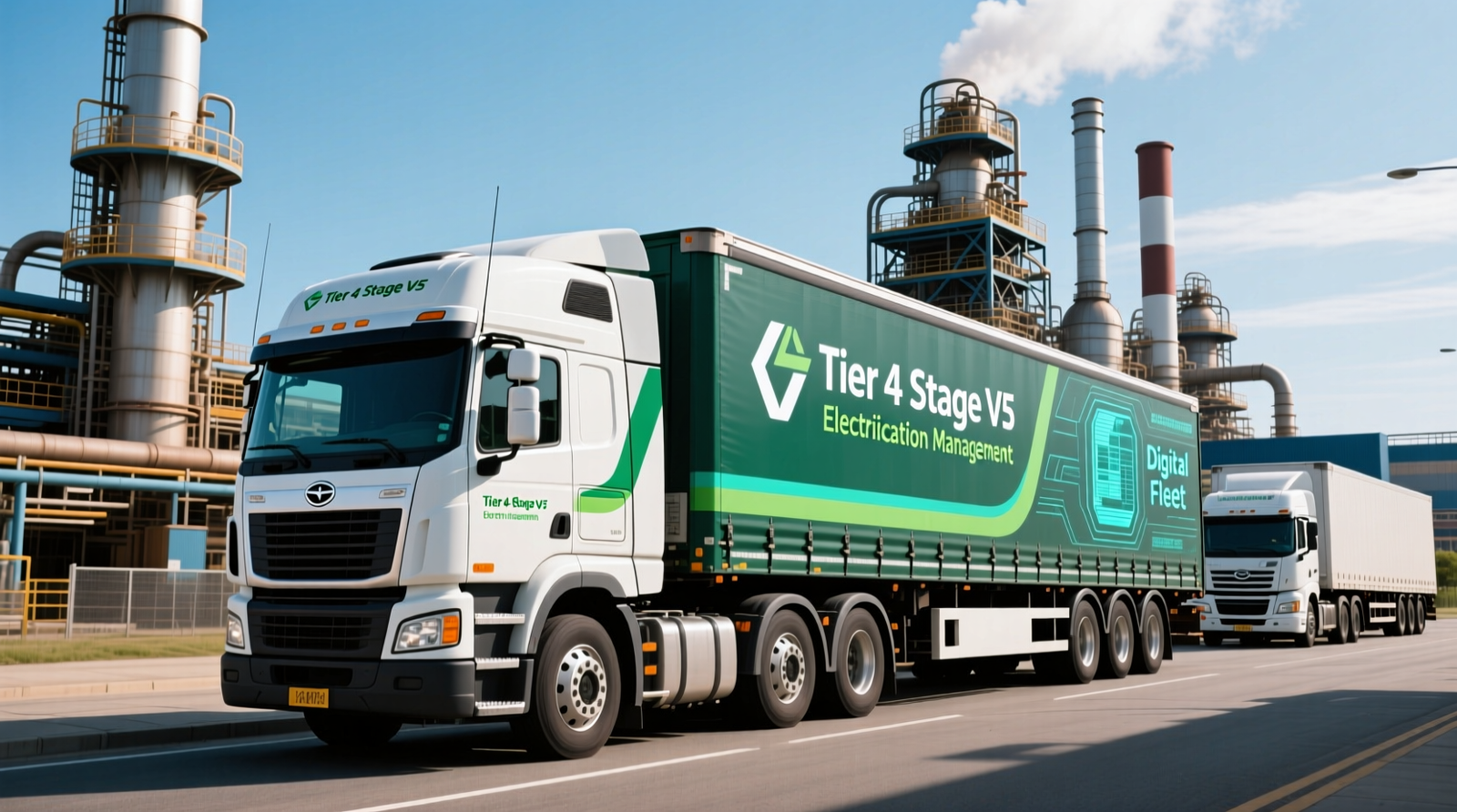
Steel is still the dominant end-use driver for minerals containing iron. In 2025–2026, the shift is not “less steel,” but different steelmaking routes—with stricter requirements on ore quality, energy inputs, and emissions accounting.
Iron ore-to-steel value chain (described schematic)
Schematic in words: Mine → crushing/screening → beneficiation (optional) → concentrate → pelletizing/sinter feed → ironmaking (blast furnace or DRI) → steelmaking (BOF or EAF) → rolling/fabrication → use → scrap collection → recycling.
Green steel pathways and constraints
- DRI (Direct Reduced Iron): DRI reduces iron ore in the solid state. Hydrogen-based DRI can materially lower emissions, but typically needs high-grade ore or DR-grade pellets and reliable low-carbon hydrogen plus power infrastructure. (DRI = Direct Reduced Iron.)
- EAF (Electric Arc Furnace): EAF primarily melts scrap; it can also use DRI/HBI (Hot Briquetted Iron) to manage chemistry and quality. Emissions depend heavily on electricity carbon intensity and scrap mix. (EAF = Electric Arc Furnace; HBI = Hot Briquetted Iron.)
For decarbonization context and scenario framing (which depends on power grids, hydrogen cost, and scrap availability), the IEA’s steel roadmap and the World Steel Association sustainability materials are widely cited references. Emission-reduction ranges are scenario-based and should be interpreted as pathways, not promises.
TL;DR: Green steel in 2025–2026 increases demand for high-grade, low-impurity iron ore and for infrastructure that can supply low-carbon electricity and hydrogen at industrial scale.
Recycling, circularity, and material efficiency: what’s plausible by 2026
Steel is already one of the most recycled materials globally, but recycling shares vary by region, product lifetime, and scrap collection systems. Growth in EAF capacity can raise scrap use, yet scrap availability is constrained by how much steel is reaching end-of-life.
The main levers that improve circularity
- Scrap collection and sorting: Better sorting reduces tramp elements (e.g., copper) that can limit high-quality steel grades.
- Design for disassembly: Easier separation of steel components improves recovery rates and scrap quality.
- Yield improvements in fabrication: Less offcut waste reduces upstream demand for primary ore.
When articles cite “20–30% recycling improvements,” it’s best read as a potential improvement in specific systems (collection, sorting, yield, or scrap substitution) rather than a guaranteed jump in national recycling rates. For widely referenced circularity and scrap context, worldsteel’s data and sustainability reporting are a practical starting point: worldsteel statistics.
TL;DR: Recycling gains by 2026 are real but constrained by scrap supply, sorting quality, and product lifetimes—so primary minerals containing iron remain essential.
Regulatory, ESG, and reporting frameworks shaping iron-containing mineral projects

In 2025–2026, “license to operate” increasingly depends on credible reporting across emissions, water, tailings, and closure planning. For minerals containing iron, this affects both mine development and downstream steel procurement.
What changes project decisions
- LCA (Life Cycle Assessment): LCA quantifies environmental impacts across the value chain (e.g., cradle-to-gate steel). LCA is increasingly used in procurement and product declarations.
- Responsible sourcing expectations: Buyers and financiers often require traceability, community engagement evidence, and alignment with recognized mining standards.
- Mine closure planning: Closure design, progressive rehabilitation, and bonded liabilities influence permitting and financing—particularly for large open pits and tailings facilities.
For global context on tailings governance and risk management, the Global Tailings Review is a credible reference point.
TL;DR: ESG requirements now influence exploration methods, mine design, and steel procurement; credible LCA, tailings governance, and closure planning are becoming standard expectations.
Defense and strategic supply: why iron still matters beyond construction
Defense platforms rely on steels and iron-based alloys for armor, naval hulls, and critical infrastructure. The 2025–2026 strategic theme is not scarcity of iron in the crust, but security of supply for high-quality feedstocks, metallurgical capacity, and resilient logistics.
Where iron-based materials show up in defense supply chains
- Armor and protective systems: High-hardness steels and engineered microstructures balance strength, toughness, and weight.
- Naval and aerospace: Corrosion performance and fatigue resistance are major drivers of alloy selection and quality control.
TL;DR: For defense, the strategic question is stable access to quality steelmaking inputs and capacity—not the geological abundance of minerals containing iron.
Future outlook for minerals containing iron (2026 focus)
Looking across the value chain, three trends are likely to define 2026 planning:
- Higher quality requirements: More projects will optimize for low-impurity, high-grade products that fit DRI/EAF pathways.
- Digitized targeting and planning: Satellite screening plus integrated geoscience data will increasingly be used to reduce early-stage exploration waste—while acknowledging uncertainty and the need for validation.
- Stronger disclosure: Emissions accounting and tailings/closure governance will shape financing and permitting timelines.
TL;DR: In 2026, the winners in iron-bearing minerals are likely to be projects that align ore quality, processing routes, and ESG disclosure with the realities of green steel and stricter permitting.
Conclusion
Minerals containing iron remain indispensable in 2025–2026—supporting conventional infrastructure growth while also enabling (and constraining) green steel transitions. The practical shift is toward better targeting (satellites + AI + geoscience integration), more selective drilling, and tighter control of ore quality and impurity penalties.
Satellite-based mineral detection can accelerate early-stage screening, but it does not replace geophysics, sampling, metallurgical testwork, or compliant resource estimation. The strongest programs treat remote sensing as a front-end filter that reduces wasted effort and supports more defensible field decisions.
TL;DR: For 2026, minerals containing iron stay foundational—but competitive advantage increasingly comes from ore quality, processing fit for green steel, and transparent ESG performance.
FAQ
Q: What are the most important minerals containing iron for iron ore exploration?
A: Hematite (Fe2O3) and magnetite (Fe3O4) dominate most iron ore exploration and supply. Goethite (FeO(OH)) is common in weathered profiles and can be a major ore component in some deposits, while siderite (FeCO3) is less common in mainstream supply and often needs more processing.
Q: What Fe grades are typical for hematite vs magnetite, and why does it matter?
A: Many commercial hematite ores fall roughly in the ~55–68% Fe range, while magnetite ore is frequently upgraded to ~65–70% Fe concentrate through magnetic separation and then pelletized. It matters because processing route, energy use, and product suitability for DRI/EAF “green steel” pathways depend on grade and impurities.
Q: Can satellite-based mineral detection reliably find iron ore under vegetation or cover?
A: Not reliably in all cases. Satellite methods are strongest for mapping surface mineralogy and alteration; vegetation, soil/regolith cover, and spectral ambiguity can mask signals. That’s why ground-truthing, geophysics, and drilling are required to confirm whether a satellite anomaly is actually ore-grade iron mineralization.
Q: What is hydrogen-based DRI, and what does it require from iron ore supply?
A: Hydrogen-based DRI (Direct Reduced Iron) uses hydrogen as a reducing agent instead of fossil-derived carbon, reducing CO2 emissions. It typically requires high-grade, low-impurity ore or DR-grade pellets, plus reliable low-carbon hydrogen and electricity infrastructure.
Q: In agriculture, when should I use iron sulfate versus an iron chelate?
A: Iron sulfate is often used where soil pH is not extremely high or where acidification helps. In alkaline/calcareous soils where iron quickly becomes unavailable, chelated iron (commonly EDDHA for high pH) is often more effective at lower application rates. Soil tests, irrigation water alkalinity, and label guidance should determine the final product and rate.