
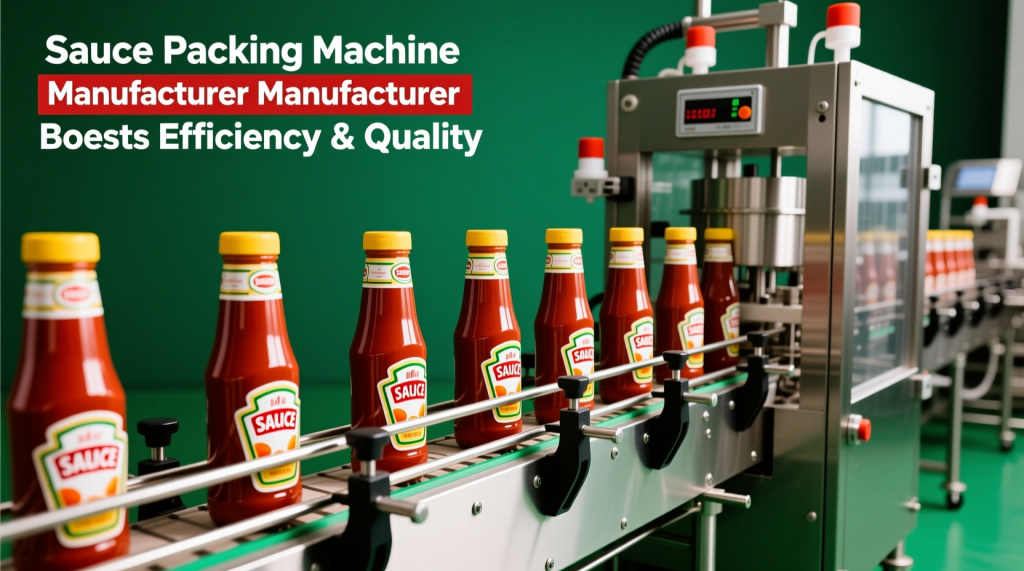
Sauce Packing Machines: Efficient, Hygienic Solutions from a Leading Manufacturer
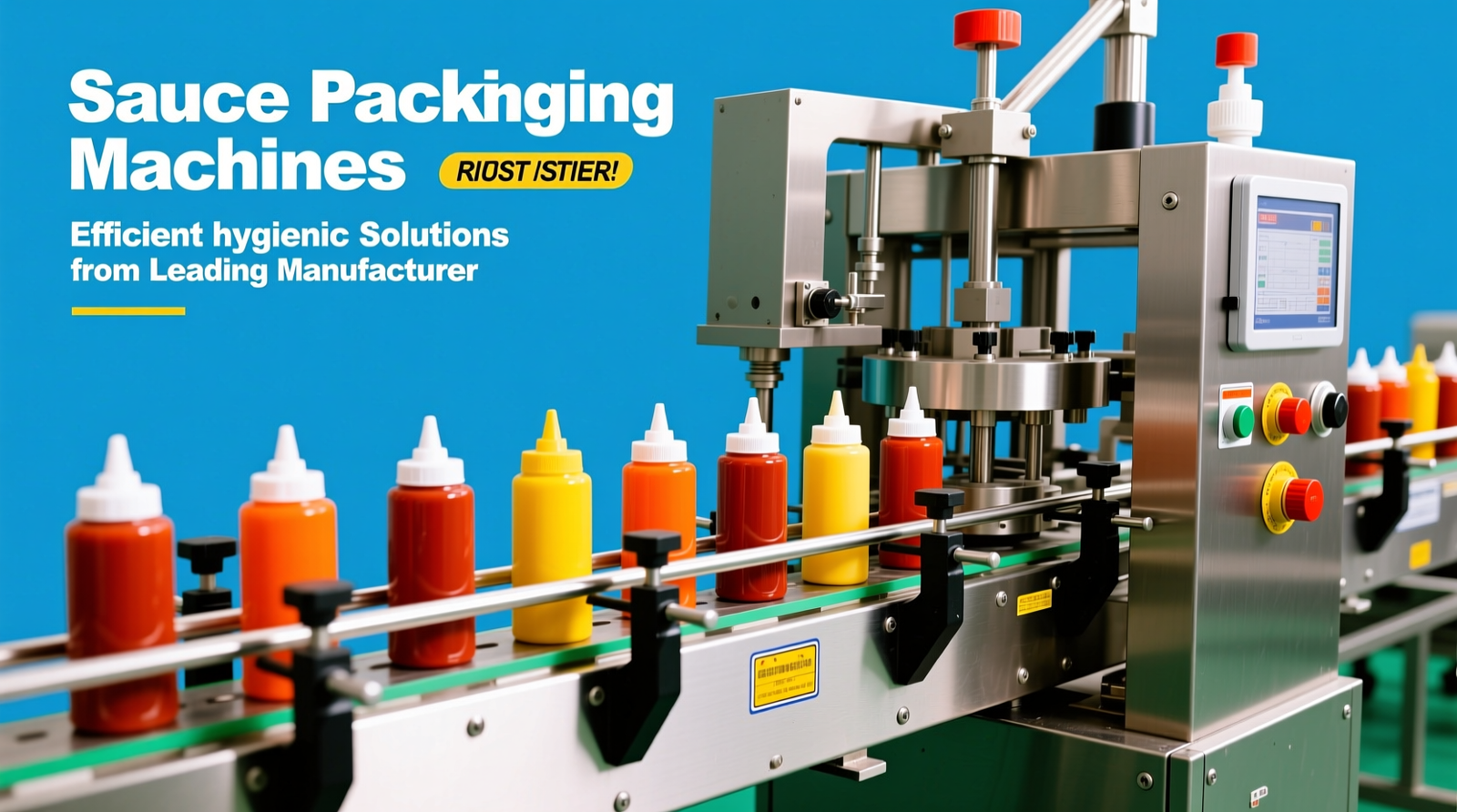
Packaged sauces—ketchup, chili sauce, mayonnaise, dressings, curry pastes, and cooking sauces—create demanding packaging requirements: sticky flow, particle inclusions, strict net-content control, and hygiene-ready design. This guide explains common sauce filling and sealing technologies, hygiene/CIP (clean-in-place) expectations, how to compare an automatic sauce filling and packaging line, and what to look for in a sauce packing machine manufacturer—plus a brief company profile of Guangzhou Western Packing Co., Ltd.
TL;DR: This article breaks down sauce filling/sealing options, hygienic/CIP design, selection criteria, integration/maintenance tips, and a manufacturer profile for industrial buyers evaluating sauce packing equipment.
Why Sauce Packing Machines Matter in Modern Food Production
Sauce products span a wide range of viscosities and textures—from free-flowing soy-based sauces to high-viscosity mayonnaise and particle-loaded salsas. The wrong filling principle can cause stringing/dripping, product shear (texture damage), inconsistent weights, or clogged nozzles—each directly affecting yield, compliance, and OEE (Overall Equipment Effectiveness: availability × performance × quality).
- Net-content control: Typical industrial targets are within ±0.5% to ±1.0% of set weight/volume, depending on product and container (final performance depends on dosing principle, container stability, and checkweigher feedback loops).
- Speed expectations: Semi-automatic filling often runs ~10–30 bottles/min (bpm) or 10–25 pouches/min; automatic multi-head systems commonly run ~80–200 bpm (format/product dependent).
- Waste reduction: Better cut-off/nozzle design reduces “giveaway” (overfill) and rework due to messy seals.
For regulated markets, buyers also align equipment performance with labeling/net quantity rules and inspection expectations. For background on net quantity and packaging compliance concepts, see NIST (National Institute of Standards and Technology) packaging/weights guidance: https://www.nist.gov/pml/owm.
TL;DR: Matching filling technology to sauce behavior protects accuracy, yield, and OEE—especially when viscosity and particulates vary across SKUs.
Filling Technologies for Sauces (What Works Best for Viscosity and Particles)
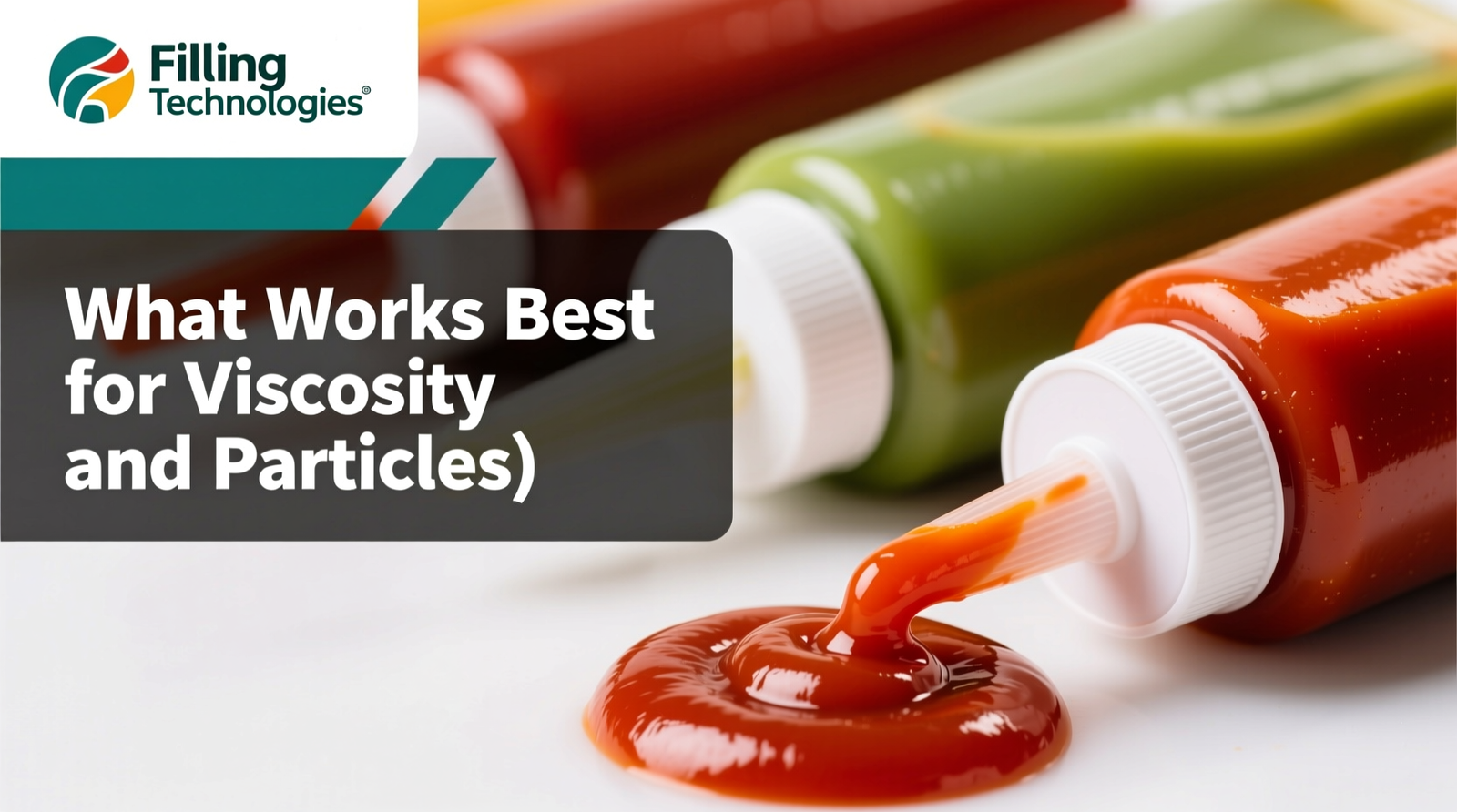
Industrial sauce filling machines typically use one (or a combination) of the following dosing principles. The best choice depends on viscosity (how thick the sauce is), particle size, shear sensitivity, required accuracy, and sanitation strategy.
-
Piston fillers (volumetric): A cylinder/piston measures a fixed volume each stroke. Best for medium-to-high viscosity sauces (e.g., ketchup, mayonnaise) and products needing repeatable volumetric dosing. With a properly sized valve/nozzle, piston systems can handle small particulates; very large particulates may require larger valve passages.
Typical advantage: strong accuracy on viscous products; good repeatability. -
Rotary lobe pump fillers (positive displacement): A rotary lobe pump moves product gently with low shear. Often preferred for viscous sauces and particle-containing products (e.g., salsa with diced vegetables) because it can pass particulates with less damage when designed with suitable clearances.
Typical advantage: gentle handling + higher continuous-flow capability for multi-head lines. -
Peristaltic pump fillers: Product stays inside tubing while rollers compress the tube. This can be excellent for hygiene/quick change on certain applications, but tubing wear and throughput limits can make it less common for heavy industrial sauce speeds. More common for lower-viscosity or specialty products, or when cross-contamination risk must be minimized.
Typical advantage: product-contact limited to tubing; fast product changeover. -
Flow meter fillers: Uses a flow meter (mass or volumetric) to dose by measured flow. Best for low-to-medium viscosity sauces and dressings where consistent flow is achievable. Highly viscous or particle-heavy products can reduce metering stability unless engineered carefully.
Typical advantage: flexible recipe-based dosing; good for multiple bottle sizes with minimal mechanical change.
Practical matching examples:
- Industrial ketchup filling machine: often piston or rotary lobe with anti-drip nozzles and suck-back cut-off to reduce stringing.
- Pouch sauce packing equipment (stand-up pouches): commonly paired with piston or lobe pump dosing + a pouch gripper system and controlled nozzle insertion to keep seal areas clean.
- Particle sauces (e.g., chili sauce with seeds): rotary lobe pump or large-port piston valve designs reduce clogging and particle damage.
Case-style example (typical): A condiment co-packer running 3 SKUs (smooth ketchup + two chili sauces with seeds) replaced a basic timed-fill system with a rotary-lobe pump dosing skid and optimized suck-back nozzles. The plant reported fewer nozzle wipes, more stable checkweigher results, and reduced giveaway on high-volume ketchup runs (exact results depend on product rheology, line speed, and container choice).
TL;DR: Piston = strong for viscous volumetric fills; rotary lobe = gentle and particle-friendly; peristaltic = fast hygiene changeovers; flow meters = great for low/medium viscosity and multi-size flexibility.
Sealing & Closing Technologies (Bottles, Jars, Pouches, Sachets)
Filling performance is only half the battle—seal integrity determines shelf life, leak rates, and customer complaints.
-
Induction sealing (bottles/jars): Uses electromagnetic induction to heat a foil liner and seal to the container rim. Common for sauces needing tamper evidence and improved leak resistance. It requires compatible liners and controlled headspace/clean rim conditions.
Reference: https://www.automationdirect.com/blog/induction-sealing-101 - Cap closing (bottles): Screw capping, press-on, pump caps, or flip-top closures. Key variables: applied torque, cap/thread compatibility, and cap presence detection.
- Heat sealing (pouches/sachets): Uses heated jaws/bars to fuse film layers. Seal quality depends on time/temperature/pressure and film structure (e.g., PE, PET/AL/PE laminates). For sauce pouches, keeping the seal area clean (no product contamination) is critical—often solved by nozzle insertion, controlled cut-off, and pouch mouth control.
- Hot-fill vs. cold-fill considerations: Hot-fill (product filled hot to reduce microbial risk) requires packaging materials that tolerate temperature and vacuum/pressure changes during cooling. Cold-fill may rely more heavily on upstream pasteurization/UHT (ultra-high temperature) or preservatives and demands strict hygienic design to avoid post-process contamination.
TL;DR: Choose closures based on format and shelf-life needs: induction + caps for bottles/jars, tuned heat sealing for pouches/sachets, and always design around hot-fill/cold-fill thermal realities.
Hygiene, Food Safety, and Regulatory Compliance (What “Hygienic Design” Should Mean)

For sauces, hygienic design is not a marketing phrase—it’s an engineering checklist that reduces microbiological risk and cleaning time. Buyers commonly specify HACCP (Hazard Analysis and Critical Control Points) alignment and may require ISO 22000 (food safety management system) at the facility level. Official HACCP principles reference: https://www.fao.org/3/y1579e/y1579e03.htm.
Key hygienic design expectations in wash-down and food zones:
- Stainless steel in product zones: typically AISI 304/316 where corrosion resistance is needed (e.g., acidic sauces).
- Sloped surfaces and no pooling: angled frames/drip edges to prevent standing water—reduces harborage risk.
- Minimized dead legs: short, well-drained product paths; hygienic valves and fittings sized for particulates.
- Appropriate IP ratings: IP (Ingress Protection) ratings indicate resistance to water/dust; for wash-down areas, buyers often require higher ratings for enclosures and sensors (selection depends on cleaning method and chemical exposure). IP overview: https://www.iec.ch/ip-ratings.
- Food-contact elastomers compliance: gaskets/hoses frequently need FDA (U.S. Food and Drug Administration) food-contact compliance and/or EU 10/2011 (EU plastics food contact regulation) depending on market. EU regulation reference: https://eur-lex.europa.eu/eli/reg/2011/10/oj.
- Hygienic design principles: many engineers align designs with EHEDG (European Hygienic Engineering & Design Group) or 3-A Sanitary Standards guidance (commonly referenced in dairy and high-hygiene food plants). Resources: https://www.ehedg.org/ and https://www.3-a.org/.
Typical CIP configurations for sauce equipment:
- Single-tank CIP: one solution tank used for rinse/caustic cycles (simpler, lower cost; more manual validation).
- Multi-tank CIP (common in larger plants): separated rinse water, caustic (alkaline), and acid tanks for repeatable cleaning with conductivity/temperature control.
- Temperature ranges: many CIP programs run warm-to-hot (often ~50–80°C depending on chemistry, soil load, and materials). Always verify gasket/hoses compatibility with temperature and chemicals.
- Chemistry compatibility: caustic cleaners remove fats/proteins; acids help remove mineral films; sanitizers depend on plant policy. Material selection (stainless grade, elastomer type) should be specified to match your chemical set.
TL;DR: Hygienic sauce packing equipment should be sloped/drainable, dead-leg minimized, wash-down appropriate (IP-rated), built with compliant food-contact elastomers, and designed for repeatable CIP—single-tank for simplicity, multi-tank for control and consistency.
Automation Trends in Automatic Sauce Filling and Packaging Lines
Modern lines increasingly run as integrated systems rather than standalone fillers. A typical automatic sauce filling and packaging line may include:
- Buffer tank and product feed (with level control)
- Filler (piston/lobe/flow meter) with anti-drip or suck-back nozzles
- Capper or heat sealer + optional induction sealer
- Cooling tunnel (for hot-fill where needed)
- Checkweigher + reject + metal detector/X-ray (as required)
- Date coder/labeler
- Case packing and palletizing interfaces
Controls often use PLC (Programmable Logic Controller) + HMI (Human–Machine Interface). Plants may also request integration to MES (Manufacturing Execution System) and ERP (Enterprise Resource Planning) for batch reporting, downtime coding, and traceability.
Use-case example: A regional sauce brand added an in-line checkweigher with automatic feedback to the filler. After tuning, the line reduced weight variability during viscosity swings (e.g., seasonal tomato solids changes) and stabilized throughput during long runs by cutting manual adjustments.
TL;DR: Automation is moving toward fully integrated lines with PLC/HMI controls, inspection, and optional MES/ERP connectivity to stabilize output, accuracy, and traceability.
Flexible Packaging Formats (Bottles, Jars, Pouches, Sachets)
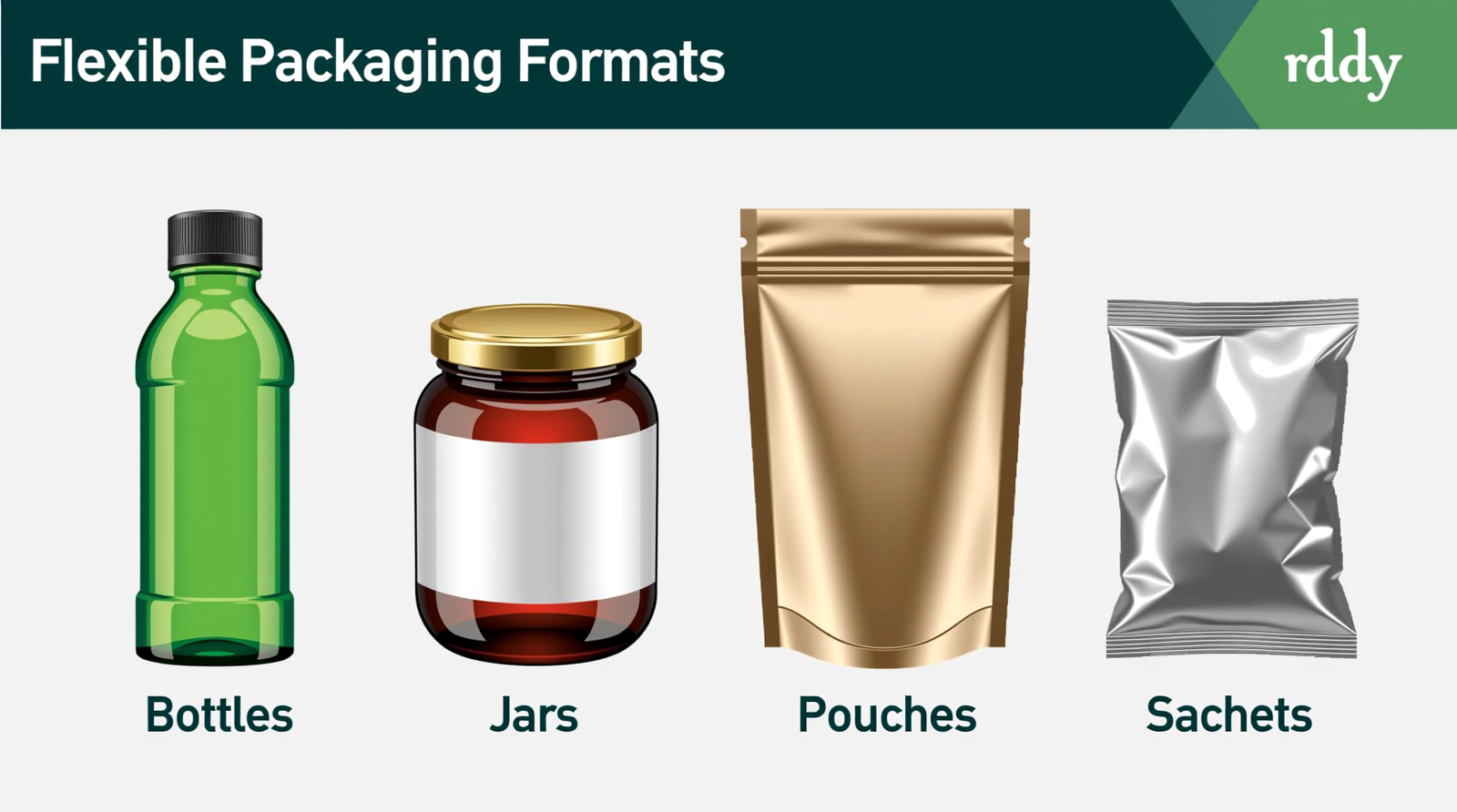
Format flexibility matters for co-packers and brands running frequent SKU changes. Practical flexibility features include:
- Recipe-driven settings: stored parameters for fill volume, nozzle timing, conveyor speed, and seal temperature.
- Change parts strategy: format-specific star wheels, guides, pouch grippers, and nozzle kits designed for quick swap.
- Changeover time targets: well-designed lines aim for ~15–45 minutes for common size changes (actual time depends on format differences and QA checks).
- Limitations to clarify: maximum container height/diameter range, pouch width/length range, and whether capper heads or sealing jaws must be swapped for different closures/films.
TL;DR: Real flexibility is recipe control plus practical change parts—verify size ranges and changeover time, and expect added tooling for major format shifts.
How to Compare Different Sauce Packing Machine Options (Mini Buying Guide)
- Product fit: viscosity range, particle size (max mm), shear sensitivity, and temperature (hot-fill/cold-fill).
- Dosing principle: piston vs rotary lobe vs flow meter vs peristaltic—ask for similar-product references.
- Accuracy & giveaway control: target tolerance, checkweigher integration, feedback control capability.
- Speed & scalability: current bpm/ppm target and the path to add heads or parallel lanes.
- Hygienic design: drainability, dead-leg control, IP ratings, tool-less access, CIP readiness.
- Seal integrity controls: induction/heat seal capability, cap torque control, seal contamination mitigation.
- Materials compliance: food-contact declarations for elastomers/plastics, surface finish requirements.
- Utilities: available power, compressed air, steam/hot water (if CIP/hot-fill), cooling water needs.
- Validation & documentation: FAT (Factory Acceptance Test) protocol, CE documentation, manuals, spare parts list.
- Aftermarket: response time, remote diagnostics, critical spares availability, training plan.
TL;DR: Compare machines on product fit, dosing principle, accuracy/giveaway, hygienic/CIP design, sealing controls, documentation/compliance, utilities, scalability, and service readiness—not just price.
Buyer Checklist and Common Pitfalls to Avoid

Quick buyer checklist:
- Define sauce viscosity window and maximum particle size (with photos/sieve data if available).
- Confirm required output (bpm/ppm) and line efficiency targets (e.g., OEE goal and planned run length).
- List all packaging formats now and in the next 2–3 years (bottle + pouch, cap types, film structures).
- Confirm local compliance needs: CE (Europe), potential UL/CSA (North America), and food-contact requirements.
- Confirm utilities: plant air pressure/flow, available power, CIP/hot-water capability, floor drain strategy.
- Plan spares and service: critical wear parts, lead times, and who performs maintenance.
Common pitfalls:
- Underestimating cleaning time: sanitation often limits real throughput more than fill speed.
- Ignoring rim/seal contamination risk: especially on pouches—product on seal areas leads to leaks.
- Not planning for future formats: adding pouches later may require a different platform, not just a kit.
- Spare parts strategy missing: downtime increases when wear parts are not stocked locally.
TL;DR: Specify product/format/future needs early, validate utilities and cleaning strategy, and avoid “speed-only” decisions that ignore sanitation, sealing cleanliness, and spares.
Line Integration: Upstream Processing and Downstream Packing
Sauce packaging performance depends on stable upstream conditions and smooth downstream flow:
- Upstream: kettles and blending systems should deliver consistent temperature and viscosity; proper agitation prevents settling (for particulates). A buffer tank with level control reduces filler starvation and pulsation.
- Infeed handling: container unscramblers, rinsers (if used), and conveyors must match filler cadence; mismatch causes micro-stops that reduce OEE.
- Downstream: cappers/sealers must keep pace with filler; checkweighers/reject systems need enough belt length and stable containers; case packing/palletizing should be sized for peak line rate.
TL;DR: Design the sauce line as a system—stable upstream viscosity/level control and balanced downstream inspection/packing prevent micro-stops and protect real throughput.
Maintenance Planning (What Typically Wears and How to Keep Uptime High)

A realistic maintenance plan reduces unplanned downtime and helps keep fill accuracy stable over time.
- Common wear parts: piston seals/O-rings, rotary lobe pump seals, valve seats, nozzle seals, peristaltic tubing (if used), sealing jaw Teflon tapes, and capper chuck inserts.
- Preventive maintenance (PM): many plants schedule weekly inspections (leaks, seal condition, air quality), monthly checks (torque verification, sensor checks), and quarterly/semiannual deeper service (pump seal inspection, valve rebuild kits)—actual intervals depend on run hours and product abrasiveness/acidity.
- Lubrication: follow OEM lubrication charts and use food-grade lubricants where required; prevent over-lubrication near product zones.
- Predictive options: cycle counters and downtime codes in the PLC/HMI support wear-part replacement based on usage, not guesses.
TL;DR: Plan for seal/valve/nozzle wear, set PM by run hours, keep a critical spares kit, and use PLC counters/downtime logs to schedule service before accuracy drifts.
Energy Efficiency and Sustainability in Sauce Packaging
Energy and material efficiency are increasingly tied to cost and retailer expectations. Practical equipment-level levers include:
- Servo drives and efficient motors: reduce power draw during acceleration/deceleration cycles.
- Giveaway reduction: tighter dosing control lowers product loss, which often beats energy savings in ROI.
- Film optimization: stable heat sealing helps run thinner or recyclable structures with fewer leaks (subject to validation).
- CIP efficiency: multi-tank CIP with conductivity control can reduce chemical and water usage versus manual “over-cleaning.”
TL;DR: Sustainability gains often come from reducing giveaway and rework, optimizing sealing/films, and running controlled CIP—not only from motor efficiency.
After-Sales Service and Global Support (What to Ask For)

To protect uptime, buyers typically request:
- Remote diagnostics capability and structured troubleshooting guidance
- Commissioning and operator/maintenance training plans
- Spare-parts list with recommended on-site quantities and lead times
- Clear FAT (Factory Acceptance Test) and SAT (Site Acceptance Test) criteria
- Documentation for compliance (e.g., CE Declaration of Conformity where applicable)
TL;DR: Strong support means test protocols, training, remote diagnostics, and a defined spares strategy—not vague “lifetime service” claims.
Innovation and Digitalization in Sauce Packing (Controls, Data, Traceability)
Digital features increasingly requested by engineering teams include:
- PLC + HMI: recipe management, guided changeover steps, alarm history.
- Data hooks: export of run rate, downtime reasons, reject rates; integration to MES (Manufacturing Execution System) and ERP (Enterprise Resource Planning) for batch reporting and traceability.
- Quality enforcement: interlocks (e-stop circuits, guard switches), cap presence sensors, seal temperature monitoring, and checkweigher trend reporting.
TL;DR: Modern lines use PLC/HMI recipes and production data to improve changeovers, traceability, and maintenance planning, especially when connected to MES/ERP.
Broader Packaging Solutions: Powder Packing and Mixing Systems (Why It Matters for Multi-Product Plants)
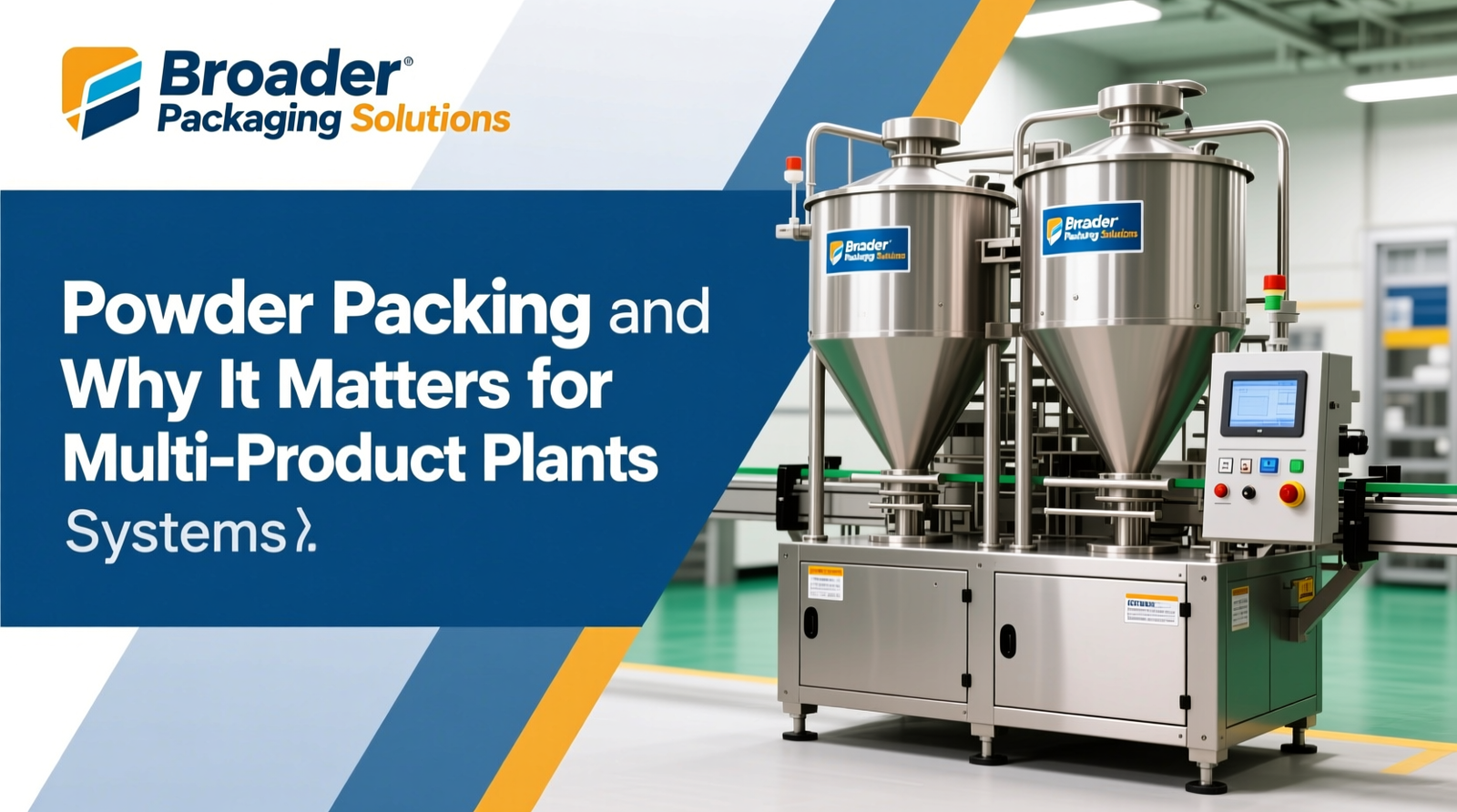
Multi-category manufacturers often want one vendor to engineer sauce and dry-mix packaging because it simplifies controls, spares, training, and accountability.
Powder packing technical context:
- Feeding: screw feeders/augers (metering via screw rotation) are common; vibration assistance helps prevent bridging in hoppers for cohesive powders.
- Dust control: dust extraction ports and sealed transfer points reduce contamination and improve housekeeping.
- Accuracy: auger + load cell feedback is typical for fine powders; packaging film sealing must account for powder contamination in seal areas.
Powder mixer filling machines: combining mixing and dosing can reduce segregation risk for seasoning blends and instant soups, helping consistency from batch to batch.
Benefit to customers: Shared HMI logic, unified spare parts strategy (sensors, pneumatics, drives), and single-vendor line responsibility reduce commissioning time and simplify plant maintenance.
TL;DR: Powder systems rely on augers/screw feeding, vibration, and dust control; having sauce + powder + mixing capability can reduce vendor complexity in multi-product plants.
About Guangzhou Western Packing Co., Ltd.
Guangzhou Western Packing Co., Ltd. is a packaging machinery manufacturer located in Baiyun District, Guangzhou, China. The company develops automated packaging equipment covering sauce filling/packing, powder/granule packaging, and mixer-integrated dosing solutions, with integrated line options including filling, sealing/capping, and labeling.
Compliance and documentation (typical buyer requests): Depending on project scope and export destination, customers commonly request CE documentation for applicable equipment, electrical safety conformity documentation, and food-contact compliance declarations for product-contact seals/hoses (e.g., FDA or EU 10/2011 where applicable). Buyers should confirm the exact documentation package during URS (User Requirement Specification) and FAT.
Export/support expectations: International projects typically require English documentation, remote commissioning options, and spares planning aligned with shipping lead times. Customers should request region-specific requirements early (e.g., North America UL/CSA preferences, EU CE conformity, local language labels).
Address: No.3, Yilong Street, Wulonggang, Zhongluotan Town, Baiyun District, Guangzhou, 510550, China
Official Website: https://www.gzwestern.com
TL;DR: Guangzhou Western Packing focuses on sauce and powder packaging platforms plus integrated line solutions; confirm market-specific compliance documents and service/spares plans during URS/FAT.
FAQ

Q: What filling technology is best for a high-viscosity sauce like ketchup or mayonnaise?
A: Piston fillers and rotary lobe pump fillers are common choices. Piston fillers often deliver strong volumetric repeatability for thick sauces, while rotary lobe pumps can be gentler and more forgiving with texture and particulates. Many industrial ketchup filling machine setups target about ±0.5% to ±1.0% fill accuracy when properly tuned and paired with checkweigher verification.
Q: What is a typical speed range for sauce packing equipment in bottles or pouches?
A: Semi-automatic systems are often around 10–30 bottles/min (bpm) depending on operator handling and viscosity. Automatic lines frequently run ~80–200 bpm for bottles (depending on head count and container stability). For pouch sauce packing equipment, speeds commonly depend on pouch size and seal time; many automatic pouch lines run ~30–120 pouches/min with the right film and product behavior.
Q: Can one automatic sauce filling and packaging line run both bottles and stand-up pouches?
A: It’s possible, but it usually requires different downstream modules (capper/induction sealer for bottles vs. heat sealing jaws and pouch handling for pouches) and format-specific change parts. Expect limitations on container/pouch size range and plan for additional tooling. Changeovers can be fast for size changes within one format, but switching formats typically takes longer and may require re-validation of sealing and checkweighing settings.
Q: What utilities do I need to install an industrial sauce packaging line?
A: Most lines need stable electrical power, compressed air for pneumatics, and adequate floor drainage for wash-down/CIP. If you run hot-fill or CIP, you may also need hot water/steam supply and cooling water (or a cooling tunnel) depending on process design. Always confirm utility specs (air flow, pressure, electrical load) during line layout and FAT planning.
Q: How long does installation and commissioning usually take for sauce packing machines?
A: For a standalone filler/capper, on-site installation and commissioning can be a few days to 1–2 weeks depending on utilities readiness and operator availability. For a full automatic sauce filling and packaging line with inspection and secondary packaging, commissioning often ranges from 2–6+ weeks depending on integration complexity, product changeovers, and sanitation validation requirements.