
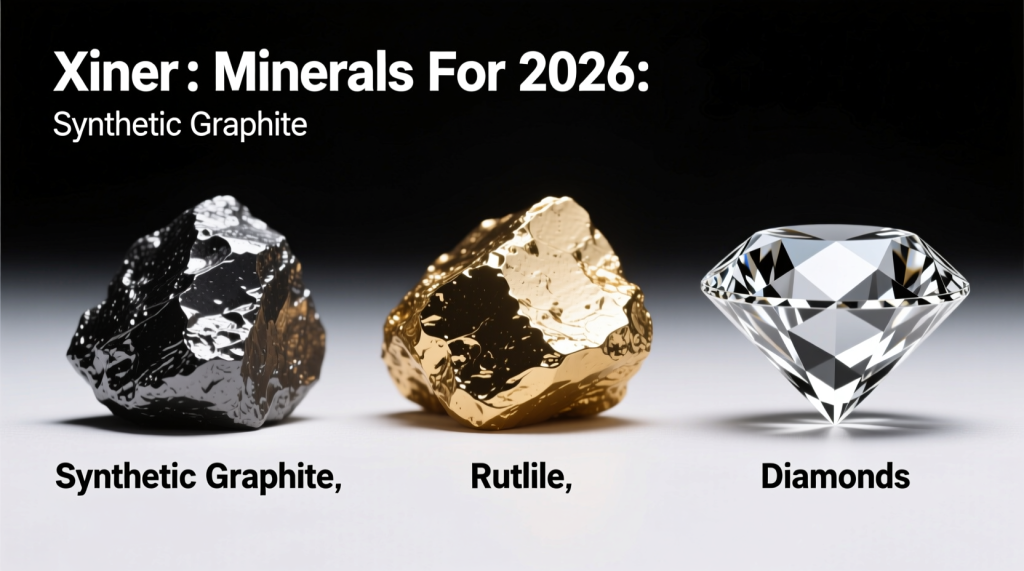
Positioning (2025–2026): This article focuses on the near-term (2025–2026) industrial reality: tighter battery-material specifications, higher scrutiny on titanium feedstock quality, and expanding use of engineered diamond in tooling and select electronics. Where numbers are cited, they are identified as forecasts/projections and scoped as global unless stated otherwise.
- Key takeaways for industrial buyers:
- Synthetic graphite is widely used in premium lithium-ion (Li-ion) anodes due to controllable purity, particle size distribution (PSD), and microstructure; it often carries a price/energy footprint premium versus natural graphite.
- Synthetic rutile is a high-grade titanium feedstock favored for chloride-route TiO2 pigment plants because impurities (notably Fe, MgO, CaO) directly affect plant performance and product quality.
- Synthetic diamonds made by HPHT/CVD dominate industrial abrasive/tooling volumes; in power electronics, diamond is promising but constrained by wafer size, defect control, and cost versus SiC/GaN.
- ESG nuance: synthetic routes can reduce land disturbance and tailings but can be energy-intensive; outcomes depend heavily on electricity mix and process efficiency.
- Satellite mineral exploration can narrow targets for graphite/ilmenite exploration, but it must be validated by ground truthing and drilling.
TL;DR: By 2026, engineered consistency is increasingly purchased as a “spec,” but buyers should weigh performance benefits against energy intensity, cost premiums, and supply-chain constraints.
Quick glossary (definitions for non-specialists)

- Li-ion: Lithium-ion battery chemistry used in EVs and stationary storage.
- ESG: Environmental, social, and governance criteria used in investment and procurement.
- PSD: Particle size distribution—how powder particle sizes are distributed; affects packing, kinetics, and slurry rheology.
- Tap density: Packed bulk density after tapping; important for anode energy density (more active mass per volume).
- Specific surface area (SSA): Surface area per mass (e.g., m²/g); influences first-cycle loss and side reactions in batteries.
- Synthetic rutile: Upgraded ilmenite product, typically >90–92% TiO2, used as titanium feedstock.
- HPHT: High Pressure High Temperature—diamond growth method mimicking deep-earth conditions.
- CVD: Chemical Vapor Deposition—diamond growth from hydrocarbon gas onto a substrate.
- NV centers: Nitrogen-vacancy defect centers in diamond used in quantum sensing/quantum devices.
- Chloride-route (TiO2): Titanium pigment process using chlorine chemistry; generally needs low impurity feedstocks.
TL;DR: If you only remember a few terms: PSD/tap density/SSA (graphite), impurities like Fe/MgO/CaO (rutile), and HPHT/CVD + defect control (diamond).
Why synthetic minerals matter (without the hype)
Synthetic graphite, synthetic rutile, and synthetic diamonds are produced under controlled process conditions to meet repeatable specifications that can be difficult to guarantee with variable ore bodies. For industrial users, the value is less about “being synthetic” and more about meeting tight limits on impurities, microstructure, and performance metrics (e.g., battery cycling stability, pigment plant operability, or tool wear rates).
However, synthetic production is not automatically “greener.” High-temperature graphitization (often ~2,800–3,000°C) and CVD diamond growth can be energy-intensive; sustainability outcomes depend strongly on electricity mix, yield, and off-gas treatment. In contrast, natural mining can carry larger land-use impacts, tailings, and water risks. Many buyers now evaluate both pathways using lifecycle assessment (LCA) methods such as ISO 14040/14044 guidance (ISO 14040).
TL;DR: Synthetic minerals are “spec-driven materials” that can reduce variability risk—while shifting some impacts from land/tailings to energy/CO2.
Synthetic graphite (battery materials focus)
Synthetic graphite is widely used in Li-ion anodes because producers can tightly control impurity levels (e.g., metallic contaminants that catalyze side reactions), particle morphology, and graphitic order—parameters that influence irreversible capacity loss, rate performance, and cycle life. Market and supply-chain analysis for battery graphite is commonly covered by specialist sources such as Benchmark Mineral Intelligence and the International Energy Agency (IEA).
How synthetic graphite is produced (and why it matters)
Most synthetic graphite for anodes is produced from petroleum coke and coal-tar pitch, followed by high-temperature graphitization to increase crystalline order. Process controls determine ash content, trace metals, and structural defects, which translate into cell-level performance differences.
- Energy note: graphitization is energy-intensive; the CO2 footprint varies widely by plant efficiency and grid carbon intensity.
- Quality note: consistent microstructure helps reduce batch-to-batch variability in electrode processing (slurry viscosity, coating uniformity, calendering response).
TL;DR: Synthetic graphite’s advantage is controllability (impurities + structure), but it can carry a higher energy footprint depending on power source and yield.
Anode material landscape: where synthetic graphite is strongest
Battery anodes are not “one graphite.” In 2025–2026 procurement discussions, you’ll typically see:
- Coated synthetic graphite (CSG): synthetic graphite with carbon coating to tune SSA/SEI formation (SEI = solid electrolyte interphase) and improve first-cycle efficiency and rate capability.
- Blended systems (synthetic + natural graphite): blends to balance cost and performance; often used when a pure synthetic approach is not economically justified for the target cell.
- Silicon–graphite composites: emerging higher-capacity anodes using silicon in a graphite matrix; graphite quality still matters for mechanical buffering, conductivity, and processing stability.
Where synthetic tends to win: high-power or premium cells where tighter control of PSD, tap density, and low metallic impurities is linked to yield, warranty risk, and fast-charge performance.
TL;DR: Synthetic graphite is most defensible in premium/high-power anodes and as a performance stabilizer in blended or silicon–graphite systems.
Selection criteria (what to put on the datasheet and in contracts)
- Purity/ash and trace metals: specify ash %, Fe/Ni/V ppm ranges (metals can accelerate parasitic reactions).
- PSD and morphology: D10/D50/D90, sphericity (processing + packing behavior).
- Tap density: impacts volumetric energy density.
- SSA: correlates with first-cycle loss and electrolyte consumption.
- Electrochemical metrics: first-cycle efficiency, capacity retention at defined C-rates and temperatures.
Cost & supply considerations: synthetic graphite typically commands a price premium versus natural graphite due to energy and processing intensity; upstream feedstocks (needle coke, pitch) can be bottlenecks and are exposed to refining/steel industry cycles.
TL;DR: Buy to measurable specs (PSD/tap density/SSA + metal limits), and treat needle coke/pitch availability as real supply risk inputs.
Production outlook note (how to read “2.5+ million tons” claims)
Statements like “synthetic graphite demand/provision exceeding 2.5 million metric tons by 2026” should be treated as global forecasts that vary by definition (anode-grade vs all synthetic graphite uses) and by scenario assumptions (EV adoption, chemistry mix, scrap rates). For decision-making, validate the number against specialized market intelligence (e.g., Benchmark Mineral Intelligence) and cross-check demand scenarios with IEA battery supply-chain work (IEA critical minerals).
TL;DR: Treat the “2.5+ Mt by 2026” figure as a scenario-dependent forecast; confirm scope (anode-grade vs total) before using it in capacity planning.
Synthetic rutile (titanium feedstock for chloride-route TiO2 and titanium metal)
Synthetic rutile is a high-TiO2 feedstock produced by upgrading ilmenite (FeTiO3). It is used primarily in chloride-route TiO2 pigment plants and in titanium metal value chains. Global titanium feedstock fundamentals and mineral statistics are often tracked by the USGS National Minerals Information Center (e.g., Titanium mineral concentrates summaries).
Becher process vs chloride-route upgrading (what changes chemically)
- Becher process: typically involves reductive roasting of ilmenite to convert iron oxides, followed by aeration/leaching to remove iron and increase TiO2 content.
- Chloride-route compatible upgrading: focuses on producing a feedstock suitable for chlorination; controlling impurities is critical to avoid operational issues and product contamination.
Key impurities that matter in pigment plants: Fe (iron), MgO (magnesia), CaO (lime), and other minor elements can impact chlorination efficiency, waste generation, and product brightness/quality consistency.
TL;DR: Synthetic rutile value is largely “impurity control” for chloride-route operability—Fe/MgO/CaO specifications matter as much as TiO2%.
Selection criteria for buyers (pigment and titanium metal)
- TiO2 grade: confirm assay and variability (lot-to-lot consistency).
- Impurity suite: Fe, MgO, CaO, SiO2, Cr/V—aligned to your chloride-route tolerance.
- Physical properties: PSD, moisture, and handling behavior (dusting, flowability) affecting feeding and reaction control.
- Chloride-route compatibility: ask for operational history/references if available (same plant type, similar process conditions).
Cost & risk considerations: feedstock markets can be influenced by ilmenite supply, logistics to coastal processing hubs, and regional environmental permitting. Synthetic rutile may carry a premium when it enables higher pigment yields or lower waste handling compared with lower-grade alternatives.
TL;DR: Buy synthetic rutile like a process reagent: specify impurity limits and consistency, not just TiO2%.
Growth and capacity claims (how to treat 7–10% ranges)
Broad statements like “7–10% annual growth to 2026” are typically market forecasts that differ by segment (pigments vs titanium metal), region, and macro assumptions (construction cycles, coatings demand, aerospace build rates). For internal planning, anchor growth assumptions using a mix of public statistics (e.g., USGS) and industry market reports, and run sensitivity ranges rather than a single-point CAGR.
TL;DR: Treat 7–10% growth as scenario guidance, not a guaranteed baseline; validate by end-market and region.
Synthetic diamonds (industrial tooling, plus realistic electronics constraints)

Synthetic diamonds are produced mainly by HPHT (High Pressure High Temperature) and CVD (Chemical Vapor Deposition). Industrial volumes are dominated by abrasives, cutting, drilling, and wear parts, while higher-purity CVD diamond targets electronics thermal management and niche device concepts. Background on diamond properties and applications is summarized well in resources like Encyclopaedia Britannica and technical literature across materials journals.
HPHT vs CVD (production and property differences)
- HPHT: efficient for many crystal/abrasive applications; properties depend on catalyst/metal solvent and growth conditions.
- CVD: enables diamond films and single crystals with tighter control of purity/defects (important for optical/quantum and some electronics uses), but growth rates and yield/cost can be limiting.
TL;DR: HPHT is workhorse for industrial grit/tools; CVD is the route for high-purity/defect-engineered diamond—at higher cost and complexity.
Industrial applications (what buyers actually optimize)
- Cutting/drilling/grinding: specify grit size, toughness, coating (if any), and thermal stability for the target workpiece (stone, composites, ceramics, hard metals).
- Thermal management: diamond heat spreaders/substrates can outperform many materials on thermal conductivity, but joining/metallization and cost are decisive.
- Quantum (NV centers): applications depend on defect type and concentration control; not all “CVD diamond” is suitable for quantum devices.
TL;DR: The majority of value is still in tooling; advanced electronics/quantum uses are spec- and defect-controlled niches.
Limitations in power electronics (balancing the benefits)
Diamond’s wide bandgap and thermal conductivity are attractive, but adoption in power electronics faces practical constraints: wafer size limitations, defect density control (dislocations, impurities), processing and contact formation challenges, and cost competitiveness versus established wide-bandgap materials such as SiC (silicon carbide) and GaN (gallium nitride). These factors often keep diamond in R&D, thermal-management components, or specialized high-performance niches rather than mainstream device substrates.
TL;DR: Diamond is promising for extreme-performance electronics, but wafer/defect/cost constraints keep it behind SiC/GaN in most commercial roadmaps.
Production outlook note (how to read “15+ billion carats”)
Claims such as “15+ billion carats by 2025” generally refer to global synthetic diamond output dominated by industrial abrasives, not gem-grade or electronics-grade single crystals. Forecasts vary depending on whether they count only grit/powder, include all HPHT/CVD categories, and how they convert mass to carats across product forms. When using such figures commercially, state the scope explicitly (industrial abrasive vs gem vs electronic-grade) and reference an identifiable industry report or specialist intelligence provider.
TL;DR: “Billions of carats” is mostly abrasive-grade volume; it should not be interpreted as equivalent growth in electronics-grade diamond wafers.
Core advantages of synthetic minerals (kept in one place)
- Specification control: tighter limits on impurities, PSD, and microstructure reduce performance variance in downstream manufacturing.
- Process reliability: steady output independent of ore variability, weather, and mine sequencing.
- Qualification efficiency: once qualified, repeatable lots can reduce re-testing and scrap rates (especially in batteries/pigments).
- Supply optionality: potential to diversify away from single-deposit risk, though synthetic routes may introduce new dependencies (energy, coke/pitch, ilmenite logistics, reactor uptime).
- Tailored functionality: coatings (graphite), controlled impurity suites (rutile), or engineered defects (diamond) enable application-specific performance.
TL;DR: The “synthetic advantage” is repeatable specs—balanced by new inputs (energy/feedstocks) that must be managed like any other supply chain.
Downstream sectors in 2025–2026 (one unified view)
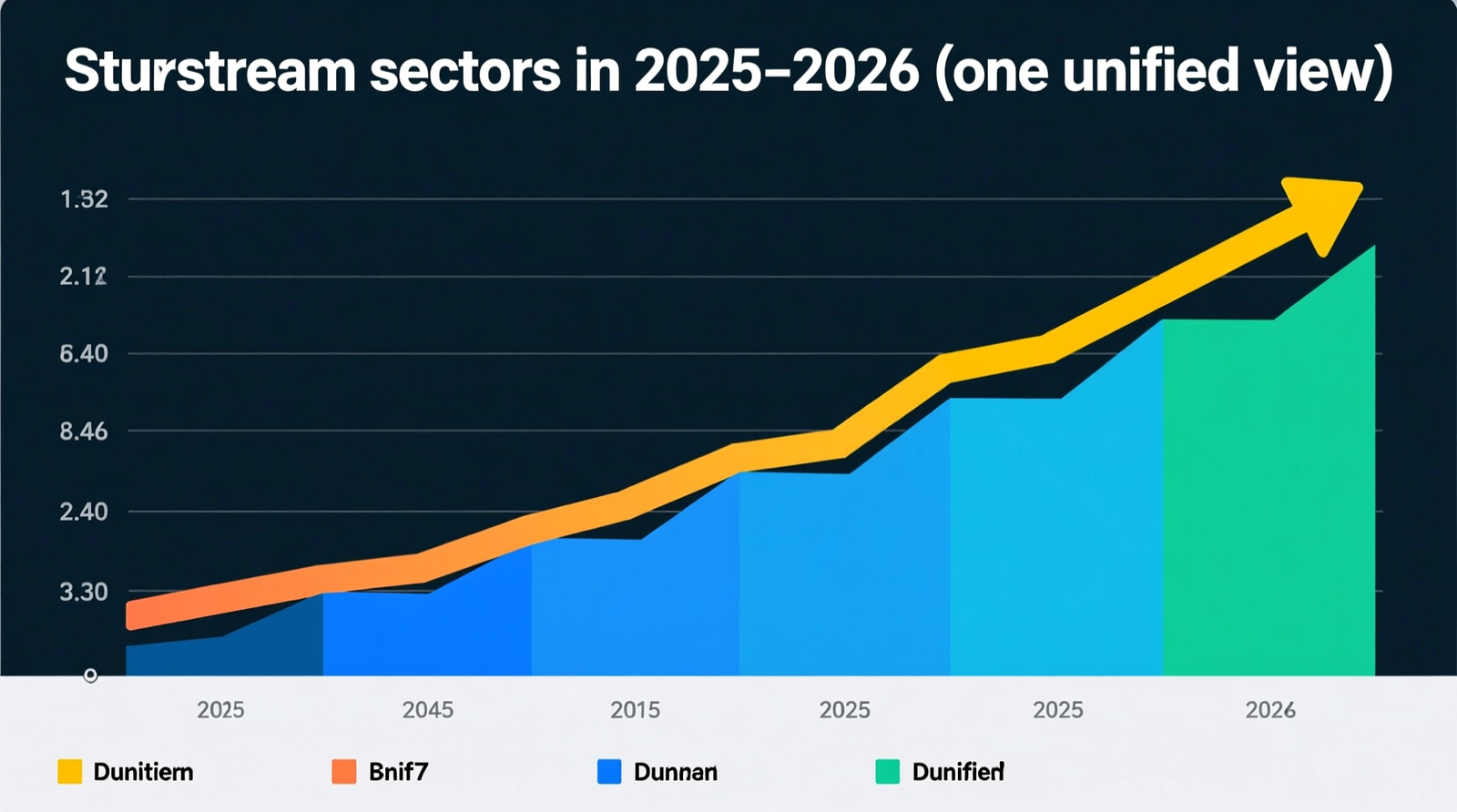
- Battery materials: synthetic graphite supports anode consistency in high-performance Li-ion cells; silicon–graphite composites increase the need for controlled graphite properties.
- Titanium feedstock & coatings: synthetic rutile supports chloride-route TiO2 pigments for paints/plastics and provides feedstock continuity for titanium metal supply chains.
- Manufacturing & mining equipment: synthetic diamond abrasives and cutters improve wear life and dimensional control in hard-to-machine materials.
- Aerospace and defense: titanium alloys derived from high-quality feedstocks are critical for weight/corrosion constraints; diamond tooling is relevant for advanced composites and hard materials.
- Electronics/quantum: diamond heat spreaders and NV-center devices are growing niches; graphite also appears in thermal and conductive components.
- Nuclear (specific designs): graphite use as moderator/structural material applies to certain reactor types (e.g., gas-cooled and high-temperature reactor concepts), where purity and neutron behavior are tightly specified.
TL;DR: The near-term story is specification tightening: anodes, chloride-route pigment feed, and tool materials—plus niche electronics/quantum growth.
Environmental and ESG reality check (synthetic vs natural)
Comparing synthetic and natural sources is case-specific:
- Natural mining trade-offs: land disturbance, tailings management, water use, and local ecological impact can be significant depending on deposit type and regulation.
- Synthetic processing trade-offs: higher electricity and thermal energy demand (graphitization, CVD) can increase CO2 intensity unless powered by low-carbon grids and optimized processes.
- Best practice: request product-specific environmental data (e.g., EPDs where available; EPD = Environmental Product Declaration) and align evaluation to LCA standards (see ISO 14040).
TL;DR: Synthetic can reduce land/tailings impacts but may increase energy/CO2; the “better” option depends on site, grid, and process efficiency.
Satellite mineral exploration (technical, case-driven, and bounded)

Satellite mineral exploration can support natural feedstock discovery (graphite, ilmenite, kimberlite indicator terrains) by screening large areas with multispectral/hyperspectral imagery and prioritizing targets for field campaigns. A practical use case is early-stage graphite or ilmenite target screening: remote sensing narrows prospective lithologies/alteration zones and reduces the number of ground traverses and first-pass samples required.
Example use case (indicative, project-dependent): an exploration team can use satellite-based mineral detection to rank target corridors (e.g., carbonaceous units for graphite or heavy-mineral sand systems for titanium minerals), then allocate ground geophysics and drilling to the top-ranked zones—often cutting weeks of reconnaissance over large, remote tenements. Tools marketed for this workflow include Farmonaut’s mineral detection offering (Farmonaut Mining).
Limitations (important for credibility):
- Ground truthing is mandatory: satellite screening does not replace sampling, geophysics, and drilling for resource definition.
- Spectral ambiguity: vegetation cover, weathering, and similar spectral responses among rock types can create false positives/negatives.
- Depth limitation: remote sensing mainly “sees” surface or near-surface expressions; buried deposits may not be detectable.
TL;DR: Satellite mineral exploration is best used to prioritize where to spend field/drilling budgets—then validated with conventional exploration methods.
Conclusion (tight)
Through 2025–2026, synthetic graphite, synthetic rutile, and synthetic diamonds matter because they enable tighter industrial specifications: anode consistency in Li-ion battery materials, impurity control for chloride-route titanium feedstock, and predictable wear performance in tooling—plus selective growth in thermal management and quantum applications. For decision-makers, the key is to procure to measurable specs, validate forecast numbers by scope, and evaluate ESG trade-offs with lifecycle-based data rather than assumptions.
TL;DR: The winning strategy is “spec-first sourcing”: define performance metrics, qualify suppliers rigorously, and balance cost/energy/ESG across both synthetic and natural pathways.
FAQ

Q: What specs should I request when buying synthetic graphite for Li-ion anodes?
A: Ask for ash/purity plus trace metals (Fe/Ni/V in ppm), PSD (D10/D50/D90), tap density, specific surface area (SSA), and electrochemical data such as first-cycle efficiency and capacity retention at defined C-rates and temperatures. These parameters affect yield, fast-charge behavior, and warranty risk.
Q: Is synthetic graphite always better than natural graphite for batteries?
A: Not always. Synthetic graphite often provides tighter consistency and lower problematic impurities, but it can cost more and can have a higher energy footprint due to graphitization. Many manufacturers use blended synthetic–natural systems to balance performance and cost.
Q: Why do chloride-route TiO2 pigment plants care so much about synthetic rutile impurities?
A: Impurities such as Fe, MgO, and CaO can reduce chlorination efficiency, increase waste, and destabilize product quality (brightness/consistency). High-grade synthetic rutile is often selected because it improves process stability and pigment quality compared with lower-grade titanium feedstocks.
Q: Are CVD diamonds ready to replace SiC or GaN in power electronics by 2026?
A: Generally no. Diamond has excellent thermal and wide-bandgap properties, but wafer size, defect control, processing challenges, and cost keep it from broad replacement of SiC/GaN in most commercial devices. Near-term adoption is more common in thermal management components and specialized niches.
Q: How reliable is satellite-based mineral exploration for finding graphite or ilmenite deposits?
A: It can be very useful for early-stage target screening and prioritization over large areas, but it’s not definitive. Spectral confusion, vegetation/weathering effects, and limited depth penetration mean results must be confirmed with ground mapping, sampling, geophysics, and drilling.