
Introduction: North America mobile crushers and screeners market in 2025–2033
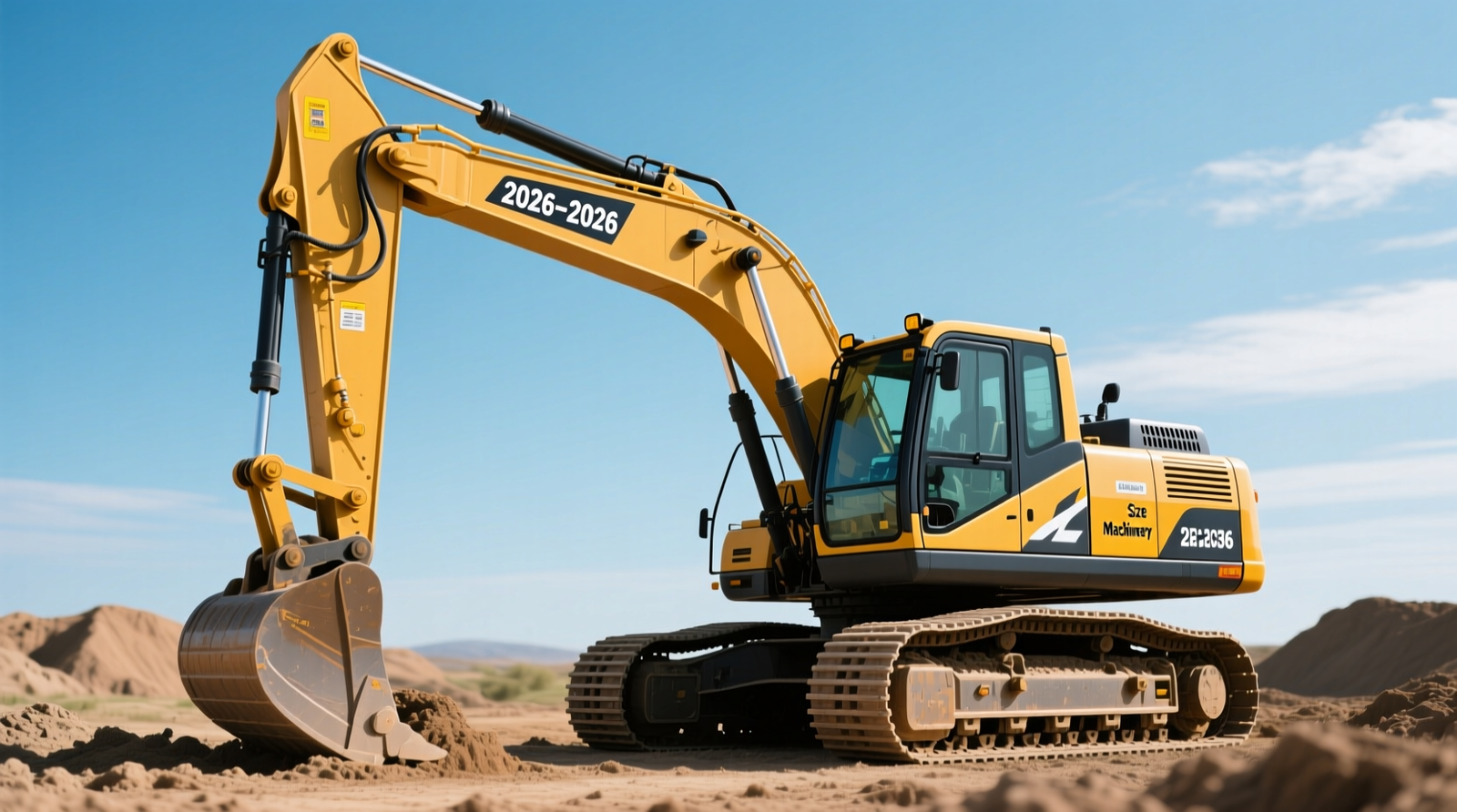
The North America mobile crushers and screeners market is increasingly shaped by three practical realities on U.S., Canadian, and Mexican job sites: (1) infrastructure rehabilitation that must be executed under tight lane-closure windows, (2) rising disposal and hauling costs that make on-site processing financially compelling, and (3) regulatory pressure to run cleaner, quieter equipment in dense urban corridors. Mobile crushers and screeners—typically tracked (crawler) or wheeled plants—let contractors and quarry operators crush and classify material at the point of use, reducing truck cycles and improving schedule control.
Market sizing in this article follows widely cited syndicated research benchmarks (e.g., ResearchAndMarkets.com listings and similar publisher methodologies), assuming a 2024 base year and forecasts influenced by public infrastructure outlays, aggregate demand, and recycling penetration. The market is estimated at ~USD 1.00 billion in 2024 and projected to reach ~USD 1.60 billion by 2033, implying a 5.4% CAGR (compound annual growth rate) from 2025–2033. Core assumptions typically include sustained U.S. infrastructure funding under the Bipartisan Infrastructure Law (FHWA), continued aggregates consumption for roads and housing, and a gradual shift toward recycled aggregates (RCA) and lower-emission fleets.
TL;DR: North America demand is rising because on-site crushing/screening cuts hauling and downtime, while infrastructure funding and emissions rules push contractors toward newer, cleaner mobile fleets.
Market overview: what’s different about North America vs. Europe and APAC?
North America’s mobile fleet decisions tend to be driven by jobsite logistics and dealer support as much as by fuel burn. Compared with Europe—where dense urban work, strict local noise controls, and earlier adoption of electrified fleets are common—North America still leans heavily on high-output diesel-hydraulic machines, but electrification is accelerating in city work and enclosed environments. Versus many APAC markets, North America places heavier emphasis on after-sales coverage, parts availability, and emissions certification, and rental penetration plays a larger role in fleet refresh cycles.
Across the region:
- U.S. leads in volume, driven by DOT-funded roadwork, quarry output, and C&D (construction & demolition) recycling growth.
- Canada shows strong demand in aggregates and mining, with heightened attention to cold-weather reliability and provincial environmental compliance.
- Mexico continues to expand in industrial construction and aggregates, with growing interest in mobile solutions where fixed-plant investment is harder to justify.
TL;DR: North America prioritizes uptime, service reach, and high-throughput diesel fleets, but urban projects and sustainability targets are pulling the market closer to Europe’s electrification trend.
Market size and segment signals (crushers vs. screeners; construction vs. mining vs. recycling)

While exact shares vary by publisher, the North American mix typically tilts toward crushers as the primary capex item, with screeners and scalpers added to control gradation and maximize finished product value. In practice:
- Mobile jaw crushers are widely used as primary crushers for blasted rock, shot rock, and recycled concrete; common North American production setups frequently target 200–600+ tons per hour (tph) depending on feed size and spec.
- Mobile cone and impact crushers are selected based on end-product requirements (e.g., cubical spec aggregate, asphalt millings processing).
- Mobile screeners (incl. scalpers and finishing screens) often see faster adoption in recycling and contract crushing because they directly improve product quality and reduce rehandling.
By end use, construction and on-site recycling tends to be the faster-growing demand pocket in North America (especially around major metros), because these projects benefit most from avoided hauling, tipping fees, and schedule compression. Mining & quarry remains a large base of demand, but growth can be more cyclical with commodity and housing cycles.
TL;DR: Crushers remain the biggest spend, but screeners and scalpers increasingly get pulled in to improve spec compliance—especially in U.S. recycling and contract crushing work where margins depend on product quality.
Market dynamics in North America (drivers, restraints, opportunities)
Drivers: infrastructure delivery, quarry output, and on-site aggregate recycling equipment in the U.S.
The strongest near-term demand catalyst is the need to execute repairs and expansions with minimal disruption—particularly highways, bridges, and airport projects. U.S. federal programs (and state-level matching funds) are translating into predictable letting schedules, which favors contractors that can mobilize plants quickly. For time-sensitive rehabilitation, mobile spreads reduce dependence on distant fixed plants and help meet night/weekend closure windows.
A second driver is the growing economics of recycled concrete aggregate (RCA) and reclaimed asphalt pavement (RAP). Where landfill tipping fees and truck availability are constraints, mobile processing becomes a direct cost-control lever.
TL;DR: In North America, mobile plants win when projects are schedule-tight and hauling/tipping is expensive—conditions that are increasingly common in major U.S. corridors.
Restraints: capital costs, labor, and grid/power constraints for electrification
Even when the business case is strong, mobile plants require significant upfront investment, plus skilled operators and maintenance technicians. Electrified or plug-in solutions can be limited by jobsite power availability (especially for remote aggregates pits) and by the cost/lead time of temporary power distribution.
TL;DR: The bottlenecks are not only price—operator availability, maintenance capability, and access to reliable power can slow adoption of advanced fleets.
Opportunities: electric mobile screeners for urban construction and hybrid crushers for mixed fleets
Electrified screeners and hybrid crushers are gaining attention where noise and emissions are tightly managed—think downtown demolition, rail-adjacent sites, and projects near schools/hospitals. A practical pathway in North America is hybridization (diesel engine + electric drives) because it reduces fuel burn without requiring full grid dependence.
TL;DR: The clearest “next wave” in North America is hybrid and electric screening/crushing in metro areas where noise, neighbors, and idling rules matter.
Regulatory and environmental framework (emissions, safety, dust/noise)

Emissions: EPA Tier 4 Final and Canada/Mexico equivalents
In the U.S., off-road diesel engines in modern mobile plants are commonly selected to meet EPA Tier 4 Final emissions requirements (the strictest EPA standard for most nonroad diesel categories), typically using aftertreatment such as DOC (diesel oxidation catalyst), DPF (diesel particulate filter), and sometimes SCR (selective catalytic reduction). For reference, see the U.S. EPA nonroad engines and vehicles regulations.
Canada’s non-road engine rules align closely with U.S. approaches under Environment and Climate Change Canada; provincial procurement and sustainability policies can further favor newer equipment (Government of Canada: non-road engine emissions information). Mexico’s framework continues to evolve; many fleets operating cross-border standardize on Tier 4 Final-capable equipment to simplify compliance and resale.
TL;DR: EPA Tier 4 Final compliance is a baseline expectation in the U.S., and Canadian alignment makes “North America-ready” fleets increasingly standardized around modern aftertreatment and cleaner powertrains.
Safety: OSHA and MSHA considerations on mobile spreads
Safety requirements influence guarding, lockout/tagout procedures, emergency stops, and dust suppression. In construction and general industry contexts, buyers commonly reference OSHA (Occupational Safety and Health Administration) principles (see OSHA). In mining and some quarry environments, MSHA (Mine Safety and Health Administration) oversight affects work practices around crushers, conveyors, and maintenance access (see MSHA).
TL;DR: OSHA/MSHA expectations push OEMs toward safer access, clearer lockout provisions, better guarding, and remote/safer operation features—especially in quarry and mining deployments.
Dust and noise: urban permitting and community constraints
North American metro projects increasingly specify integrated dust suppression (sprays, encapsulation points, transfer sealing) and noise-conscious operation (engine speed management, acoustic covers). While limits are often set locally, equipment that can run quieter and cleaner directly reduces permitting friction and neighbor complaints—an underappreciated “cost” on demolition and recycling jobs.
TL;DR: Dust/noise control is not just compliance—it’s a practical way to keep urban projects moving without stoppages and disputes.
Notable North America deployment patterns and “why mobile wins” (project-style examples)
Across the U.S. and Canada, three deployment patterns show up repeatedly:
- Interstate and arterial rehabilitation: mobile jaw + screen train set up near the work zone to process imported stone or reclaimed material and keep trucking off constrained corridors.
- Urban demolition and brownfield redevelopment: impactor + finishing screen to convert concrete into usable base/subbase, minimizing disposal trucking and supporting LEED-aligned (Leadership in Energy and Environmental Design) material reuse targets.
- Quarry “surge” and contract crushing: tracked spreads used to open new faces or manage seasonal peaks without committing to permanent fixed-plant expansion.
These use cases are especially prominent in the U.S. Northeast and West Coast (tight urban constraints), Texas/Southeast (volume roadwork), and Western Canada (aggregates/mining with demanding climates and remote logistics).
TL;DR: In North America, mobility is most valuable where projects face haul constraints, tight closures, or the need to recycle on-site to control disposal and material costs.
Competitive landscape and recent moves (OEMs, partnerships, product launches)
The competitive field combines global OEM scale with strong regional specialists and dealer networks. Key manufacturers active in the North America mobile crushers and screeners market include Sandvik, Metso, Komatsu, Terex, Astec, Eagle Crusher, Senya, Keestrack, IROCK, and Superior.
Recent competitive signals worth tracking in North America include:
- Electrification roadmaps: OEMs increasingly promote diesel-electric and plug-in configurations; for example, Metso has expanded its Lokotrack® line with diesel-electric options and automation/remote monitoring capabilities (see Metso mobile solutions overview: Metso portable crushing and screening).
- Connected fleets: telematics adoption is moving from “nice-to-have” to standard in premium fleets for uptime and maintenance planning.
- Dealer/service density as a differentiator: in North America, winning bids often comes down to parts availability, field service response time, and rebuild programs—especially for rental and contract crushing.
Because M&A (mergers and acquisitions) and product announcements can change quickly, buyers should validate the latest dealer coverage, parts lead times, and model availability directly from OEM newsrooms and distributor bulletins during procurement.
TL;DR: The competitive battle in North America is increasingly about service reach and connected uptime—not just horsepower—with electrified/diesel-electric product lines becoming key differentiators.
Buying guide: key purchase criteria for end users (TCO, compliance, service)
For contractors, quarries, and recyclers evaluating mobile spreads, the decision is usually won on TCO (total cost of ownership) rather than sticker price. Practical criteria include:
- Throughput and gradation control: ability to hit DOT specs with minimal recirculation; match jaw opening, crusher power class, and screen deck area to feed and product targets.
- Fuel efficiency and power strategy: Tier 4 Final diesel vs. diesel-electric/hybrid; consider idle time, jobsite power, and fuel price volatility.
- Mobility type: tracked for frequent moves on rough terrain; wheeled for easier road moves and certain quarry layouts.
- Wear parts and maintenance: liner/blow bar life, changeout time, access safety, and local inventory of critical spares.
- Dust/noise package: essential for urban permits and community relations.
- Local dealer support: field tech response times, rebuild capability, and loaner/rental backup during outages.
- Automation/telematics: remote monitoring, alarms, and production reporting to reduce unplanned downtime.
TL;DR: North American buyers should prioritize total cost of ownership, local service support, and emissions-ready powertrains—then optimize for spec compliance and wear-part economics.
Actionable insights by stakeholder (next 3–5 years)
- OEMs: prioritize Tier 4 Final reliability (aftertreatment uptime), scalable diesel-electric options, and North America-specific service kits; invest in operator-aid automation that reduces dependency on scarce skilled labor.
- Contractors/aggregate producers: build a standardized mobile spread (primary jaw + secondary cone/impactor + screen) and measure profitability by avoided hauling/tipping; negotiate guaranteed parts availability for high-wear items.
- Rental companies: expand fleets with “permit-friendly” configurations (dust suppression, noise packages, telematics); train field support teams to reduce downtime and protect utilization.
- Investors: watch exposure to infrastructure cycles and recycling adoption; businesses with strong service revenue, rebuild programs, and rental utilization resilience often perform better through volatility.
TL;DR: The winners will be those who treat mobile processing as a system (equipment + service + data), not a one-time machine purchase.
Risks and constraints: what could slow the market?
Despite favorable fundamentals, several headwinds can delay purchases or reduce utilization:
- Construction slowdown: weaker housing starts or delayed DOT lettings can reduce aggregate demand.
- Tight credit conditions: higher rates can push buyers toward rentals and extend replacement cycles.
- Commodity volatility: mining and some quarry capex follows price swings and can pause abruptly.
- Labor constraints: insufficient operators/technicians can cap effective fleet deployment even when equipment is available.
- Supply chain/lead times: engines, electronics, and wear parts availability can disrupt delivery schedules and uptime.
TL;DR: The biggest risks are macro (construction and credit cycles) and operational (labor and parts availability), which can postpone fleet renewals even when long-term demand is intact.
Conclusion: prioritized outlook for the North America mobile crushers and screeners market
The North America mobile crushers and screeners market is on a credible growth path through 2033, supported by infrastructure rehabilitation, ongoing aggregates demand, and the economics of recycling C&D materials on-site. Based on the 2024 base (~USD 1.0B) and forecast to ~USD 1.6B by 2033 (5.4% CAGR, 2025–2033), the market’s direction is less about “more machines everywhere” and more about where and how fleets are deployed: urban recycling, tight-corridor infrastructure work, and flexible quarry/contract crushing capacity.
Three forward-looking scenarios to watch:
- Faster electrification in metros: electric mobile screeners and hybrid crushers gain share where noise/emissions constraints directly affect permits and working hours.
- AI-enabled uptime: condition monitoring and predictive maintenance (via telematics) increasingly becomes a procurement requirement, not an add-on.
- Rental-driven refresh cycles: higher rental penetration could accelerate adoption of newer Tier 4 Final/hybrid fleets even when contractors delay capex, reshaping who “owns” the equipment base.
TL;DR: Over the next 3 years, the fastest growth is most likely in U.S. on-site recycling and urban “permit-sensitive” projects—where cleaner powertrains, dust/noise control, and uptime analytics deliver immediate ROI.
FAQ
Q: What is the North America mobile crushers and screeners market size in 2024, and what is the forecast for 2033?
A: The North America mobile crushers and screeners market is estimated at about USD 1.00 billion in 2024 and is projected to reach roughly USD 1.60 billion by 2033, implying about a 5.4% CAGR for 2025–2033 (with 2024 used as the base year in typical syndicated market models).
Q: Which segment is growing faster—construction, mining & quarry, or material recycling?
A: In North America, material recycling and construction-linked mobile deployments often show faster growth momentum than mining & quarry because avoided hauling and tipping fees create immediate payback, especially in dense U.S. metro areas with high disposal costs and tighter permitting.
Q: What emissions standard should I look for when buying a mobile crusher or screener in the U.S.?
A: Most buyers specify engines compliant with EPA Tier 4 Final for nonroad diesel applications. Tier 4 Final helps reduce particulate matter and NOx (nitrogen oxides) and is commonly required on public projects and in contractor fleet standards.
Q: Is it better to rent or buy mobile crushing and screening equipment in North America?
A: Renting is often preferred for short-duration projects, uncertain pipelines, or when credit is tight; buying is typically better when utilization is consistently high and you can control maintenance. Many North American contractors use a hybrid approach: own core crushers and rent specialty screeners or extra capacity during peak seasons.
Q: What are the most common barriers to adopting electric or hybrid mobile screeners and crushers?
A: The main barriers are jobsite power availability, higher upfront cost, and uncertainty about service support and parts for newer powertrain configurations. Hybrid machines can be a practical bridge because they reduce fuel use while keeping diesel flexibility where grid power is limited.