Company Overview: Industrial Biscuit, Cookie, and Potato Chips Processing Equipment
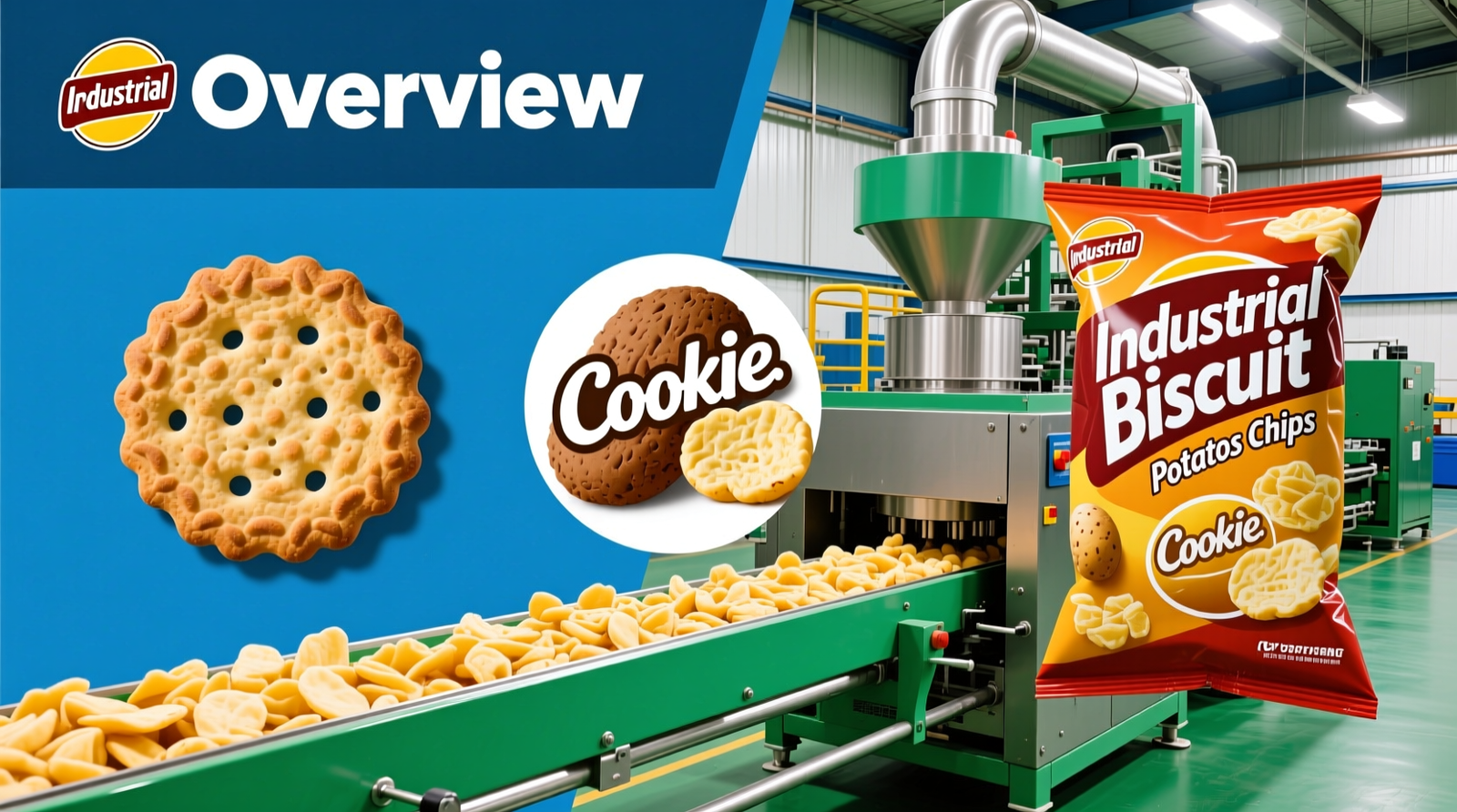
When buyers search for an industrial biscuit production line, automatic cookie production equipment, or a continuous potato chips frying line, they usually need two things: predictable throughput and repeatable product quality. SINOBAKE (Shunde, Foshan, China) designs and builds complete snack processing systems for biscuits, cookies, and potato chips, including layout engineering, automation, and line integration for new plants and upgrades.
With more than 30 years in food machinery applications, SINOBAKE typically supports projects from “add one more line” expansions to a turnkey snack food processing plant where baking/frying, seasoning, cooling, and packaging are designed as one coordinated system.
Typical capacity ranges (project-dependent):
- Hard/soft biscuits: ~300–2,000 kg/h
- Cookies (wire-cut, deposited, rotary-moulded): ~200–1,500 kg/h
- Potato chips: ~300–2,000 kg/h finished chips (continuous line), also commonly specified as ~5–30 t/day
To support buyer due diligence and compliance planning, SINOBAKE commonly aligns equipment documentation and safety design with market requirements such as CE marking (European Conformity) for machinery safety where applicable, and food safety management systems like ISO 22000 or FSSC 22000 (Food Safety System Certification). For background on these frameworks, see ISO 22000 at ISO and FSSC 22000 at FSSC. For hygienic equipment design concepts often used during line design, the EHEDG (European Hygienic Engineering & Design Group) provides widely referenced guidelines.
TL;DR: This article focuses on concrete process steps, capacities, controls, and project execution details for biscuit, cookie, and potato chips lines—plus what buyers should prepare to get an accurate line design and quotation.
End-to-End OEM vs. ODM: What Changes in Engineering Scope
Industrial buyers often see “OEM/ODM” on supplier pages, but the engineering scope matters. SINOBAKE structures projects so customers can choose between repeatable standard modules (OEM) and co-development for new products or special formats (ODM), especially when line stability, changeover time, and sanitation are non-negotiable.
OEM (Original Equipment Manufacturer): Standard Modules, Repeatable Output
OEM projects typically use proven machine platforms and standard interfaces (mechanical, electrical, PLC logic) to reduce risk. This is often the best fit when you want to replicate a product already running in another facility or expand capacity with minimal recipe rework.
- Common OEM scope: standard mixer + forming machine + multi-zone oven + cooling + packing interface
- Best for: line duplication, capacity expansion, replacing old ovens/fryers, improving uptime with standardized spares
ODM (Original Design Manufacturer): Co-Development of Product + Tooling + Control Logic
ODM goes beyond “custom length conveyors.” It can include new tooling, change-parts, and control sequences to hit a texture or shape that standard modules cannot achieve consistently.
Concrete ODM examples (typical):
- New forming tool design: co-developing a rotary-moulder roll pattern and stripper settings for a fragile embossed biscuit that breaks on transfer at high speed.
- New depositing/forming function: developing a depositor sequence for two-color dough or a center-filled cookie where the filling viscosity changes with temperature, requiring synchronized pump control and servo timing.
Mini-case examples (non-confidential):
- For a Southeast Asian biscuit producer, a line revamp increased output from 600 to 1,000 kg/h by upgrading dough transfer, adding synchronized servo-driven forming, and optimizing oven zoning; changeover time was reduced by ~30% through standardized quick-release change parts.
- For a regional potato chips plant, a continuous frying line upgrade improved seasoning consistency and reduced oil carryover by adding controlled de-oiling and inline weighing feedback, stabilizing finished oil content within a tighter process window.
TL;DR: OEM is best for proven, repeatable modules and fast replication; ODM is for co-developing new shapes, fillings, textures, and the tooling/control logic needed to run them at industrial speeds with predictable quality.
Industrial Biscuit & Cookie Line Process: From Dosing to Packaging
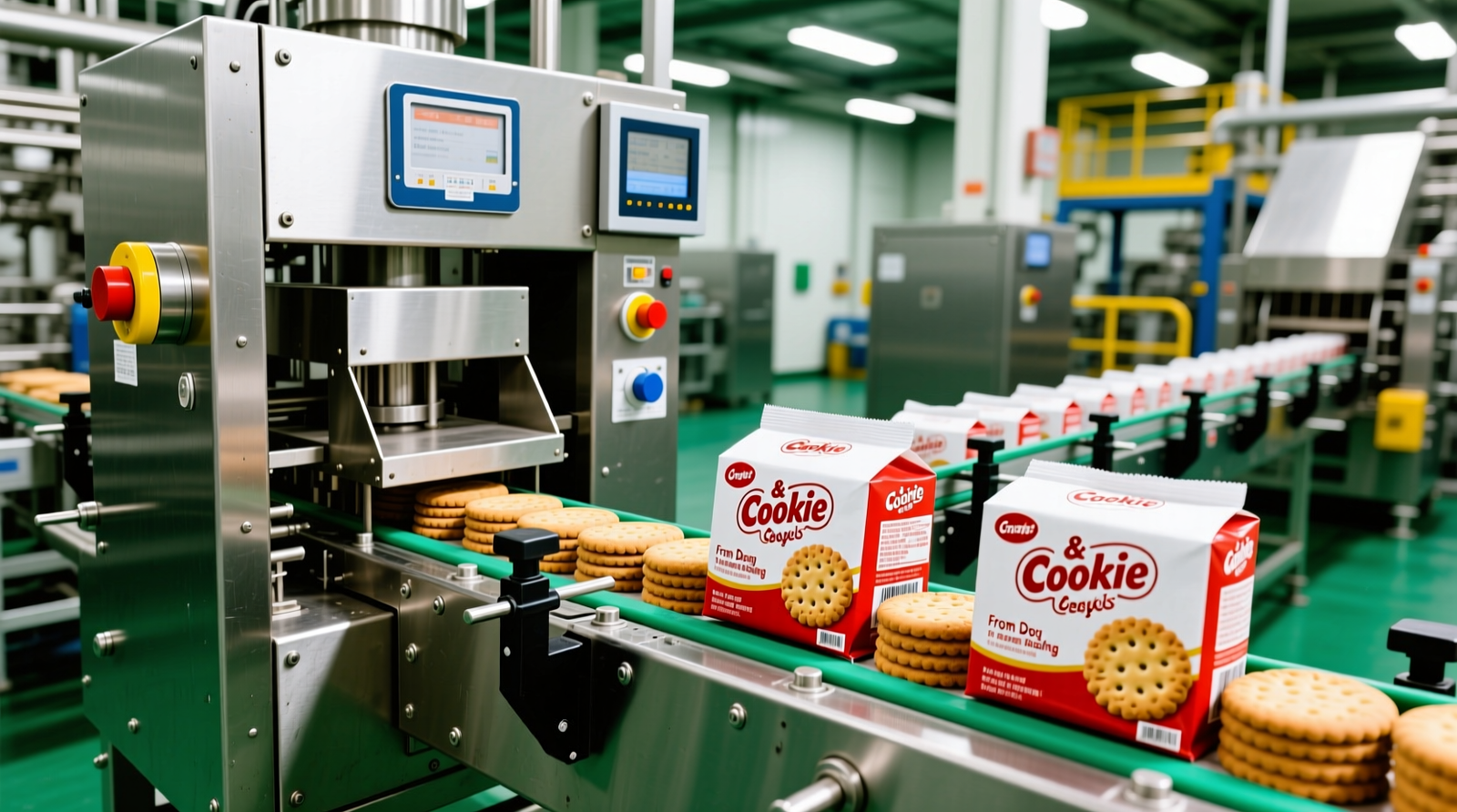
Buyers searching for an industrial biscuit production line or automatic cookie production equipment typically want clarity on mixing, forming, baking, cooling, and packing—because these steps determine scrap rate, weight control, and changeover time.
1) Ingredient handling and dosing
Common setups include bulk flour silos or bag-dump stations, sugar handling, fat/oil dosing, micro-dosing for leaveners, salt, flavors, and inclusions (chips, nuts). Gravimetric (weight-based) dosing improves repeatability versus volume dosing when ingredient density varies.
2) Dough mixing (choose by dough type and throughput)
Mixers are selected based on dough rheology (stiff vs. soft), target capacity, and sanitation needs:
- Spiral mixer: often used for softer doughs requiring gentle development.
- Horizontal mixer: widely used for biscuit dough where uniform fat distribution is critical.
- Continuous mixer: for high-output lines where steady-state mixing supports stable forming and fewer batch-to-batch variations.
3) Forming technologies (matched to product style)
Forming determines thickness control, surface definition, and weight variation (give-away):
- Rotary moulder: for embossed or shaped cookies/biscuits; uses a patterned roll to form pieces.
- Wire-cut: for cookies with inclusions or softer dough; a wire cuts pieces from a dough bank.
- Laminator + gauge rolls: for crackers or layered products; creates sheeted dough with controlled thickness.
- Depositor: for fluid or semi-fluid batters/doughs; supports multi-color or filled formats with the right pump/valve design.
4) Baking ovens (heat transfer defines texture)
Industrial ovens are usually configured in zones to control spread, lift, color, and final moisture:
- Direct gas-fired (DGF): high heat intensity and responsiveness; requires good exhaust/combustion management.
- Indirect (radiant/tube) gas-fired: separates combustion gases from baking chamber; often chosen for specific regulatory or product requirements.
- Hybrid ovens: combines convection and radiant heat for flexibility across SKUs.
- Convection: strong for uniformity and moisture removal in certain cookie types.
5) Cooling, buffering, and packing interface
Controlled cooling reduces breakage and packaging condensation. Buffer conveyors protect the oven’s continuous flow when packaging briefly stops. Typical downstream options include counting/stacking, slug wrapping, flow wrapping, or tray/carton packing depending on SKU.
TL;DR: Mixing and forming determine shape/weight stability, while oven type and zoning determine texture and moisture—together they drive yield, scrap rate, and how quickly you can switch between products.
Continuous Potato Chips Processing Line: Critical Stages and Quality Levers
A continuous potato chips frying line is defined by raw potato variability and tight control of frying, de-oiling, and seasoning. Buyers comparing suppliers usually evaluate how the line manages moisture removal, oil uptake, color, and seasoning adhesion at target throughput.
Typical process flow:
- Receiving & washing: removes soil and foreign matter to protect slicers and fryers.
- Peeling: abrasion or knife peeling (selection depends on potato variety and peel loss targets).
- Slicing: adjustable thickness to control texture and frying time; options for flat or ridged cuts.
- Rinsing / blanching: reduces surface starch and helps manage reducing sugars; blanching can stabilize color and texture.
- De-watering: vibration/air-knife systems reduce surface water to stabilize frying and reduce oil spatter.
- Frying or baking: continuous fryer (most common) or baked chips system; fryer design, oil turnover, filtration, and temperature stability strongly affect oil content and flavor.
- De-oiling: vibration + air blow-off or centrifuge-style solutions to reduce surface oil and improve seasoning control.
- Seasoning: drum seasoning with controlled powder feed; optional oil spray for adhesion where needed.
- Cooling and packaging: stable chip temperature improves bag sealing and reduces condensation; integrated weighing and bagging maintain net weight compliance.
Mini-case example (non-confidential):
- For a mid-sized chips producer targeting export specifications, an upgrade to controlled de-watering and de-oiling helped reduce finished chip breakage and stabilized target oil content during high-humidity seasons, improving pack consistency and reducing rework.
TL;DR: Chips line performance hinges on controlling raw potato variability, slice thickness, moisture removal, fryer stability, and post-fry de-oiling—these directly affect oil content, color, breakage, and seasoning uniformity.
Process Control & QA Parameters That Matter (and How Automation Supports Them)

Industrial snack plants don’t just “run machines”—they manage measurable process parameters that determine compliance, shelf-life, and customer acceptance. Modern control systems help maintain these targets across shifts and operators.
Key QA (Quality Assurance) parameters typically controlled or recorded:
- Bake time & oven zone temperatures: impacts color development and moisture reduction.
- Core temperature: confirms adequate bake/fry energy delivery for texture and food safety objectives.
- Final moisture (%): strongly linked to crispness and shelf-life; too high can cause softening or microbial risk in certain products.
- Finished oil content (%): critical for chips; affects taste, labeling, and cost control.
- Piece weight and count accuracy: reduces give-away and supports retailer compliance.
Control system components (defined):
- PLC (Programmable Logic Controller): industrial controller used to run and interlock machines.
- HMI (Human-Machine Interface): touchscreen for operators to view status, adjust setpoints, and handle alarms.
- SCADA (Supervisory Control and Data Acquisition, where used): plant-level monitoring, data logging, and reporting for traceability.
With recipe management, alarm limits, and synchronized conveyor speeds, automation helps reduce overbake/underbake events, stabilizes throughput, and lowers scrap during start-ups and product changeovers.
TL;DR: Controlling bake/fry time, temperatures, moisture, and oil content is what protects yield and compliance; PLC/HMI/SCADA tools make these parameters repeatable and auditable across shifts.
Key Specifications and Customization Options (What Buyers Usually Compare)
When specifying a turnkey snack food processing plant or adding a new line to an existing factory, purchase teams typically compare capacity, footprint, energy source, automation scope, and sanitation features—because these drive total cost of ownership.
- Capacity range: biscuits/cookies ~200–2,000 kg/h; potato chips ~300–2,000 kg/h (or ~5–30 t/day)
- Oven length & zoning: multiple heating zones to tune spread, color, and final moisture (length selected by product and output)
- Belt widths: selected to match piece count per row and required kg/h while maintaining spacing and transfer stability
- Energy options: gas and/or electric heating (project and local utility dependent); hybrid configurations available for flexibility
- Automation levels: from operator-assisted forming to servo-driven forming, inline weighing feedback, and data logging for traceability
- Sanitary design choices: access doors, tool-less disassembly where possible, washdown zoning, and material selection (304 stainless steel in food contact areas where applicable)
- Packaging interfaces: flow wrap, tray/carton packing, multihead weigher integration, nitrogen flushing (where required for shelf-life)
TL;DR: The “right” line is defined by measurable specs—kg/h, oven zoning, belt width, energy source, and automation depth—because these directly affect labor needs, give-away, scrap rate, and utility cost per ton.
Food Safety, Hygienic Design, and Compliance Signals (E-E-A-T for Industrial Buyers)
For export-oriented snack producers, equipment selection is tied to audit readiness and market access. Rather than vague “ISO-style” claims, buyers typically map the line to specific frameworks and safety requirements.
- ISO 22000 (Food Safety Management Systems): commonly used as a plant-level management framework. Reference: ISO.
- FSSC 22000: ISO 22000-based certification scheme widely used by large retailers and brand owners. Reference: FSSC.
- HACCP (Hazard Analysis and Critical Control Points): risk-based approach used to identify and control food safety hazards. Background: Codex Alimentarius (FAO/WHO).
- CE (where applicable): aligns machinery with EU safety requirements; scope depends on destination market and configuration. Background: European Commission.
Operationally, hygienic design details—smooth welds, minimized dead zones, accessible guarding, and cleanable conveyors—help reduce allergen cross-contact risk and cleaning time, which improves line availability (OEE).
TL;DR: Specifying ISO 22000/FSSC 22000/HACCP alignment and CE safety considerations up front reduces audit risk, shortens qualification time, and supports predictable uptime through cleanable, accessible design.
Project Inputs Buyers Should Prepare (to Get an Accurate Line Design)
To quote and engineer an industrial snack line accurately, equipment suppliers typically need more than “we want higher capacity.” Preparing the information below helps avoid redesign loops and missed utility constraints.
- Target product details: biscuit/cookie dimensions, thickness, inclusions, desired texture, moisture target, packaging style
- Capacity requirement: kg/h or t/day, shift pattern, planned SKU mix
- Factory constraints: floor plan, ceiling height, column grid, access routes for installation
- Utilities available: electricity (voltage/frequency), gas type/pressure, steam (if used), compressed air, water quality/pressure, drainage, ventilation/exhaust limits
- Energy preference: gas vs. electric vs. hybrid (consider local pricing and permitting)
- Labor model: target staffing per shift, operator skill level, desired automation depth
- Compliance targets: required certification or audit scheme (e.g., ISO 22000/FSSC 22000), destination market labeling constraints, safety marking needs (e.g., CE)
When these inputs are defined early, line layouts can be optimized for shorter conveying distances, fewer transfers (less breakage), and easier sanitation zoning.
TL;DR: Capacity, product specs, footprint, and utilities are the core inputs—providing them early improves layout accuracy, prevents utility surprises, and speeds up engineering.
Typical Project Steps and Timelines (From Concept to Ramp-Up)
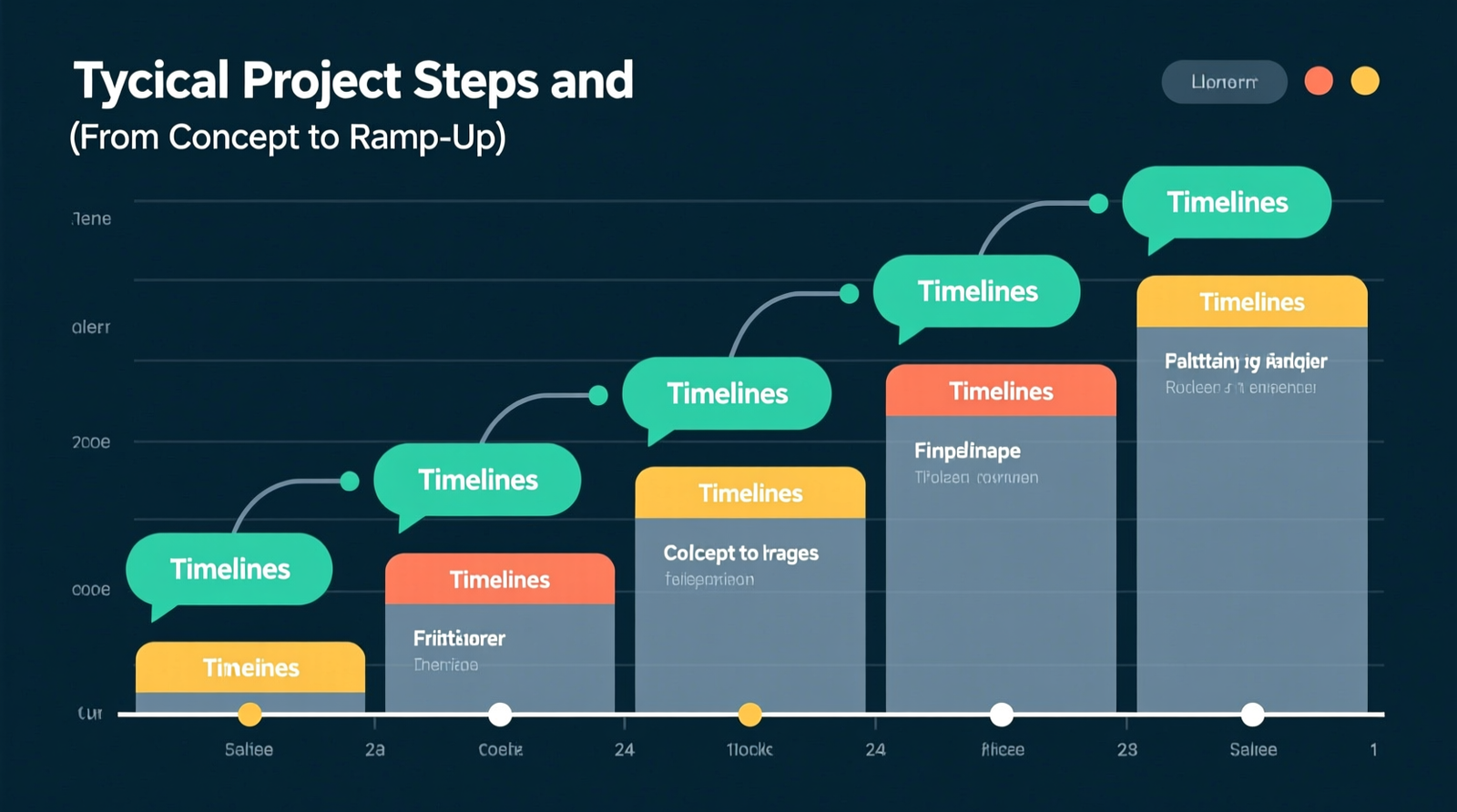
Industrial buyers evaluating a turnkey snack food processing plant usually need a realistic execution plan. While timelines vary by customization level and shipping distance, most projects follow the same gated sequence to reduce technical risk.
- Concept design: product confirmation, capacity, utilities, layout concept
- Detailed engineering: mechanical/electrical design, safety review, control philosophy, interface definition
- Fabrication: machining, welding, assembly, in-house wiring
- FAT (Factory Acceptance Test): pre-shipment testing of key functions, interlocks, and recipes where feasible
- Shipping & installation: on-site mechanical set, utility hookup, guarding completion
- Commissioning: dry run, product trial runs, parameter tuning (bake/fry curves, conveyor speeds, forming settings)
- Ramp-up: operator training, maintenance routines, yield optimization, documentation handover
In practice, OEM lines usually move faster due to standardized modules, while ODM co-development (new tooling, special depositing, or unique chip geometry) requires additional validation time.
TL;DR: Expect a structured path—concept → engineering → fabrication → FAT → install → commissioning → ramp-up—where ODM projects typically add time for tooling and process validation, but reduce long-term quality risk for new products.
Retrofit and Upgrade Scenarios for Existing Snack Plants
Not every project requires a complete replacement. Many manufacturers improve throughput and quality by upgrading specific bottlenecks in an existing biscuit, cookie, or chips system.
Common upgrades:
- Oven replacement or oven zoning retrofit: improves color uniformity and moisture control; can reduce overbake scrap and stabilize texture.
- Automation upgrades: adding servo drives, recipe control, and data logging to reduce operator-dependent variability.
- Forming change-parts modernization: quick-release tooling to shorten changeovers and reduce handling damage.
- Chips fryer filtration and de-oiling improvements: stabilizes oil quality, reduces oil carryover, and improves seasoning adhesion consistency.
- Packaging automation add-ons: inline checkweighers, metal detection interfaces, case packing to reduce labor and improve compliance.
Retrofits can be a practical route to reduce cost per ton without stopping production for a full plant rebuild.
TL;DR: Targeted retrofits—especially ovens, forming, fryer/de-oiling, and packaging automation—often deliver measurable gains in yield, changeover time, and labor efficiency with less downtime than a full line replacement.
Global Delivery and Support Model (Installations, Documentation, Service)
Snack manufacturers operating across multiple regions often prioritize documentation, spares strategy, and response time. SINOBAKE supports line delivery, installation guidance, commissioning, and operator training, with experience supplying projects across multiple international markets (often 50+ countries, project-dependent) through integrators and direct shipments.
Support typically includes recommended spare parts lists, maintenance schedules, and troubleshooting guidance aligned with PLC/HMI diagnostics. For plants running multiple SKUs, structured recipe management and changeover procedures can help reduce start-up scrap and stabilize first-pass yield after a switch.
TL;DR: For multi-market operations, the practical “trust signal” is execution capability—documentation, spares planning, commissioning discipline, and diagnostic-ready controls that reduce downtime and stabilize quality after changeovers.
Conclusion
SINOBAKE designs and builds integrated lines for biscuits, cookies, and potato chips with industrial capacities commonly ranging from a few hundred kg/h up to ~2,000 kg/h (product-dependent). The key differentiator in real plants is not broad claims—it’s matching mixer/forming/oven or fryer/de-oiling choices to the product’s process window, then using PLC/HMI control and data logging to keep moisture, color, weight, and oil content on target.
For buyers planning new installations or upgrades, the fastest path to an accurate solution is to define capacity, product specs, utilities, footprint, and automation expectations early—so engineering decisions translate into measurable outcomes: higher yield, lower give-away, fewer changeover losses, and smoother compliance audits.
TL;DR: Specific process design + measurable controls = better yield and consistency; clear upfront inputs = faster engineering and fewer surprises during installation and ramp-up.
FAQ

A: Many industrial biscuit lines are specified around 300–2,000 kg/h, while cookie systems (wire-cut/deposited/rotary moulded) are often 200–1,500 kg/h depending on piece weight, rows across the belt, and oven length/zoning. The correct capacity should be tied to your SKU mix and packaging rate to avoid bottlenecks.
Q: How long is the lead time, and how long do installation and commissioning usually take?
A: Timelines vary by scope and customization level. Standardized OEM modules generally ship faster than ODM projects that require new tooling and process validation. After delivery, on-site installation plus commissioning commonly runs from several weeks to a few months depending on line size, utility readiness, and how many products need trial runs before ramp-up.
Q: What utility requirements should I plan for a continuous potato chips frying line or biscuit oven line?
A: Most projects require electricity (voltage/frequency confirmed), an energy source for heating (gas and/or electric), compressed air for pneumatics, and water for washing/cooling where applicable. Potato chips lines may also require robust ventilation/exhaust and drainage planning. SINOBAKE typically supports layout and utility planning by confirming equipment loads, connection points, and recommended service margins during the engineering phase.
Q: Can you retrofit an existing line instead of buying a full turnkey snack food processing plant?
A: Yes. Common retrofit scopes include oven replacement or re-zoning, adding servo/recipe automation to forming, fryer filtration and de-oiling upgrades for chips, and packaging automation additions (checkweighing, metal detection interfaces, case packing). Retrofitting often improves yield and reduces labor without the downtime of a complete rebuild.
Q: Do you offer remote support (remote diagnostics, online troubleshooting, spare parts logistics)?
A: Many modern lines support remote troubleshooting via PLC/HMI diagnostics and structured alarm/event logs, enabling faster root-cause analysis and parameter checks. Spare parts support typically includes recommended spares lists and shipment coordination so critical wear parts (belts, bearings, knives, sensors) can be replenished with minimal disruption.