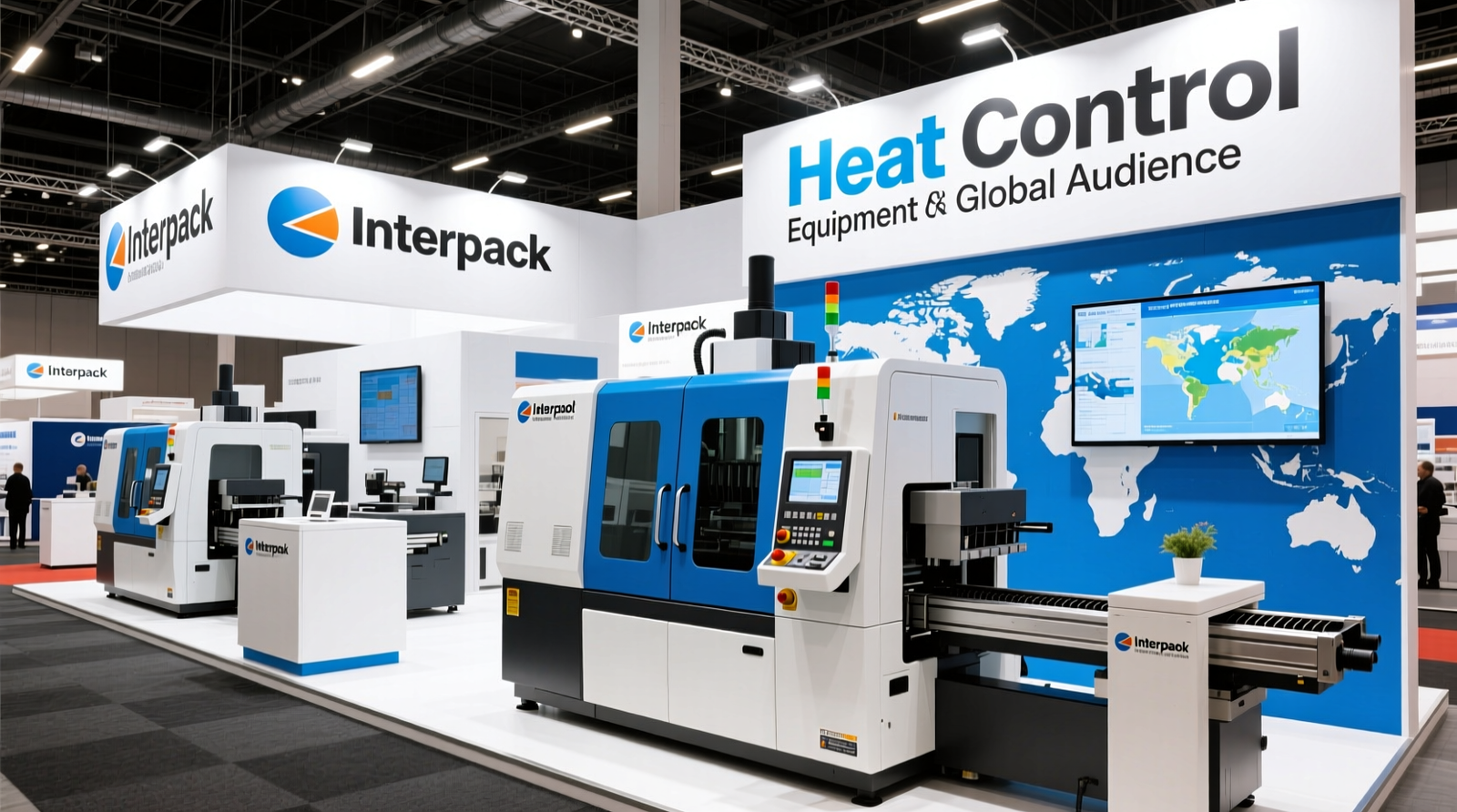
If you’re researching food processing equipment for snack production lines—including packaging automation, horizontal motion conveyors, frying, seasoning, inspection, and cooling—this overview explains what Heat and Control and its partner brands are showing at Interpack (Düsseldorf) and the Sweets & Snacks Expo supplier showcase, with practical engineering details and selection tips.
- Processing: frying, cooking, thermal systems
- Seasoning & coating: oil/slurry application, dry seasoning, multi-ingredient coatings
- Conveying: FastBack® horizontal motion, distribution, elevation
- Inspection: metal detection, checkweighing
- Packaging: weighing and bagmaking integration (via partners)
TL;DR: The article focuses on complete snack/confectionery line building blocks—processing, seasoning, conveying, inspection, and packaging—plus what to evaluate before specifying equipment.
Global Trade Show Presence: Interpack (Düsseldorf) and Sweets & Snacks Expo (Las Vegas)

At Interpack in Düsseldorf (Hall 15, Booth A56), visitors can compare processing and packaging concepts side-by-side—useful when a project’s bottleneck sits between a fryer exit, seasoning, and bagging rather than in one isolated machine. Interpack is widely recognized as a global packaging and processing trade fair, so it’s a practical venue for evaluating upstream-downstream integration (e.g., conveying to multihead weighers, inspection placement, and changeover access).
The company will also participate in the Sweets & Snacks Expo supplier showcase in Las Vegas, a show heavily attended by snack and confectionery producers. For R&D teams and plant engineers, the supplier showcase is typically where you can discuss application-specific issues such as fragile inclusions (chips with ridges, puffed extrudates, clusters) and allergen-driven sanitation needs.
TL;DR: Interpack is ideal for end-to-end “processing-to-packaging” line discussions; Sweets & Snacks Expo is strong for snack/confectionery application problem-solving (fragility, seasoning, allergen changeovers).
75+ Years in Food Processing and Packaging Equipment (What That Means Practically)
Heat and Control has supplied processing and packaging systems for more than 75 years. In practical project terms, longevity matters less as a slogan and more as a proxy for: (1) a large installed base to benchmark performance, (2) mature spare-parts and field-service processes, and (3) repeatable commissioning methods that reduce “ramp-up” losses after installation.
Engineering teams typically get pulled into problems that show up in plant KPIs (key performance indicators), such as:
- Giveaway and yield loss: seasoning over-application, fines generation, breakage.
- OEE: Overall Equipment Effectiveness (availability × performance × quality) losses from unplanned stops at transfer points.
- Food safety: changeover validation, allergen control, inspection performance verification.
TL;DR: The value proposition is less “innovation” in the abstract and more KPI-driven: reducing ramp-up risk, improving OEE, and lowering waste at the most failure-prone points (transfers, seasoning, and packaging feed).
Integrated Brand Family and Partner Technologies (Who Does What)
Rather than treating “processing” and “packaging” as separate projects, the portfolio groups equipment around the highest-leverage interfaces—fryer discharge to conveying, conveying to seasoning, seasoning to distribution, and distribution to weighing/inspection/bagging.
Internal brand family (processing, seasoning, conveying, drying/cooling)
- FastBack® – horizontal motion conveying designed to move product with controlled acceleration to reduce breakage and seasoning loss.
- Spray Dynamics – application systems for oils, slurries, and seasonings; typically where closed-loop dosing and coverage consistency are engineered.
- Mastermatic – frying and cooking systems with emphasis on oil management and thermal control.
- Tek-Dry Systems – drying and cooling for moisture/texture control and downstream packaging stability.
- Fabcon Food Systems – UK-based conveying and handling equipment for food production environments.
Technology partner brands (inspection and packaging integration)
- Ishida – weighing and packing systems (e.g., multihead weighers and bagmakers) used in high-speed snack packaging. See: Ishida.
- CEIA – metal detection for food safety programs and customer specifications. See: CEIA Food Industry.
TL;DR: The in-house brands cover core processing/handling; partners fill in weighing, packaging, and metal detection to complete a processing-to-pack line.
Integrated Snack and Confectionery Processing Lines (From Frying to Packaging Feed)
In snack plants, the biggest losses often occur at transitions—hot product moving from fryer to de-oiling, from seasoning to distribution, and from distribution to scales. An “integrated line” approach targets those transitions so the line is tuned as a system (product temperature, surface oil, seasoning adhesion, and feed stability to packaging).
Frying systems: oil management and thermal control (why it affects quality and compliance)
Frying performance hinges on temperature uniformity (minimizing hot/cold zones), oil turnover rate (how quickly oil is refreshed through make-up oil addition and removal), and filtration (removal of fines/crumb that accelerate oil degradation). In practice, these variables influence:
- Color and texture consistency: tighter temperature control reduces batch-to-batch variation and “over-browned” outliers.
- Oil life and flavor stability: fines removal and controlled turnover can slow oxidation and polymerization that contribute to off-flavors.
- Chemistry risk management: controlling time/temperature and product moisture is part of managing process contaminants such as acrylamide (a compound that can form in some carbohydrate-rich foods cooked at high temperatures). Regulatory guidance and mitigation toolkits are widely referenced, including the U.S. FDA overview on acrylamide and the European Commission information on acrylamide.
For plants operating under HACCP (Hazard Analysis and Critical Control Points), thermal process control and oil management records can also support verification activities and audits (especially where customer specifications tie to finished-product color, moisture, or oil content). Reference: FDA HACCP resources.
TL;DR: Better filtration, controlled oil turnover, and uniform heat reduce defects (color swings, off-flavors) and support contaminant-risk mitigation (e.g., acrylamide) and HACCP documentation.
Seasoning and coating systems: dosing accuracy, adhesion, and changeover reality
Seasoning systems aren’t only about “coverage”—they’re about dose control (g/kg), adhesion (how well seasoning sticks), and repeatability after changeovers. A practical target some snack operations pursue is reducing seasoning waste (overs and dust/fines) by 5–15% through improved applicator control, better product presentation to the seasoning zone, and more stable feed rates (actual results depend on seasoning type, oil level, and product geometry).
Spray Dynamics application systems commonly focus on:
- Closed-loop controls: flowmeter feedback for oil or slurry delivery, with setpoints tied to product throughput to keep dosing stable during line-speed changes.
- PLC/HMI integration: PLC (Programmable Logic Controller) recipes and HMI (Human-Machine Interface) screens for fast, repeatable changeovers and operator accountability.
- Hygienic design: CIP (Clean-in-Place) options where appropriate, tool-less disassembly for wet zones, and weld/finish choices that align with sanitation practices and audit expectations.
For plants certified to GFSI (Global Food Safety Initiative) benchmarked schemes—such as SQF or BRCGS—recipe control, allergen changeover procedures, and hygienic equipment design can materially reduce audit friction. Background: GFSI.
TL;DR: Seasoning performance is an engineering/control problem (flow feedback + recipe control + hygienic access) that can reduce overs/dust and stabilize flavor intensity—especially through speed changes and allergen-driven changeovers.
Drying and cooling systems: moisture targets, packaging stability, and controls
Drying/cooling is often the hidden driver of shelf-life and bag performance. If product enters packaging too warm, condensation can occur; if moisture is uneven, texture drift and clumping can increase. Tek-Dry systems typically address this with controlled air temperature, airflow distribution, and residence time.
From an engineering standpoint, look for:
- Temperature and airflow monitoring: sensors tied into the PLC for alarms and trend data (useful for troubleshooting texture complaints).
- Closed-loop control strategies: adjusting fan speed, damper position, or air temperature based on product exit temperature targets.
- Sanitation features: access panels, smooth product-contact surfaces, and cleaning-friendly designs aligned to plant sanitation SOPs.
TL;DR: Controlled cooling/drying reduces condensation risk and texture variation, and sensor-driven controls help maintain consistent exit conditions into packaging.
Horizontal Motion Conveyors for Fragile Snacks: How FastBack® Differs from Vibratory Conveying
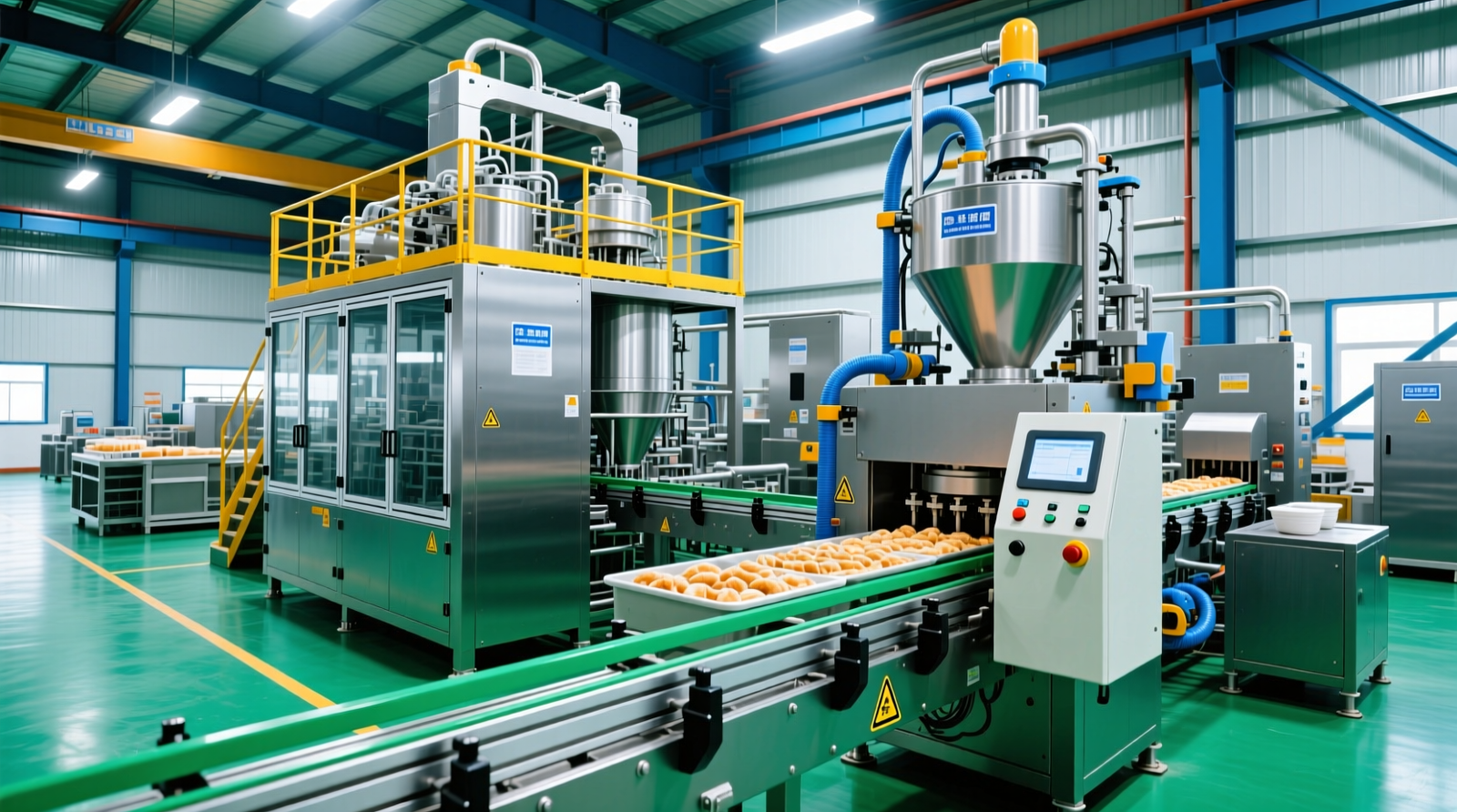
“Horizontal motion conveying” is often compared with traditional vibratory conveying, but the mechanics are materially different. A typical vibratory conveyor uses rapid oscillation to “throw” product forward via repeated micro-lifts, which can increase collisions, fines, and seasoning dust—especially with brittle snacks.
FastBack® horizontal motion conveying instead uses a controlled forward-and-return stroke profile that aims to keep product in more continuous contact with the conveying surface during the forward movement, then retracts in a way that reduces backward drag on the product. In practice, that can lower peak acceleration forces on the product compared with high-frequency vibration, which is why horizontal motion conveying is often specified for:
- Fragile products: kettle chips, baked chips, extruded curls, nut clusters.
- Coated/seasoned items: where reducing “dust-off” supports both yield and consistent label claims (e.g., seasoning declaration per serving).
- Distribution to multiple scales/baggers: where stable, metered flow improves weigher performance and reduces package weight variability.
Performance targets vary by product, but many snack plants evaluate conveying upgrades by tracking breakage/fines reduction and seasoning waste reduction. It’s common to see projects justified when fines drop by several percentage points or when seasoning loss (dust collection + rework + giveaway) becomes measurable at scale.
TL;DR: Horizontal motion uses a different stroke/acceleration profile than vibratory “throwing,” which can reduce fines and seasoning dust—key for fragile snacks and stable feeding to weigh/pack equipment.
Food Safety, Inspection, and Regulatory Compliance Solutions (HACCP, GFSI, FDA/USDA/EU)
Inspection is usually specified as part of a broader food safety plan rather than as a standalone purchase. Under HACCP, foreign material control is typically addressed through prerequisite programs and/or Critical Control Points (CCPs), depending on the product and hazard analysis.
With partner equipment:
- Metal detection: CEIA systems are commonly used to detect ferrous, non-ferrous, and stainless contamination risks on finished product lines (sensitivity depends on aperture size, product effect, and packaging format).
- Checkweighing and weighing: Ishida systems can support weight compliance and reduce giveaway when tuned correctly with stable infeed and consistent product presentation.
Manufacturers selling into multiple regions often align equipment documentation and validation with applicable frameworks (e.g., FDA requirements for U.S. operations, EU expectations for contaminant mitigation, and customer-driven GFSI audits). A helpful general reference for hygienic design principles is the 3-A Sanitary Standards organization (commonly referenced in hygienic equipment design discussions, even beyond dairy).
TL;DR: Inspection and weighing are most effective when engineered into the HACCP/GFSI program and mechanically supported by stable conveying and product presentation.
Real-World Example: Upgrading a Potato Chip Line to Reduce Fines and Seasoning Dust

Consider a mid-size potato chip producer running ~2–4 tons/hour with frequent flavor changeovers (e.g., salted, BBQ, sour cream & onion). The plant reports three measurable issues: (1) rising fines at the packaging mezzanine, (2) visible seasoning dust in the seasoning area, and (3) checkweigher rejects during speed changes.
A practical upgrade path might look like this:
- Conveying change: replace a high-vibration transfer conveyor after seasoning with horizontal motion conveying to reduce collisions at the transfer point; track outcome via fines % in rework bins and dust collection mass per shift.
- Seasoning control: add flowmeter-based oil dosing with recipe setpoints tied to line throughput (closed-loop) to stabilize adhesion during speed ramps; measure seasoning usage (kg/shift) versus finished product output.
- Distribution tuning: improve proportional feed to packaging scales to reduce starvation and overfeed events; measure checkweigher reject rate and weigher “over/under” trends.
Even modest improvements—e.g., 1–3% less breakage and 5–10% less seasoning loss—can be financially meaningful when multiplied across multi-shift operations and high ingredient costs.
TL;DR: A line upgrade is best justified with measurable before/after KPIs (fines %, seasoning kg per ton, reject rate), not generic “efficiency” claims.
How to Specify Snack Processing Equipment (Conveyors, Fryers, Seasoners): Practical Evaluation Checklist
Before requesting quotes, define the boundaries of your process and the constraints your plant actually faces. The most common specification mistakes are underestimating sanitation time, ignoring changeover frequency, and treating conveying as “utility equipment” rather than a yield and quality driver.
- Throughput range: minimum/nominal/peak rate (e.g., 1–10 tons/hour) and how often you run at peak.
- Product fragility & geometry: thickness, seasoning sensitivity, inclusion content (nuts, clusters), and allowable fines.
- Thermal targets: fryer exit moisture/oil targets, cooler exit temperature targets for packaging stability.
- Changeovers: allergen vs non-allergen changeovers, sanitation windows, and recipe count; define acceptable changeover time and validation steps.
- Controls & data: PLC/HMI standards, historian/SCADA needs, and what you want trended (oil temperature, flow rates, product temp).
- Hygiene requirements: wet washdown zones, CIP needs, tool-less disassembly preferences, and surface finish expectations.
TL;DR: Strong specifications start with throughput, product fragility, sanitation/changeover requirements, and control/data expectations—then match equipment to those constraints.
Common Production Challenges Mapped to Solutions (Waste, Bottlenecks, Allergen Changeovers)

- Over-seasoning and ingredient cost creep: address with closed-loop dosing, stable feed, and improved adhesion control in seasoning systems.
- Product damage and fines: reduce high-acceleration transfers with horizontal motion conveying and better distribution design.
- Bottlenecks between processing and packaging: stabilize proportional feed and accumulation so weighers/baggers run closer to rated speed.
- Allergen changeovers and sanitation delays: specify hygienic design features (access, tool-less teardown, CIP where appropriate) and recipe-driven controls that reduce setup errors.
- Food safety audit pressure: align inspection points and documentation with HACCP and GFSI expectations.
TL;DR: The fastest ROI usually comes from fixing transfer/feeding stability (fines + downtime) and dosing control (seasoning cost + consistency), while designing sanitation and audit requirements in from the start.
What Visitors Can See at Interpack and Sweets & Snacks Expo (Demos, Discussions, and Line Concepts)
At the upcoming Interpack and Sweets & Snacks Expo supplier showcase, visitors typically focus on:
- FastBack® conveying and distribution concepts: how horizontal motion supports gentle handling and consistent feed to packaging.
- Seasoning/application strategies: oil/slurry dosing approaches, recipe control, and changeover-friendly design.
- Processing discussions: fryer oil management, filtration approaches, and temperature control considerations tied to quality and contaminant mitigation.
- Inspection integration: where to place metal detection and checkweighing to protect the brand and reduce false rejects.
TL;DR: Expect practical conversations around demos and line concepts—especially the “hand-off points” where most snack-line waste and downtime originate.
Global Footprint, Test Centers, and Support (How to De-Risk a Line Upgrade)

Heat and Control operates a global network of manufacturing sites, test centers, and service teams. For buyers, the most actionable benefit is the ability to run product trials before committing capital—especially when the risk is not whether a machine “works,” but whether it hits your specific targets for fines, seasoning usage, moisture, and packaging feed stability.
Test center trials are typically used to:
- Compare conveying methods on a fragile SKU and quantify fines generation.
- Validate seasoning adhesion and dosing stability across line speeds.
- Establish process windows (e.g., fryer temperature vs color target) and document them for scale-up.
TL;DR: Use trials to turn subjective quality complaints into measurable acceptance criteria (fines %, seasoning kg/ton, reject rate, temperature/moisture targets).
Next Steps: Schedule a Show Meeting, Request a Line Audit, or Book a Test-Center Trial
If you’re attending Interpack or Sweets & Snacks Expo, come prepared with throughput, product details, and top pain points (waste, breakage, sanitation time, or packaging starvation). From there, the most productive next actions are:
- Schedule a meeting at the booth to review your current line layout and constraints.
- Request a line assessment/audit focused on measurable KPIs (fines, seasoning usage, downtime sources, reject rates).
- Arrange a test center trial for high-risk SKUs or new product launches to confirm performance before purchase.
TL;DR: The fastest path to a confident purchase is: show meeting → KPI-focused line audit → test trial for your specific product.
FAQ

Q: When is a FastBack® horizontal motion conveyor preferable to a vibratory conveyor for snacks?
A: Choose horizontal motion when breakage, fines, or seasoning “dust-off” is a measurable cost—common with kettle chips, baked chips, and fragile extruded snacks. If your line shows rising fines after transfer points or unstable feed into weighers during speed changes, horizontal motion conveying is often evaluated because its stroke/acceleration profile can be gentler than vibratory “throwing.” Ask for a trial or a side-by-side test and track fines % and seasoning loss before/after.
Q: What fryer features should I prioritize to improve consistency and manage acrylamide risk?
A: Prioritize temperature uniformity (avoid hot/cold zones), filtration to remove fines, and a controllable oil turnover strategy. These factors impact color control, oil degradation, and process contaminant risk. Use FDA and EU guidance on acrylamide mitigation to set internal targets, then validate the process window (time/temperature/moisture) during trials.
Q: How can seasoning systems reduce ingredient waste without under-flavoring the product?
A: Look for closed-loop oil or slurry dosing (flowmeter feedback), recipe management in the PLC/HMI, and stable product presentation from conveying/distribution. The goal is to hit a consistent g/kg dose across speed changes and shift-to-shift operation. Many plants quantify success by tracking seasoning usage (kg) per ton of finished product and dust collection per shift.
Q: What should I evaluate for ROI and total cost of ownership (TCO) on a snack line upgrade?
A: Beyond purchase price, model (1) waste reduction (fines, rework, seasoning overs), (2) uptime gains (fewer jams/stops at transfers), (3) sanitation labor and changeover time, and (4) maintenance intervals/parts. A small percentage reduction in breakage or seasoning loss can outweigh energy differences, especially on multi-shift lines with expensive flavors.
Q: How do I scale from pilot trials to a full high-throughput snack production line?
A: Start with a test-center trial to define process windows and acceptance criteria (fines %, seasoning dose range, exit temperature/moisture targets). Then specify modular equipment capacities (conveying, seasoning, cooling, and distribution) with headroom for peak rates and future SKUs. Ensure controls (PLC recipes, alarms, trend data) are designed from day one so scale-up doesn’t depend on “tribal knowledge” from operators.