
Introduction

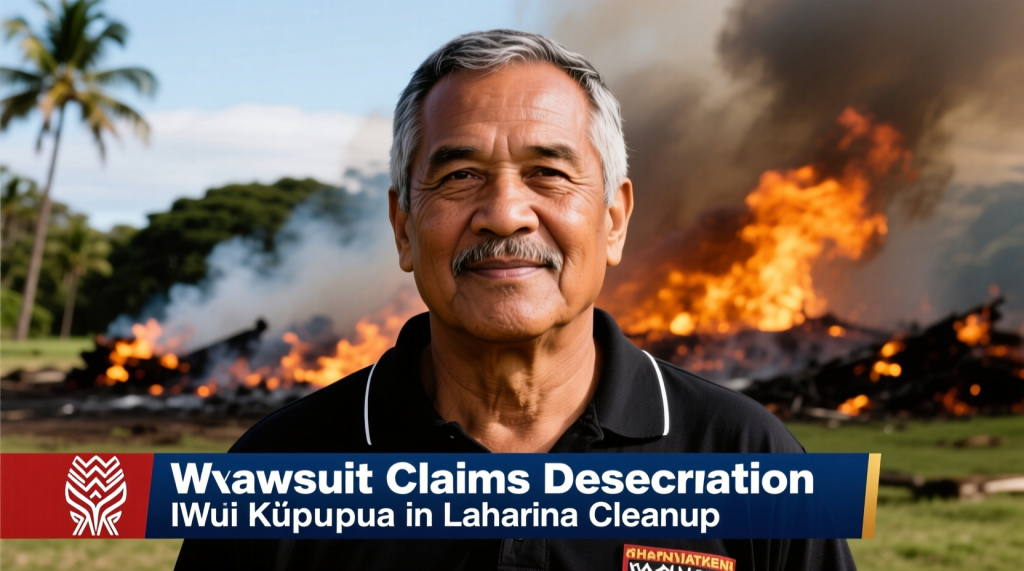
A Native Hawaiian family is suing a prominent Maui landowner and the State of Hawaiʻi, alleging that government agencies and the private owner failed to protect ancestral Native Hawaiian remains—iwi kūpuna (ancestral bones/remains)—after the 2023 Lahaina wildfire.
The complaint focuses on a historic burial ground in Lahaina’s Mill Camp neighborhood. ʻOhana Kimokeo (ʻohana = family) alleges that state officials did not timely register and safeguard newly exposed burials, and that the landowner permitted heavy equipment and later landscaping that desecrated (disturbed or damaged) iwi.
Beyond one parcel, the dispute spotlights a recurring statewide tension: how Hawaiʻi balances development and disaster recovery with Native Hawaiian burial protection obligations under the Hawaiʻi Constitution and the state’s historic preservation and burial laws.
TL;DR: The lawsuit claims iwi kūpuna were exposed after the Lahaina fire, then allegedly damaged by later land work, and that state agencies failed to respond as required under Hawaiʻi burial protection laws.
Key Dates Timeline (Great Māhele to the Lawsuit)
- 1848 (Great Māhele): Land division/awards reshape land tenure in the Hawaiian Kingdom; the family alleges ancestral land interests trace to this period.
- 2014: Defendant landowner reportedly purchases undeveloped parcels from Pioneer Mill-related holdings.
- 2018: Burials on the property are reportedly registered with the State Historic Preservation Division (SHPD).
- August 2023: Lahaina wildfire devastates the area; additional burials are allegedly exposed post-fire.
- January 2024: Heavy machinery work (excavator) allegedly occurs on the parcel.
- Early 2025: Papaya trees reportedly planted in the same sensitive area.
- 2025: Lawsuit filed (timing as described in the article and related reporting).
TL;DR: The dispute spans long-standing family burial stewardship, a 2018 registration, post-2023 fire exposure, and alleged impacts from 2024–2025 ground activity leading to litigation.
Glossary of Key Hawaiian and Agency Terms (Used Throughout)

- ʻohana: family
- kuleana: responsibility/privilege; also can refer to certain land interests
- mālama: to care for/protect
- pono: just, proper, balanced
- ʻāina: land
- SHPD: State Historic Preservation Division (within Hawaiʻi Department of Land and Natural Resources)
- DLNR: Department of Land and Natural Resources
- DOCARE: Division of Conservation and Resources Enforcement (DLNR’s enforcement arm)
- IBC: Island Burial Council (e.g., Maui/Lānaʻi IBC), advisory/decision-making role in burial treatment matters
TL;DR: These are the core cultural terms and agencies referenced; definitions appear once here for easier reading later.
Background: Native Hawaiian Burial Practices and the Legal Framework
For many Native Hawaiians, caring for iwi kūpuna is a sacred cultural practice—often described as mālama iwi kūpuna—and a continuing kuleana to keep ancestors undisturbed so they may rest and remain connected to ʻāina and descendants.
Legally, burial protection in Hawaiʻi sits at the intersection of constitutional principles, historic preservation statutes, and administrative rules. Key authorities commonly implicated in burial disputes include:
- Hawaiʻi Revised Statutes (HRS) Chapter 6E (Historic Preservation), which establishes the state historic preservation program and processes for identifying/protecting historic properties and burials. See the official state code: HRS Chapter 6E (Capitol.hawaii.gov).
- HRS §6E-43 (Burial sites; procedures; penalties), frequently cited in enforcement and compliance discussions involving inadvertent discoveries, treatment plans, and restrictions on disturbance. (Readers can access the statute through the Chapter 6E link above.)
- HRS §6E-11 (Civil penalties), relevant when the state seeks monetary penalties for violations under Chapter 6E.
- Hawaiʻi Administrative Rules (HAR) Title 13, Chapter 300 (burial sites rules), which implement procedures for burial treatment, inadvertent discoveries, and roles of island burial councils and SHPD. Official access: Hawaiʻi Administrative Rules for Historic Preservation (SHPD).
In addition, projects involving federal funding, permits, or federal agency action may trigger review under the National Historic Preservation Act (NHPA) (a federal law), particularly Section 106 consultation requirements. Authoritative overview: Advisory Council on Historic Preservation: Section 106 Process.
TL;DR: Hawaiʻi burial protection commonly relies on HRS Chapter 6E (especially §6E-43 and §6E-11) and related administrative rules, with federal NHPA processes sometimes applying when federal actions are involved.
How Hawaiʻi Burial Enforcement Has Played Out Before (Case Context)

This lawsuit arrives in a state where iwi kūpuna disputes have repeatedly led to contested permitting, enforcement debates, and litigation. Two landmark examples often referenced in discussions of Hawaiian burial/cultural resource protection include:
- Ka Paʻakai o ka ʻĀina v. Land Use Commission (Hawaiʻi Supreme Court, 2000): a foundational decision requiring agencies to meaningfully consider and make findings on the exercise of Native Hawaiian traditional and customary practices when approving land uses. Summary source: Justia summary of Ka Paʻakai.
- State v. Hanapi (Hawaiʻi Supreme Court, 1995): an important case on Native Hawaiian traditional and customary rights defenses, frequently cited alongside constitutional protections for cultural practices. Summary source: Justia summary of State v. Hanapi.
While these cases are broader than burial-specific enforcement, they help explain why courts in Hawaiʻi often require rigorous agency process, evidentiary support, and explicit balancing when cultural practices and land use collide.
TL;DR: Prior Hawaiʻi Supreme Court precedent (e.g., Ka Paʻakai, Hanapi) sets expectations that agencies must seriously analyze and document impacts to Native Hawaiian practices—context that may influence how burial disputes are evaluated.
The Kimokeo ʻOhana’s Burial Ground in Lahaina
According to the complaint, the Kimokeo ʻohana traces roots in Lahaina back more than two centuries and connects their presence to land interests stemming from the Great Māhele era. Over generations, the family states it buried and cared for ancestors in what later became the Mill Camp neighborhood.
Traditional indicators cited in the narrative include pōhaku (stones), ʻiliʻili (pebbles), and coconut trees used to recognize burial locations. Over time, the article describes how much of the area was subdivided and conveyed, including to Pioneer Mill Co. in the early 1900s, with the defendant landowner purchasing parcels in 2014.
The burials were reportedly registered with SHPD in 2018, and the family says it continued mālama of known sites after that registration.
TL;DR: The family claims long-standing burial stewardship in Mill Camp, a chain of land transfers, and formal SHPD registration in 2018—facts that shape the “known burial” arguments in the lawsuit.
How the 2023 Lahaina Wildfire Allegedly Exposed Additional Iwi Kūpuna

In August 2023, the Lahaina wildfire destroyed large parts of town, including areas around Mill Camp. The article and complaint describe how fire impacts and subsequent debris/vegetation loss revealed additional remains that had not been visible before.
In a public statement (as referenced in reporting about the case), the Native Hawaiian Legal Corporation (NHLC)—counsel for the family—said family members documented what they found, marked locations, and submitted materials seeking SHPD registration for the newly exposed burials.
The piece also describes that federal archaeologists and officials reportedly advised that any ground-disturbing activity on the parcel should be done by hand to reduce the risk of damaging remains—guidance consistent with cultural resource best practices in highly sensitive contexts.
TL;DR: After the fire, the family says new remains became visible, they documented and sought registration, and hand-work-only precautions were reportedly advised due to sensitivity.
Alleged Desecration by Heavy Machinery and Later Planting (What’s Known vs. Alleged)
The complaint alleges that, despite post-fire sensitivity and prior knowledge of burials, the landowner authorized work that damaged newly exposed iwi.
Specific allegations described include that in January 2024 a contractor used a machine excavator to clear parts of the property, with instructions allegedly limited to avoiding only pre-fire-identified burials. The next day, a family member reportedly observed excavator tracks, displaced stones, and flags moved/removed from marked areas.
On the record available in the article narrative, the extent of impact (including the allegation that roughly “90%” of exposed remains were desecrated) appears to rely on the family’s observations and the state enforcement investigation described below. The article does not specify that an independent archaeological damage assessment report (post-excavation) was publicly released; if such a report exists, it would likely become a key evidentiary document in litigation or agency proceedings.
Separately, in early 2025, the complaint describes papaya trees being planted in the same area with alleged permission from the landowner. The family believes that planting further disturbed the burial area.
The landowner declined to comment when contacted (as reported), and allegations remain unproven unless and until established through admissions, agency findings, or a court ruling.
TL;DR: The lawsuit alleges excavator work in Jan. 2024 and later planting disturbed burials; the article does not detail a publicly released independent post-work archaeological assessment, and the claims are not yet proven in court.
State Investigation and Alleged Failure to Act (Separated for Clarity)
(a) DOCARE’s finding (as alleged): After the excavator work, DOCARE investigated. DOCARE is DLNR’s enforcement division with authority to investigate suspected violations and pursue enforcement actions (including referrals and administrative/civil enforcement, depending on the statute and forum). The complaint alleges DOCARE concluded the heavy machinery work resulted in desecration of ancestral remains.
(b) The family’s administrative efforts: Following the alleged DOCARE conclusion, the family and counsel say they repeatedly engaged SHPD, the Maui/Lānaʻi Island Burial Council, and the Board of Land and Natural Resources seeking protective measures. In burial matters, island burial councils typically coordinate with SHPD to evaluate burial identification, determine preservation options (e.g., preserve in place vs. relocation in limited circumstances), and guide/approve burial treatment plans under applicable rules.
(c) Status as described in the reporting: The lawsuit asserts that, despite reporting and paperwork, state action was insufficient—especially around formal registration and protective planning for newly exposed iwi. The article also notes that a DLNR spokesperson stated SHPD and DLNR had not yet received information about the lawsuit itself at that time.
TL;DR: The narrative distinguishes (1) alleged DOCARE findings, (2) the family’s attempts to work through SHPD/burial council processes, and (3) the claimed lack of timely protective action as of the most recent reporting.
The Lawsuit: Claims Against the Landowner and the State (With Legal Anchors)
The suit names both the private landowner and state entities. Although the specific causes of action depend on the filed complaint, the legal backbone of many burial disputes involves HRS Chapter 6E—particularly burial procedures and potential civil penalties.
Claims and theories alleged against the landowner include knowingly permitting or causing disturbance of burial sites and failing to follow culturally appropriate and legally compliant precautions in a known burial area—issues often framed through HRS Chapter 6E requirements and any applicable burial treatment plan conditions.
Claims and theories alleged against the State include failure to timely process/register newly identified burials and failure to implement protections or enforcement after notice—issues that can implicate SHPD’s statutory program responsibilities under HRS Chapter 6E and implementing rules (HAR Chapter 13-300 as referenced by SHPD).
The requested remedies described include penalties/damages, completion of registration steps, creation of a comprehensive burial treatment/protection plan, and restrictions on future ground-altering activity until protections are in place.
Neutral note: At the time of the information summarized here, the article indicates no detailed public response from the landowner beyond declining comment, and the ultimate outcome will depend on judicial findings, the evidence developed, and any agency action taken during or after litigation.
TL;DR: The suit targets both private actions (alleged disturbance) and public duties (alleged delay/inadequate protection), with HRS Chapter 6E and burial rules forming the likely statutory backbone.
Wider Context: Post-Wildfire Recovery, Cultural Resources, and Process Expectations
Wildfire recovery introduces a fast-moving environment—debris removal, hazard mitigation, and rebuilding pressures—where inadvertent discoveries can increase. When federal funding or approvals are involved, cultural resource compliance may include NHPA Section 106 review and consultation (overview from ACHP linked above), and in some contexts disaster recovery can also trigger environmental/historic reviews under the National Environmental Policy Act (NEPA). General NEPA overview: U.S. EPA: NEPA.
As a practical matter in Hawaiʻi, when iwi are newly discovered (or become newly visible), the expected procedural pattern is typically:
- Work stops or is constrained in the immediate area (often a buffer is established).
- SHPD and the appropriate Island Burial Council are notified.
- Qualified archaeologists (and cultural practitioners/lineal descendants where applicable) document and evaluate.
- A burial treatment plan may be developed or amended, prioritizing preservation in place when feasible under state policy and practice.
Scott Fisher, identified in coverage as chair of the Maui/Lānaʻi Island Burial Council, has stated in interviews about burial protection issues that uncovering burials in disturbed post-disaster landscapes is not surprising, while the circumstances alleged in this case are unusual compared with more common inadvertent discoveries.
TL;DR: Post-disaster work can increase burial exposure; standard practice is to stop/limit work, notify SHPD/IBC, document properly, and implement a treatment plan—process steps central to many disputes.
Practical Implications for Landowners and Agencies
For readers searching “landowner obligations for burial sites in Hawaiʻi” or “post-wildfire cultural site protection,” the key takeaways are procedural and risk-based:
- Do due diligence early: Check known burial information and consult SHPD before grading, trenching, planting, or debris work in historically sensitive areas.
- Assume conditions changed after wildfire: Fire can expose burials that were previously covered; a “clean” pre-fire surface does not guarantee safety post-fire.
- Use the right method: In sensitive areas, limit or avoid heavy machinery; hand work and controlled archaeological monitoring may be needed.
- Follow stop-work and notification protocols: If remains are encountered, stop and contact SHPD/IBC immediately; unauthorized continuation can escalate liability.
- Document decisions: Keep written direction to contractors, maps/avoidance zones, and any agency guidance—these records matter in enforcement and litigation.
- Agencies should communicate timelines clearly: Delays or unclear process steps can increase conflict, especially where lineal descendants are actively seeking protection.
TL;DR: After disasters, landowners should increase caution, consult SHPD/IBC before ground disturbance, avoid heavy machinery in sensitive areas, and follow stop-work/notification steps; agencies should respond with clear, timely process guidance.
Actionable Steps (Families and Landowners)
For Native Hawaiian families seeking to register or protect a burial site: Document respectfully (photos, GPS if appropriate), avoid further disturbance, notify SHPD and the relevant Island Burial Council, and keep a dated paper trail of submissions and responses. If safety allows, mark locations in a way that reduces accidental impacts while awaiting agency direction.
For landowners planning work in historically sensitive areas: Before clearing, grading, trenching, or even substantial planting, consult SHPD, consider engaging a qualified archaeologist, brief contractors in writing, and establish avoidance buffers. If burials are found or suspected, stop work and seek formal direction rather than improvising on site.
TL;DR: Families should document and notify with a clear paper trail; landowners should consult SHPD early, use qualified expertise, and adopt stop-work/avoidance protocols to prevent harm and liability.
Why This Case Matters (And What Happens Next)
At stake is more than a single enforcement decision. The lawsuit tests whether burial protection processes function effectively during disaster recovery—when time pressures are high and physical conditions change quickly.
If courts find violations (or if agencies take parallel action), outcomes could shape expectations for:
- How quickly newly exposed burials are evaluated and formally processed.
- What precautions are considered reasonable (or mandatory) for post-wildfire land work.
- How consistently civil penalties or corrective actions are applied under HRS Chapter 6E.
Because the matter is in litigation, the public record may evolve through filings, declarations, agency records, and potential motions. Until adjudicated or resolved, the allegations remain claims that must be proven.
TL;DR: The case could influence post-disaster burial protection expectations, including agency responsiveness and landowner precautions, but the facts and liabilities will ultimately depend on the legal process.
FAQ

Q: What are iwi kūpuna, and why are they protected in Hawaiʻi?
A: Iwi kūpuna are Native Hawaiian ancestral remains. They are culturally and spiritually significant, and Hawaiʻi law recognizes the importance of protecting burial sites as historic and cultural resources. Disturbing burials can cause profound harm to lineal descendants and the broader community, which is why burial protection is embedded in the state’s historic preservation framework.
Q: What Hawaiʻi laws govern Native Hawaiian burial protection and desecration claims?
A: The primary state framework is Hawaiʻi Revised Statutes (HRS) Chapter 6E (Historic Preservation), including burial-related procedures and enforcement provisions commonly associated with HRS §6E-43 and civil penalties under HRS §6E-11. Implementing rules also matter, including Hawaiʻi Administrative Rules (HAR) Chapter 13-300 (burial sites rules) referenced by SHPD. You can read HRS Chapter 6E on the official state site: capitol.hawaii.gov.
Q: What should families do if they believe iwi kūpuna have been disturbed?
A: Prioritize safety and respect: avoid further disturbance, document what you can (photos/notes, locations), and notify SHPD and the relevant Island Burial Council as soon as possible. You may also report suspected violations to DLNR/DOCARE for investigation. Consider contacting an attorney or an advocacy organization experienced in Native Hawaiian burial protection for guidance on preserving evidence and navigating agency procedures.
Q: What penalties can landowners face for disturbing burial sites in Hawaiʻi?
A: Potential consequences can include civil penalties under HRS Chapter 6E (for example, penalties tied to violations addressed through HRS §6E-11) and court-ordered corrective actions such as stopping work, implementing burial treatment plans, or restoring protections. The exact penalties and remedies depend on the facts, whether the conduct was knowing or negligent, and what enforcement pathway (administrative vs. judicial) is used.
Q: How can landowners reduce the risk of disturbing iwi kūpuna after a wildfire?
A: Treat post-fire landscapes as newly sensitive: consult SHPD early, use qualified archaeological and cultural resource support, brief contractors in writing, and avoid heavy machinery where burials are known or likely. If remains are encountered, stop work and notify SHPD/IBC immediately. If federal funds or permits are involved, ensure NHPA Section 106/NEPA obligations are addressed as well (see: ACHP Section 106 and EPA NEPA overview).