Introduction

For brand owners, retailers, and packaging buyers sourcing high quality corrugated flexographic printing in the UK, Atlas Packaging’s £1.75m investment is focused on three practical outcomes: premium flexo print on corrugated board, faster throughput, and improved repeatability for retail and transit environments. As a Devon corrugated packaging manufacturer based in Barnstaple, Atlas is expanding its print and finishing capability to support both branded growth and operational efficiency.
- Print quality: improved dot reproduction, colour consistency, and tighter registration for retail-facing graphics
- Speed: higher line speeds and quicker changeovers to support mid-to-high volume runs
- Finishes: water-based and UV (ultraviolet) coating options for shelf impact and scuff resistance
- Integration: added logistics capacity to support stockholding and distribution for repeat programmes
TL;DR: This investment is designed to deliver higher-spec flexo for retail-ready corrugated packaging while improving operational metrics like consistency, throughput, and responsiveness.
New Cuir Corrugated Flexographic Printing Machine (What’s New and Why It Matters)
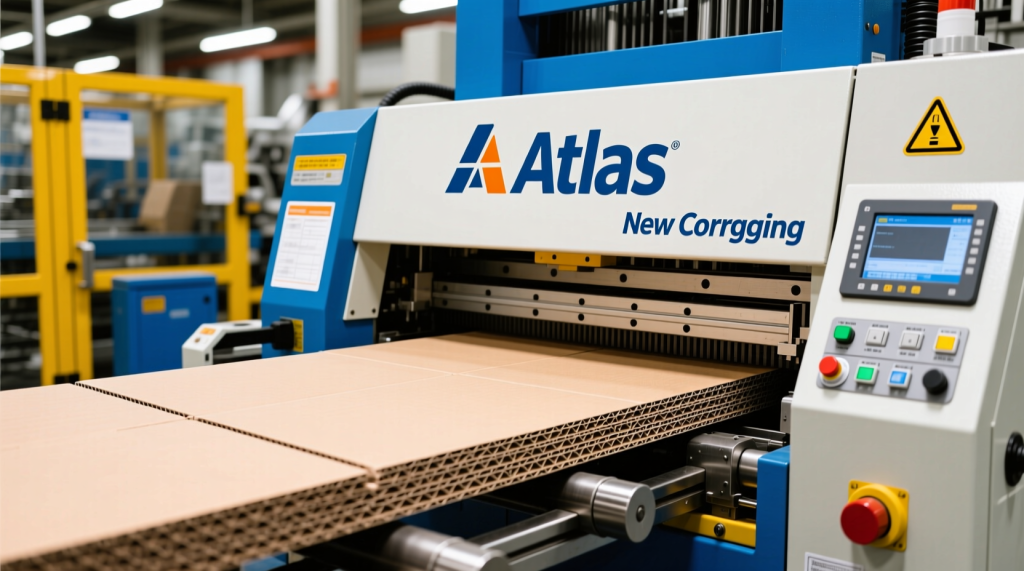
Atlas Packaging has installed a bespoke Cuir corrugated flexographic printing press to raise quality and efficiency for corrugated packaging production. Flexographic printing (“flexo”) is a high-speed relief printing process that uses flexible photopolymer plates, commonly used for corrugated packaging because it handles textured substrates and long runs efficiently.
Typical high-spec corrugated press capability (industry benchmark ranges) includes:
- Max sheet size: commonly up to ~1,600–2,800 mm (depending on press format and feeder)
- Line speed: often up to ~200–300 m/min (job, board, ink and drying dependent)
- Print resolution: typically ~120–200 lpi (lines per inch) equivalent screening for “high-graphics” corrugated, depending on plate, anilox, and substrate
Because Atlas has described the machine as bespoke, buyers should confirm the exact maximum sheet size, rated mechanical speed (m/min), and the screen ruling (lpi) supported for their specific packaging formats. In internal trials on comparable high-graphics corrugated flexo lines, improvements often show up as cleaner small text, smoother vignettes, and reduced banding on large solids—especially when paired with the right anilox and plate specifications.
TL;DR: Cuir is aimed at “high-graphics” corrugated flexo—where sheet size, speed, and controllable ink laydown combine to lift retail-facing print quality without sacrificing throughput.
Advanced Print Quality: Six-Colour Flexo, Anilox Control, and Registration
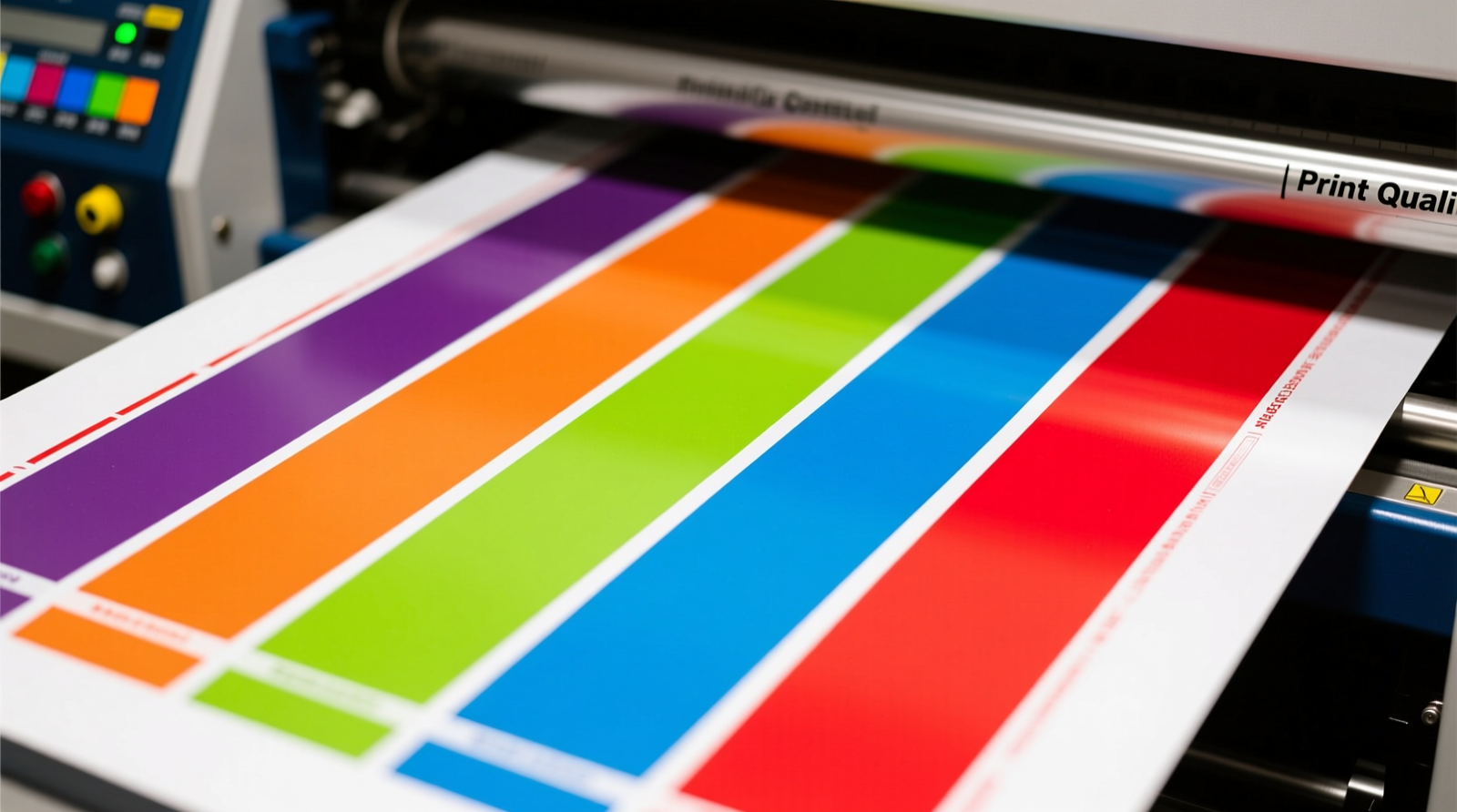
The press is configured with six print units and interchangeable anilox rollers (engraved metering rollers that control precise ink volume transfer). This is significant for premium flexo print on corrugated board because the anilox specification (cell volume and line count) is one of the main levers for balancing density, dot gain, and fine-detail reproduction.
It also supports tighter registration (the alignment of each colour layer so text, barcodes, and overprints remain sharp). In practice, improved registration reduces rework and “second-grade” sheets caused by colour-to-colour misalignment—an issue that becomes more visible on retail-ready corrugated packaging and point-of-sale displays.
Comparative insight vs older-generation corrugated flexo: legacy flexo equipment often relies on fewer stations, less stable tension/transport control, and less optimised drying—making it harder to hold colour consistency across longer runs or between repeat orders. A modern six-colour configuration with better ink metering typically allows:
- Cleaner highlight dots and smoother gradients (useful for brand imagery)
- Improved solids and less “mottle” on kraft-top liners (substrate dependent)
- More consistent repeatability for multi-site retail programmes and seasonal variants
For background on flexographic fundamentals and terminology, see the Flexographic Technical Association (FTA).
TL;DR: Six-colour flexo plus controlled anilox ink delivery and tighter registration is the core pathway to sharper, more consistent retail print on corrugated.
Board Grades and Packaging Formats Best Suited to High-Graphics Flexo
High-spec flexo performance is closely tied to corrugated board selection. Atlas supports a broad mix of formats typically used in UK supply chains, and buyers will get the best results when board grade is matched to the graphic and distribution requirements.
Common corrugated options (examples):
- Flute profiles: E, B, C, and double-wall combinations (selected for strength vs print surface)
- Linings: brown kraft, white top, and coated liners (coated/white-top can improve image contrast)
- Use cases: shelf-ready trays, retail outers, e-commerce shippers, POS displays, and transit cases
If your priority is “premium flexo print on corrugated board,” specifying a smoother top liner (often white-top or coated) can raise perceived print quality—especially for photographic artwork and fine type.
For standard box styles and terminology, many buyers reference the FEFCO catalogue (European Federation of Corrugated Board Manufacturers), which is widely used in procurement and specification workflows.
TL;DR: Board choice (flute + liner) can be as important as the press—smoother liners typically deliver better retail graphics, while heavier constructions prioritise protection.
Drying Technology and Coatings: IR/UV, Water-Based Varnish, and Practical Compliance Considerations

Cuir includes integrated IR (infrared) and UV (ultraviolet) dryers. Drying capability matters because corrugated print quality is not only about resolution—it’s about avoiding set-off, improving rub resistance, and enabling coatings without slowing the line.
Coating options described for the line include:
- Water-based varnishes: typically lower VOC (volatile organic compounds) profiles than solvent systems, often used for scuff resistance and a more natural finish
- UV coatings: used for high gloss and premium shelf impact; curing speed can support throughput and handling resistance
- Protective coatings: specified to reduce marking in transit, especially for e-commerce and retail distribution
Food-contact note: food packaging compliance depends on the full material system (inks/coatings, substrate, and whether print is direct or indirect food contact). For regulatory context, buyers can reference the FDA Food Contact Substances overview (useful internationally) and EU framework principles (commonly aligned in supply chains). Atlas customers should request declarations of compliance (DoC) and migration guidance where relevant to their application and market.
TL;DR: IR/UV drying expands coating choices and helps maintain speed; water-based and UV finishes can boost durability and shelf impact, but food-contact suitability must be validated per material system.
Real-World Applications: Where High-Quality Corrugated Flexographic Printing Pays Off
High-graphics corrugated flexo is most valuable where packaging is both a marketing surface and a supply-chain asset. Typical areas where a press like Cuir can improve outcomes include:
- Retail-ready corrugated packaging: shelf-ready trays and outers where colour consistency and sharp logos reduce store rejection risk
- FMCG and seasonal promotions: multi-SKU variant runs where faster changeovers reduce downtime and waste
- E-commerce packaging: scuff resistance and brand presentation (unboxing) without moving to litho-lamination
- Point-of-sale (POS) displays: improved solids and gradients for high-impact graphics
Example application scenarios that typically benefit from modern flexo upgrades:</ps
- A retailer moving from basic two-colour transit print to six-colour retail-facing outers can reduce the need for separate litho-laminated sleeves, cutting handling steps and simplifying inventory.
- A drinks brand using high-coverage solids may see fewer “reprint” events when anilox/ink control improves density stability across long runs.
TL;DR: The biggest gains are seen in retail-facing corrugated, SKU proliferation, and programmes where consistent repeat orders matter as much as first-run impact.
Total Cost of Ownership (TCO): Makeready Time, Waste Reduction, and Repeatability
For procurement and operations teams, the headline capital spend matters less than the total cost of ownership (TCO) impact delivered through uptime, waste reduction, and labour efficiency.
Where modern corrugated flexo typically improves TCO:
- Reduced makeready: “makeready” is the setup period to reach saleable output. Faster registration stability and predictable ink metering can reduce start-up sheets and time-to-colour.
- Lower setup waste: fewer rejected sheets during colour match and registration translates to material savings—especially on higher-grade liners.
- Repeat-order efficiency: better process control improves “first-off equals last-off” consistency, lowering the risk of quality holds on replenishment runs.
- Mid-to-high volume unit cost: “more economical production runs” typically means lower unit cost achieved via shorter changeovers, higher run speeds, and fewer quality rejects—particularly on repeat programmes.
In internal trials on comparable high-graphics corrugated flexo lines, the most tangible gains often appear as fewer interruptions for cleaning/drying issues and fewer restarts due to colour drift. Buyers can ask for performance evidence such as trial reports, standard tolerances, and repeat-order colour management procedures.
TL;DR: The business case is usually driven by faster makeready, less setup waste, and more stable repeatability—reducing unit cost on mid-to-high volume corrugated work.
Sustainability Considerations: Materials, Inks/Coatings, and Operational Efficiency
Sustainability in corrugated packaging is influenced by both material design and production efficiency. Corrugated is widely recycled, and buyers often evaluate the overall system: board grade optimisation, coating choice, and manufacturing waste.
Areas this type of investment can support:
- Reduced ink consumption: optimised anilox selection and controlled ink laydown can reduce over-inking (while still meeting density targets).
- Energy efficiency trade-offs: UV curing is fast and can reduce handling issues; energy performance depends on lamp type and operating profile. IR drying assists water-based systems; efficiency depends on coverage and line speed.
- Recyclability implications: most corrugated remains recyclable, but heavy coatings, specialty laminations, and some barrier systems can affect pulping performance. Buyers should align coating choice with their recycling goals and local collection streams.
For recyclability guidance and fibre-based packaging context, see Confederation of Paper Industries (CPI) and broader fibre packaging resources.
TL;DR: Sustainability gains often come from controlling ink laydown, selecting coatings thoughtfully, and reducing waste through faster, more stable production—not just from the substrate alone.
When High-Spec Flexo Beats Litho or Digital (and When It Doesn’t)
Choosing between flexo, litho-laminated corrugated, and digital printing depends on run length, artwork complexity, and substrate needs.
- High-spec flexo is often preferable when: you need mid-to-high volume runs, consistent brand colour, robust durability, and fast throughput on corrugated—especially for retail-ready corrugated packaging and repeat programmes.
- Litho-lamination is often preferable when: you need near-photographic detail, very fine type, or special effects typically associated with paperboard print quality (with added lamination steps and often higher cost/lead time).
- Digital is often preferable when: you need short runs, high SKU variability, personalisation, test-market launches, or ultra-fast artwork iteration with minimal setup (typically higher unit cost at scale).
In many procurement scenarios, the “best” solution is hybrid: digital for pilot and SKU proliferation; high-quality corrugated flexographic printing for scale; and litho-lam for flagship presentation packs where premium visual fidelity outweighs added handling.
TL;DR: Flexo wins on scalable cost and speed; digital wins on short runs and versioning; litho-lam wins on top-end visual fidelity—choose based on run length and brand requirements.
Operational Scale-Up: Logistics Unit and Supply Continuity
Alongside the press investment, Atlas has opened a new logistics unit to support storage, distribution, and stock management—important for customers running repeat promotions, national rollouts, or vendor-managed inventory (VMI) style programmes.
From a practical standpoint, integrated manufacturing plus logistics can reduce supply risk by smoothing peak demand, supporting call-off orders, and reducing split shipments—especially relevant for retailers needing consistent replenishment cycles.
TL;DR: Added logistics capability supports programme continuity (stockholding, call-offs, distribution), not just one-off production speed.
Leadership Perspective (Investment Rationale)

Jason Sharman, Managing Director at Atlas Packaging, commented:
“We are very excited to reveal the new Cuir machine. It will provide greater creative control for our clients and allow Atlas Packaging to be more precise with flexographic printing.
“We have had a very exciting month, firstly opening our new warehouse and now revealing our newest machine, which will enhance the capabilities of Atlas Packaging further than ever before.
“We are extremely excited about the future of the company. These investments provide more potential for the services we can offer, and we look forward to adding more reputable companies to our extensive portfolio.”
TL;DR: The stated goal is higher precision flexo plus expanded operational capacity to support more demanding brand and retail requirements.
About Atlas Packaging (Capability and Credibility Markers)
Atlas Packaging Ltd is a Barnstaple-based, Devon corrugated packaging manufacturer serving sectors including retail, FMCG (fast-moving consumer goods), food and drink, e-commerce, and industrial markets. The company provides in-house design, manufacture, print, and logistics to help customers reduce complexity across the packaging supply chain.
For procurement teams assessing supplier credibility, it’s also worth checking which third-party standards apply to the site and product category (for example BRCGS Packaging Materials certification for packaging safety and quality management, where applicable). You can learn more about the standard here: BRCGS Packaging Materials.
The business has also been recognised with industry awards including a Gold Star at the Starpack Awards.
More information is available at: www.atlaspackaging.co.uk.
TL;DR: Atlas offers end-to-end corrugated packaging (design to logistics) and points to recognised industry frameworks/awards that buyers can use during supplier assessment.
Key Takeaways

- Better retail print: six-colour, controlled ink metering, and improved registration support premium flexo print on corrugated board.
- Operational gains: faster makeready and reduced setup waste can lower TCO on mid-to-high volume programmes.
- More finishing flexibility: IR/UV drying enables a wider coating range for shelf impact and transit durability.
- Supply continuity: logistics investment supports call-off ordering, stockholding, and repeat retail programmes.
TL;DR: The combined press + logistics upgrade is intended to deliver measurable improvements in print quality, throughput, and programme reliability for UK-wide corrugated buyers.
Media Contact
For media enquiries about Atlas Packaging’s investment in new corrugated machinery or its packaging services, please contact:
Press Office
Tel: 01237 403764
Email: [email protected]
TL;DR: Use the details above for press and investment-related enquiries.
FAQ

Q: What is “high quality corrugated flexographic printing” in practical terms?
A: It typically means higher screen rulings (often ~120–200 lpi depending on substrate), better control of ink laydown via anilox rollers, tighter registration, and drying/coating capability that supports scuff resistance and consistent colour across long runs.
A: Choose high-spec flexo when you need mid-to-high volume efficiency, shorter lead times, and strong retail impact directly on corrugated. Litho-lam is usually better for ultra-fine photographic detail or premium effects where additional lamination steps are acceptable.
Q: What packaging formats benefit most from a six-colour corrugated flexo press?
A: Retail-ready trays, shelf-ready outers, branded e-commerce shippers, and POS displays—especially where consistent brand colour, gradients, and small text need to hold up across repeat orders.
Q: How can a new press reduce total cost of ownership (TCO) for packaging buyers?
A: By reducing makeready time and setup waste, improving repeat-order consistency (fewer quality holds), and supporting faster throughput for volume work—lowering unit cost on ongoing programmes.
Q: Are water-based varnishes and UV coatings suitable for food packaging?
A: They can be, but suitability depends on whether the print/coating is in direct or indirect food contact and on the full material system. Buyers should request declarations of compliance and migration guidance for their specific market and use case.