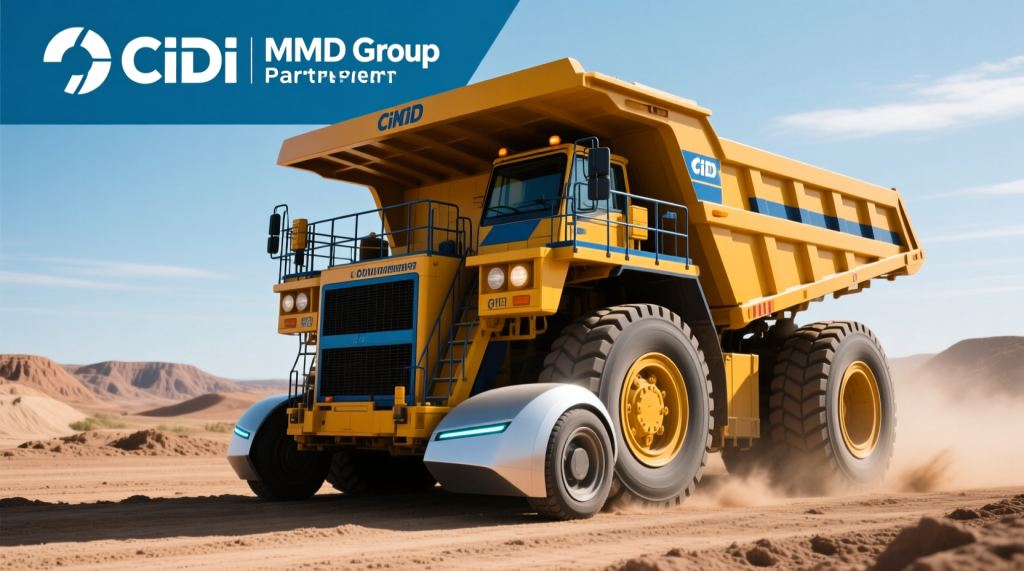
Introduction: CiDi and MMD Partner on Autonomous Haulage Systems (AHS) for Mining

CiDi Inc. and MMD Group Limited have signed an exclusive agreement to co-develop and deploy autonomous haulage systems (AHS)—driverless haul truck operations supported by software, communications, and site controls—for mining operations outside China. The objective is practical: combine CiDi’s autonomy stack (proven at scale in Chinese open-pit mines) with MMD’s equipment engineering and global delivery capability to shorten the path from pilot to production for mines that want retrofit autonomous haulage or new autonomous-ready truck deployments.
For context on how autonomous mining systems are typically defined and governed, many operations align their programs to ISO guidance such as ISO 17757 (Autonomous and semi-autonomous machine system safety) and functional safety practices such as ISO 26262 (functional safety for road vehicles—often used as a reference point even for off-road autonomy architectures).
- Who: CiDi (autonomous driving + fleet autonomy) and MMD (mining equipment + global service footprint)
- What: Driverless haul truck safety, autonomous mining truck fleet management, and integration with digital mine automation tools
- Where: Global markets via MMD’s network; CiDi brings learnings from large-scale China deployments
- Why it matters: Aimed at mines that want automation without waiting for a full OEM “walled garden” AHS
TL;DR: The partnership targets real-world deployability—combining CiDi’s autonomy stack with MMD’s equipment delivery and support to bring AHS to more mines, including retrofit pathways.
What Autonomous Haulage Systems (AHS) Mean in Day-to-Day Mine Haulage
In mining, an autonomous haulage system (AHS) is more than “a truck without a driver.” It’s a coordinated operating model covering the truck, the mine roads, the loading unit interface, and a control layer that manages interactions with people and other machines. A typical AHS cycle includes:
- Bench-to-crusher workflow: spotting at the shovel/excavator, loaded travel, intersection handling, dumping at ROM (run-of-mine) pad or crusher tip, and return travel
- Haul profiles mines actually care about: long uphill ramps (engine temp and braking management), tight switchbacks (path tracking and speed control), and variable rolling resistance after rain or grading
- Mixed-visibility conditions: dust plumes, low sun angle, fog, and night operations under uneven lighting
Definitions (first use): LiDAR (Light Detection and Ranging) measures distance using laser pulses; GNSS (Global Navigation Satellite System) provides satellite positioning; V2X (vehicle-to-everything) is communications between vehicles and infrastructure; FMS (Fleet Management System) coordinates dispatch, payloads, and cycles.
For a general overview of autonomous hauling and related mine automation concepts, see Caterpillar’s public overview of autonomous mining (useful for understanding common operational building blocks): Caterpillar Mining Autonomy overview.
TL;DR: AHS is an operating system for hauling—designed around real mine constraints like steep ramps, tight intersections, dust, and repetitive bench-to-crusher cycles.
What the Exclusive CiDi–MMD Agreement Covers (and What It Likely Enables)

Under the agreement, CiDi is the exclusive supplier of the autonomous driving system within MMD’s equipment automation offering. In practical terms, this usually means CiDi provides the autonomy “brain and senses,” while MMD industrializes integration into trucks and site packages. The program scope typically spans:
- Autonomy kit engineering: sensor placement, compute enclosure, power conditioning, and vehicle network integration
- System integration: linking autonomy to braking, steering, throttle, retarder, transmission logic, and payload/dump interfaces
- Site rollout: communications, control room tooling, operating rules, and safety validation
- Lifecycle support: remote diagnostics, software updates, and spares/logistics planning
The differentiator implied by “exclusive supplier” is accountability: mines typically struggle when autonomy stack, truck OEM, and site integrator each point at the other during commissioning. A structured joint offer can reduce integration ambiguity—especially important for mid-tier mines without large in-house automation teams.
TL;DR: This is not just R&D—it’s an integration-and-delivery model intended to reduce commissioning friction and clarify support ownership.
System Architecture: Perception Fusion, Planning, and Fail-Safe Operation
Most production-grade AHS stacks follow a layered architecture. While CiDi and MMD have not published full technical schematics, a deployable mining autonomy system generally includes the following functional blocks—each with fail-safe behavior:
Perception and Sensor Fusion
Autonomous haul trucks commonly use LiDAR, radar, and cameras to cover different failure modes (dust, rain, glare, and occlusion). Sensor fusion means combining these inputs into a single tracked “world model” (vehicles, berms, people, light vehicles, and static objects). Typical fusion approaches include:
- Radar + LiDAR: radar for robust detection in dust; LiDAR for shape/position precision near berms and windrows
- Camera semantic understanding: recognizing signage, cones, light-vehicle behaviors, and atypical obstacles
- GNSS + IMU fusion: IMU (inertial measurement unit) helps maintain stable pose when GNSS degrades near highwalls or in multipath conditions
Localization and Mapping
Mining roads change daily. A practical AHS typically supports frequent map refresh and uses geofencing (a virtual boundary) to constrain autonomous operations to validated areas. When the truck approaches a geofence boundary or an unvalidated road segment, the system should slow and transition to a controlled stop or request supervisor intervention depending on rules.
Planning, Control, and Road-Condition Response
Unlike highway autonomy, mine autonomy must manage grades, curves, rolling resistance, and variable traction. A robust controller typically:
- Applies speed limits by segment (e.g., ramps vs. flat haul) and adapts to braking/retarder temperature
- Adjusts headway in dust and low-visibility zones
- Enforces intersection policies (right-of-way, stop lines, radio/V2X checks)
Fail-Safe States and Degraded Modes
Fail-safe design is where “driverless haul truck safety” is won or lost. Typical states include:
- Minimal risk condition: controlled stop in-lane or at a safe pull-off when perception/localization confidence drops
- Graceful degradation: reduced speed and increased separation when a sensor becomes unreliable
- Emergency stop (E-stop): triggered by critical faults, obstacle proximity thresholds, or external E-stop beacons
For a high-level view of functional safety concepts that underpin these behaviors, TÜV SÜD’s functional safety resources provide useful background: TÜV SÜD functional safety overview.
TL;DR: The value of AHS is in robust fusion + rules + fail-safe behavior—especially around geofences, intersections, and degraded visibility/traction.
Truck Types, Retrofit vs. New-Build, and Mixed-Fleet Realities
Mining buyers typically want clarity on whether an AHS is retrofit-focused, new-build only, or both. Based on CiDi’s scale of deployment in China (over 1,500 autonomous mining trucks reported by the company) and typical market demand, the most commercially relevant approach is supporting both retrofit and line-fit options—because brownfield mines rarely replace entire fleets at once.
In practical deployments, autonomy programs often prioritize common rigid-body haul truck classes such as 90 t, 150 t, and 220 t payload segments. Some mines also evaluate articulated trucks for shorter hauls or softer ground; however, articulated steering dynamics can increase control complexity and may be phased in later depending on site conditions and truck models.
Mixed fleets: Many mines run trucks from multiple OEMs plus varying light-vehicle traffic. An “open” AHS approach typically differentiates itself by:
- Interfacing with existing FMS and dispatch (via APIs or data exchange layers) rather than forcing a full rip-and-replace
- Supporting autonomy kits that can be adapted across multiple truck platforms (within engineering and warranty constraints)
- Allowing supervised interoperability: autonomous trucks follow rules for human-driven trucks, water carts, graders, and maintenance vehicles
TL;DR: Mines should expect the CiDi–MMD offer to be strongest where retrofit and mixed-fleet integration are required—especially in common rigid truck payload classes.
Key Benefits of the CiDi–MMD Autonomous Haulage Solution (Safety, Productivity, Cost, Emissions)
Decision-makers generally evaluate AHS on four axes: safety risk reduction, throughput stability, unit cost, and energy/emissions. While exact results vary by pit geometry and operating discipline, the following ranges are commonly targeted in real deployments and can be treated as indicative example outcomes (not guarantees):
- Utilization and consistency: Typical improvements come from fewer shift-change disruptions, more consistent speed control, and reduced variability at intersections and dumping. Mines often target +5% to +15% improvement in effective truck utilization after stabilization.
- Incident exposure reduction: Removing drivers from high-risk zones (ramps, tips, shovel spotting) can reduce high-severity exposure. Programs often report meaningful reductions in near-miss potential when geofencing and right-of-way rules are enforced consistently.
- Fuel and tire impacts: Smoother throttle/brake profiles and speed governance can reduce harsh events. Many sites target ~3% to 8% fuel savings and fewer tire-damaging overspeed/overload events, depending on haul length and grades.
- Cost per tonne: Gains come from higher hours, fewer disruptions, and more predictable maintenance. In well-implemented AHS, operators commonly aim for mid-single-digit to low-teens % reductions in haulage cost per tonne after full ramp-up.
Where CiDi–MMD can be differentiated vs. legacy haulage and some incumbent AHS models:
- Legacy manned haulage: typically higher variability (operator style, fatigue, adherence to speed rules), higher exposure at tips and intersections, and harder-to-standardize cycle times—especially at night or in low visibility.
- Incumbent “closed” AHS ecosystems: often strongest for large, standardized fleets but can be CAPEX-heavy and less flexible for mixed OEM environments. An openness/retrofit bias can be attractive for mid-tier mines or staged brownfield conversions.
- CiDi–MMD positioning (inferred from structure of the deal): an integration-forward model that may reduce vendor fragmentation and make phased adoption easier (start with a subset of trucks and one route, then scale).
TL;DR: Expect the biggest value where consistent rule enforcement and cycle stability matter—ramps, intersections, tips, and night operations—especially when a mine can’t justify a full OEM-locked autonomy ecosystem.
Safety, Standards, and How Validation Typically Works On-Site
AHS programs increasingly align with formal safety frameworks rather than ad-hoc “trial rules.” Mines commonly reference:
- ISO 17757 for autonomous/semi-autonomous machine system safety concepts and lifecycle thinking
- IEC functional safety principles (e.g., safety lifecycle, hazard analysis, verification)
On a typical mine deployment, safety validation is not a single test—it’s a staged process:
- Hazard analysis and risk assessment (HARA): defines credible hazards (runaway on ramp, loss of localization near highwall, light-vehicle incursion) and required mitigations
- Operational design domain (ODD): the allowed operating envelope (roads, speed limits, weather/visibility constraints, traffic rules)
- Scenario-based testing: intersections, overtakes (if allowed), shovel spotting, tip head management, and unexpected obstacles
- Human–machine interaction (HMI): procedures for spotters at shovel/tip (if used), supervisor interventions, and maintenance lockout/tagout practices
Importantly, mature sites define how manual and autonomous trucks coexist: dedicated autonomous zones, controlled crossings, standardized radio calls, and enforced light-vehicle exclusion areas around tips and shovels.
TL;DR: Safe AHS deployment is governed by standards, an explicit operating envelope (ODD), and staged validation—plus disciplined rules for human interactions at shovels, tips, and crossings.
Communications, Edge vs. Cloud Processing, and Control Room Requirements
Reliable connectivity is a make-or-break requirement for autonomous mining truck fleet management. Mines typically choose from:
- Private LTE: common baseline for pit coverage and mobility
- Private 5G: increasingly used where higher device density, better uplink, or network slicing is beneficial
- Wi‑Fi mesh: sometimes used in constrained areas but can be harder to maintain with moving faces and changing topology
Latency and resilience: The truck must remain safe even with intermittent connectivity. Most safety-critical functions (perception, planning, braking) should run on edge compute onboard. The network is then used for fleet coordination, mission updates, tele-assist workflows (if permitted), and reporting. Practically, mines design for graceful degradation: if comms drop, trucks continue to follow local rules and transition to a minimal risk condition if they cannot safely proceed.
Control room: A production AHS generally requires:
- Fleet dashboards (health, mission status, exceptions)
- Geofence and road-rule management
- Incident replay and auditing
- Clear authority model (who can pause/resume, who can edit routes)
For background on private mobile networks commonly used in industrial environments, Ericsson’s overview is a useful primer: Ericsson private networks overview.
TL;DR: Safety runs on the truck (edge); the network enables coordination and visibility. Private LTE/5G is often the most practical backbone for open-pit AHS.
Global Rollout and Target Markets (Demonstrations, Scaling, and Where It Fits Best)
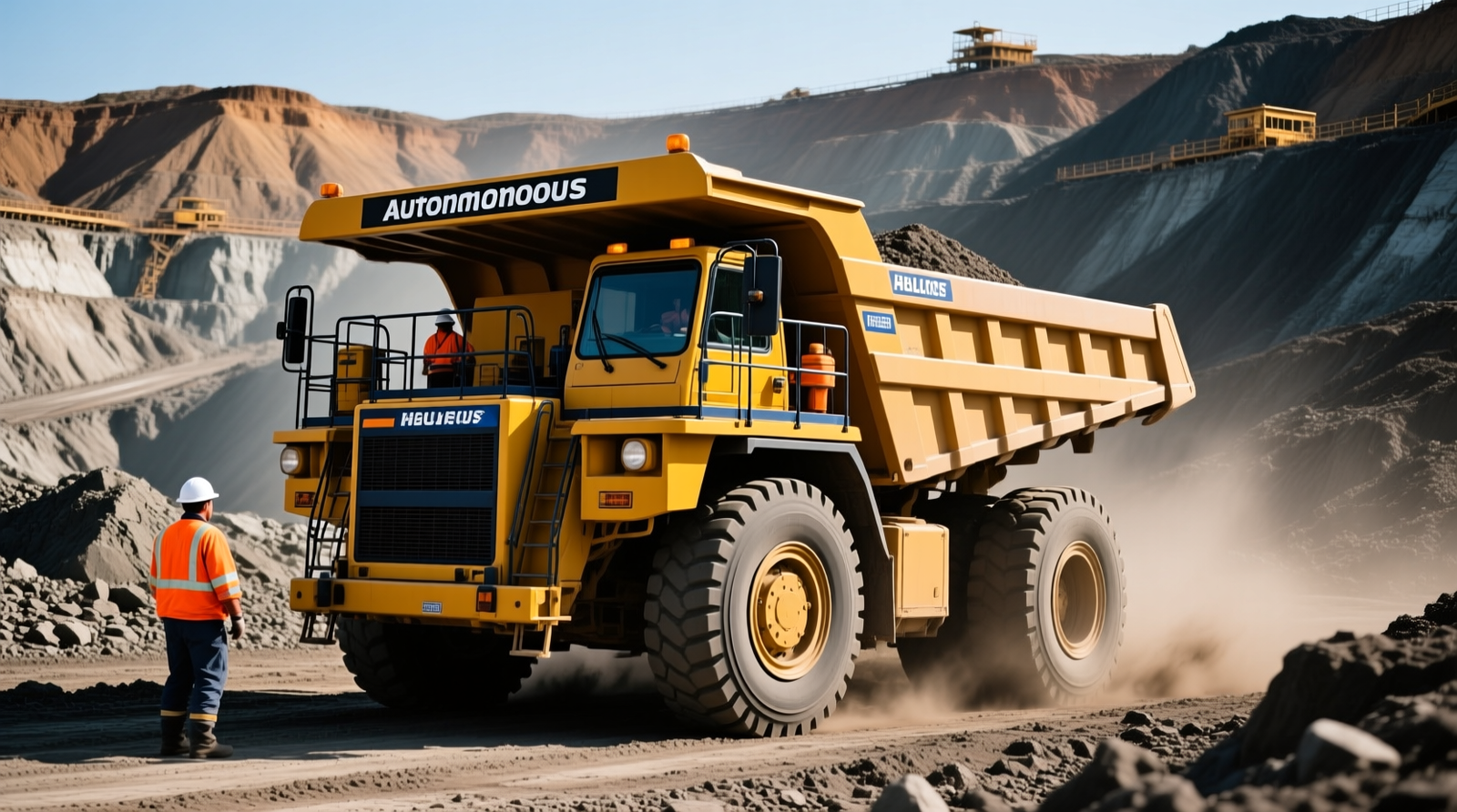
Demonstration projects matter because mines want to see repeatable performance on real haul roads—especially in conditions that stress autonomy: steep ramps, changing berms, and low visibility. The CiDi–MMD approach is positioned to use demonstrations as a structured pre-production phase where the ODD, road rules, and interfaces (shovel, tip, crusher) are proven before adding more trucks.
Based on where AHS adoption is most active, near-term target markets typically include Australia, South America, and the Middle East/North Africa—regions with large open pits, established contractor ecosystems, and increasing interest in digital mine automation.
TL;DR: The fastest route to scale is a demo that proves ODD + safety case + interfaces—then expands truck count and routes in phases.
Implementation Roadmap: From Assessment to Pilot to Production
Mines evaluating the CiDi–MMD autonomous haulage solution (or any AHS) should plan for a staged rollout:
- Pre-feasibility assessment (4–8 weeks typical): route selection, pit comms survey, traffic rule review, and identification of “AHS-ready” segments (e.g., stable ramp geometry, manageable intersections).
- Pilot (3–6 months typical): small number of trucks on a constrained route (often one loading area to one dump/crusher), with measurable KPIs (cycle time distribution, interventions per hour, stoppage causes).
- Brownfield scale-up: expand geofenced areas, add intersections, bring in additional truck models, and harden maintenance/shift routines.
- Greenfield design considerations: if autonomy is planned early, roads, berm standards, intersection design, signage, and comms towers can be built “autonomy-first,” often reducing later rework.
- Change management and training: supervisor training, maintenance procedures (sensor cleaning, calibration checks), and clear rules for light-vehicle access.
A practical tip: select a haul route where the mine can “hold geometry steady” during the pilot. Autonomy can handle change, but constant uncontrolled road redesign increases validation workload and undermines KPI comparability.
TL;DR: Successful AHS adoption is staged—assess, pilot on a controlled route, then scale—supported by training and disciplined road/traffic governance.
Selection Criteria: When This AHS Approach Makes Sense (and When It Might Not Yet)
Autonomy is not one-size-fits-all. Mines are typically good candidates when they have:
- Fleet scale: enough trucks to justify a control layer and site infrastructure (often a stronger ROI case as fleet size grows, but retrofit models can lower the threshold)
- Repeatable haul cycles: stable bench-to-crusher or bench-to-dump workflows with controllable intersections
- Pit layout compatibility: manageable interaction points and the ability to implement geofenced zones
- Regulatory and organizational readiness: ability to define and enforce traffic rules, and to build a safety case with audits
- Infrastructure readiness: comms coverage plan, power for towers, and maintenance capability for sensors/compute
Limitations to acknowledge: Sites with extremely dynamic traffic patterns (dense contractor light-vehicle movement), frequent blasting-induced reroutes without formal revalidation, or persistent GNSS denial zones may require additional engineering and operational controls. The typical mitigation is narrowing the initial ODD (start with simpler routes), improving comms and localization aids, and tightening traffic governance.
TL;DR: The best fits are repeatable haul cycles with controllable traffic and comms coverage; the hardest sites are chaotic traffic environments without enforceable road rules.
Aftersales, Remote Support, and Software Lifecycle Expectations
For production autonomy, support capability matters as much as the autonomy algorithms. A credible AHS program typically includes:
- Local service coverage: trained field technicians for sensor replacement, harnessing, calibration checks, and commissioning
- Spares and logistics: defined critical spares lists (LiDAR units, compute modules, connectors) and replenishment timelines
- Remote diagnostics: health monitoring, log capture, and guided troubleshooting workflows
- Update policy: staged software releases with rollback plans, validation gates, and change notes tied to safety and performance
TL;DR: Autonomy is a lifecycle product—mines should evaluate local support, spares strategy, remote diagnostics, and disciplined software update processes.
Conclusion: What’s Actually New for Mining Buyers
Connecting CiDi’s large-scale autonomy experience (reported 1,500+ autonomous mining trucks deployed in China) with MMD’s equipment delivery and service footprint creates a pathway that can appeal to mines that are not “mega-scale” but still want the safety and productivity discipline of autonomous hauling. The most practical promise here is not hype—it’s execution: retrofit-friendly integration, staged rollout via demonstrations, and operational tooling that supports digital mine automation and mixed-fleet realities.
TL;DR: The CiDi–MMD collaboration is positioned to make AHS adoption more deployable for a broader set of mines—especially those needing phased rollout, retrofit options, and integration with existing site systems.
FAQ
Q: How long does it typically take to deploy an autonomous haulage pilot at an open-pit mine?
A: A common timeline is 4–8 weeks for assessment and site readiness planning, followed by a 3–6 month pilot on a constrained route (one load area to one dump/crusher). The biggest schedule drivers are communications coverage, traffic rule definition, and how stable the haul road geometry remains during testing.
Q: Is the CiDi–MMD autonomous haulage system retrofit-focused, new-build only, or both?
A: The market need strongly favors supporting both retrofit and new-build pathways. Most brownfield mines prefer phased conversions (starting with a subset of trucks), while greenfield projects can design roads and comms “autonomy-first.” Mines should confirm which truck models and payload classes (e.g., 90 t, 150 t, 220 t rigid trucks) are supported for their site.
Q: What CAPEX/OPEX model is typical for autonomous haulage (and what should buyers ask for)?
A: AHS is commonly sold as (1) upfront CAPEX for onboard kits plus site infrastructure, with ongoing software/support OPEX, or (2) subscription/“autonomy-as-a-service” structures where some costs shift to recurring fees. Buyers should ask what’s included: sensors/compute, control room software, comms equipment, validation, updates, and SLAs for uptime and response times.
Q: Do we need to change mine roads and traffic rules to run autonomous trucks safely?
A: Usually yes. Most sites introduce geofenced autonomous zones, standardized right-of-way rules at intersections, controlled light-vehicle crossings, and defined stopping/parking areas. Physical improvements often include clearer berm definitions, consistent signage/markers, and maintaining road surfaces to reduce unexpected traction changes.
Q: Can manual and autonomous trucks operate together in the same pit?
A: Yes, but it requires disciplined operating rules. Common approaches include dedicated autonomous haul routes, controlled interaction points, speed governance, and strict exclusion zones around shovels and tips. The AHS should reliably detect obstacles and follow conservative policies in mixed traffic—especially in dust or low-visibility conditions.
Q: Who owns the data, and how are cybersecurity and remote support typically handled?
A: Data ownership and access rights are contractual and should be explicitly defined (telemetry, video, production KPIs, incident logs). Mines should require cybersecurity controls such as role-based access, encryption in transit, secure remote access, audit logs, and a documented vulnerability/patch process—especially if remote diagnostics or remote support are part of the service model.
Q: Is autonomous haulage viable for smaller or shorter-life mines?
A: It can be, particularly if the solution supports retrofit autonomous haulage and phased deployment rather than requiring a full-fleet replacement. The best candidates have repeatable haul routes, manageable traffic complexity, and the ability to enforce geofences and operating rules. Mines should model ROI using realistic ramp-up time and infrastructure needs (comms, control room, training).