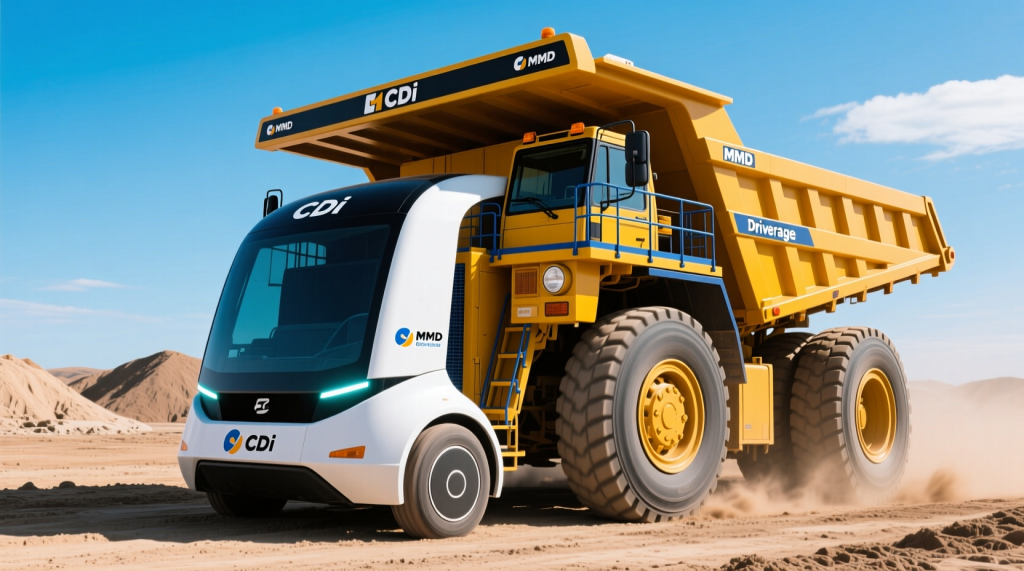
Introduction

CiDi Inc. has signed an exclusive agreement with MMD Group Limited to jointly develop and deploy an autonomous haulage system (AHS) for open-pit mines. In this article, you’ll learn what autonomous haulage is, how the CiDi–MMD solution is expected to work in real mine operations, typical adoption barriers (from change management to mixed-traffic safety), and where the partnership fits versus other autonomous haulage providers such as Caterpillar, Komatsu, and Hitachi.
By combining CiDi’s driverless mining haulage technology with MMD’s equipment footprint and its TraxIQ digital platform, the partnership aims to accelerate mine automation and digitalization in major mining regions while improving safety, uptime, and cost per tonne.
TL;DR: CiDi and MMD are pairing autonomous driving software and mining equipment integration to bring AHS fleets to more open-pit mines globally, with emphasis on practical deployment, safety, and system interoperability.
What Is Autonomous Haulage in Mining?
In mining, an autonomous haulage system (AHS) refers to driverless or semi-driverless haul trucks plus the site infrastructure and software needed to move ore and waste without a driver in the cab. Depending on a mine’s maturity and risk profile, operations may use multiple modes:
- Fully autonomous: Trucks execute missions end-to-end (spotting, hauling, dumping) under rules and supervision, with no in-cab driver.
- Supervised autonomous: Similar to fully autonomous, but with tighter oversight and intervention workflows (e.g., more frequent remote approvals in complex areas).
- Remote operation (teleoperation): A human operator controls the truck remotely for edge cases (tight maneuvers, unusual obstacles, recovery). This is often used as a transition step and as an exception-handling tool.
A typical AHS stack includes:
- GNSS (Global Navigation Satellite System) for positioning (often augmented on-site for higher accuracy)
- LiDAR (Light Detection and Ranging) and radar for ranging and obstacle detection
- Cameras for scene understanding and operational verification
- Onboard compute for perception, planning, and control
- Fleet management/dispatch and traffic control (the “brain” coordinating many trucks)
Autonomous haulage is already proven at scale in large surface mines; for background on industry adoption, see Caterpillar’s overview of mine automation and autonomous solutions (Caterpillar Mine Automation) and Komatsu’s Autonomous Haulage System resources (Komatsu AHS).
TL;DR: AHS in open-pit mining ranges from fully autonomous to supervised and teleoperated modes, combining positioning, sensors, onboard autonomy, and centralized dispatch/traffic control.
From AHS Concept to the CiDi–MMD Agreement (Why This Matters)
Many mines understand AHS benefits in principle, but struggle with “last-mile” execution: integration with existing fleets, interoperability with third-party systems, and safe mixed-traffic operations. The CiDi–MMD agreement is positioned as a delivery mechanism—combining an autonomy provider’s deployment experience with an OEM-integrator’s global mining relationships—to reduce implementation friction and shorten time-to-value.
TL;DR: The partnership is designed to turn AHS from a concept into deployable projects by combining autonomy know-how with global equipment integration and service reach.
Scope of the CiDi–MMD Collaboration
Under the exclusive agreement, CiDi and MMD will collaborate across core AHS workstreams:
- R&D (Research & Development): Designing and validating mining-grade autonomy functions (navigation, obstacle handling, intersection rules, recovery behaviors).
- System integration: Integrating CiDi’s autonomous driving platform with MMD’s equipment and the TraxIQ digital layer for monitoring, analytics, and operational control.
- Global rollout: Packaging the solution for deployment through MMD’s international customer base, services, and project delivery channels.
CiDi will act as the exclusive supplier of autonomous driving systems for MMD’s equipment automation offering, including autonomous kits, software, commissioning support, and lifecycle technical services.
TL;DR: The collaboration covers engineering, integration, and global delivery—with CiDi supplying the autonomy stack and MMD providing deployment scale and system packaging.
About MMD Group Limited (Installed Base and Delivery Capacity)
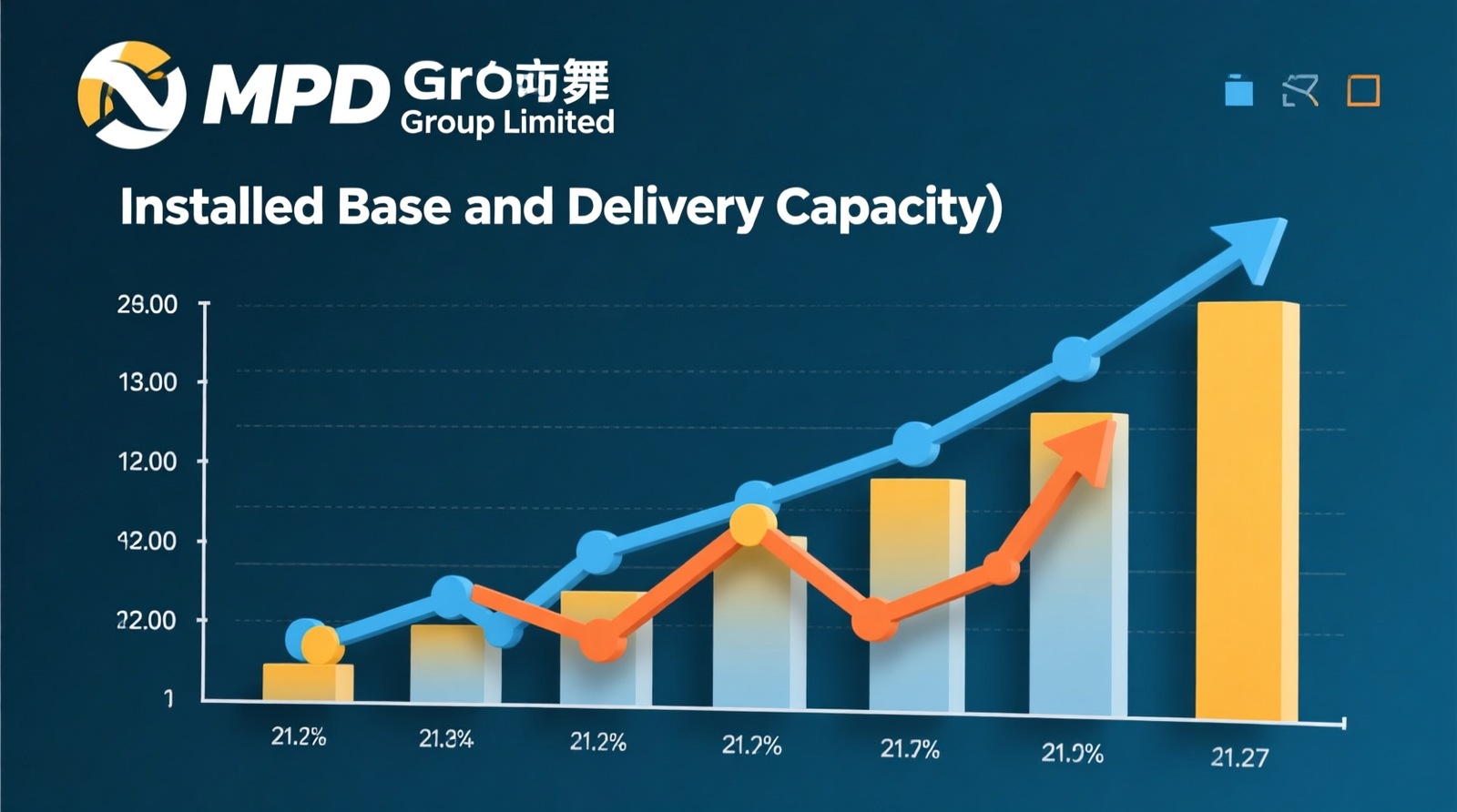
MMD Group Limited (headquartered in the Isle of Man) is a manufacturer of mineral processing and mining equipment with a global presence, including 23 offices and six production facilities across key mining regions.
MMD reports more than 3,500 units deployed globally (company-reported figure). That installed base matters for autonomy because it can lower adoption friction: existing customer relationships, established maintenance workflows, and field service coverage can reduce downtime risk during ramp-up.
TL;DR: MMD’s company-reported installed base and global service network can help de-risk deployment and support long-term AHS operations.
About CiDi Inc. and Its Autonomous Mining Track Record
CiDi develops autonomous driving technology for commercial and industrial vehicles, including autonomous mining trucks and heavy-duty logistics applications. The company also works on V2X (Vehicle-to-Everything communication), enabling vehicles to exchange data with infrastructure, other vehicles, and control systems.
CiDi states it has deployed more than 1,500 autonomous mining trucks in mainland China (company-reported figure). Large deployment counts are not, by themselves, a performance guarantee, but they do indicate operational exposure to real mine variability: shifting haul road geometry, dust, changing light conditions, tire wear, and operational exceptions.
For broader context on autonomous haulage maturity and why early adopters invest, Rio Tinto’s public information on autonomous operations offers an accessible reference point (Rio Tinto Autonomous Operations).
TL;DR: CiDi’s company-reported fleet scale in China suggests significant operational learning, which is critical for robust AHS behavior in real mines.
How TraxIQ and CiDi’s Software Work Together
A major differentiator in real deployments is not “can a truck drive itself,” but “can the mine operate and govern a fleet safely and efficiently.” In the CiDi–MMD approach, TraxIQ functions as a digital backbone for fleet visibility and performance management while CiDi provides the autonomy behaviors on the truck and supporting orchestration logic.
At a high level, the combined architecture typically includes:
- Onboard autonomy: Perception (detect/track objects), localization (precise positioning), planning (path and speed selection), and control (steering/throttle/brake).
- Fleet orchestration: Dispatching missions, coordinating intersections and right-of-way, managing queuing at shovels and dumps, and handling re-routes.
- Operational analytics: Cycle time tracking, queuing losses, speed compliance, and event review to support continuous improvement.
Interoperability matters for mines with existing systems. In practice, many sites require integration with third-party fleet management, maintenance, and planning tools through APIs (Application Programming Interfaces) and structured data exchange. A common reference point for industrial interoperability is the OPC Foundation (OPC UA is widely used for secure industrial data exchange), even though each mine’s final integration pattern depends on its vendor stack and governance model.
TL;DR: TraxIQ supports monitoring and performance workflows while CiDi’s onboard stack drives the trucks; real value depends on fleet orchestration plus clean integration via APIs and industrial data interfaces.
Technical Overview: Sensor Fusion, Redundancy, Safety, and Cybersecurity
Industrial buyers typically evaluate AHS solutions on how they manage edge cases and risk, not just normal driving. While implementation details are proprietary, a credible mining-grade autonomy stack usually demonstrates the following:
- Sensor fusion: Combining LiDAR, radar, cameras, and positioning to improve robustness in dust, glare, and low-contrast environments.
- Redundancy strategies: Fail-operational or fail-safe behaviors for critical functions (e.g., safe stop), redundant sensing modalities, and health monitoring of compute and actuation.
- Functional safety approach: Alignment with recognized safety engineering processes and lifecycle thinking. Many industries reference ISO 26262 (functional safety for road vehicles) as a framework, while mining deployments often add site-specific safety cases and operational rules.
- Cybersecurity controls: Network segmentation, authentication, secure update mechanisms, and monitoring. A common reference framework is NIST Cybersecurity Framework for risk-based controls and governance.
Another key technical nuance is mixed-traffic management. Many mines cannot go “all autonomous” on day one. Safe coexistence with manned haul trucks, dozers, graders, water carts, and light vehicles typically requires geofencing, well-defined right-of-way rules, intersection control policies, and disciplined V2X/communications rules.
TL;DR: Mining-grade autonomy requires robust sensor fusion, redundancy, functional safety processes, cybersecurity governance, and clear mixed-traffic operating rules.
Benefits of Autonomous Haulage for Mine Operators
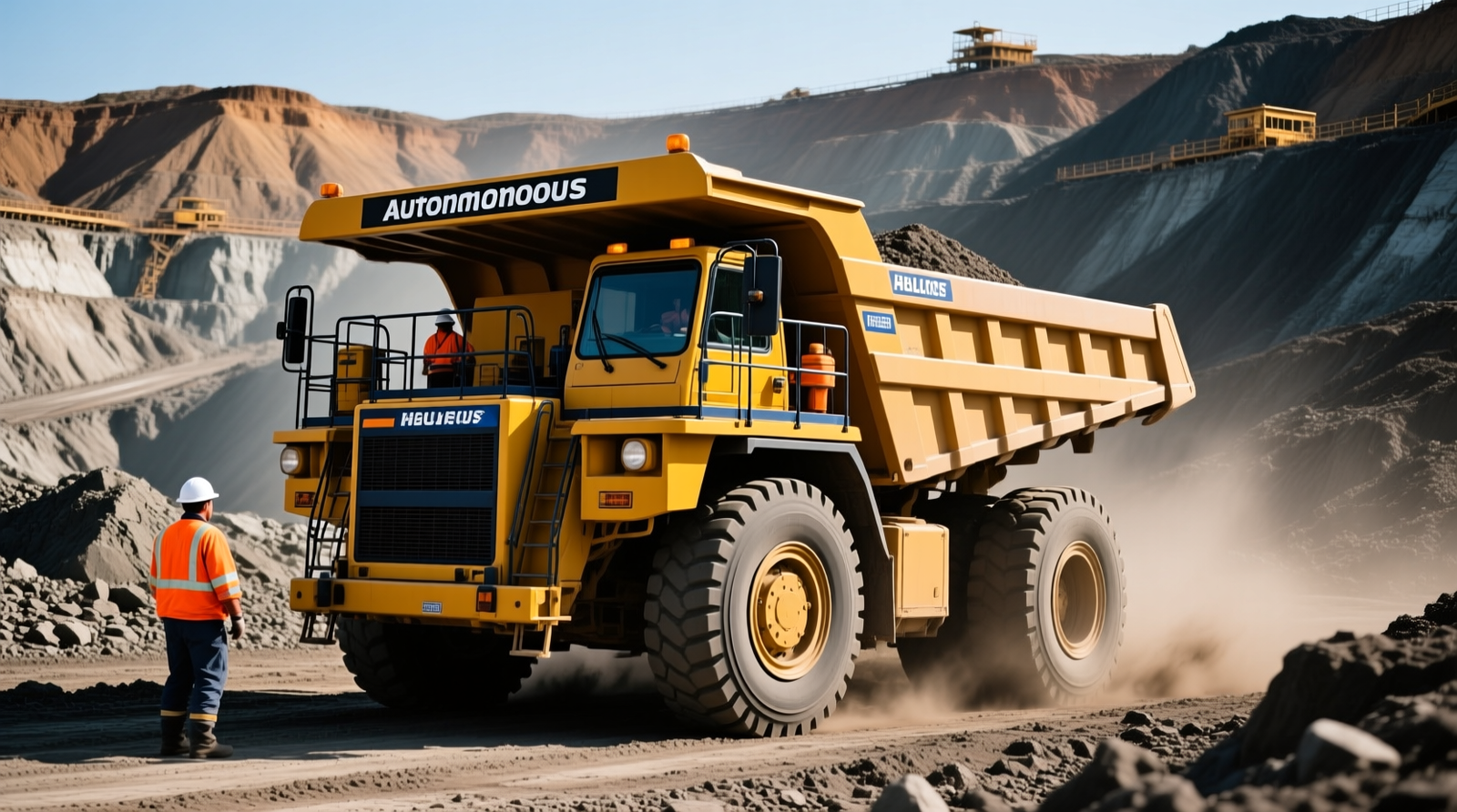
For open-pit operations, AHS value is usually measured in safety exposure reduction, productivity consistency, and cost per tonne. Typical benefit drivers include:
- Safety: Removing operators from high-risk haulage exposure and reducing fatigue-related variability.
- Productivity: More consistent speed control, fewer unplanned stops, and improved shift-change continuity.
- Equipment utilization: Smoother dispatching reduces queuing at shovels and dumps, improving effective utilization.
- Energy and tire management: Controlled acceleration/braking and speed compliance can reduce excessive fuel burn and avoid harsh driving events that impact tires and drivetrain.
Quantitative outcomes vary widely by mine design, road conditions, dispatch discipline, and baseline practices. Where any improvement percentages are cited by vendors, operators should confirm whether metrics are measured against manual baselines under comparable constraints and whether results are independently validated.
TL;DR: AHS typically targets measurable gains in safety exposure reduction, consistent productivity, utilization, and energy/tire efficiency—but results depend heavily on site conditions and baseline performance.
Challenges in Deploying Driverless Mining Trucks (and How CiDi–MMD Can Address Them)
Most AHS programs succeed or fail on execution details. Common adoption barriers include:
- Change management: Moving from operator-driven decision-making to rules-based fleet behavior requires new standard operating procedures (SOPs), dispatch discipline, and cross-functional alignment.
- Interoperability with legacy fleets: Many sites run mixed OEM haul trucks and support equipment. Integrations with existing fleet management and maintenance platforms can be complex.
- Regulatory and permitting constraints: Jurisdictions may require specific safety cases, workforce agreements, radio spectrum compliance, or incident reporting practices.
- Communications reliability: AHS depends on predictable site wireless coverage for coordination, telemetry, and exception handling.
- Mixed-traffic operations: Safely managing interactions with light vehicles and manned equipment requires geofences, intersection controls, and strict right-of-way logic.
The CiDi–MMD partnership is structurally suited to address these through packaged integration, local service support, and a deployment playbook built from operational learning. Practically, that often means staged rollouts: start with constrained routes, controlled zones, and a small number of trucks; then expand autonomy domains, introduce mixed-traffic protocols, and scale fleet size after stability is proven.
TL;DR: The hardest parts of AHS are people/process, legacy integration, regulatory constraints, communications, and mixed traffic—best addressed through phased deployment and strong local support.
Integration and Retrofit Strategy: New-Build Autonomy vs Retrofit Autonomous Haul Truck Conversion Kits
For many mines, the fastest path to autonomy is not a full fleet replacement. That’s why buyers often ask whether a program supports retrofit autonomous haul truck conversion kits, new-build autonomous trucks, or both.
- Retrofit approach: Can reduce upfront CAPEX (capital expenditure) versus buying new autonomous-ready units, and allows autonomy to be piloted on existing assets. However, retrofit scope depends on truck model compatibility, wiring/controls access, and remaining truck life.
- New-build approach: Can simplify integration and lifecycle support (cleaner architecture, warranty alignment, better sensor placement). It may require higher upfront CAPEX but can lower integration risk and improve maintainability.
In practice, many operations adopt a hybrid strategy: retrofit a pilot fleet to validate the safety case and operating model, then standardize autonomy-ready specs for future fleet procurement to streamline scaling and reduce long-term OPEX (operating expenditure) associated with bespoke integrations.
TL;DR: Retrofit kits can accelerate pilots and reduce initial CAPEX, while new-build autonomy-ready trucks can lower integration risk and improve lifecycle maintainability; many mines use a hybrid pathway.
Example Deployment: Open-Pit Copper or Iron Ore Mine Use Case
Consider a typical open-pit copper mine with a shovel-to-crusher circuit and variable haul road grades. A practical deployment of the joint solution could look like this:
- Phase 1 (Pilot zone): 3–6 autonomous haul trucks assigned to a single shovel and a dedicated dump or crusher route. Geofenced haul roads limit interactions with light vehicles.
- Phase 2 (Operational scaling): Expand to multiple loading units and add supervised autonomous behavior at intersections. Introduce formal mixed-traffic rules (e.g., manned light vehicles allowed only in controlled windows or with defined right-of-way).
- Phase 3 (Full circuit): Add additional dumps, stockpiles, and dynamic re-routing based on queue conditions and short-term plan changes. Teleoperation handles exceptions (stuck events, unusual obstacles, or road closures).
During operations, TraxIQ can support performance management workflows (cycle time and queue loss analysis), while the autonomy stack executes consistent driving and enforces speed/zone rules. Maintenance teams typically track sensor health, calibration status, and autonomy event logs as part of standard reliability routines.
TL;DR: A realistic AHS rollout starts small on a constrained route, then scales across shovels/dumps with mixed-traffic rules and exception handling via teleoperation.
Electric or Hybrid Haul Trucks: Powertrain-Agnostic Autonomy and Charging Orchestration
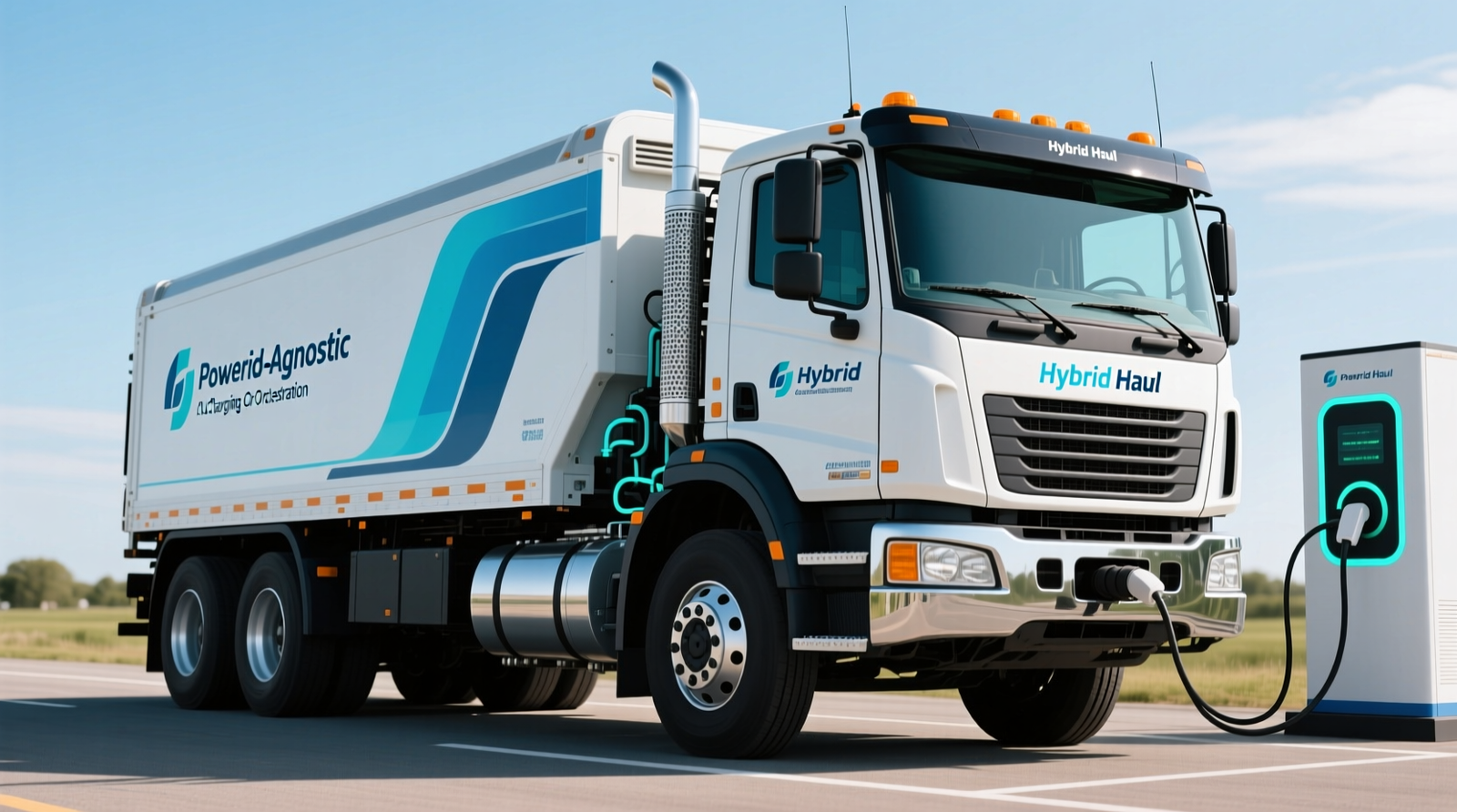
Mines are increasingly evaluating electric and hybrid haulage to support decarbonization goals. A practical autonomy program benefits from being powertrain-agnostic—able to operate diesel, hybrid, or battery-electric trucks—because many sites will run mixed powertrains during transitions.
Where battery-electric haul trucks are used, the fleet layer can help orchestrate charging logistics: scheduling charging windows, routing trucks to chargers based on state of charge and mission priority, and avoiding charger congestion. Whether this is handled directly by TraxIQ, a third-party energy management system, or a site SCADA/MES layer depends on the mine’s digital architecture.
TL;DR: Powertrain-agnostic autonomy supports mixed diesel/electric fleets, while fleet orchestration can reduce charging bottlenecks through smarter routing and scheduling.
Workforce, Training, and Change Management Implications
AHS doesn’t eliminate work; it changes work. Successful programs plan early for new roles, training, and governance:
- Control room operators: Supervising missions, responding to exceptions, and coordinating with dispatch and pit supervision.
- Autonomy technicians: Maintaining sensors, compute units, communications hardware, and calibration procedures.
- Planners and dispatchers: Adapting short-interval control practices to leverage consistent autonomous cycle times.
- Safety and operations leadership: Managing the operating model, traffic rules, and continuous improvement from autonomy event learnings.
Change management typically includes competency frameworks, simulation or supervised field training, clear escalation paths for exception handling, and workforce engagement to address concerns and improve adoption.
TL;DR: AHS requires new operating roles (control room, autonomy maintenance) and structured training/change management to achieve stable performance and workforce acceptance.
Competitive Landscape: Where CiDi–MMD Fits vs Caterpillar, Komatsu, and Hitachi
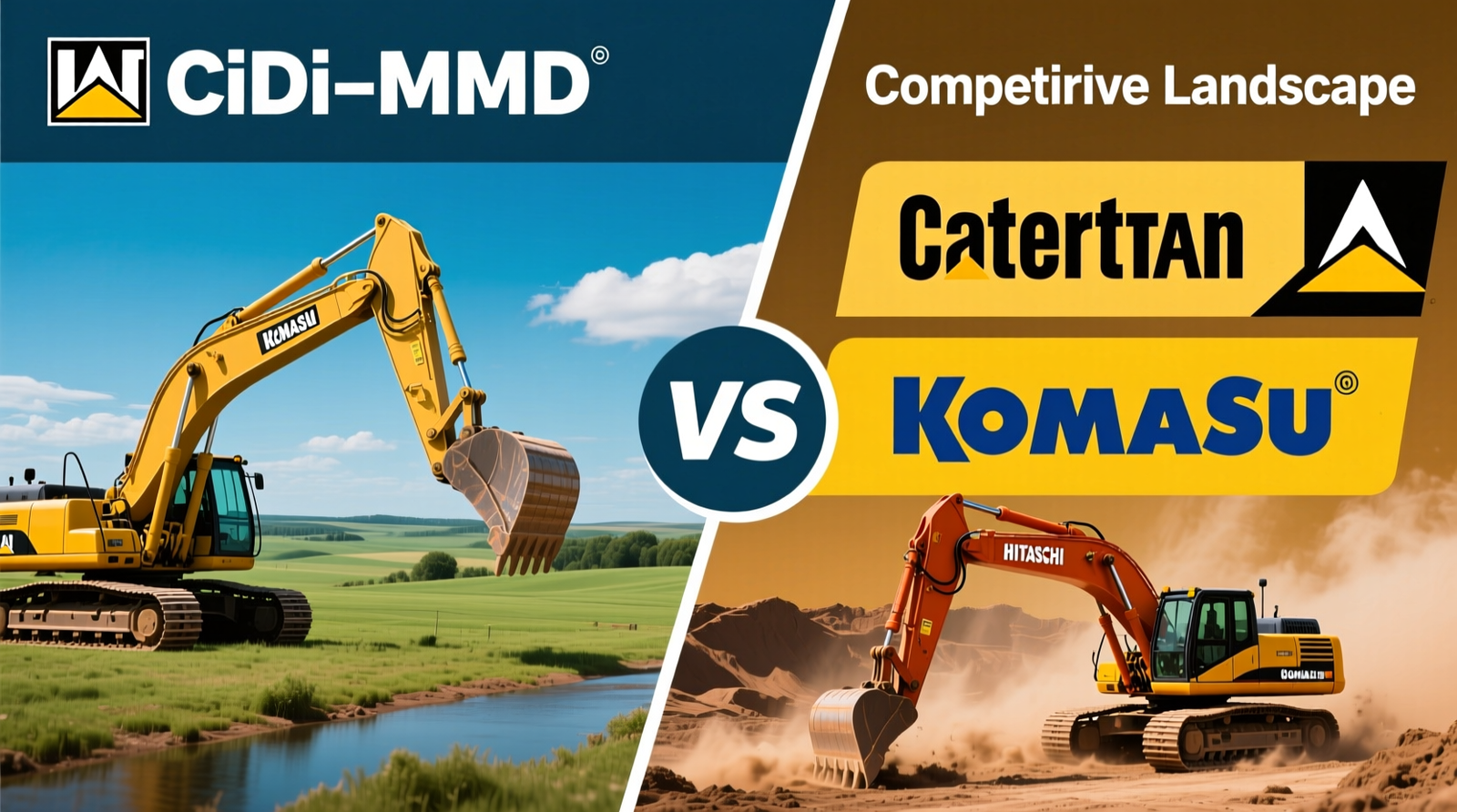
Autonomous haulage has several established players:
- Caterpillar: A major OEM with mature autonomous and mine automation offerings and deep integration with its equipment ecosystem (source).
- Komatsu: A long-standing AHS provider with extensive global deployments and an OEM-centric solution approach (source).
- Hitachi: Active in mining fleet and digital solutions via Hitachi Construction Machinery and group digital capabilities (readers can start with Hitachi Construction Machinery’s solutions pages: Hitachi Construction Machinery).
The CiDi–MMD partnership appears positioned as an integration-forward alternative: pairing an autonomy technology provider with a globally distributed mining equipment and systems partner to accelerate deployments beyond a single-OEM ecosystem. For mines with heterogeneous fleets or strong preferences for “best-of-breed” digital architectures, that packaging and integration capability can be strategically attractive—assuming interoperability, safety case quality, and lifecycle support meet site requirements.
TL;DR: Caterpillar and Komatsu lead mature OEM-centric AHS ecosystems; CiDi–MMD aims to compete by combining autonomy expertise with global integration and service reach that may appeal to mixed-fleet operations.
Market Impact and Strategic Outlook (Executive Perspectives and Target Regions)
From CiDi’s perspective, the agreement supports a shift from domestic leadership in China to broader international deployment. From MMD’s side, the strategic logic is that autonomous material movement is becoming a core lever for safety, productivity, and cost control in modern surface mines.
Target regions commonly cited for growth in mine automation include:
- Australia: A mature AHS market with established operational precedents in large open-pit iron ore.
- South America: Significant copper and iron ore operations where productivity and safety initiatives drive automation investment.
- MENA (Middle East and North Africa): Growing quarrying and bulk materials handling activity, often with strong interest in modernization.
Industry demand is also shaped by macro drivers: labor constraints, increasing safety expectations, and the push toward decarbonization. For a high-level view of mining technology trends, the World Economic Forum’s mining and metals initiatives can provide useful context (WEF – Mining & Metals).
TL;DR: The partnership targets global growth regions for AHS and is aligned with broader trends in safety, labor availability, and decarbonization-driven mine digitalization.
Conclusion

The CiDi–MMD exclusive agreement is more than a partnership headline: it is an attempt to productize and scale an autonomous haulage system (AHS) for open-pit mines through tight integration of autonomy software, fleet operations tooling, and global field support.
Concretely, the partnership aims to deliver outcomes that operators care about:
- Faster pilots: Packaged deployments that can start with constrained routes and scale after safety and stability are proven.
- Clear migration paths: Support for supervised autonomy and teleoperation to bridge the gap from manual haulage to fully autonomous operation.
- Mixed-traffic readiness: Operating rules, geofencing, and traffic control processes to coexist with manned equipment during transition.
- Scalable integration: Better alignment with mine systems (dispatch, maintenance, planning) via APIs and structured data exchange.
While pilot counts, go-live timelines, and site selections have not been publicly detailed in the provided information, readers should expect initial demonstration programs to focus on a small fleet and a limited operational domain before expanding to broader circuits and higher truck counts.
TL;DR: CiDi–MMD’s near-term success will be judged by pilot execution, safe scaling in mixed traffic, practical retrofit/new-build pathways, and seamless integration into mine operations systems.
FAQ
Q: What is an autonomous haulage system (AHS) for open-pit mines, and what does it include?
A: An AHS for open-pit mines includes autonomous haul trucks plus the supporting systems—positioning (GNSS), sensors (LiDAR/radar/cameras), onboard autonomy software, site communications, and a centralized fleet/traffic management layer. Together, these components run haul cycles, manage right-of-way, and coordinate multiple trucks safely and efficiently.
Q: Can autonomous trucks operate safely in mixed traffic with manned equipment and light vehicles?
A: Yes, but it requires explicit mixed-traffic controls such as geofenced zones, right-of-way rules, controlled intersections, communications policies (often supported by V2X), and strong operating discipline. Many mines phase this in gradually—starting with dedicated autonomous routes before expanding interaction with manned assets.
Q: Are retrofit autonomous haul truck conversion kits a realistic option for existing fleets?
A: Often, yes. Retrofit kits can enable pilots and early value without immediate fleet replacement, but feasibility depends on truck model compatibility, available interfaces to steering/braking/throttle systems, remaining asset life, and maintenance capability. Many sites pilot with retrofits, then specify autonomy-ready features on new fleet purchases.
Q: How do TraxIQ and CiDi’s autonomy software typically interface with mine systems like MES and ERP?
A: In many deployments, the AHS fleet layer exchanges dispatch, status, and production data with a mine’s MES (Manufacturing Execution System) and ERP (Enterprise Resource Planning) through APIs and structured integrations. The exact architecture depends on whether the site uses third-party fleet management, maintenance systems, or planning tools, and how data governance is defined.
Q: What workforce changes should operations leaders plan for when deploying driverless mining haulage technology?
A: Mines typically introduce control room supervision roles, autonomy maintenance/technician roles (sensors, compute, communications), and updated dispatch/planning practices. Training programs, new SOPs, and clear exception-handling workflows are critical to adoption and to maintaining safe, stable performance during ramp-up.